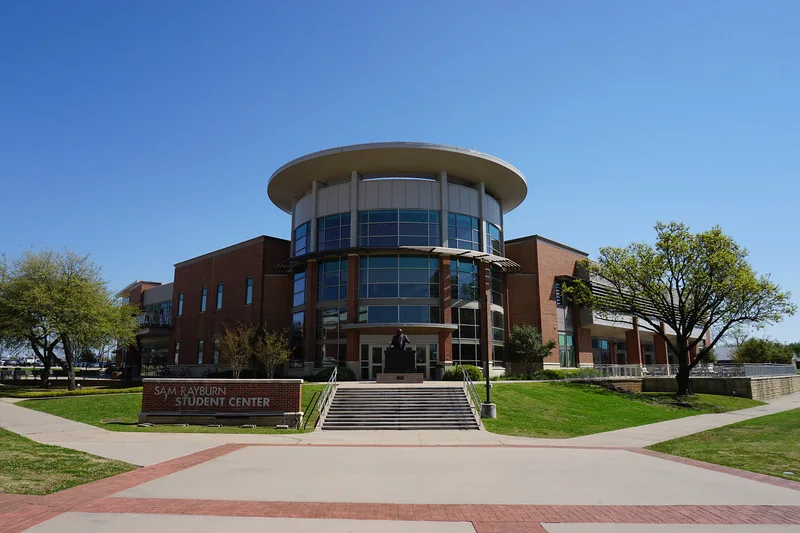
Texas A&M University
College Station, TX
SEC competition, established academics and a tradition-rich campus appeal to athletes seeking a demanding college experience.
Browse programs
College directoryEvery program, filtered by what fits Sport directoryMen's and women's, every division State directoryPrograms in the states you would play inGo deeper
Major directoryYour major and your sport in one list Camp directoryID camps and showcases at college programs Conference directoryEvery conference and its member colleges
Texas is one of the deepest states for women’s cross country recruiting, with strong in-state choice across multiple levels. Use this page to target programs that match your running level, scholarship goals, and college fit.
41 of 51 play in divisions that allow athletic scholarships
At a glance
51 women's cross country programs in Texas. Tap a level to jump to its schools.
Division I has the most options here, with 19 of 51 programs (37%).
NCAA Division I
Texas offers a deep set of Division I options for women’s cross country, creating plenty of ways to match competitive level and roster needs. Expect a faster recruiting pace and earlier outreach at many programs.
Strongest programs first, by Pathley's program strength score.
College Station, TX
SEC competition, established academics and a tradition-rich campus appeal to athletes seeking a demanding college experience.
Waco, TX
Competitive athletics, challenging academics and a Christian campus community give recruits distinct reasons to consider Baylor.
University Park, TX
ACC competition, established business programs and Dallas connections appeal to athletes with ambitious academic and career goals.
Fort Worth, TX
Competitive athletics, professionally focused academics and Fort Worth internship access give recruits distinct reasons to consider enrolling.
Lubbock, TX
Competitive athletics, applied academics and public university value give recruits several reasons to consider studying in Lubbock.
Houston, TX
Big 12 competition, professional programs and Houston career opportunities appeal to athletes planning beyond their sport.
Houston, TX
Challenging academics, close faculty connections and a residential college community complement the demands of Division I competition.
Denton, TX
Competitive athletics, distinctive academics and regional career opportunities give recruits several reasons to consider studying here.
San Antonio, TX
Accessible admissions, technology-focused academics and urban opportunities make this a practical option for athletes pursuing competitive college sports.
Edinburg, TX
Division I competition, a very affordable cost and strong health-focused academics give athletes clear reasons to consider UTRGV.
El Paso, TX
Accessible admissions, research opportunities and affordable costs give athletes practical reasons to consider this border-city university.
Commerce, TX
Accessible admissions, education-focused academics and affordable costs give athletes practical reasons to consider Southland Conference competition here.
Houston, TX
A small Christian community and Houston career connections give athletes reasons to look beyond the competition schedule.
Beaumont, TX
Competitive athletics, affordable degree options and hands-on academics give recruits several reasons to consider this Beaumont campus.
Nacogdoches, TX
Specialized academics, Division I competition and small-town campus life give athletes distinct reasons to consider enrolling.
Stephenville, TX
Career-focused programs, accessible admissions and a community-oriented setting give athletes practical reasons to consider competing here.
Corpus Christi, TX
Coastal academics, Southland competition and in-state value give athletes distinct reasons to consider this island campus.
San Antonio, TX
Health-profession pathways, reachable faculty and Southland Conference competition appeal to athletes seeking career preparation alongside their sport.
Prairie View, TX
Engineering programs, an HBCU community and SWAC competition give athletes clear reasons to consider studying and competing here.
NCAA Division II
Division II in Texas adds scholarship-eligible opportunities with a balance of athletic commitment and campus experience. This level can be a strong fit for recruits looking for meaningful aid potential and a competitive team environment.
Strongest programs first, by Pathley's program strength score.
San Angelo, TX
Conference competition, practical majors and scholarship opportunities appeal to athletes looking for a balanced West Texas college experience.
Lubbock, TX
Athletes come for competitive conference play, personal mentoring and a campus community shaped by Christian faith.
Wichita Falls, TX
Accessible admissions, health-focused academics and affordable public tuition give athletes practical reasons to consider competing here.
Austin, TX
Close faculty relationships and Austin career opportunities complement a small-campus experience with Lone Star Conference competition.
Alpine, TX
Small classes, accessible admissions and a rural setting appeal to athletes seeking a more personal college experience.
Laredo, TX
Affordable costs and regionally focused academics give athletes practical reasons to pursue competitive Division II opportunities here.
Kingsville, TX
Specialized academics, accessible admissions and Lone Star Conference competition give athletes practical reasons to consider this campus.
Odessa, TX
Accessible admissions, regional career connections and affordable academics give athletes practical reasons to consider competing here.
Tyler, TX
Accessible admissions, career-focused academics and regional conference competition give athletes several practical reasons to consider this campus.
Canyon, TX
Accessible admissions, practical academic strengths and relatively affordable costs make Lone Star Conference competition worth considering.
Texarkana, TX
Personalized academic support, relatively affordable tuition and a small campus give athletes practical reasons to consider competing here.
NCAA Division III
Division III programs in Texas can be a great option if you want college running with an academics and fit first approach. Recruiting is often more flexible, with roster spots shaped by overall student fit rather than athletic aid.
Strongest programs first, by Pathley's program strength score.
Austin, TX
A small campus, accessible admissions and Austin career opportunities give athletes practical reasons to consider competing here.
Longview, TX
Athletes choose a close-knit Christian community where hands-on academics and competitive athletics share space with professional preparation.
Abilene, TX
A close-knit community and career-focused study appeal to athletes seeking balance alongside NCAA Division III competition.
Kerrville, TX
Personal attention, accessible admissions and Hill Country surroundings appeal to athletes seeking a smaller college experience.
Seguin, TX
A small campus, reachable faculty and Division III competition appeal to athletes seeking a connected college experience.
Irving, TX
Close mentoring, a shared intellectual foundation and competitive athletics appeal to students who value learning alongside sport.
Marshall, TX
A close-knit Christian community and competitive athletics appeal to recruits who want faith woven into college life.
Abilene, TX
A close-knit Christian community and approachable professors help athletes connect their college experience beyond competition.
Georgetown, TX
Interdisciplinary learning, a small campus and Division III competition appeal to athletes seeking a connected college experience.
Belton, TX
A Christian community, career-focused academics and nationally successful athletics draw recruits seeking a small-campus experience.
NAIA
NAIA schools in Texas expand the map with additional scholarship-eligible programs and a wide range of competitive levels. Many recruits find NAIA to be a practical path for combining athletics, admissions fit, and potential financial support.
Strongest programs first, by Pathley's program strength score.
Fort Worth, TX
Small classes, accessible admissions and NAIA competition give athletes a personal college experience within urban Fort Worth.
Plainview, TX
Athletes are drawn to established NAIA competition, close faculty mentoring and a faith-centered community in Plainview.
Austin, TX
Athletes choose this small Austin campus for NAIA competition, business studies and its historically Black community.
Hawkins, TX
Personal faculty attention, accessible admissions and a close-knit campus help athletes build a manageable college experience.
San Antonio, TX
Personal attention, NAIA competition and a lakeside San Antonio campus give athletes a distinctive college experience.
Dallas, TX
Paid work experience, a close-knit community and Dallas opportunities give athletes reasons to look beyond their sport.
San Antonio, TX
Affordable costs, accessible admissions and flexible academic options give athletes practical reasons to consider competing here.
Tyler, TX
Accessible admissions, a small campus and NAIA competition give athletes a practical starting point for college.
Dallas, TX
Career-focused programs, affordable costs and a small urban campus give athletes practical reasons to consider competing here.
Marshall, TX
Athletes choose this small campus for its HBCU heritage, NAIA competition, accessible admissions and financial aid.
Stafford, TX
A small campus, career-oriented programs and NAIA competition give athletes a focused college experience near Houston.
Free school matcher
Pick your position and level, and we score every women's cross country program on roster openings at your position, athletic level and academics.
Conferences
Every women's cross country conference with at least one program in Texas, across every division.
Scorecard
This scorecard summarizes how Texas stacks up for women’s cross country recruits based on in-state program availability, division mix, scholarship pathways, and overall college-fit options.
Overall opportunity score
StandoutTexas stands out as one of the best states for women’s cross country recruits who want lots of in-state choices across divisions and scholarship-eligible programs.
Texas offers far more women’s cross country programs than a typical state, giving recruits a deep in-state list to build around.
With strong representation across NCAA D1, D2, D3, and NAIA, Texas provides excellent division flexibility for recruiting targets.
Texas has an unusually large pool of scholarship-eligible women’s cross country programs, creating more avenues where athletic aid may be possible.
Compared with many states for this sport, Texas leans more affordable overall and slightly more accessible by admissions, with plenty of school-size variety skewing larger.
Recruiting snapshot
Who it suits, what the landscape looks like, where the money is and what gives this state an edge.
Recruits who want a wide in-state shortlist with multiple competitive levels and lots of program-to-program variety.
The in-state landscape is deep and competitive, so athletes can target reach, match, and likely-fit programs without leaving Texas.
Scholarship opportunities are most commonly tied to NCAA D1, NCAA D2, and NAIA programs, while NCAA D3 recruiting is typically more academic and fit-driven with no athletic scholarships.
Texas’s large footprint and year-round training culture can support consistent racing preparation and makes it easier to find frequent in-state meet and campus-visit options.
Key metrics
How women's cross country programs in Texas compare with the average state on program count, tuition, enrollment and admissions.
Three ways to start
Pick the option that matches where you are, and we will show you the plan that fits.
News
Resources
National rankings
Sport hub
The Women's Cross Country hub brings every division together: how D1, D2, D3 and NAIA compare, the strongest programs in each state, camps, and the recruiting guides for each level.