A supportive HBCU community, distinctive academics and Division I competition give recruits clear reasons to consider enrolling.
- 3,242
- Students
- 83%
- Admit rate
- $18,097
- Net price
Browse programs
College directoryEvery program, filtered by what fits Sport directoryMen's and women's, every division State directoryPrograms in the states you would play inGo deeper
Major directoryYour major and your sport in one list Camp directoryID camps and showcases at college programs Conference directoryEvery conference and its member colleges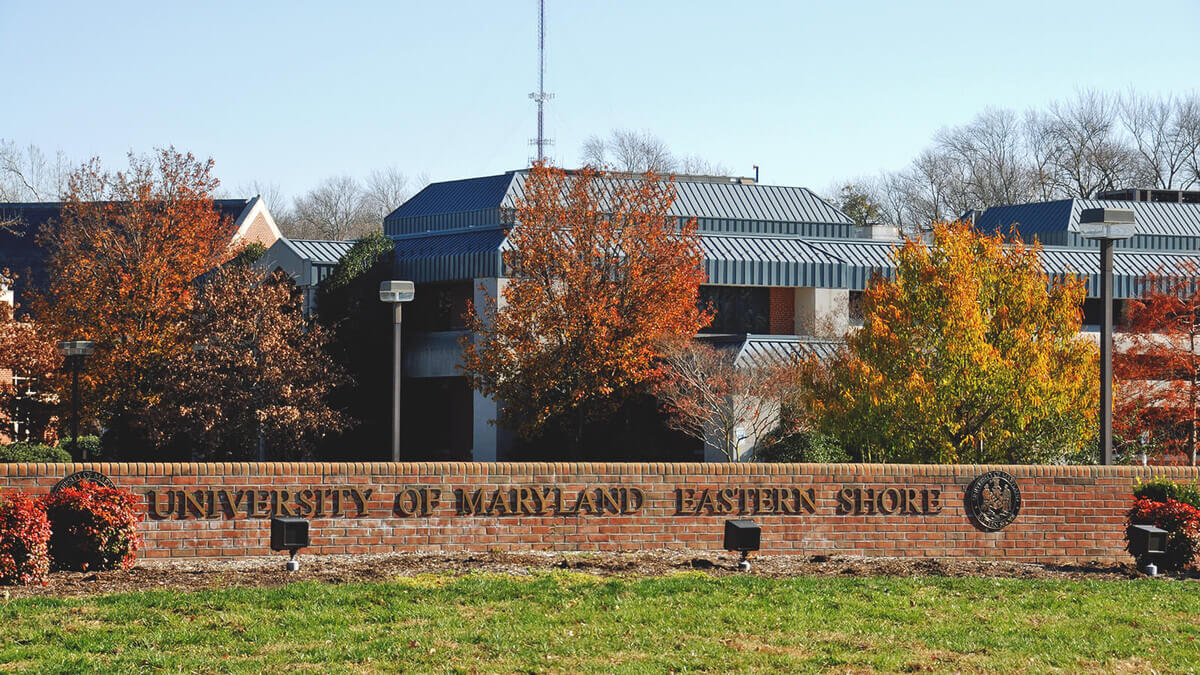

Princess Anne, MarylandMid-Eastern Athletic Conference
The University of Maryland Eastern Shore is a public historically Black land-grant university in Princess Anne, Maryland, known for programs such as aviation, PGA golf management and pharmacy and NCAA Division I Hawks athletics in the Mid-Eastern Athletic Conference.
Overview
Mission and culture
The University of Maryland Eastern Shore is a historically Black land-grant university in rural Princess Anne, Maryland, and part of the University System of Maryland. Its distinctive programs in aviation, PGA golf management, hospitality and health professions, along with NCAA Division I athletics in the Mid-Eastern Athletic Conference, make it worth considering if you want a small campus with Division I competition.
Why athletes choose University of Maryland Eastern Shore
Division I competition, a close HBCU community and distinctive career programs give athletes strong reasons to consider UMES.
Fit check
Pick a sport, your position and level, add a test score if you have one, and get an instant read on your chances here. Free, and no account needed.
Academics
The University of Maryland Eastern Shore pairs a land-grant HBCU mission with health professions, aviation, hospitality and golf management programs, making academic support, faculty access and degree completion important considerations alongside your sport.
Academic strength
A composite of graduation rate, earnings after college, how selective admissions are and how hard the coursework is.
Acceptance rate
More selectiveMore accessible
Admissions are highly accessible, so recruits can focus on showing academic readiness while evaluating program fit and athletic opportunities.
Six-year graduation rate
0%100%
Finishing a degree takes real self-direction, making consistent academic planning and use of support services especially important.
Academic difficulty
Rated 2 out of 5
Coursework should be manageable with steady effort and planning around athletic commitments.
Student to faculty ratio
students for every faculty member
Faculty should be reachable in this personal academic environment, creating opportunities for guidance as you balance coursework with your sport.
Median earnings
per year, ten years after starting college
Six years after: $39,287Graduate earnings are moderate, so weigh affordability carefully and connect your major to clear career goals.
Undergraduate enrollment
undergraduate students
The small undergraduate community offers a close-knit daily experience, with opportunities to build connections beyond your athletic program.
Most popular majors
Popular choices such as Biology, Criminal Justice and Exercise Science and Sport Management reflect practical, career-oriented interests, with Aviation adding a distinctive option.
Admissions
Prepare your application to the University of Maryland Eastern Shore by reviewing deadlines, test policy, application fees and recommendation requirements alongside your recruiting conversations.
Majors
25 undergraduate majors across 7 academic areas.
No major matches that search.
Campus life
Daily life centers on a small residential campus in rural Princess Anne on Maryland's Eastern Shore, where HBCU traditions, student organizations and Hawks athletics shape the community.
Athletics
Athletes compete at the NCAA Division I level, primarily in the Mid-Eastern Athletic Conference, while baseball and men's and women's golf compete in the Northeast Conference. Programs include basketball, track and field, softball and volleyball.
Athletic department
Explore how the University of Maryland Eastern Shore supports its NCAA Division I department through athlete participation, department revenue, recruiting expenditures and athletic aid, including how scholarships and recruiting spending are distributed by gender.
Athletes
Athletic aid
Recruiting spend
Source: the federal Equity in Athletics report, 2025.
Cost
At the University of Maryland Eastern Shore, in-state tuition can improve value for Maryland families, while net price, published costs and need-based or merit-based aid shape your budget.
Average net price
What families pay on average after grants and scholarships, including tuition, housing and fees.
Published tuition
The sticker price a year, before any aid.
Financial aid
Need-based and merit-based aid availableAthletic scholarships, where a program offers them, are awarded by the coaching staff and come on top of these figures.
NIL
NIL rating
The University of Maryland Eastern Shore offers a developing name, image and likeness (NIL) environment for NCAA Division I student-athletes. HBCU pride, MEAC competition and a loyal alumni network give Hawks athletes ways to build personal brands, even in a small rural market.
See the full NIL breakdownStudent fit
The kind of student-athlete who tends to do well at University of Maryland Eastern Shore.
The University of Maryland Eastern Shore fits athletes who want NCAA Division I competition within a close-knit HBCU community, particularly those interested in health professions, biology, criminal justice, aviation or golf management. You should be comfortable on a small rural campus and ready to take ownership of your academic progress, since finishing a degree here takes real self-direction and consistent use of support. Highly accessible admissions and small classes can make it a welcoming option for prepared students. Families should compare aid offers carefully, and athletes seeking a large campus or a big-city setting may prefer another option.
Who thrives here
HBCU Community FitDivision I CompetitorsSmall Campus CommunityHealth Career PlannersProactive Self StartersQuestions
The university is located in Princess Anne, Maryland, on the Eastern Shore of the Delmarva Peninsula. Its setting offers a small-town environment near Salisbury and within driving distance of Atlantic coastal destinations.
Yes. It is a public, historically Black university and a member of the University System of Maryland. Its land-grant mission emphasizes education, research, and community service.
The university is known for programs in agriculture, aviation, hospitality and tourism management, and health professions, including pharmacy. Academic offerings also span business, education, science, and technology.
First-year applicants generally submit an application and high school transcripts demonstrating completion of college-preparatory coursework. Requirements can differ for transfer, international, and graduate applicants, so prospective students should review the current criteria for their applicant category.
Yes. As a public university in Maryland, it has different tuition rates for eligible Maryland residents and out-of-state students. Residency classification follows university system policies, and total attendance costs also include fees, housing, meals, and other expenses.
Eligible students may receive federal grants, student loans, work-study, state assistance, and institutional scholarships. Completing the FAFSA is an important step in applying for need-based aid, while some scholarships may require separate applications.
Yes. The university offers on-campus student housing and dining services. Housing options, eligibility, and availability vary, so students should review current residence life information before making plans.
Student life centers on a small-town campus with student organizations, cultural activities, service opportunities, and intercollegiate athletics. Its HBCU traditions are an important part of the campus experience.
Princess Anne experiences four seasons, with warm, humid summers and generally cool winters. Students should prepare for rain throughout the year and occasional winter snow or ice.
The Hawks compete at the NCAA Division I level, primarily in the Mid-Eastern Athletic Conference. Some sports have separate conference affiliations.
Varsity sports include basketball, track and field, softball, and volleyball, among other programs. Prospective student-athletes should consult the official athletics website for current team offerings and recruiting information.
Yes. Career services help students explore career paths, prepare resumes, develop interview skills, and search for internships and jobs. Academic departments may also provide field-specific guidance and experiential learning opportunities.
Compare
Other colleges worth comparing with University of Maryland Eastern Shore.
A supportive HBCU community, distinctive academics and Division I competition give recruits clear reasons to consider enrolling.
A supportive HBCU community and career-focused academics give athletes reasons to look beyond the competition.
Athletes can combine Division I competition with a small HBCU community, career-focused academics and affordable public education.
Athletes find competitive conference play, a supportive campus and practical academic options within a historically Black university.
Accessible admissions, affordability and a small-campus community give recruits practical reasons to consider competing here.
Athletes come for competitive athletics, HBCU culture and professional programs connected to opportunities in Nashville.
Close faculty connections, undergraduate research and Asheville's arts and outdoor opportunities complement the Division I athletic experience.
Athletes can pair high-level competition with personal faculty access, career-focused study and an urban college experience.
Competitive athletics, HBCU heritage and a supportive campus community give recruits distinct reasons to consider coming here.
Conference competition, practical academic programs and Huntsville career opportunities give athletes several reasons to consider Alabama A&M.
A small residential community and accessible faculty help athletes keep academics connected to their competitive goals.
Purdue system academics, approachable faculty and regional career connections complement the demands of Division I competition.
Three ways to start
Pick the option that matches where you are, and we will show you the plan that fits.
Resources