
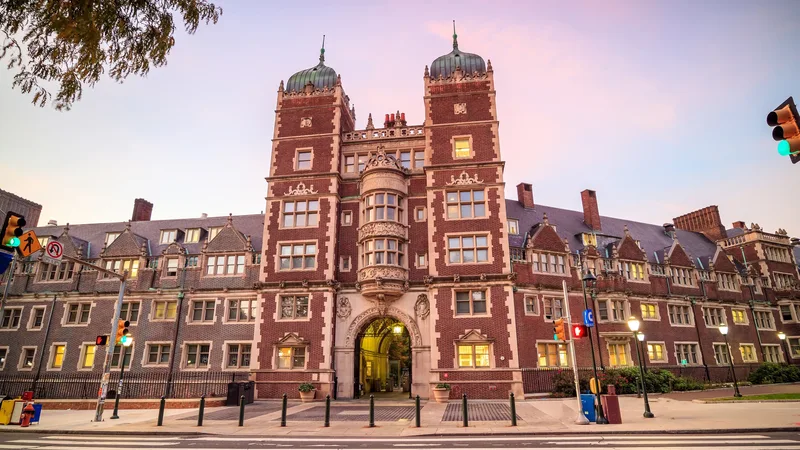

Rigorous academics, Ivy League competition and Philadelphia opportunities appeal to athletes with ambitious academic and career goals.
- 29,109
- Students
- 5%
- Admit rate
- $28,699
- Net price
Browse programs
College directoryEvery program, filtered by what fits Sport directoryMen's and women's, every division State directoryPrograms in the states you would play inGo deeper
Major directoryYour major and your sport in one list Camp directoryID camps and showcases at college programs Conference directoryEvery conference and its member collegesOverview
Mission and culture
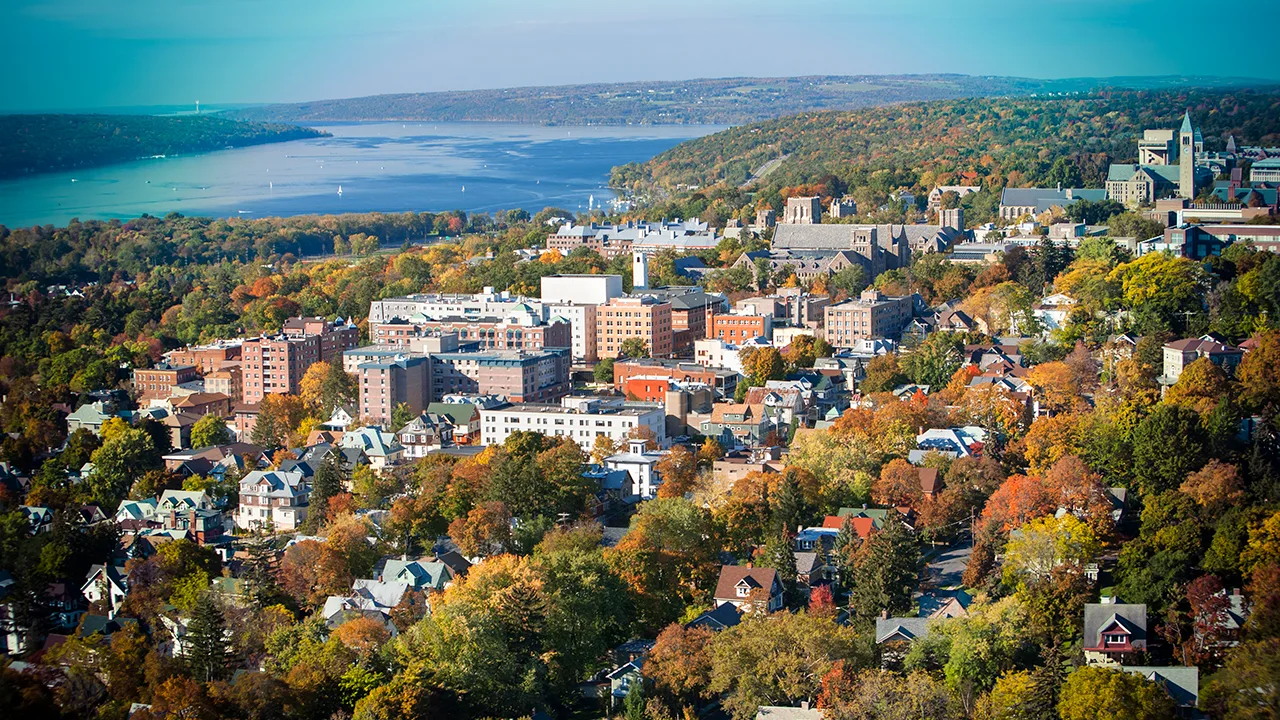
Cornell University is an Ivy League research university in Ithaca, New York, combining NCAA Division I athletics with demanding academics and broad professional study options. Its rural, residential campus offers strong research opportunities, active student organizations and particular depth in engineering, computing and the life sciences.
Why athletes choose Cornell University
Ivy League competition, research opportunities and a residential campus appeal to athletes seeking an academically demanding experience.
Fit check
Pick a sport, your position and level, add a test score if you have one, and get an instant read on your chances here. Free, and no account needed.
Academics
Cornell University pairs demanding research-oriented academics with broad professional options, making academic preparation, major selection and the balance between coursework and athletic commitments central to evaluating your fit here.
Academic strength
A composite of graduation rate, earnings after college, how selective admissions are and how hard the coursework is.
Acceptance rate
More selectiveMore accessible
Admissions are highly selective, so recruits need standout academic preparation and accomplishments rather than relying on athletic ability alone.
Six-year graduation rate
0%100%
Students have an excellent chance of finishing on schedule, supporting a clear path from athletics to graduation.
Academic difficulty
Rated 5 out of 5
Coursework is very demanding and time-intensive, requiring careful planning around training and competition.
Student to faculty ratio
students for every faculty member
The academic environment supports personal faculty access and close mentoring, valuable when coursework and athletic demands overlap.
Median earnings
per year, ten years after starting college
Six years after: $87,830Strong graduate earnings support long-term value, though your major and financial aid package still matter.
Undergraduate enrollment
undergraduate students
The large undergraduate community offers considerable variety, while your team and student organizations can help create a smaller circle.
SAT and ACT scores
Required testing and a strong test score profile make exam preparation important alongside excellent classroom performance and your athletic recruiting process.
Most popular majors
Admissions
Applying to Cornell University means planning carefully around admissions deadlines, test policy, the application fee and recommendation requirements while coordinating your recruiting conversations with coaches.
Binding. If admitted, you commit to attend.
The standard deadline. Not binding.
Majors
61 undergraduate majors across 6 academic areas.
No major matches that search.
Campus life
A large residential campus in rural Ithaca combines research-focused academics with active student organizations and outdoor activities in the surrounding area.
Athletics
Competing in NCAA Division I, primarily in the Ivy League, means pairing serious athletic commitments with demanding academics. Ice hockey, lacrosse and rowing are among the options.
Athletic department
The athletic department at Cornell University supports a substantial NCAA Division I athlete community, with revenue, recruiting investment and aid by gender helping families understand how its programs operate.
Athletes
Recruiting spend
Source: the federal Equity in Athletics report, 2025.
Cost
Cornell University's private-university price makes need-based aid central to affordability, so compare the published cost with your estimated net price rather than assuming athletic scholarship support.
Average net price
What families pay on average after grants and scholarships, including tuition, housing and fees.
Published tuition
The sticker price a year, before any aid.
Financial aid
Need-based aid availableAthletic scholarships, where a program offers them, are awarded by the coaching staff and come on top of these figures.
NIL
NIL rating
Cornell University in Ithaca, New York offers a robust name, image, and likeness (NIL) environment powered by its Ivy League reputation and passionate college sports culture. Student-athletes across many teams can leverage Cornell’s strong academic brand and national alumni network for NIL opportunities on and off campus.
See the full NIL breakdownStudent fit
The kind of student-athlete who tends to do well at Cornell University.
Cornell University best suits athletes ready for NCAA Division I competition and very demanding academics, with standout classroom preparation and a clear interest in their field of study. Its broad academic options appeal to students exploring engineering, computing, business or life sciences while committing substantial time to training and competition. You should enjoy a large residential community in a rural setting and be willing to build your own circle through teammates, faculty and student organizations. Families seeking athletic scholarships should look elsewhere, while those considering Cornell should assess need-based aid carefully and decide whether its academic intensity fits the athlete's goals.
Who thrives here
Self Driven CompetitorsIvy League AcademicsStrong Time ManagersResilient High AchieversCampus Community SeekersQuestions
It is best known for combining Ivy League academics with strong programs in engineering, business, agriculture and life sciences, computer science, architecture, hotel administration, and the liberal arts, along with extensive research opportunities at the undergraduate level.
Admission is highly selective, with decisions based on a holistic review that considers academic rigor, grades, test scores if submitted, essays, recommendations, extracurricular involvement, and overall fit with a specific undergraduate college.
It looks for academically strong, intellectually curious students who challenge themselves in school, contribute to their communities, and show clear interests that align with one or more of its undergraduate colleges or schools.
The main campus is in Ithaca, New York, a small city in the Finger Lakes region known for gorges, waterfalls, and outdoor recreation, offering a traditional residential campus with a mix of historic and modern facilities in a rural college-town setting.
It offers multiple undergraduate colleges and schools, including options focused on arts and sciences, engineering, business, human ecology, agriculture and life sciences, architecture and planning, industrial and labor relations, and hotel administration, each with its own admissions process and academic requirements.
Undergraduates have wide access to research across disciplines, with opportunities to work directly with faculty, join established labs and projects, pursue independent studies and honors theses, and sometimes present or publish their work.
Student life is active and diverse, with numerous clubs, cultural and professional organizations, Greek life, performing arts groups, community service opportunities, and events on campus, alongside access to hiking, skiing, and other outdoor activities in the surrounding area.
It is widely recognized for rigorous engineering and computer science programs, offering strong foundational coursework, specialized upper-level classes, access to cutting-edge research, and strong connections to industry and graduate study pathways.
It offers need-based financial aid, including grants, work-study, and limited loans, and uses family financial information to determine an aid package, with resources and counseling to help make attendance more affordable for admitted students with demonstrated need.
Varsity teams compete at the NCAA Division I level, primarily in the Ivy League and some other conferences, and student-athletes balance demanding training and competition schedules with rigorous academics, supported by academic advising and athletic support services.
Non-athletes can take part in intramural and club sports, fitness classes, outdoor education programs, and use campus recreation facilities, making it easy for students of all skill levels to stay active and engaged in physical activities.
Undergraduates can live in traditional residence halls, themed and program houses, and some apartment-style housing, with many first-year students living in designated first-year communities to help with social connections and the transition to college.
Compare
Other colleges worth comparing with Cornell University.
Rigorous academics, Ivy League competition and Philadelphia opportunities appeal to athletes with ambitious academic and career goals.
Big Ten competition, demanding academics and access to Chicago appeal to athletes with ambitious goals beyond sports.
Ivy League competition, demanding academics and New York City opportunities appeal to athletes with broad ambitions.
Co-op experience, demanding academics and Boston opportunities appeal to athletes with clear competitive and career goals.
Demanding academics, Ivy League competition and residential college communities give athletes reasons to pursue Yale.
Demanding academics, Ivy League competition and need-based financial support draw athletes ready for a rigorous college experience.
Strong research opportunities, ACC competition and a spirited residential campus attract athletes with ambitious academic goals.
Rigorous liberal arts study, close faculty relationships and competitive athletics appeal to recruits seeking a demanding college experience.
Close faculty relationships and a tight-knit community appeal to athletes balancing demanding academics with Ivy League competition.
Academic flexibility, close faculty access and Ivy League competition draw athletes who want substantial challenges beyond their sport.
Competitive athletics, research opportunities and access to Boston give recruits compelling reasons to consider this urban university.
Competitive athletics, rigorous academics and a close residential community appeal to recruits seeking commitment beyond their sport.
Three ways to start
Pick the option that matches where you are, and we will show you the plan that fits.
Resources