Pathley News
College Soccer Walk On Opportunities: Real Guide for Recruits
Learn where college soccer walk on opportunities really exist, what coaches evaluate, and how athletes can judge whether this route is realistic.
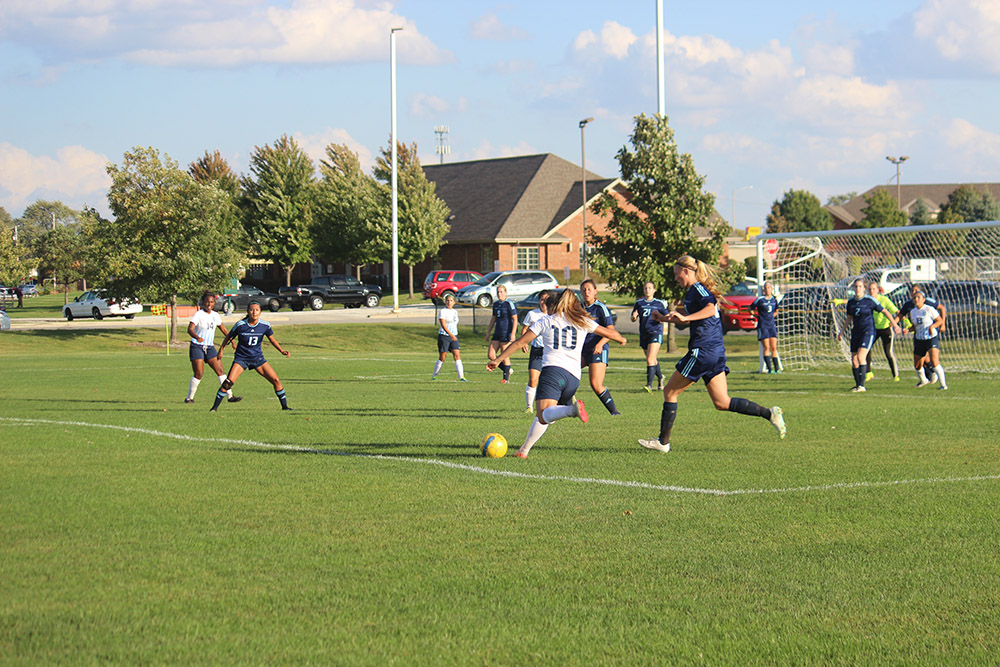
Most searches for college soccer walk on opportunities start with the same picture: an athlete arrives on campus, plays well in a tryout, and wins a spot. That can happen, but it is not the normal path. In soccer, coaches usually want to know who a player is before preseason ever begins. They want film, academics, club context, and a reason to believe the player can handle the speed of training.
That is why the walk-on route is less about surprise tryouts and more about fit. For some players, especially late bloomers, strong students, or athletes willing to widen the school list, it can be a real path. For others, the better move is adjusting level sooner instead of waiting for a dream-school opportunity that may never open.
One question that comes up early is this: How do soccer walk on opportunities differ across NCAA, NAIA, and JUCO?
Soccer uses the words walk on loosely. One coach may mean an athlete who is fully supported for admissions and expected to join the roster without athletic aid. Another may mean a player the staff likes but has not committed to yet. Another may mean a true campus student who asks for a tryout after enrolling. Those are very different situations, and families get in trouble when they treat them as the same thing.
In practice, there are two versions of the path that matter most.
This is the version most athletes should picture. The coach has already seen film or live play, has some level of communication with the athlete, and believes the player can compete for a roster place. There may be no athletic aid attached at the start, but the athlete is not random to the staff. The coach knows the position, club background, academics, and timeline.
This is the version families often imagine, and it is usually the hardest one. Some programs hold open tryouts. Some allow currently enrolled students to ask about joining after classes start. But soccer staffs are rarely building a roster from scratch in that moment. They are usually confirming depth, looking at one or two specific needs, or giving a local student a chance to prove something the staff already suspected.
Position matters, too. It is easier for a coach to carry extra depth at some field positions than at goalkeeper, where the number of meaningful spots is smaller. A player who can cover multiple roles, defend, and survive training speed often has a better shot than a specialist who only fits one narrow tactical use.
If a coach is going to use a roster place on a walk-on, even temporarily, the coach is usually solving a problem. Maybe the program needs training depth. Maybe a defender fits the style better than the current bench options. Maybe a late-developing player has a body and motor that project upward. Maybe a strong student can help the team without adding recruiting risk in admissions.
The key point is that coaches are not rewarding effort alone. They are evaluating whether the player can live inside a college training environment without slowing it down. That is a higher bar than dominating a high school match or looking good in a highlight reel against weak opponents.
Division I soccer is the toughest place to count on a traditional walk-on outcome. Rosters are planned early, recruiting networks are broad, and staffs have strong club connections. In some conferences, transfer movement and international recruiting make late openings even tighter. That does not mean it never happens. It means the athlete usually needs one of a few advantages: local visibility, a strong pre-existing relationship with the staff, a late physical jump, or admissions strength that makes the decision easier.
At this level, a player who says, "I will just show up in August and win a spot," is usually underestimating how much evaluation already happened before arrival.
Division II can be more flexible, but it is not casual. The level is still strong, the speed is real, and many programs recruit nationally or internationally. What changes is the range. Some teams are close to Division I in training standard, while others are more developmental and may have room for a player who is still rising. For an athlete who is good enough to contribute but not locked into a scholarship conversation, Division II can offer realistic room to earn a place.
Division III is one of the most important levels for late bloomers to understand. Because Division III programs do not offer athletic scholarships, the roster conversation can be more about admissions fit, academics, and whether the coach sees genuine on-field value. The soccer is still very good. Many Division III teams would surprise families who only follow big-name conferences. But if the player is a strong student, coachable, and a true fit for the level, Division III can be a serious path rather than a fallback.
NAIA and junior college soccer are often where under-recruited players find the clearest runway. The NAIA recruiting world can move differently from the NCAA, and the junior college route can give a late developer two important things, matches and film against older players. For athletes who need another year or two of proof before targeting higher divisions, JUCO can be developmental, not disappointing.
The NCAA's recruiting overview is helpful for understanding the broader recruiting structure, and its student-athlete participation data is a reminder that the college soccer landscape is much bigger than the handful of brands most families mention first. The NAIA future student-athlete information page is also useful if you are comparing routes outside the NCAA.
The most realistic college soccer walk on opportunities are often found when families stop treating the search like a race to the highest logo and start treating it like a fit problem. A broad college-by-sport directory can make that full landscape easier to see.
As you sort through levels, another smart question is: What do college soccer coaches actually want to see from a walk on prospect?
Walk-ons are not judged only on talent. They are judged on whether they can help the team function. A coach is thinking about training quality, locker room reliability, admissions, and long-term development all at once.
Here is what that usually looks like in soccer.
• Game speed. Can the player think and act quickly when space disappears? College coaches care less about a nice first touch in isolation and more about whether that touch survives pressure.
• Positional usefulness. A versatile outside back who can also defend wide midfield may be easier to carry than a player who only fits one exact role.
• Competitive habits. Coaches notice pressing effort, recovery runs, reaction after mistakes, and whether the athlete competes when tired.
• Physical floor. Soccer is not only about size, but it is about repeat speed, balance, contact tolerance, and the ability to train several days in a row.
• Coachability. A walk-on must absorb feedback fast. Staffs rarely want to spend a roster spot on a player who argues, drifts, or needs every instruction repeated.
• Academic stability. A player who can be admitted and stay eligible is easier to bring into the program than one who adds uncertainty off the field.
• Video quality. Coaches want clips that show real game actions, not only fancy edits. Full-match segments or longer sequences often say more than a soundtrack-heavy montage.
Parents sometimes miss the bigger point here. A coach does not need a walk-on to be perfect. The coach needs the player to be usable. That can mean training depth as a freshman, energy in a pressing system, or eventual growth into a rotation piece by later years.
Honest self-evaluation matters more here than in almost any other recruiting conversation. The athlete should not ask, "Am I the best player on my high school team?" The better question is, "Can I help a college roster that trains every day with older, faster players?"
A few signs usually point in the right direction. Strong club competition helps. Good film against good opponents helps more. Multi-position value helps. So does an upward development curve, especially if junior and senior year performances are clearly better than earlier ones.
Just as important, a player needs the right search size. Many families start with a tiny list of famous programs and then say there are no options. In reality, the list was the problem. A searchable college directory can be useful when you are trying to widen the academic, geographic, and athletic range instead of recycling the same handful of schools.
General class-balance patterns matter as well. Reviewing a team roster analysis page can help you think about depth by class year and position, even though no public roster tells the whole story by itself. Rosters change. Injuries happen. Transfers happen. But the overall shape of a team can still tell you whether the staff usually carries a lot of depth or runs lean.
If a family keeps reaching only for the top division that sounds impressive, the process gets distorted. Some of the best outcomes happen when a player chooses the level where minutes, development, and belonging are actually possible.
Even when the goal is a walk-on spot, early communication matters. Coaches do not like surprises in preseason. They prefer context. They want to know who the player is, what level of club soccer shaped them, what the academic profile looks like, and why their program makes sense.
If that part feels confusing, this is the right question to ask: When should a soccer player reach out if the goal is to walk on in college?
A strong first message is usually simple. It explains the athlete's graduation year, primary position, club team, academic information, and a short reason the school belongs on the list. It also includes film that shows real match play. A coach does not need a life story. A coach needs enough signal to decide whether more conversation is worth the time.
If the staff replies with interest, the next phase is usually about detail. They may ask for more video, academic documents, camp plans, or timing around a visit. They may also be honest and say the roster is full, the current level is too high, or the athlete should reconnect later. None of that is personal. It is part of how narrow roster management can be in soccer.
Families also ask many of the same timing and eligibility questions over and over, which is why a searchable family recruiting question archive can be useful background when the process starts to feel repetitive.
When an athlete does get an in-person evaluation, the details matter. Coaches are watching warm-up habits, communication, fitness between actions, reaction to coaching, and whether the player competes after a mistake. A tryout or camp session is rarely only about the prettiest technical moment.
Most failed walk-on attempts are not about effort. They are about bad assumptions.
• Waiting too long. If the first contact happens after a student is already committed academically, the staff may have no reason to reconsider a settled roster.
• Targeting only brand-name programs. Reputation can hide better fit options at other levels.
• Confusing high school success with college readiness. Coaches care much more about the quality of the competition and how the player solves real game problems.
• Sending weak film. Heavy editing, short clips, or highlights with no context make evaluation harder.
• Ignoring academics. A coach cannot help much if the admissions side is unrealistic.
• Thinking a walk-on route is automatically easier. In some soccer programs, it is actually less forgiving because the player has to prove value without the cushion of a strong recruiting commitment.
Late bloomers should especially hear that last point. There is nothing wrong with needing more time. But extra time only helps if the athlete uses it to improve the right things, speed of play, strength, consistency, decision-making, and match film against better opponents.
The big takeaway on college soccer walk on opportunities is simple: the path is real, but it is rarely random. The athletes who make it work usually understand their level, build a wider college list, communicate before arriving on campus, and target programs where they can actually survive the speed of training.
That is why the next useful question is often this one: What is a realistic college soccer list for a player pursuing the walk-on route?
If an athlete treats the walk-on route as a backup fantasy, the process usually gets frustrating. If the athlete treats it like a real recruiting lane, with honest level-matching, stronger film, better academics, and earlier communication, the odds of finding a genuine fit become much better.
Rosters, coaches, and division breakdowns for every NCAA and NAIA program we track.