Insight
Water Polo Scholarships: How Much Aid Can Players Get?
Water polo scholarships exist, but they are small and partial. See how aid works at each level, men's vs women's gaps, and how to compare real costs.
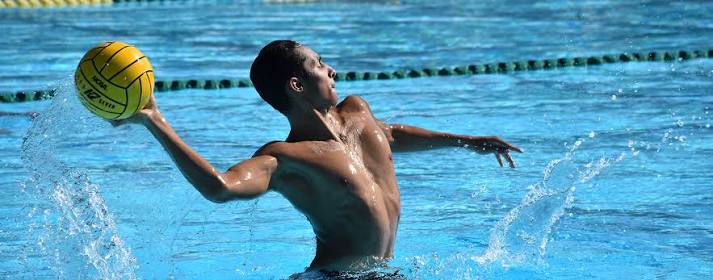
Water polo scholarships do exist, but they work differently from the scholarships in larger sports. The sport is small, the programs are concentrated in a few regions, and most athletic awards are partial. Families who understand that early make better decisions than families who expect a full ride.
This guide walks through the money level by level, explains why men's and women's aid differ, and shows how to build a realistic target list. Many families start with a simple question: Can I get a full ride for water polo? The short version is that it is possible in theory at some Division I schools, but it is not what most players receive.
Yes. Division I and Division II schools can award athletic aid in water polo. Division III schools cannot give athletic scholarships, and California community colleges do not either.
The bigger limit is the number of programs. Water polo has far fewer college programs than most sports: a few dozen men's teams and somewhat more women's teams, concentrated in California and the East. Programs have been added in recent years, so check a current directory for the exact count.
That small footprint shapes everything. There are fewer rosters, fewer coaches, and fewer places to compare offers. It also means a player who looks at every program in the country can realistically contact all of them.
For context on the odds across all sports, the NCAA reports that over 8 million students play high school sports and about 550,000 compete at NCAA schools, which is roughly 6.9 percent, according to the NCAA probability of competing beyond high school page. Water polo is a narrower path inside that number.
| Level | Athletic aid? | What to know |
|---|---|---|
| NCAA Division I | Yes | Opted-in schools use a roster limit of 24 for each team. Others work from the old values. |
| NCAA Division II | Yes | Scholarship caps still apply. Confirm the current number with the school. |
| NCAA Division III | No | Academic and need-based aid only. |
| California community colleges | No | Athletes pay tuition. |
| NAIA | Rare | Very few programs. Ask the coach directly. |
Under the House settlement, Division I schools that opted in no longer have scholarship limits and use roster limits instead. The water polo roster limit is 24 for men and 24 for women, and each team has its own limit, according to the Collegiate Water Polo Association summary of the NCAA overview. You can see how water polo compares with other sports in our NCAA roster limits by sport guide.
The College Sports Commission oversees compliance with the new rules on roster limits, revenue sharing and NIL.
Schools that did not opt in are no longer held to the old counter limits. They can give aid up to the value of the sport's 2024-25 Division I limit in equivalencies (4.5 for men's and 8 for women's water polo) and split it across more athletes. Going over that value puts them under the settlement, including roster limits.
So a school that did not opt in is not stuck with a handful of full rides. It can spread the same total value across many players.
Opted-in Division I schools can fund all 24 roster spots, but most water polo programs do not have the budget to do so. Ask each coach how many players are on aid and how awards are split.
A roster limit is a ceiling on team size. It is not a promise of 24 scholarships.
Many parents ask the question directly: Do women's water polo players get more scholarship money than men? Historically, yes. The old Division I water polo limits were 4.5 equivalencies for men and 8 for women, according to a WRHI table of old limits and new roster limits. The new roster limit is 24 for each.
The reason matters for your expectations. Water polo is an equivalency sport, so coaches divide the total value into pieces. A larger total means larger pieces, or more of them. For a deeper look at partial awards, see our guide to equivalency versus headcount sports.
The averages show why a typical award is partial. Spread across a full roster, the old men's value comes to less than a fifth of a scholarship per player. Coaches rarely split evenly, so a few players may receive more and many may receive little or nothing.
Division II schools still have scholarship caps. Water polo has traditionally been listed at 4.5 for men and 8 for women, but confirm the current number with the school's compliance office. Division II awards are also usually partial, and they are often combined with academic aid. Our Division II athletic scholarships guide explains how that stacking tends to work.
Division III gives no athletic scholarships. Players there can still receive academic and need-based aid, and the net cost at some private schools can be competitive. Our Division III athletic scholarships guide covers how that money works. Domestic Division III recruits who first enroll in fall 2026 or later need a free NCAA Eligibility Center Profile Page and NCAA ID. A common question here is Do Division III or California community college water polo teams offer any financial aid? They cannot offer athletic aid, but other aid may be available.
California community college athletic schools, governed by the CCCAA (now 3C2A), do not give athletic scholarships, so athletes there pay tuition, according to Mt. San Antonio College cabinet notes. Junior college water polo is mainly in California. Players choose it for development time and lower tuition, not for athletic money.
NAIA water polo is very rare. If you find an NAIA program, ask the coach directly how aid is awarded.
A realistic offer is a partial athletic award combined with other money. A coach might offer a percentage of tuition, and the rest of the package comes from academic scholarships, need-based aid and school grants.
Here is a simple example. Suppose a family compares two schools. School A offers a small athletic award but has a high sticker price. School B offers no athletic money but gives a strong academic scholarship. School B can easily cost less. The athletic number alone does not tell you that.
Our guide to stacking athletic and academic scholarships shows how families combine these pieces. When you compare, line up tuition, housing, fees and every award in one place, then look at what you would owe each year.
Families often ask When can college water polo coaches start contacting me and make a scholarship offer? Water polo is not an exception to the Division I contact rules.
• Division I: calls and texts start June 15 after sophomore year. Off-campus contact and official visits start August 1 before junior year.
• Division I offers: August 1 of senior year is the earliest date a school can make a written aid offer. The National Letter of Intent was eliminated in Division I in October 2024, so you sign only during the signing period, which opens November 11, 2026 for most sports in 2026-27.
• Division II: coaches can call, text, email and send materials at any time. In-person off-campus contact and official visits start June 15 before junior year. Division II uses written aid agreements signed in the signing period, though some schools may still use the National Letter of Intent, so ask which document you sign.
• Division III: off-campus contact begins after sophomore year, and official visits start January 1 of junior year.
Because coaches can only reach out so much, you can start the conversation earlier by writing to them. Our coach email generator can help you draft a first message.
On academics, neither Division I nor Division II requires an SAT or ACT score for initial eligibility. Division I requires 16 core courses, a 2.3 core GPA and the 10/7 rule. Division II requires 16 core courses and a 2.2 core GPA. Division I (June 23, 2026) and Division II (August 5, 2026) adopted an age-based five-seasons-in-five-years model. Litigation is ongoing, so check with compliance.
Because the sport is small, you can learn a lot by reading every roster. Avoid websites that claim to list the stats coaches want. Build your own benchmarks instead.
For each program on your list, note these things:
• Club and high school backgrounds of current players
• National team or ODP (Olympic Development Program) involvement
• Height by position
• How many seniors are graduating at each position, especially goalkeepers and centers
• Whether the roster is near the limit of 24
The roster analyzer can help you read class-year counts, and our guide to how to read a college roster explains what the patterns mean. A program graduating two goalkeepers and returning none has a different need than one with three goalkeepers under age 20.
Sort your list into reach, target and likely schools, with a mix of Division I, Division II and Division III. Include at least a few places where you would be happy to attend even if the water polo offer is small.
For most water polo players, athletic money is a partial piece of the package. The families who do best treat water polo as a way into a good academic fit, then compare total net cost instead of the athletic offer alone.
Next, build a list of programs across several levels, read each roster for graduating positions, and ask every coach how aid is split. Keep an eye on the rules as well. The Protect College Sports Act passed the Senate, according to Cozen O'Connor, but it is pending in the House, could change college sports rules, and is not yet law.
Be honest about what is realistic. A full ride is unlikely, and a partial award is common. A strong academic record often opens more money than the pool does, and that is true for most athletes, not only water polo players.