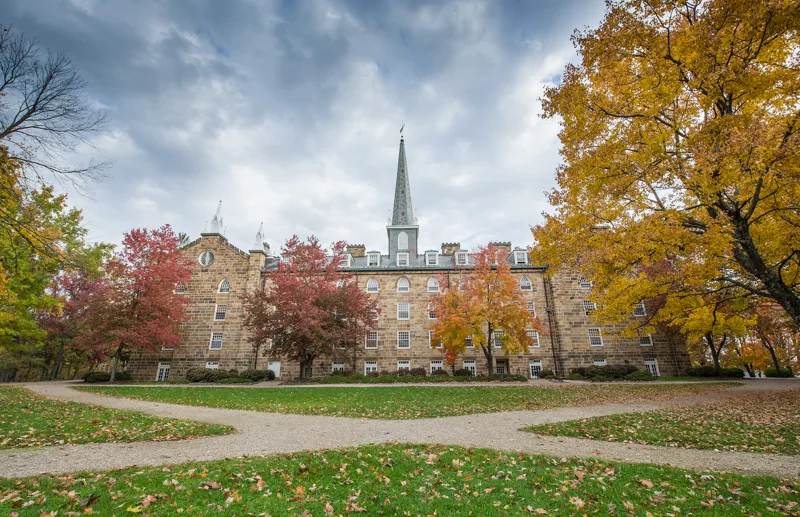
Close faculty relationships, NESCAC competition and Hartford internship opportunities appeal to athletes seeking a demanding liberal arts experience.
- 2,238
- Students
- 29%
- Admit rate
- $34,832
- Net price
Browse programs
College directoryEvery program, filtered by what fits Sport directoryMen's and women's, every division State directoryPrograms in the states you would play inGo deeper
Major directoryYour major and your sport in one list Camp directoryID camps and showcases at college programs Conference directoryEvery conference and its member colleges

Saint Paul, MinnesotaMinnesota Intercollegiate Athletic Conference
Overview
Mission and culture
Macalester College is a selective liberal arts college in Saint Paul, Minnesota, with a strong international focus and NCAA Division III athletics in the MIAC. Its small academic community combines demanding coursework, close faculty access and an urban setting with opportunities to explore Twin Cities culture and internships.
Why athletes choose Macalester College
Close faculty relationships, globally focused academics and Twin Cities opportunities complement competitive Division III athletics here.
Fit check
Pick a sport, your position and level, add a test score if you have one, and get an instant read on your chances here. Free, and no account needed.
Academics
Macalester College pairs rigorous liberal arts study with international perspectives, undergraduate research and civic engagement, making academic preparation, faculty access and long-term career direction important considerations for prospective student-athletes.
Academic strength
A composite of graduation rate, earnings after college, how selective admissions are and how hard the coursework is.
Acceptance rate
More selectiveMore accessible
Admissions are selective, so recruits should bring strong classroom preparation and meaningful accomplishments alongside their athletic ability.
Six-year graduation rate
0%100%
Students have an excellent chance of completing their degrees on time while pursuing their athletic commitments.
Academic difficulty
Rated 5 out of 5
Coursework is very challenging and time intensive, making careful planning around athletics essential.
Student to faculty ratio
students for every faculty member
Close faculty access supports personal mentoring, especially when you build relationships and discuss academic demands early.
Median earnings
per year, ten years after starting college
Six years after: $46,244Graduate earnings suggest solid outcomes, giving families a useful reason to weigh career direction alongside affordability.
Undergraduate enrollment
undergraduate students
The small undergraduate community offers a more personal daily experience, with globally diverse peers bringing different perspectives to campus.
SAT and ACT scores
Testing is optional, but the strong score profile suggests recruits should demonstrate substantial academic readiness through their coursework and any scores they submit.
Most popular majors
Admissions
Preparing an application to Macalester College means reviewing deadlines by plan, test policy, application fees and recommendation requirements while coordinating your academic preparation with recruiting conversations.
Binding. If admitted, you commit to attend.
Not binding. Hear back early and decide by May 1.
A second binding round with a later deadline.
The standard deadline. Not binding.
Majors
34 undergraduate majors across 3 academic areas.
No major matches that search.
Campus life
Daily life combines a small, globally diverse campus community with an urban Saint Paul setting and access to Twin Cities arts, culture and internships.
Athletics
Athletes compete in NCAA Division III, primarily within the Minnesota Intercollegiate Athletic Conference, where soccer and softball have regularly contended for conference playoff opportunities.
Athletic department
The athletic department at Macalester College supports Division III competition, with its athlete participation, operating resources, recruiting spending and aid breakdown offering context for conversations about program fit.
Athletes
Recruiting spend
Source: the federal Equity in Athletics report, 2025.
Cost
At Macalester College, need-based and merit-based aid can help offset the published cost, so compare the price after grants with your family's budget and available assistance.
Average net price
What families pay on average after grants and scholarships, including tuition, housing and fees.
Published tuition
The sticker price a year, before any aid.
Financial aid
Need-based and merit-based aid availableAthletic scholarships, where a program offers them, are awarded by the coaching staff and come on top of these figures.
NIL
NIL rating
Macalester College in Saint Paul, Minnesota offers a growing but modest name image and likeness (NIL) environment typical of a selective NCAA Division III program. Student-athletes in Macalester College sports can use NIL to build personal brands that connect with the campus community and the broader Twin Cities area.
See the full NIL breakdownStudent fit
The kind of student-athlete who tends to do well at Macalester College.
Macalester College best suits athletes seeking NCAA Division III competition alongside a demanding liberal arts education with a strong international outlook. You should be ready to manage time-intensive coursework, contribute in a small academic community and build close relationships with faculty while staying committed to your sport. Its urban Saint Paul setting fits students who want access to Twin Cities culture and internships, along with peers who bring diverse backgrounds and perspectives. Families should weigh need-based and merit-based aid carefully, since athletic aid is not part of the financial picture, and students seeking a lighter academic workload may find the balance challenging.
Who thrives here
Academically AmbitiousGlobally MindedDiscussion Driven LearnersSelf Directed StudentsBalanced Athlete IdentityQuestions
It is best known for its strong liberal arts curriculum, international focus, commitment to social responsibility, and a close-knit campus community where students and faculty regularly collaborate on research and experiential learning.
It is located in Saint Paul, Minnesota, in a residential neighborhood that offers easy access to both the Saint Paul and Minneapolis downtowns, providing students with internships, cultural events, restaurants, and outdoor recreation in a major metropolitan area.
Admission is highly selective, with successful applicants typically presenting strong academic records, rigorous coursework, thoughtful essays, and meaningful involvement in activities, along with evidence of curiosity, initiative, and global or community engagement.
The admission office looks for students who are academically ambitious, globally minded, and committed to community engagement, valuing applicants who show intellectual curiosity, openness to diverse perspectives, and a desire to contribute to campus and society.
Popular areas of study include the social sciences, natural sciences, international studies, languages, and interdisciplinary programs that draw on the college’s strengths in global perspectives, research, and civic engagement.
It offers need-based financial aid and a range of merit scholarships, aiming to make education affordable for admitted students by combining grants, scholarships, work-study, and limited loans based on individual circumstances.
Student life is active and community-oriented, with many student-run clubs, cultural organizations, service groups, and arts and music opportunities, as well as events that connect campus life with the broader Twin Cities community.
It enrolls a significant number of international students and emphasizes global learning, offering dedicated support services, internationally focused courses, and a campus culture that values diverse backgrounds and perspectives.
Most students live on or near campus in residence halls or college-affiliated housing, fostering a residential community where students can easily participate in activities, connect with peers, and access academic and support resources.
As an NCAA Division III member, it offers varsity, club, and intramural sports, emphasizing a balance between academics and athletics where student-athletes compete at a high level while maintaining rigorous coursework.
Student-athletes are expected to prioritize academics, and the structure of Division III athletics, along with faculty support and academic resources, helps them manage practices, competitions, and demanding coursework successfully.
Students benefit from a strong career services office and the college’s urban location, which together provide access to internships, research placements, nonprofit and corporate partnerships, and an alumni network that supports career exploration and post-graduation opportunities.
Compare
Other colleges worth comparing with Macalester College.
Close faculty relationships, NESCAC competition and Hartford internship opportunities appeal to athletes seeking a demanding liberal arts experience.
Close faculty relationships and a strong academic culture complement competitive athletics in a small residential community.
Close faculty relationships and Los Angeles opportunities complement a residential liberal arts experience and Division III competition.
Close faculty connections and a collaborative campus culture complement demanding academics and competitive NESCAC athletics.
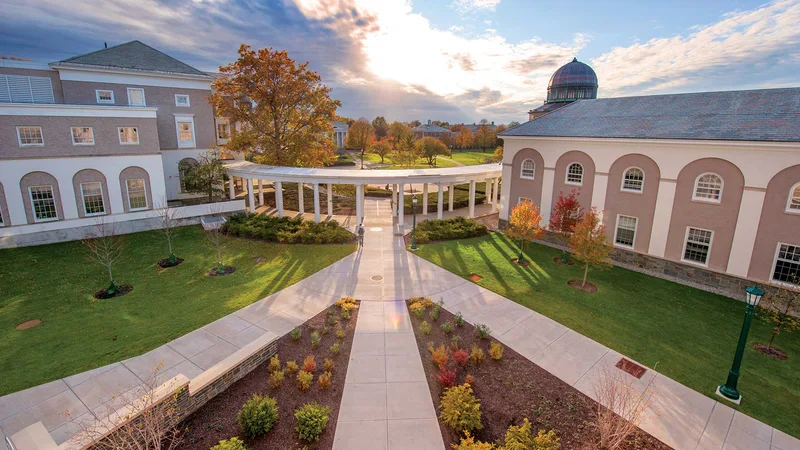
Engineering, close faculty relationships and a residential campus with city access give athletes distinct reasons to consider Union.
Close faculty relationships, interdisciplinary study and NESCAC competition appeal to athletes seeking a small residential college.
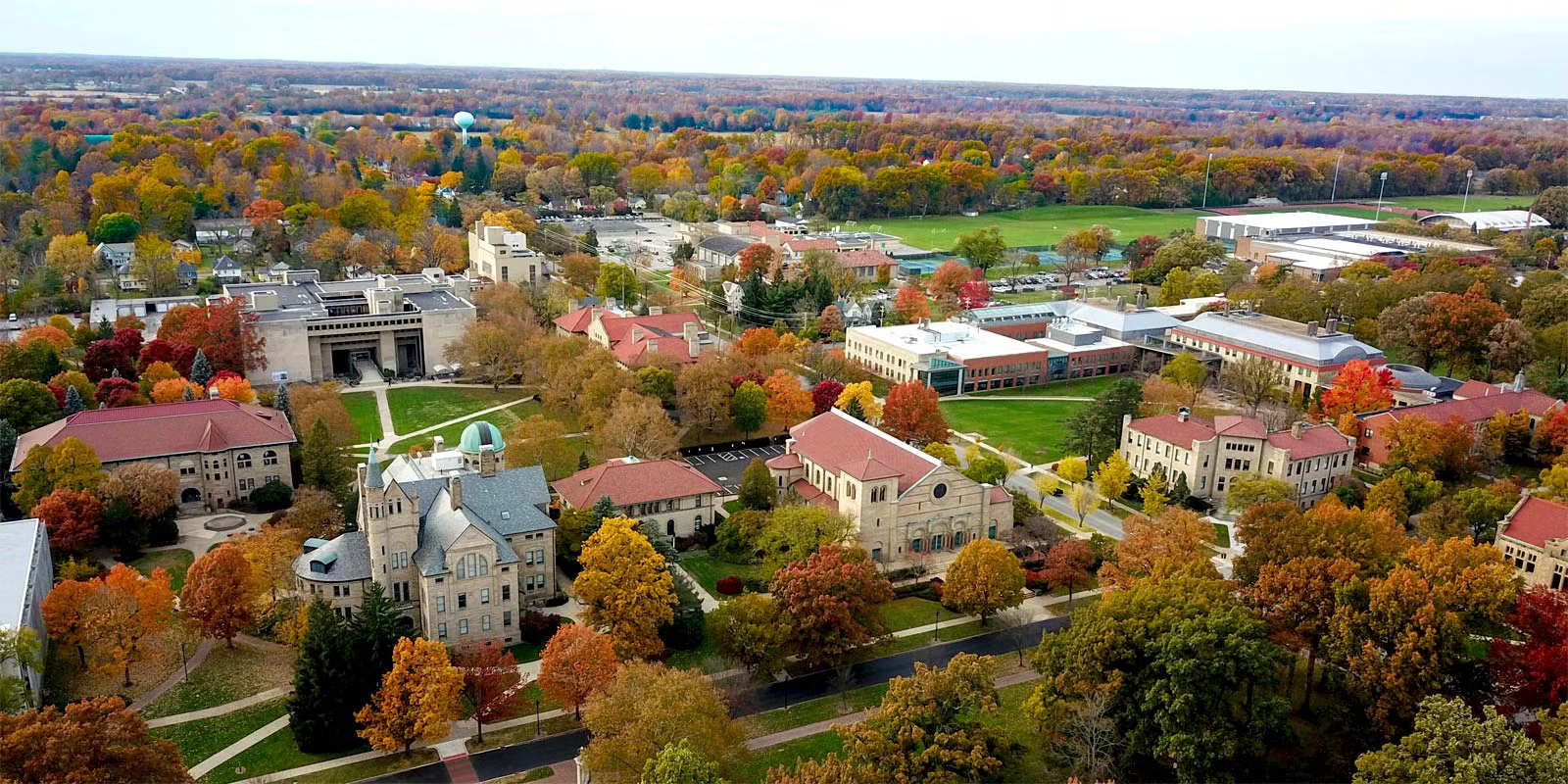
Athletes choose Oberlin for demanding academics, close faculty relationships and a campus shaped by music and activism.
Hands-on STEM learning, personal faculty access and competitive athletics appeal to recruits with clear technical career goals.
Close faculty relationships and a residential community appeal to athletes seeking challenging academics alongside conference competition.
Close faculty relationships, demanding academics and conference competition appeal to athletes who want a residential liberal arts experience.
Close faculty relationships, research opportunities and Centennial Conference competition appeal to athletes seeking a demanding liberal arts education.
Close faculty mentorship and creative academics give athletes room to pursue interests beyond Liberty League competition.
Three ways to start
Pick the option that matches where you are, and we will show you the plan that fits.
Resources