Insight
Sports Recruiting Profile Examples That Coaches Actually Read
See what a strong athlete profile looks like, what college coaches care about first, and how to build one that leads to real recruiting talks.
Most families think the hardest part of recruiting is the highlight video. Sometimes it is. But before a coach watches film, checks academic fit, or talks about scholarships, there is usually a fast first screen. That screen is your recruiting profile.
If the profile is cluttered, vague, outdated, or hard to open on a phone, your chances drop fast. If it is clear, honest, and built around what coaches need, it can open real conversations. That is why looking at strong sports recruiting profile examples matters. The goal is not to copy someone else. The goal is to understand how smart structure helps a coach see fit quickly.
As you read, keep this question in mind: What should a college recruiting profile include for my sport?
College coaches do not have unlimited time. They are evaluating tournaments, managing current players, planning travel, communicating with admissions, and sorting through messages from recruits. Your profile is often the first filter.
That matters because the funnel is small. The NCAA's official data on the probability of competing beyond high school shows that only a fraction of high school athletes go on to NCAA sports. That does not mean you should panic. It means clarity becomes a competitive advantage.
A good profile does three things at once. It helps a coach understand who you are. It helps that coach decide whether to spend more time on you. It helps your family stay organized, because good recruiting is not just about being seen. It is about being seen by the right schools.
That last part gets missed all the time. A player can have a sharp looking profile and still waste months contacting programs that are too high, too low, too expensive, or just not a social or academic fit. A profile is a tool, not the whole strategy.
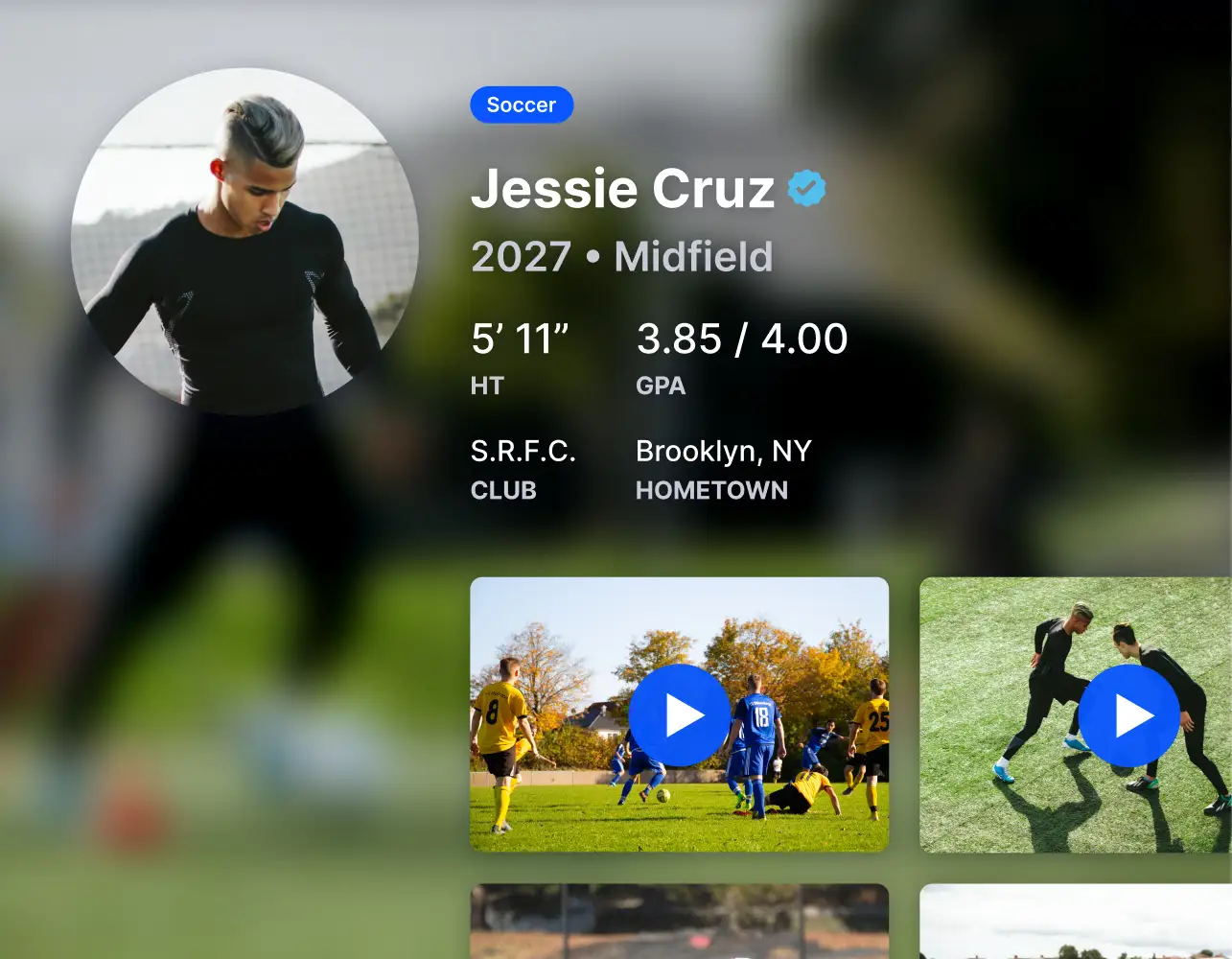
You do not need a fancy design. You need signal. When a coach opens your page, PDF, or introductory email, they should be able to find the most important information without hunting for it.
Here is what a fast coach scan usually looks for:
• Your name, graduation year, sport, position or event, club or high school, and home state.
• Measurable athletic information, such as height, weight, times, marks, position specific stats, or role based performance indicators.
• Basic academic context, especially GPA, course rigor, and class information if it strengthens your fit.
• A direct video or results link that opens quickly and does not require extra searching.
• Upcoming schedule information and easy contact details for you and, when appropriate, your coach.
What they do not want is a long life story, generic claims about leadership with no context, or a page where the best information is buried halfway down.
Think like a coach on a phone in an airport. If your best material is not obvious in a few seconds, it might as well not be there.
If you want to pressure test that first impression, ask yourself this while reading: What makes an athlete profile stand out to college coaches?
The best sports recruiting profile examples share one trait. They make the next step easy. Easy to evaluate. Easy to follow up on. Easy to connect to the right level of college.
This is the cleanest style for most athletes. The top of the profile gives a coach the essentials right away. Think of it like a scoreboard, not an essay.
What it includes: graduation year, position or event, physical data if relevant, GPA, team names, core stats, best video link, and upcoming schedule.
Why it works: a coach can decide in seconds whether you belong in the next evaluation bucket. That quick yes is powerful.
What it sounds like: 2027 outside hitter, 6 foot 0, 3.82 GPA, club and high school listed, attack percentage, blocks per set, highlight video, and tournament schedule, all near the top.
This version matters a lot for Division III, Ivy level academic conversations, high academic Division I and Division II programs, and families who know college fit is about more than the scoreboard.
What it includes: concise academic snapshot, intended areas of study if real, honors or advanced coursework, then athletic information in a clear second section.
Why it works: some coaches are recruiting both the athlete and the admissions case. If your grades and course load are a strength, do not hide them.
What it sounds like: 2026 midfielder, 4.0 weighted GPA, AP and honors coursework, interested in biology, captain, high work rate, tackle percentage, film link, and spring schedule.
Not every recruit peaks early. Some athletes grow late, switch positions, add strength, or make a major jump between sophomore and junior year. In those cases, the profile should tell the truth about the trend.
What it includes: recent verified growth points, updated metrics, recent film, and a short line explaining the improvement without overselling it.
Why it works: coaches recruit projection as much as production. If your newest version is much better than your old numbers, your profile should make that obvious.
What it sounds like: moved from JV minutes to full time starter, improved 60 time, added velocity, new personal bests, or recent results from higher level competition.
This is huge for sports where times, marks, scores, or rankings matter. Track, swimming, golf, tennis, wrestling, and similar sports reward precision.
What it includes: verified bests, date achieved, venue or meet, whether the mark was legal when relevant, and a link to results or video.
Why it works: in these sports, coaches often care less about hype and more about comparable data. Cleaner data creates faster decisions.
What it sounds like: best legal marks first, season by season progress, strongest recent competitions, and academic information placed right beside the performance data.
Some athletes make the mistake of acting like every coach only wants the leading scorer. That is not how real rosters work. Coaches recruit defenders, setters, faceoff specialists, utility players, relays, base runners, and athletes who solve very specific problems.
What it includes: role clarity, system fit, reliable stats, and film clips that show how you help a team win, even if your box score is not loud.
Why it works: clear role identity can get a coach interested faster than vague superstar language.
What it sounds like: defensive center back with strong aerial percentage, first step quickness, and ability to organize the back line, or catcher with pop time, framing traits, and game management value.
This is the most underrated model. It is also the one that usually leads to better outcomes. Instead of trying to look like a universal recruit for every level, the profile speaks clearly to the level where you can actually compete.
That might mean highlighting consistency, coachability, academic value, multi year improvement, or the kind of role you can grow into instead of pretending you are an instant impact star at the top level.
Families often resist this because honesty can feel smaller than ambition. In reality, honest fit is what creates real options.
If you are unsure how to package all of this cleanly, the free Athletic Resume Builder can help you turn raw details into a coach friendly format quickly.
A lot of sports recruiting profile examples online look polished but still miss the point. They try to impress everyone instead of helping the right coach evaluate fast.
Too much fluff. If half your page is motivational language, the coach has to work to find the facts.
Outdated information. Recruiting profiles should be living documents. If your GPA, results, club, schedule, or video changed three months ago, your profile should have changed too.
No proof. Strong claims need clear stats, verified marks, recent film, or role based evidence.
No sense of school fit. A coach can tell when the same generic material is being sent to every level from top scholarship programs to small NAIA schools.
Hard to contact. If your email, phone, or schedule is missing, you create friction for the exact person you want to hear from.
A simple rule helps here. Every time you update your stats, schedule, transcript strength, or film, update the profile the same week. Waiting too long means coaches may evaluate an older version of you.
Need help deciding what belongs where? Ask: How do I organize my stats, video, and academic info for recruiting?
One of the smartest moves a family can make is adjusting the emphasis of the same core profile based on who is reading it. The facts should stay honest. The presentation can get sharper.
For top scholarship level programs, measurable upside and verified competition level often matter most. For many Division III programs, academic fit and personal seriousness can carry more weight. For NAIA and JUCO options, cost, path, playing opportunity, and development story can matter a lot. The official NAIA future student-athlete resources are worth reviewing alongside NCAA guidance so you understand how different paths work.
This is where many families lose time. They build one general profile and assume it answers every question. It does not. The same athlete can look like a reach at one school, a target at another, and a safety at a third. Your profile should support that reality, not ignore it.
After the profile is ready, outreach matters too. A strong first message gives context to the profile and tells the coach why you are contacting that specific school. The free Coach Email Generator is useful when you want a cleaner intro than the generic emails most recruits send.
This is the part families usually realize too late. A strong profile can help you get noticed. It cannot tell you whether a school is a realistic match, whether the money is workable, what coaches care about in your position, or how to pace your next six months.
That is why browsing schools matters, but strategy matters more. You can start exploring with the Pathley College Directory or use Pathley Chat to ask specific recruiting questions.
This is especially true when the recruiting process starts feeling noisy. One camp says chase exposure. Another says wait for better stats. Another says email more coaches. Without structure, families bounce between tips instead of building momentum.
If your profile is almost done, the next smart question is this: What should I do after my recruiting profile is finished?
Here is the answer in plain English. You need a school list that fits your real level. You need honest insight into where you are strong and where you still have gaps. You need a timeline so you know what to do now, next month, and next season. You need action items you can actually follow, not a pile of random advice from the internet.
The strongest sports recruiting profile examples do not try to impress everybody. They help the right coach understand the right athlete at the right moment. That is a big difference.
Keep your profile clear. Keep it current. Keep it honest. Then make sure it points toward schools where you truly fit. That is how recruiting gets less confusing and a lot more productive.
Rosters, coaches, and division breakdowns for every NCAA and NAIA program we track.