January Skills Camp
- Jan 25, 2026
- Husky Ballpark, Seattle, WA
- $249
One-day winter skills clinic with Driveline assessments and position-specific sessions (infield/outfield and pitchers/catchers) led alongside UW baseball staff.
Browse programs
College directoryEvery program, filtered by what fits Sport directoryMen's and women's, every division State directoryPrograms in the states you would play inGo deeper
Major directoryYour major and your sport in one list Camp directoryID camps and showcases at college programs Conference directoryEvery conference and its member collegesOne plan built for University of Washington Baseball, with the roster read, the coach's contact and a dated plan, delivered within 24 hours. An expert checks every plan.
Overview
Key facts about the University of Washington baseball team.
University of Washington plays Division I baseball in the Big Ten Conference from its campus in Seattle, Washington. The most room for the Class of 2027 is among pitchers, with 10 leaving after the 2026-27 season, followed by three infielders. It is an experienced group, with 18 of 39 players seniors or graduate students.
Head Coach
players a season
Fit check
Pick your position and level, add a test score if you have one, and get an instant read on your chances here. Free, and no account needed.
Coaching staff
Head coach
Eddie SmithHead CoachRoster
The roster by class
39 players on the latest roster (2027).
Roster openings after 2026-27
Pitcher 10 · Catcher 2 · Infielder 3 · Outfielder 3
Pitchers are where the Class of 2027 has the most room: 10 leave after the 2026-27 season, followed by three infielders. More spots open up than at most programs: 18 players are set to leave after that season, or 46% of the roster compared with a median of 26% among Division I baseball teams, and that class stands to gain.
See who you would be replacingWith 46% of the roster made up of seniors and graduate students, this is a veteran group. Recruits could step into larger roles as those players move on.
Positions
How many players a season the program carries at each position, and how tall they are.
Average height 6'3"
Average height 6'0"
Average height 6'0"
Average height 6'1"
Transfers
transfers in for 2026-27
transfers out
Footprint
Where the players are from
Counted from players on recent rosters with a known hometown.
Top home states
Most players come from just a handful of states, with the top five adding up to 89% of the roster versus a 78% median among Division I baseball teams.
Results
Swipe to see every season
2021
40%20-30overall
6-21conference
2022
54%30-26overall
14-16conference
2023
64%35-20overall
17-12conference
2024
38%19-31-1overall
10-20conference
2025
51%29-28overall
17-13conference
Standings
Where University of Washington stands in the Big Ten Conference.
Schedule and travel
The season's games, home and away, and how far the team travels.
Recruiting
Washington is an NCAA Division I program competing in the Big Ten, with a schedule that regularly tests players against nationally competitive opponents. The Huskies reached the Big Ten Tournament in 2025 and the conference tournament quarterfinals in 2026, so recruiting is competitive and roster opportunities are generally earned through strong performance, positional fit, and development potential.
Recruiting difficulty
Washington is a competitive Big Ten program where most roster spots are likely to favor recruited players, but it is not currently positioned as an elite national contender with no realistic development path.
What coaches value
How to get recruited here
Build a complete video profile with game footage, verified measurements, position-specific metrics, and academic information. Attend events where Big Ten evaluators are present, contact the baseball staff professionally, and keep updating them as your performance, strength, and competition level improve.
How hard is it to make the team
Making Washington's baseball team is difficult because it is a Big Ten Division I program facing a demanding conference and nonconference schedule. Players typically need college-ready tools, strong baseball habits, and a clear role fit, while high school athletes may need to show projection and junior college players may need immediate readiness.
Who fits this program
Program stats
Athletes on the roster
Coaches on staff
Spent per athlete
Spending and revenue a year
Revenue covers 16% of what the program spends.
Operating spending comes to about $28,000 per athlete in the 2025 EADA report, about three times the Division I median. The team spends about $4.8 million and takes in $760,000 in the same report, covering 16% of its spending.
Source: the federal Equity in Athletics report, 2025.
Feeders
The high schools and clubs that sent the most players to this roster.
On recent rosters, four players came from North Kitsap High School, more than from any other school or club, ahead of Eastlake High School with three. Recruiting runs through several pipelines, as five sources have placed two or more players across recent rosters.
The school
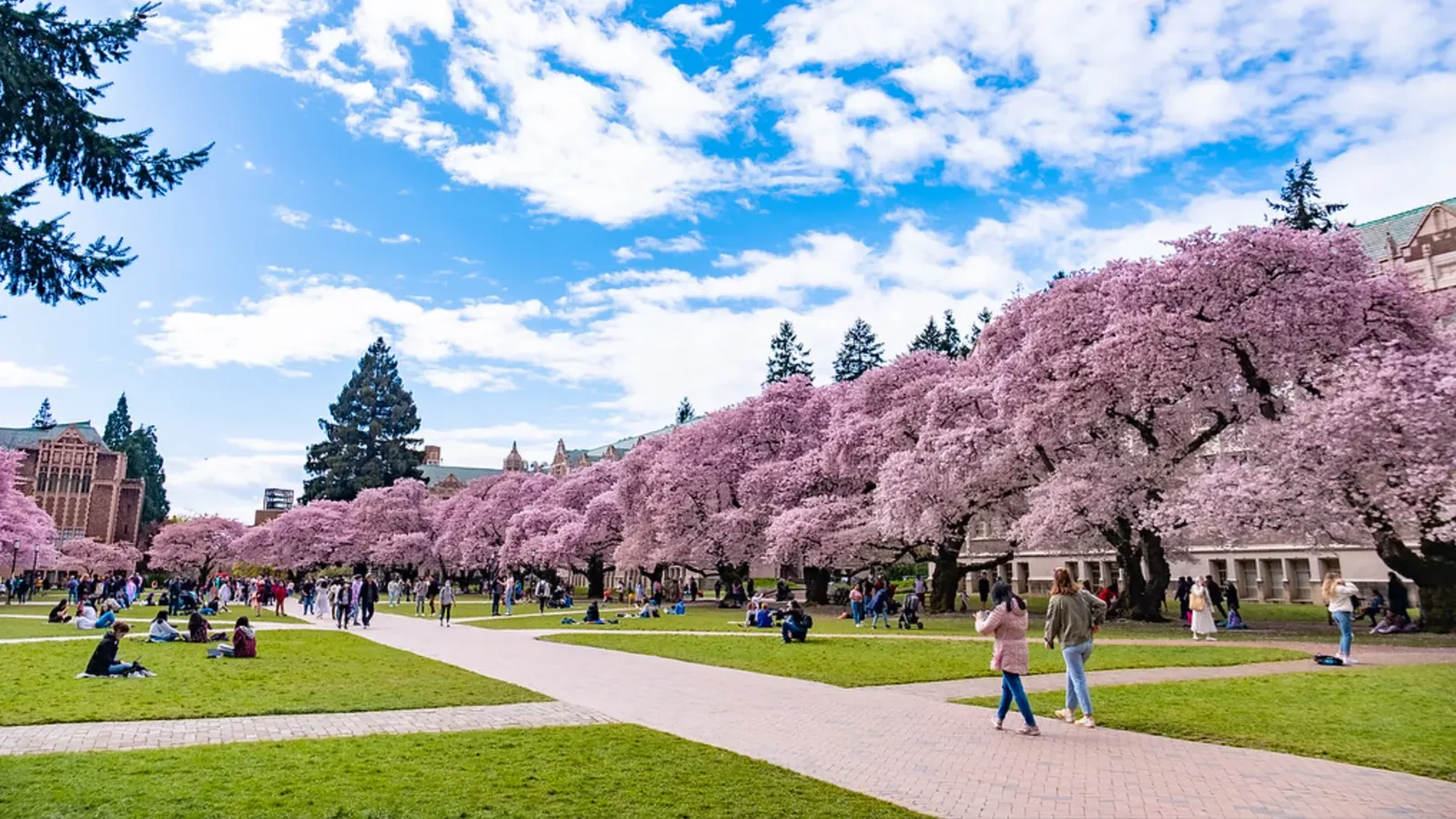
The University of Washington combines research-driven strengths in computing, engineering and health with challenging coursework, making academic preparation and a realistic plan for balancing classes and competition especially important.

Acceptance rate
Graduation rate
Camps
New camp dates are not posted yet. These ran last season.
One-day winter skills clinic with Driveline assessments and position-specific sessions (infield/outfield and pitchers/catchers) led alongside UW baseball staff.
Four-day youth summer camp for ages 6-12 featuring daily instruction, games, and on-field skill development with UW coaching staff and players.
Four-day youth baseball day camp (ages 6-12). Instruction includes hitting, defense, throwing mechanics and games; UW coaching staff involvement.
Official links
Similar programs
Programs at a similar level, with similar academics, worth adding to your recruiting list.
Big Ten competition, research opportunities and active campus life appeal to athletes seeking a broad college experience.
Big Ten competition, broad academic choices and in-state tuition value give athletes several reasons to consider enrolling.
Nationally prominent basketball, reachable faculty and strong career outcomes give athletes compelling reasons to consider this campus.
Division I competition, hands-on research and a spirited residential community give recruits distinct reasons to consider Pullman.
Big East competition, career-focused academics and a service-minded community give athletes distinct reasons to consider Creighton.
Competitive athletics, hands-on academics and an engaged campus community give recruits several reasons to consider studying here.
Teams in Washington
Spokane, WA
Nationally prominent basketball, reachable faculty and strong career outcomes give athletes compelling reasons to consider this campus.
Seattle, WA
Close faculty connections and Seattle internship access complement competitive athletics and a service-centered Jesuit education.
Pullman, WA
Division I competition, hands-on research and a spirited residential community give recruits distinct reasons to consider Pullman.
Roster openings · 2026-27
Every program ranked by players in their final year, with the positions they are losing.
Three ways to start
Pick the option that matches where you are, and we will show you the plan that fits.
Resources