Youth campBaseball · Men's
Miles Miller Baseball Camps — SLU Youth Camp (Session 1)
- Jul 6 to 10, 2026
Browse programs
College directoryEvery program, filtered by what fits Sport directoryMen's and women's, every division State directoryPrograms in the states you would play inGo deeper
Major directoryYour major and your sport in one list Camp directoryID camps and showcases at college programs Conference directoryEvery conference and its member colleges

One plan built for Saint Louis University Baseball, with the roster read, the coach's contact and a dated plan, delivered within 24 hours. An expert checks every plan.
Overview
Key facts about the Saint Louis University baseball team.
From its campus in St. Louis, Missouri, Saint Louis University competes in Division I baseball as a member of the Atlantic 10 Conference. The most room for the Class of 2027 is among pitchers, with seven leaving after the 2026-27 season, followed by two catchers. The roster is stable, with 86% of last season's non-seniors back, above the 61% median among Division I baseball teams.
Head Coach
players a season
Fit check
Pick your position and level, add a test score if you have one, and get an instant read on your chances here. Free, and no account needed.
Coaching staff
Head coach
Miles MillerHead CoachRoster
The roster by class
36 players on the latest roster (2027).
Roster openings after 2026-27
Pitcher 7 · Catcher 2 · Infielder 1
After the 2026-27 season, seven pitchers will leave, the largest group of departures by position, followed by two catchers. Players at those positions have the clearest chance to step into new roles.
See who you would be replacingFew players leave early here, with 86% of last year's freshmen, sophomores and juniors back, versus a 61% median among Division I baseball teams. Coaches have brought in 16 players from other colleges, ahead of most teams among Division I baseball teams. Players who stay tend to build roles, so newcomers may need patience.
Positions
How many players a season the program carries at each position, and how tall they are.
Average height 6'2"
Average height 5'11"
Average height 6'0"
Average height 5'11"
Average height 6'0"
Outfielders are thinner here than at most programs, at 10% of the roster, about three a season, versus an average of 15% among Division I baseball teams.
Transfers
transfers in for 2026-27
transfers out
Footprint
Where the players are from
Counted from players on recent rosters with a known hometown.
Top home states
Recruiting has moved closer to home lately, since 50% of the freshman class is from Missouri versus 28% of the roster as a whole.
Results
Swipe to see every season
2022
55%29-24overall
14-9conference
2023
59%33-23overall
15-9conference
2024
70%37-16overall
16-8conference
2025
56%33-26overall
18-12conference
2026
37%20-34overall
11-19conference
Winning percentage fell to 37% in the 2026 season, a 20-34 finish and the lowest of the last five seasons.
Schedule and travel
The season's games, home and away, and how far the team travels.
Recruiting
Saint Louis competes at the NCAA Division I level in the Atlantic 10, where making the roster requires more than basic high school production. The program has a documented history of Atlantic 10 regular-season and tournament titles, three NCAA Tournament appearances, and a recent conference regular-season championship in 2024. The current roster includes a mix of high school recruits, junior college transfers, and four-year transfers, creating multiple pathways but meaningful competition for playing opportunities.
Recruiting difficulty
This is a competitive Division I program where most roster spots are likely filled through recruiting, but it is not currently established as an elite national contender.
What coaches value
How to get recruited here
Build a complete recruiting profile with verified measurables, academic information, recent statistics, and video that shows full at-bats or game pitching sequences. Contact the baseball program early, attend appropriate showcases or camps, and explain your position, role, development goals, and interest in Saint Louis rather than sending only a general highlight reel.
How hard is it to make the team
Making this team is moderately difficult because Saint Louis competes in Division I and the Atlantic 10, with roster competition from both incoming freshmen and college transfers. A player usually needs a clear Division I skill, strong academics, dependable defensive or pitching value, and the ability to contribute within a competitive team environment.
Who fits this program
Program stats
Athletes on the roster
Coaches on staff
Spent per athlete
Spending and revenue a year
Revenue covers everything the program spends.
Coaches are responsible for fewer athletes than usual, with about nine athletes per coach in the 2025 EADA report versus a median of 10 among Division I baseball teams.
Source: the federal Equity in Athletics report, 2025.
Feeders
The high schools and clubs that sent the most players to this roster.
Recent rosters include three players from Edwardsville High School, the most of any single school or club, ahead of Belleville High School-East with two. Recruiting runs through several pipelines, as five sources have placed two or more players on recent rosters.
The school
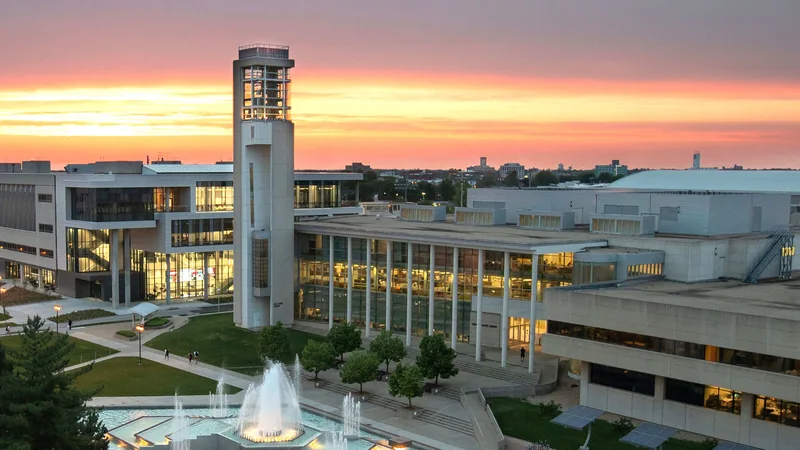
Saint Louis University combines established health sciences, business and research strengths with a Jesuit educational approach, giving athletes academic options that connect professional preparation with service and ethical thinking.
 Saint Louis UniversitySt. Louis, MissouriSee the full profile
Acceptance rate
Graduation rate
Camps
New camp dates are not posted yet. These ran last season.
Official links
Similar programs
Programs at a similar level, with similar academics, worth adding to your recruiting list.
Competitive athletics, career-focused academics and a residential community give recruits reasons to look closely at Dayton.
Competitive athletics, professional programs and Philadelphia internships give recruits clear reasons to consider this Jesuit campus.
Competitive athletics, professional programs and nearby New York City give recruits several reasons to consider this campus.
Big East competition, career-focused academics and a service-minded community give athletes distinct reasons to consider Creighton.
Big East competition, career-focused academics and nearby internship opportunities appeal to athletes planning beyond their playing careers.
Undergraduate teaching, competitive athletics and a traditional residential campus give recruits reasons to consider Miami.
Teams in Missouri
St. Charles, MO
Career-oriented study, scholarship opportunities and access to St. Louis complement the demands of Division I competition.
Springfield, MO
Competitive athletics, broad academic options and relatively affordable tuition give recruits several reasons to consider this campus.
Cape Girardeau, MO
Division I competition, practical academics and relatively affordable tuition appeal to athletes seeking a residential college experience.
Columbia, MO
SEC competition, recognized academic strengths and a lively residential campus give athletes several reasons to consider Missouri.
Roster openings · 2026-27
Every program ranked by players in their final year, with the positions they are losing.
Three ways to start
Pick the option that matches where you are, and we will show you the plan that fits.
Resources