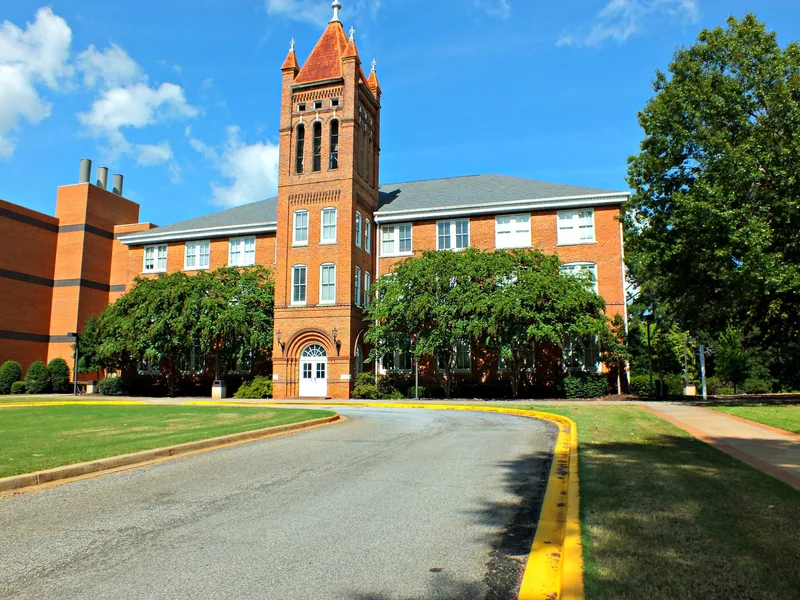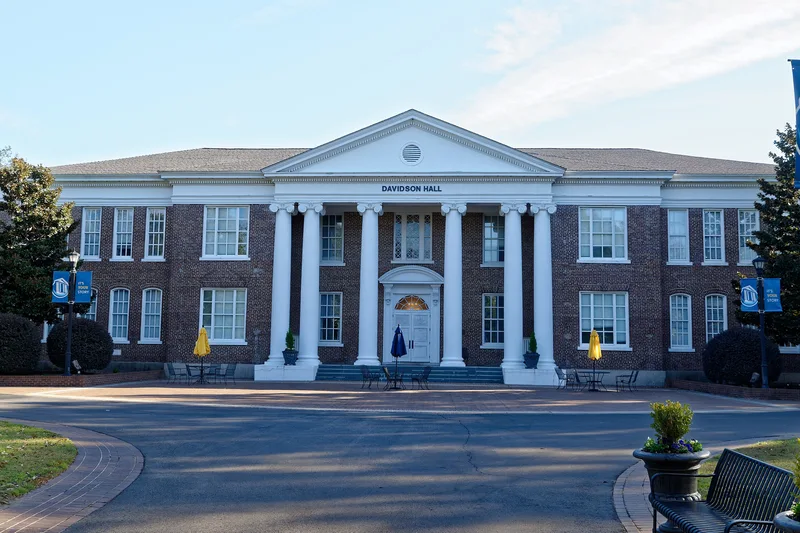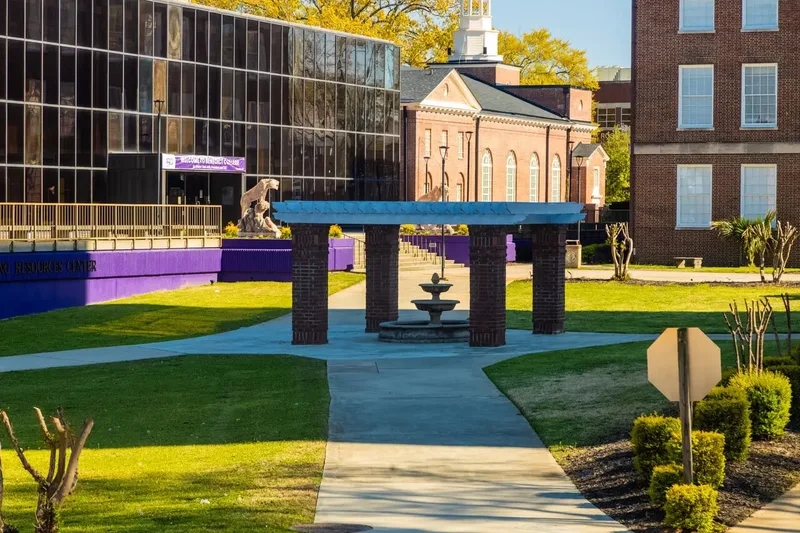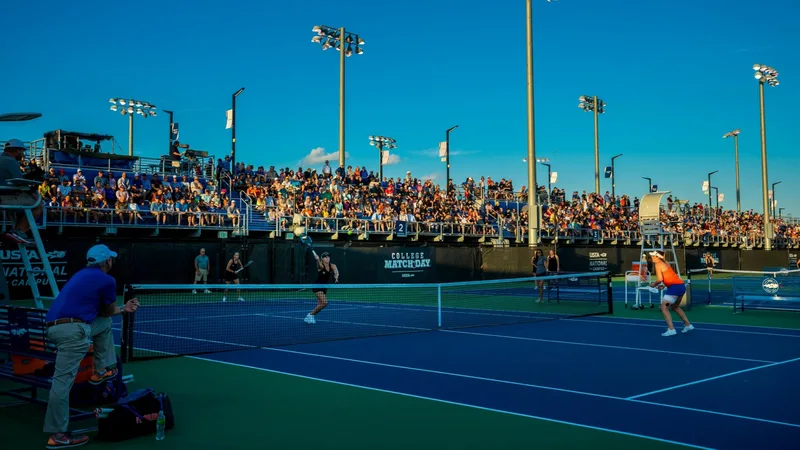

Charleston Southern University
North Charleston, SC
A small Christian community and close faculty interaction help athletes find connection alongside Division I competition.
Browse programs
College directoryEvery program, filtered by what fits Sport directoryMen's and women's, every division State directoryPrograms in the states you would play inGo deeper
Major directoryYour major and your sport in one list Camp directoryID camps and showcases at college programs Conference directoryEvery conference and its member colleges
South Carolina offers a strong set of in-state options for women’s tennis recruits, especially for athletes targeting scholarship-eligible programs. Use this page to compare divisions, recruiting depth, and overall college fit.
19 of 19 play in divisions that allow athletic scholarships
At a glance
19 women's tennis programs in South Carolina. Tap a level to jump to its schools.
Division II has the most options here, with 9 of 19 programs (47%).
NCAA Division I
South Carolina has a solid Division I presence for women’s tennis, giving recruits access to the highest NCAA level without leaving the state. Expect faster recruiting timelines and a stronger emphasis on proven match results and ranking history.
Strongest programs first, by Pathley's program strength score.
North Charleston, SC
A small Christian community and close faculty interaction help athletes find connection alongside Division I competition.
Clemson, SC
Strong professional programs and ACC competition attract athletes who want a residential college experience with career direction.
Conway, SC
Competitive athletics, coastal research opportunities and nearby Myrtle Beach give recruits distinct reasons to consider this campus.
Greenville, SC
Close faculty relationships and a residential community help athletes stay connected while pursuing demanding academics and competitive athletics.
Spartanburg, SC
Athletes choose a close-knit campus where Southern Conference competition pairs with personal academics and financial aid options.
Charleston, SC
Division I competition, undergraduate teaching and Charleston's coastal city setting give athletes distinct reasons to consider this campus.
Orangeburg, SC
A supportive HBCU community, distinctive academics and Division I competition give recruits clear reasons to consider enrolling.
Clinton, SC
Close faculty relationships and professional pathways give athletes a personal academic setting alongside demanding competition.
NCAA Division II
Division II is a major part of the women’s tennis landscape in South Carolina and can be a great balance of competitive tennis and overall college experience. Many recruits look here for meaningful roster opportunities with the potential for athletic aid.
Strongest programs first, by Pathley's program strength score.
Newberry, SC
Personal instruction, conference competition and a close-knit residential campus give athletes clear reasons to consider Newberry.
Anderson, SC
A Christian community, career-focused majors and South Atlantic Conference competition give athletes distinct reasons to consider Anderson.
Greenwood, SC
A close-knit campus, career-focused academics and Peach Belt competition give athletes a balanced college experience.
Hartsville, SC
Personal faculty access and a close-knit campus appeal to athletes seeking competitive athletics alongside discussion-based learning.
Columbia, SC
A supportive HBCU community, accessible admissions and Division II competition give athletes several reasons to consider Benedict.
Due West, SC
A close-knit campus, reachable faculty and Division II competition appeal to athletes seeking personal connections.
Florence, SC
Accessible admissions, professional degrees and a small campus give athletes a practical setting for balancing college and competition.
Spartanburg, SC
Personal faculty access, music programs and Conference Carolinas competition make this small university worth considering.
Tigerville, SC
Faith-integrated learning, a small campus and competitive athletics appeal to recruits seeking a close-knit Christian college experience.
NAIA
South Carolina includes a limited NAIA footprint for women’s tennis compared with its NCAA options. NAIA can still be a strong route for recruits seeking a smaller recruiting pool and potential athletic aid, so it is worth including if the school fit matches.
Strongest programs first, by Pathley's program strength score.
Sumter, SC
A close-knit campus, approachable faculty and career-focused majors help athletes connect their sport with broader goals.
Columbia, SC
Small classes, accessible admissions and a capital-city setting give athletes practical reasons to consider competing here.
Free school matcher
Pick your position and level, and we score every women's tennis program on roster openings at your position, athletic level and academics.
Conferences
Every women's tennis conference with at least one program in South Carolina, across every division.
Scorecard
This scorecard summarizes in-state opportunity for women’s tennis recruits, including overall program availability, division coverage, scholarship-eligible pathways, and college-fit factors like affordability and admissions accessibility.
Overall opportunity score
StandoutSouth Carolina stands out for women’s tennis recruiting thanks to strong in-state program availability and plenty of scholarship-eligible options across divisions.
South Carolina is deeper than many states for women’s tennis, giving recruits more in-state program choices than a typical state.
You will find multiple scholarship-eligible divisions in South Carolina for women’s tennis, though the overall mix is less complete without a D3 layer.
South Carolina offers a standout number of scholarship-eligible women’s tennis programs, increasing the chances of finding athletic-aid conversations that fit your level.
South Carolina’s women’s tennis schools tend to be more affordable than the typical state for this sport and generally accessible by admission, with many options on smaller-to-midsize campuses.
Recruiting snapshot
Who it suits, what the landscape looks like, where the money is and what gives this state an edge.
Women’s tennis recruits who want a deeper in-state list of scholarship-eligible programs, especially across NCAA Division I and Division II.
The in-state landscape is notably strong in overall program availability, with a heavy concentration of NCAA options and a smaller NAIA presence.
Scholarship opportunities are most commonly tied to NCAA D1, NCAA D2, and NAIA women’s tennis programs, while NCAA D3 recruiting is typically more academic and fit-driven since athletic scholarships are not offered.
South Carolina’s regional footprint makes it practical to build an in-state and nearby-state recruiting plan, with manageable travel for campus visits and match-day evaluations across the Southeast.
Key metrics
How women's tennis programs in South Carolina compare with the average state on program count, tuition, enrollment and admissions.
Three ways to start
Pick the option that matches where you are, and we will show you the plan that fits.
News
Resources
National rankings
Other sports in South Carolina
Sport hub
The Women's Tennis hub brings every division together: how D1, D2, D3 and NAIA compare, the strongest programs in each state, camps, and the recruiting guides for each level.