
Personal faculty access and a close-knit campus appeal to athletes seeking competitive athletics alongside discussion-based learning.
- 1,325
- Students
- 94%
- Admit rate
- $20,286
- Net price
Browse programs
College directoryEvery program, filtered by what fits Sport directoryMen's and women's, every division State directoryPrograms in the states you would play inGo deeper
Major directoryYour major and your sport in one list Camp directoryID camps and showcases at college programs Conference directoryEvery conference and its member colleges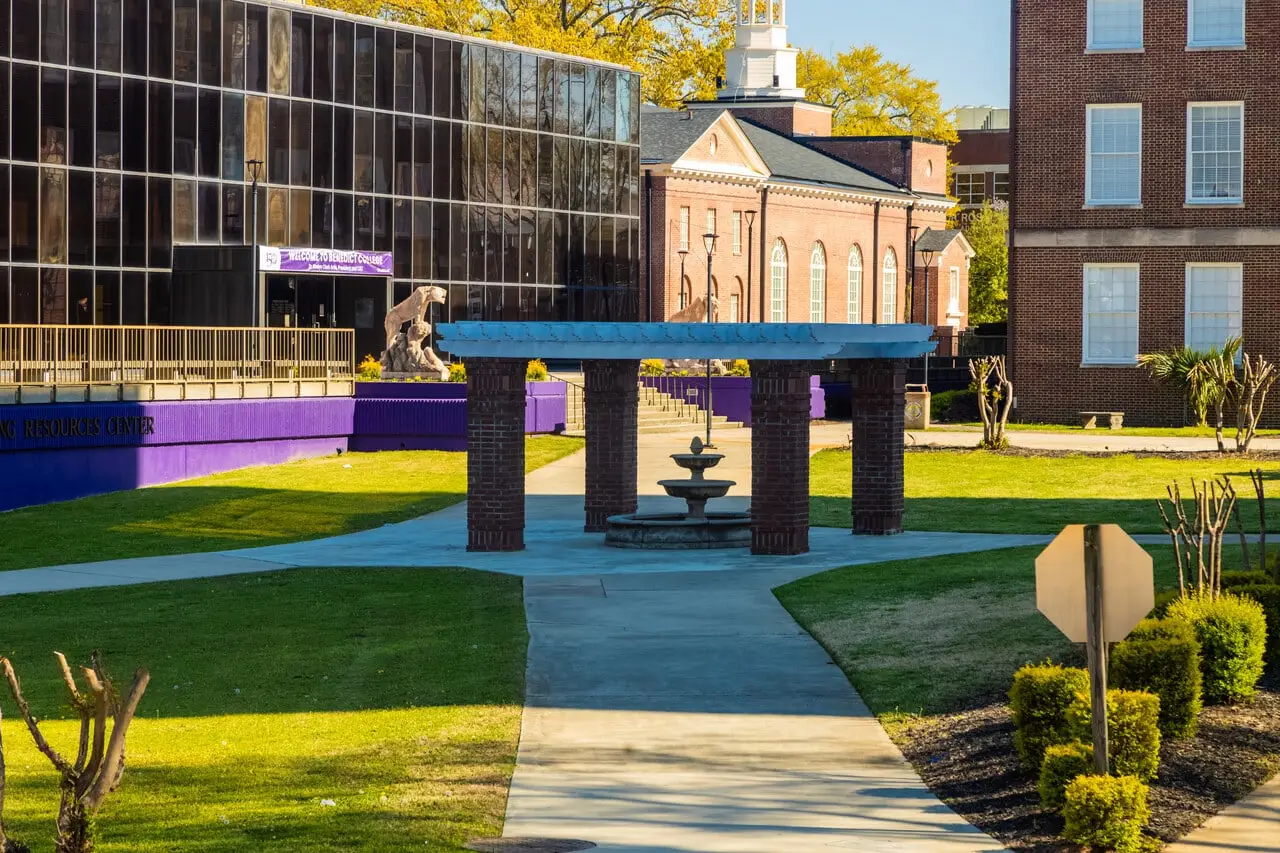

Columbia, South CarolinaSouthern Intercollegiate Athletic Conference
Overview
Mission and culture
Benedict College is a historically Black college in Columbia, South Carolina, combining liberal arts and STEM study with NCAA Division II athletics. Its small, supportive community and accessible admissions make it worth considering if you want an urban campus where academics, athletics and career preparation share attention.
Why athletes choose Benedict College
A supportive HBCU community, accessible admissions and Division II competition give athletes several reasons to consider Benedict.
Fit check
Pick a sport, your position and level, add a test score if you have one, and get an instant read on your chances here. Free, and no account needed.
Academics
Benedict College combines STEM strengths with popular pathways in business and social services, making academic fit, faculty access and career preparation important considerations alongside the demands of your sport.
Academic strength
A composite of graduation rate, earnings after college, how selective admissions are and how hard the coursework is.
Acceptance rate
More selectiveMore accessible
Admissions are highly accessible, so recruits should focus on academic readiness and choosing a program that fits their goals.
Six-year graduation rate
0%100%
Finishing a degree takes real self-direction, making consistent advising and active use of academic support especially important.
Academic difficulty
Rated 2 out of 5
Coursework should be manageable with steady effort and consistent planning around athletic commitments.
Student to faculty ratio
students for every faculty member
Faculty should be reachable, giving you opportunities to seek guidance while balancing coursework and athletic responsibilities.
Median earnings
per year, ten years after starting college
Six years after: $24,908Modest graduate earnings make affordability, practical career preparation and thoughtful major selection especially important for families.
Undergraduate enrollment
undergraduate students
The small undergraduate community offers a close-knit setting where familiar faces can help you build connections beyond your sport.
SAT and ACT scores
Testing is optional, and the score profile suggests an accessible academic entry point, making classroom readiness an important focus for prospective recruits.
Most popular majors
Admissions
For Benedict College, review the application timeline, test policy, application fee and recommendation requirements while coordinating your admissions preparation with conversations about athletic recruitment.
Majors
24 undergraduate majors across 7 academic areas.
No major matches that search.
Campus life
Residential housing, student organizations and athletics-focused school spirit shape a close-knit HBCU community within Columbia's urban setting, with city life nearby.
Athletics
Athletes compete at the NCAA Division II level in the SIAC, with opportunities in sports such as football, basketball and volleyball within a small college community.
Athletic department
Explore how Benedict College supports its NCAA Division II programs through department revenue, recruiting investment and athletic aid, including how resources and athlete participation are distributed across men's and women's programs.
Athletes
Athletic aid
Recruiting spend
Source: the federal Equity in Athletics report, 2025.
Cost
At Benedict College, compare the published attendance cost with the price after grants, then review need-based and merit-based aid to understand what your family might pay.
Average net price
What families pay on average after grants and scholarships, including tuition, housing and fees.
Published tuition
The sticker price a year, before any aid.
Financial aid
Need-based and merit-based aid availableAthletic scholarships, where a program offers them, are awarded by the coaching staff and come on top of these figures.
NIL
NIL rating
Benedict College in Columbia, South Carolina offers a growing name, image and likeness (NIL) environment that fits a smaller HBCU setting. Student-athletes in Benedict College sports can find personalized NIL opportunities by tapping into the supportive local community and regional alumni network.
See the full NIL breakdownStudent fit
The kind of student-athlete who tends to do well at Benedict College.
Benedict College is worth pursuing if you want NCAA Division II competition, a supportive HBCU environment and a small campus community in an urban setting. It suits athletes who value accessible admissions and manageable coursework but are willing to take responsibility for attending class, seeking advising and staying on track toward a degree. Students interested in business, biology or social work can connect those interests with career development support while keeping affordability central to their decision. If you prefer a large campus or highly selective admissions, this may be a less natural fit for your college search.
Who thrives here
Mission Driven CommunityFirst Generation SupportStructure And AccountabilityTime Management MindsetConfidence BuildersQuestions
It is known as a historically Black liberal arts college with a strong focus on student support, community service, and preparing graduates for careers in education, business, public service, and the sciences.
It is located in Columbia, South Carolina, near the downtown area and close to government offices, cultural venues, and other higher education institutions.
Admission is generally considered accessible, with a student-friendly review of applications and an emphasis on overall potential rather than only test scores or class rank.
It offers undergraduate programs in areas such as business, education, social sciences, natural sciences, engineering-related fields, humanities, and arts, along with some pre-professional tracks.
The campus environment is close-knit and community-oriented, with a residential feel, active student organizations, faith-based activities, and events that highlight Black history, culture, and leadership.
It offers a mix of traditional daytime courses along with some online and flexible-format classes, especially in popular majors and general education subjects, to support different student schedules.
Student life includes fraternities and sororities, honor societies, academic clubs, performing arts groups, religious organizations, and campus events such as homecoming, concerts, and cultural celebrations.
It is considered supportive for first-generation students, offering advising, tutoring, mentoring, and TRIO-style services that help with academic adjustment, financial aid navigation, and career planning.
Its teams compete in NCAA Division II, with athletics playing a visible role in campus spirit and regional competition, especially in sports like football, basketball, and track and field.
Student-athletes experience a balance of academics and competition, with access to training facilities, academic support, and structured practice schedules within a Division II environment.
It offers on-campus residence halls and meal plans, giving students the option to live in a residential community and dine in campus facilities that serve daily meals and snacks.
Support services include academic advising, tutoring, writing and math assistance, career services, counseling, and financial aid guidance designed to help students stay on track to graduation.
Compare
Other colleges worth comparing with Benedict College.
Personal faculty access and a close-knit campus appeal to athletes seeking competitive athletics alongside discussion-based learning.
Athletes come for competitive CIAA programs, a close-knit community, accessible admissions and Richmond's urban setting.
Personal instruction, conference competition and a close-knit residential campus give athletes clear reasons to consider Newberry.
A close-knit campus, historically Black identity and Jacksonville setting give athletes distinct reasons to consider competing here.
A small campus, accessible admissions and historically Black identity give athletes distinct reasons to consider studying here.
A close-knit HBCU community and Division II competition appeal to athletes seeking connection alongside their sport.
Career-focused majors, a close-knit community and competitive athletics give recruits practical reasons to consider this suburban campus.
A nurturing HBCU community, reachable faculty and regional Division II competition give athletes reasons to consider Lane.
A close-knit HBCU community, approachable faculty and CIAA competition give athletes reasons to consider this campus.
Reachable faculty, hands-on academics and a rural campus give athletes a personal setting for college competition.
A supportive community and reachable faculty help athletes pursue career-focused study alongside competitive Division II sports.
A small campus, accessible admissions and Conference Carolinas competition offer athletes a practical mix of community and opportunity.
Three ways to start
Pick the option that matches where you are, and we will show you the plan that fits.
Resources