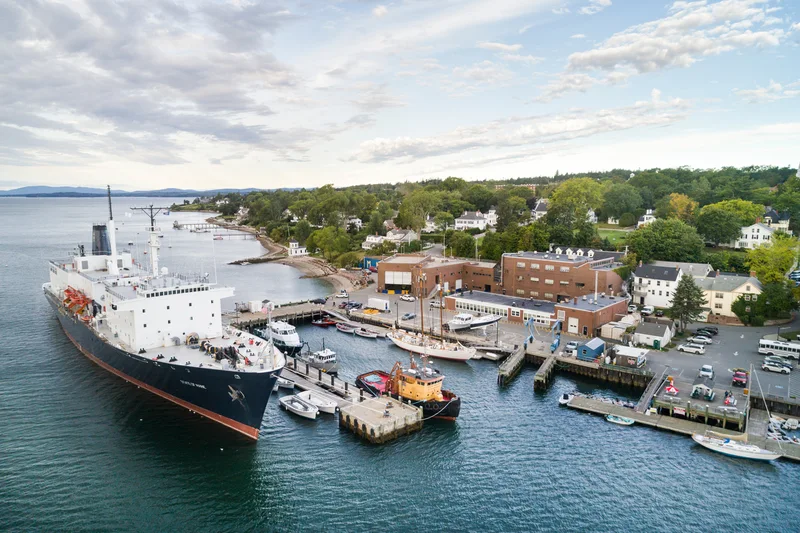

Career-focused maritime training, close faculty access and Division III competition give athletes a distinctive college experience.
- 971
- Students
- 54%
- Admit rate
- $23,414
- Net price
Browse programs
College directoryEvery program, filtered by what fits Sport directoryMen's and women's, every division State directoryPrograms in the states you would play inGo deeper
Major directoryYour major and your sport in one list Camp directoryID camps and showcases at college programs Conference directoryEvery conference and its member colleges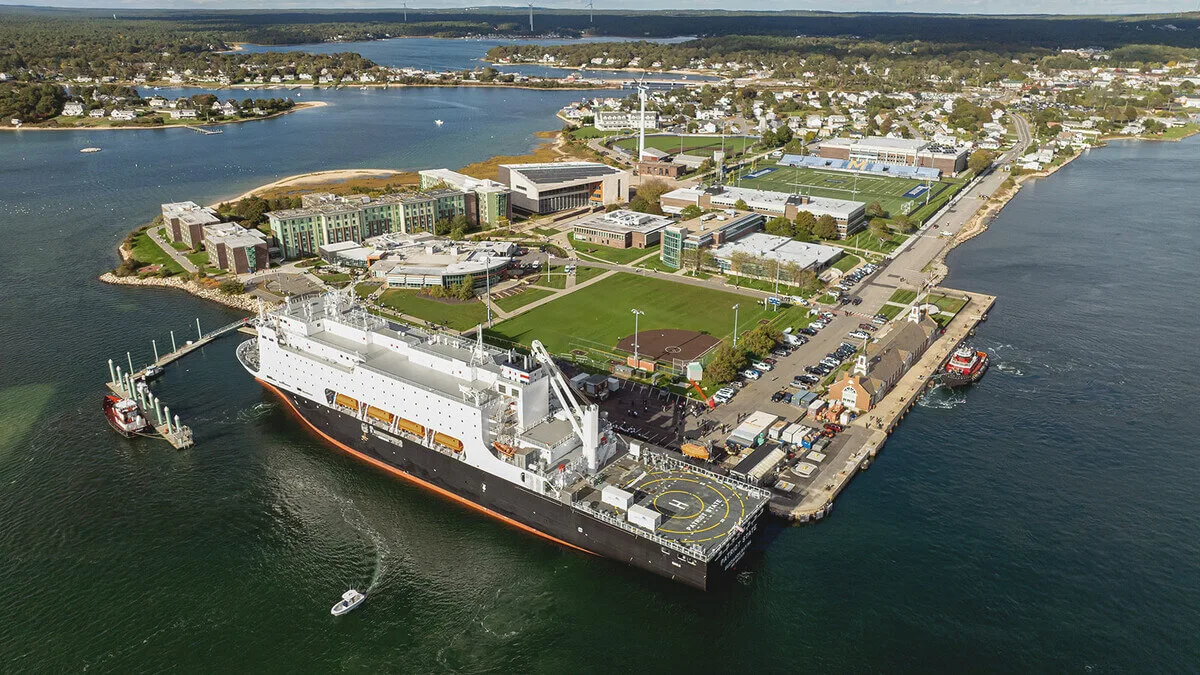

Buzzards Bay, MassachusettsMassachusetts State Collegiate Athletic Conference
Overview
Mission and culture
Massachusetts Maritime Academy is a public maritime college in Buzzards Bay, Massachusetts, combining NCAA Division III athletics with a small, regimented cadet community on the Cape Cod Canal. Its hands-on engineering and transportation programs include sea-term training aboard a dedicated training ship.
Why athletes choose Massachusetts Maritime Academy
Maritime career preparation, structured cadet life and waterfront surroundings give athletes a distinctive college experience.
Fit check
Pick a sport, your position and level, add a test score if you have one, and get an instant read on your chances here. Free, and no account needed.
Academics
At Massachusetts Maritime Academy, maritime-focused academics connect demanding coursework with sea terms, simulators and industry co-ops, giving athletes a practical foundation for engineering, transportation and related careers.
Academic strength
A composite of graduation rate, earnings after college, how selective admissions are and how hard the coursework is.
Acceptance rate
More selectiveMore accessible
Admissions are highly accessible, so recruits should focus on academic readiness and comfort with the academy's structured expectations.
Six-year graduation rate
0%100%
Students have a solid path to graduation, with consistent academic focus important alongside athletics and cadet obligations.
Academic difficulty
Rated 4 out of 5
Demanding coursework requires careful planning alongside practices, competitions and cadet responsibilities.
Student to faculty ratio
students for every faculty member
Faculty should be reachable, giving athletes opportunities to discuss coursework and build personal academic connections.
Median earnings
per year, ten years after starting college
Six years after: $80,424Strong graduate earnings make the career-focused education worth considering alongside your family's actual costs.
Undergraduate enrollment
undergraduate students
The small undergraduate community offers a close-knit daily experience shaped by shared cadet routines and a focused maritime identity.
SAT and ACT scores
The test-optional policy lets recruits decide whether scores strengthen their application, while the typical score profile suggests an accessible academic entry point.
Most popular majors
Admissions
Plan your application to Massachusetts Maritime Academy by reviewing deadlines by admission plan, test policy, application fee and recommendation requirements for the current cycle.
Not binding. Hear back early and decide by May 1.
Majors
6 undergraduate majors across 3 academic areas.
No major matches that search.
Campus life
Daily life centers on a small, close-knit waterfront cadet community, with regimented routines and leadership-focused activities in rural Buzzards Bay.
Athletics
NCAA Division III competition primarily runs through the Massachusetts State Collegiate Athletic Conference. Athletes balance their sport with demanding maritime coursework and a structured cadet lifestyle.
Athletic department
Explore how Massachusetts Maritime Academy supports Division III competition through department revenue, recruiting spending and athletic aid policies, including the distribution of athletes and resources by gender.
Athletes
Recruiting spend
Source: the federal Equity in Athletics report, 2025.
Cost
For Massachusetts Maritime Academy, compare in-state and out-of-state costs with the net price after grants, and consider how need-based and merit-based aid affect your budget.
Average net price
What families pay on average after grants and scholarships, including tuition, housing and fees.
Published tuition
The sticker price a year, before any aid.
Financial aid
Need-based and merit-based aid availableAthletic scholarships, where a program offers them, are awarded by the coaching staff and come on top of these figures.
NIL
NIL rating
Massachusetts Maritime Academy in Buzzards Bay, Massachusetts offers a developing name, image and likeness (NIL) environment that fits its focused, maritime campus and NCAA Division III sports profile. Student-athletes in football, sailing, soccer, lacrosse, and other college sports can explore NIL opportunities that connect with the academy’s specialized reputation and tight-knit community.
See the full NIL breakdownStudent fit
The kind of student-athlete who tends to do well at Massachusetts Maritime Academy.
Massachusetts Maritime Academy suits athletes seeking NCAA Division III competition and focused preparation for maritime, engineering or related careers within a regimented cadet environment. You should be ready for demanding coursework, hands-on training and sea terms, while planning carefully around practices, competition and the responsibilities of structured campus life. The small waterfront community is especially appealing if you want reachable faculty, leadership development and a rural setting rather than a broad urban college experience. Athletes who prefer loosely structured routines or want athletic scholarships may find it less suitable, since the department offers no athletic aid.
Who thrives here
Career DrivenStructure OrientedSelf DisciplinedHands On LearnersWater FocusedQuestions
Massachusetts Maritime Academy is known for its specialized focus on maritime education, engineering, emergency management, and business fields related to the maritime and energy industries, along with a regimented campus lifestyle and strong career preparation for sea-going and shore-side careers.
It is located in Buzzards Bay, Massachusetts, on Cape Cod Canal. The campus has waterfront facilities, training ships, and a compact layout that supports hands-on learning, a regimented environment, and easy access to the water for labs, training, and recreation.
Admission is considered moderately competitive, with emphasis on a solid high school record, especially in math and science, and meeting physical and medical standards for certain majors. Strong preparation, a demonstrated interest in maritime or technical careers, and a complete application help applicants be successful.
Academically, programs are structured but considered manageable for motivated students. The coursework emphasizes technical skills, applied learning, and professional preparation rather than intense theoretical research, and students often find the time management demands of the regimented lifestyle as important as the classroom rigor.
It offers career-focused majors in areas such as marine engineering, marine transportation, facilities engineering, energy systems, emergency management, international maritime business, and related disciplines that prepare students for maritime, energy, logistics, and public safety careers.
Most undergraduates participate in the Regiment of Cadets, which provides a structured, uniformed lifestyle focused on leadership, discipline, and professional development. Some specialized or graduate programs may have different requirements, but traditional full-time undergraduates should expect to be part of the regimented culture.
Student life is highly structured, with daily schedules shaped by the Regiment of Cadets, formation, and training requirements. At the same time, students take part in clubs, community service, maritime-related activities, and waterfront recreation, creating a close-knit community with strong peer support.
The academy competes in NCAA Division III, offering varsity sports such as football, soccer, lacrosse, basketball, baseball, softball, and other men’s and women’s teams. There are also club and intramural options, and student-athletes balance athletics with the demands of academics and the regimented lifestyle.
Student-athletes routinely balance varsity sports with regimental obligations by following structured daily schedules, time management, and academic support resources. Practices and competitions are coordinated with formations, labs, and classes so athletes can meet both athletic and cadet responsibilities.
Graduates typically see strong career outcomes in maritime, engineering, energy, logistics, public safety, and business roles. Many secure job offers before graduation, and the academy’s industry partnerships, co-op experiences, and sea terms help students move directly into well-defined career paths.
Many programs include sea terms aboard training ships, commercial vessels, or structured co-op and internship experiences with industry partners. These practical components are central to the curriculum and give students hands-on skills and professional networking before they graduate.
The academy offers a small-school setting with a tight-knit campus, small class sizes, and direct access to faculty. Students who prefer close community, clear routines, and structured preparation for specific careers often find it a strong fit.
Compare
Other colleges worth comparing with Massachusetts Maritime Academy.
Career-focused maritime training, close faculty access and Division III competition give athletes a distinctive college experience.
Maritime career preparation, waterfront training and Division III competition give athletes a focused college experience.
Honors academics, personal faculty access and waterfront campus life appeal to athletes seeking a close-knit college experience.
A residential community, research opportunities and public college value complement the commitment of Division III competition.
A flexible liberal arts curriculum, NEWMAC competition and access to Boston and Providence give athletes strong reasons to consider Wheaton.
Competitive conference athletics, close mentoring and a residential community appeal to athletes seeking a connected college experience.
Christian community, close faculty connections and access to Boston give athletes reasons to look beyond competition.
Close faculty mentoring, competitive athletics and a residential community help athletes build a balanced college experience.
Close faculty relationships and a residential community help athletes connect their athletic goals with a liberal arts education.
Hands-on academics, SUNY affordability and a small residential community give athletes practical reasons to pursue this campus.
Close mentoring and interdisciplinary study give athletes a personal academic experience alongside competitive Division III athletics.
Close faculty relationships and applied learning complement regional athletic competition within a small residential college community.
Three ways to start
Pick the option that matches where you are, and we will show you the plan that fits.
Resources