Sport-focused academics, accessible admissions and a close-knit community give athletes clear reasons to consider studying and competing here.
- 2,599
- Students
- 72%
- Admit rate
- $30,587
- Net price
Browse programs
College directoryEvery program, filtered by what fits Sport directoryMen's and women's, every division State directoryPrograms in the states you would play inGo deeper
Major directoryYour major and your sport in one list Camp directoryID camps and showcases at college programs Conference directoryEvery conference and its member colleges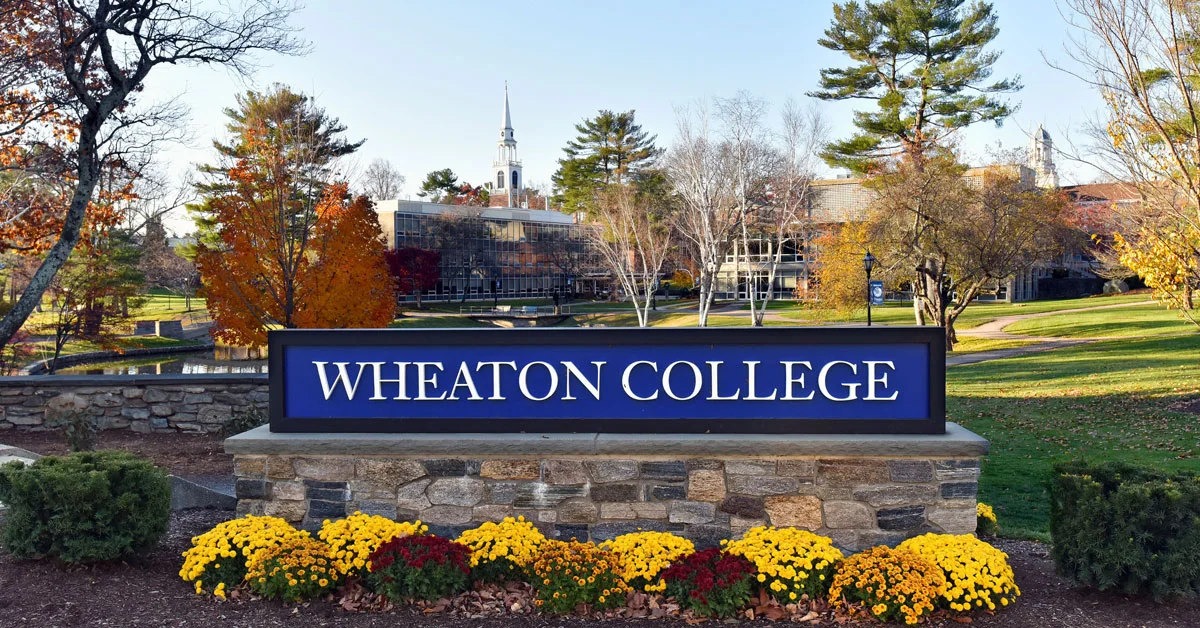

Norton, MassachusettsNew England Women's and Men's Athletic Conference
Overview
Mission and culture
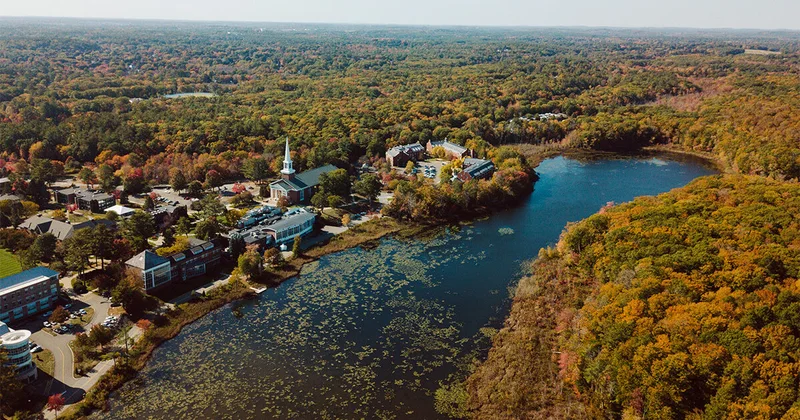
Wheaton College is a private liberal arts college on a large residential campus in Norton, Massachusetts, between Boston and Providence. Its Lyons compete in NCAA Division III in the New England Women's and Men's Athletic Conference, and students follow the flexible Compass Curriculum with more than 100 majors and minors to choose from.
Why athletes choose Wheaton College (Massachusetts)
A flexible liberal arts curriculum, NEWMAC competition and access to Boston and Providence give athletes strong reasons to consider Wheaton.
Fit check
Pick a sport, your position and level, add a test score if you have one, and get an instant read on your chances here. Free, and no account needed.
Academics
Wheaton College offers a flexible liberal arts program through its Compass Curriculum, with strengths in psychology, the sciences and business that make academic fit and exploration important parts of your recruiting decision.
Academic strength
A composite of graduation rate, earnings after college, how selective admissions are and how hard the coursework is.
Acceptance rate
More selectiveMore accessible
Admissions are accessible but competitive enough that strong grades and a challenging course load help recruits stand out.
Six-year graduation rate
0%100%
Students have a solid path to graduation, with consistent academic focus helping athletes stay on track.
Academic difficulty
Rated 4 out of 5
Coursework is demanding, so strong study habits and steady planning around athletic commitments are important.
Student to faculty ratio
students for every faculty member
The personal academic environment offers room for close mentoring and faculty relationships that support your studies.
Median earnings
per year, ten years after starting college
Six years after: $51,029Graduate earnings are strong, giving families a useful reference point for weighing cost against long-term career goals.
Undergraduate enrollment
undergraduate students
The small undergraduate community makes it easy to build familiar connections across campus and beyond your team.
SAT and ACT scores
Wheaton has been test optional for more than 30 years, and the score profile of students who submit suggests strong academic preparation.
Most popular majors
Popular choices such as Business Administration, Psychology and Biology reflect a balance of liberal arts, science and career interests.
Admissions
Prepare your application to Wheaton College by reviewing its early decision, early action and regular decision deadlines, test-optional policy and recommendation requirements alongside your recruiting conversations.
Binding. If admitted, you commit to attend.
Not binding. Hear back early and decide by May 1.
A second binding round with a later deadline.
The standard deadline. Not binding.
Majors
32 undergraduate majors across 6 academic areas.
No major matches that search.
Campus life
Daily life centers on a residential New England campus with student activities, athletics and regular trips and internships in Boston and Providence.
Athletics
The Lyons compete in NCAA Division III in the New England Women's and Men's Athletic Conference, with a wide program that includes baseball, fencing, lacrosse, water polo and women's track and field, which has won multiple national titles.
Athletic department
Explore how Wheaton College supports its NCAA Division III department through athlete participation, program spending and recruiting investment, including how recruiting resources are distributed by gender.
Athletes
Recruiting spend
Source: the federal Equity in Athletics report, 2025.
Cost
At Wheaton College, compare the published cost with the average price after grants, then consider how merit scholarships and need-based aid could shape your family's budget.
Average net price
What families pay on average after grants and scholarships, including tuition, housing and fees.
Published tuition
The sticker price a year, before any aid.
Financial aid
Need-based and merit-based aid availableAthletic scholarships, where a program offers them, are awarded by the coaching staff and come on top of these figures.
NIL
NIL rating
Wheaton College in Norton, Massachusetts offers a developing name, image and likeness (NIL) environment for a Division III program located between two major metropolitan areas. Student-athletes can build personal brands through competitive NEWMAC athletics, a strong record in sports like track and field and baseball, and connections in the Boston and Providence markets.
See the full NIL breakdownStudent fit
The kind of student-athlete who tends to do well at Wheaton College (Massachusetts).
Wheaton College fits athletes who want NCAA Division III competition alongside a flexible liberal arts education in New England. It suits students interested in psychology, the sciences or business who want to explore their interests and design a path through the Compass Curriculum. You should be ready for demanding coursework and comfortable managing a busy schedule on a residential campus. Families should compare need-based and merit-based aid offers carefully, since Division III programs do not award athletic scholarships, and athletes seeking a large university or a religious campus may prefer another option.
Who thrives here
Intellectually CuriousSelf Directed LearnersDivision III CompetitorsScience Minded StudentsNew England ExplorersQuestions
The college is located in Norton, Massachusetts, in southeastern New England. Its suburban campus offers access to both Boston and Providence for cultural activities, internships and career exploration.
It is a private, coeducational liberal arts college focused on undergraduate education. Its academic experience emphasizes small classes, close faculty interaction and learning across disciplines.
No. They are separate institutions with different histories and missions. The Massachusetts institution is a nonsectarian liberal arts college in Norton, while the Illinois institution is a Christian liberal arts college.
Students can pursue undergraduate programs across the humanities, social sciences, natural sciences and arts. The liberal arts curriculum supports exploration across subjects alongside focused study in a major.
Students can expect discussion-based classes, analytical writing and close work with faculty. Academic rigor varies by course and major, with an emphasis on critical thinking and connecting ideas across disciplines.
Yes. Students can pursue faculty-guided research, internships and other forms of experiential learning. These experiences help connect classroom study with professional interests and preparation for graduate school.
First-year applicants generally submit an application, high school transcripts and supporting materials such as recommendations. Admission considers academic preparation alongside other application components; current requirements and deadlines should be confirmed with the admissions office.
Yes. Need-based financial aid and merit scholarships can help eligible students cover educational costs. As a private college, it generally does not charge different tuition rates based on Massachusetts residency.
Student life centers on a residential campus with student organizations, arts activities, athletics and campus traditions. The close-knit setting encourages involvement and connections among students.
The Lyons compete in NCAA Division III, and most varsity teams participate in the New England Women's and Men's Athletic Conference, known as the NEWMAC. Division III athletics emphasizes competitive sports alongside academic participation.
No. NCAA Division III institutions do not award scholarships based on athletic ability. Student-athletes may qualify for need-based financial aid or academic merit scholarships under the same eligibility standards as other students.
Norton experiences four distinct seasons, with cold winters that can bring snow and ice. Fall and spring have variable temperatures, while summers are generally warm and can be humid.
Compare
Other colleges worth comparing with Wheaton College (Massachusetts).
Sport-focused academics, accessible admissions and a close-knit community give athletes clear reasons to consider studying and competing here.
Athletes come for competitive programs, close faculty relationships and a residential community with strong career preparation.
Close faculty relationships and a strong residential community help athletes connect their sport with broader academic interests.
Close faculty relationships and hands-on learning give athletes room to grow alongside competitive Centennial Conference athletics.
Christian community, close faculty connections and access to Boston give athletes reasons to look beyond competition.
Close faculty relationships and Chicago internship access help athletes connect their college experience with career goals.
Athletes choose a residential community that pairs competitive CCIW athletics with professional programs and financial aid options.
Athletes choose a close-knit campus where Division III competition meets career preparation and Boston internship opportunities.
Athletes choose a close-knit campus where competitive athletics, career-focused academics and a service culture share space.
Close faculty mentoring and experiential learning appeal to athletes seeking a small campus with competitive athletics.
Small classes, hands-on academics and Division III competition appeal to athletes seeking a close-knit residential college experience.
Close faculty mentorship and rigorous liberal arts study appeal to athletes seeking an academically focused college experience.
Three ways to start
Pick the option that matches where you are, and we will show you the plan that fits.
Resources