Pathley News
Vanderbilt closes Dare to Grow campaign at $4.5 billion
Vanderbilt University closed its Dare to Grow campaign at $4.5 billion after a record $757 million final year, with major academic and athletics impact.
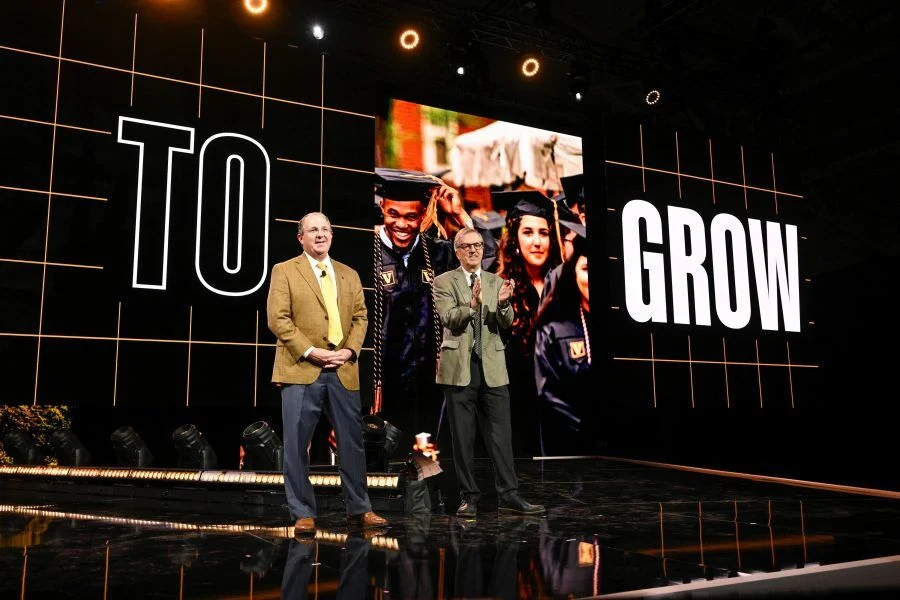
Vanderbilt University reached a defining institutional benchmark on Aug. 25, announcing that its Dare to Grow campaign officially closed on June 30, 2026, with $4.5 billion in donor support. For the Nashville-based university, the total marked the final result of the largest fundraising drive in school history and offered a clear measure of how aggressively the school has been expanding across academics, research, student support, national reach and athletics.
The headline figure was striking on its own, but the closing stretch may have been just as significant. Vanderbilt said it raised $757 million in the campaign's final year alone, a new annual record. According to the university, that total more than doubled the previous year's record and represented a 350 percent increase in annual fundraising performance since 2021. In practical terms, the final phase of the campaign showed not only donor momentum, but also a level of confidence in Vanderbilt's long-term strategy that is unusual even among major Division I institutions.
For readers tracking college growth, institutional positioning and the facilities race that often shapes the broader NCAA landscape, this was more than a ceremonial campaign closeout. Vanderbilt used the announcement to reinforce that one fundraising push had touched nearly every part of the modern university. That included new colleges, expanded scholarships, research infrastructure, a New York City campus, planned growth in Florida and California, and a major athletics investment through Vandy United.
The campaign's scale did not emerge overnight. Since its public launch in spring 2023, Dare to Grow had steadily built toward a result that increasingly looked likely to exceed its original target. In May 2025, Vanderbilt disclosed that it had already surpassed the campaign's initial $3.2 billion goal. The university's Aug. 25 update confirmed that the final total ultimately finished more than $1 billion above that mark, or about 40 percent beyond goal.
That matters because fundraising campaigns of this size are not just about optics. They often function as a public indicator of institutional leverage. When a university can meaningfully outperform a multibillion-dollar target, it signals a donor base that is engaged, a leadership team that has built credibility and a strategic plan that outside supporters believe in.
Vanderbilt reported that more than 140,000 donors participated across the campaign. The school also said alumni support rose 112 percent and parent support increased 450 percent compared with five years earlier. More than 115,000 alumni served as supporters, volunteers and ambassadors during the campaign, a sign that the effort was not limited to a narrow pool of major gift contributors.
That broader participation is important context for understanding why the campaign resonated. In many university fundraising efforts, the largest gifts drive the headlines but the real institutional story sits beneath them. Vanderbilt framed Dare to Grow as a campaign with reach across the full community, from alumni and parents to outside supporters who had no previous family tie to the school.
One of the more revealing pieces of the university's announcement was its emphasis on donor support from people without prior alumni or parent connections. Vanderbilt said interest grew from supporters beyond its traditional base as it pursued a wider national expansion strategy.
That detail helps explain the campaign's timing and message. Vanderbilt was not presenting itself as a university simply improving its existing Nashville campus. It was presenting itself as an institution trying to extend its footprint and influence in multiple markets at once. The university said newer donors supported projects in Nashville as well as across its expanding network in New York City, West Palm Beach, Chattanooga and San Francisco.
On the university's official growth page, Vanderbilt says its New York City campus will welcome students in fall 2026, becoming the institution's first campus outside Nashville. The same growth materials say the university is advancing a planned West Palm Beach campus focused on graduate education and innovation, and plans to establish an academic campus in San Francisco beginning in 2027, subject to regulatory approvals. Those are not small side projects. They represent a redefinition of how Vanderbilt University is positioning itself nationally.
For families and students who study college trajectories closely, this kind of outward growth can matter in several ways. It can influence internship pipelines, alumni networks, faculty recruitment and the visibility of the university in industries far from its home region. It can also affect recruiting in athletics, where institutional reputation and investment often shape how prospects view a program's long-term resources.
Vanderbilt also highlighted reunion philanthropy as a visible example of campaign momentum. The university said more than 3,500 alumni returned to campus from Nov. 7 through Nov. 10, and reunion classes raised more than $69 million.
That figure matters less as a standalone fundraising subtotal and more as evidence of engagement depth. Reunion giving tends to reflect both nostalgia and confidence. Alumni return, reconnect, hear the institution's case for where it is headed and decide whether that vision is credible enough to support. In Vanderbilt's case, the campaign appears to have converted that engagement into material support at a high level.
For a university trying to raise its profile across academics and athletics at the same time, that kind of alumni participation is a powerful asset. It gives administrators and coaches something that cannot be built quickly, a community willing to advocate for the institution as it grows.
Vanderbilt tied the campaign directly to several major academic projects. According to the university, donor support helped fuel the College of Connected Computing, described by Vanderbilt as its first new college in 40 years. The school also pointed to the Jen-Hsun and Lori Huang College of Art, Architecture and Design, the Roberts Academy and Dyslexia Center, the Vanderbilt Institute of National Security, new research facilities, residential colleges and expanded scholarships.
That list is significant because it shows Vanderbilt was not using philanthropy for one isolated capital project. Instead, the university spread campaign support across the kinds of initiatives that can reshape admissions demand, faculty talent, research output and student experience over time.
For an academically selective Division I university, those changes also feed the athletics side indirectly. Coaches recruit into the full institution, not just a locker room or stadium. Recruits and families routinely evaluate academic offerings, support services, housing and the overall direction of the university. A campaign that improves those areas can strengthen a school's appeal even in conversations centered on sports.
Readers looking for broader college context can compare institutional profiles through a college directory or explore schools by geography through a state directory. In Vanderbilt's case, the news stands out because the scale of the fundraising result aligns with visible strategic expansion rather than a single short-term announcement.
Even though the Dare to Grow announcement was university-wide in scope, it carried a clear athletics dimension. Vanderbilt has repeatedly linked the campaign to Vandy United, which the university describes as the largest campaign in Vanderbilt Athletics history.
According to Vanderbilt's growth materials, Vandy United began with an initial $300 million investment in student-athletes and athletics programs. An earlier campaign update said nearly $360 million had been raised for Vandy United by May 2025. The university connected those gifts to the Frist Athletics Village, the Huber Center for men's and women's basketball, planned renovations for Hawkins Field and support services through the Ingram Center for Student-Athlete Success.
The Aug. 25 recap specifically noted that the Huber Center was dedicated on Jan. 24, 2025. That detail helped move the story from fundraising promise to visible delivery. In campaign reporting, donors and outside observers often want proof that announced priorities are becoming actual facilities, services and infrastructure. Vanderbilt used the Huber Center example to show that the campaign's athletics ambitions had already produced tangible results.
The official athletics site at vucommodores.com provides the university's broader sports context, but the key point from this campaign update is straightforward. Vanderbilt said Dare to Grow brought tremendous investment into student-athletes and athletics facilities, tying university-wide philanthropy directly to varsity sports infrastructure.
That matters in the SEC and in Division I more generally. The modern recruiting environment is shaped by far more than wins and losses. Prospects notice training spaces, recovery resources, athlete support centers, nutrition access and the quality of everyday facilities. Universities that can upgrade those areas tend to improve their recruiting floor, even before the competitive results fully catch up.
Because the source story did not center on one specific sport, the athletics implications are best understood at the department level. Vanderbilt sponsors a wide range of Division I teams, and improvements tied to Vandy United can influence how the broader Vanderbilt men's basketball program and other Commodore teams are perceived by recruits, families and peer institutions.
The Huber Center, for example, has direct relevance to basketball, but the larger message extends beyond one roster. It signals that Vanderbilt is willing to invest in the competitive framework around its teams. Likewise, planned work at Hawkins Field speaks to baseball, while support services through the Ingram Center affect student-athletes across sports.
For recruits, this kind of institutional commitment often becomes part of a school's long-range identity. A program does not need to promise immediate transformation for recruits to notice momentum. What matters is whether the university is creating an environment that looks sustainable, well-resourced and aligned with the demands of high-level college athletics.
That is also why team-level research has become more important for athletes trying to understand fit. Comparing facilities direction, roster needs and conference context can help families move beyond headline brand names and assess where a program is truly headed. A broader sport directory can help place programs in that larger landscape, especially when a school's institutional growth is affecting multiple teams at once.
In many ways, the significance of the Aug. 25 announcement was symbolic as much as financial. Vanderbilt closed the campaign on June 30, but the public release of the final total just before the fall semester gave the university a chance to define the narrative entering a new academic and athletics year.
The school said the campus community will celebrate Dare to Grow this fall, including during Reunion Weekend. That timing reinforces the idea that the campaign is being treated as a milestone in Vanderbilt's institutional story, not just a development office accomplishment.
It also gives the university a fresh benchmark for what scale now looks like at Vanderbilt. Raising $4.5 billion changes expectations. It can affect what future campaigns target, what projects are considered realistic and how peer institutions interpret Vanderbilt's ambitions.
From an external perspective, this is where the story gets especially relevant. Universities increasingly compete on multiple fronts at once, academic reputation, research output, geographic reach, student experience and athletics infrastructure. Vanderbilt's Dare to Grow result suggests the institution believes those categories should reinforce one another rather than develop separately.
Vanderbilt's announcement also fits into a wider higher education picture in Nashville, a city with several notable institutions. Readers tracking college options in the same market may also want to follow Belmont University, Lipscomb University and Tennessee State University. Each operates in a different institutional lane, but all are part of the same regional education ecosystem.
For athletics-specific context, Nashville also offers different program models and conference environments through teams such as Belmont men's basketball, Lipscomb men's basketball and Tennessee State football. Those comparisons can be useful for understanding how universities in the same city pursue different combinations of academic positioning, athletic identity and donor support.
The final-year total of $757 million may prove to be one of the most revealing numbers in the whole campaign. It showed that Vanderbilt did not simply coast to the finish after surpassing its initial goal in 2025. Instead, the university accelerated. More than doubling the prior year's record and posting a 350 percent increase in annual fundraising performance since 2021 suggests a campaign that built credibility as it progressed.
That pattern is often a sign that donors saw enough evidence to deepen their support late in the cycle. It can reflect confidence in leadership, successful visible projects, momentum from peer giving or a growing belief that the university has entered a different tier of ambition.
At Vanderbilt, all of those explanations seem plausible based on the projects the university emphasized. New colleges, expanded campuses, major athletics work and broad alumni engagement gave the campaign a narrative that extended well beyond one headline number.
For people who follow the recruiting landscape closely, this story is a reminder that roster building does not happen in isolation from institutional investment. Coaches recruit within the environment their university creates. When a school expands scholarships, opens new academic pathways, adds student support resources and modernizes athletics facilities, it changes the pitch that coaches can make and the questions families ask on visits.
Vanderbilt's Dare to Grow campaign does not guarantee a specific competitive outcome in any one sport. Fundraising totals do not automatically turn into conference championships or instant recruiting wins. But they do matter because they reveal how seriously an institution is investing in its future and how much capacity it has to support that vision over time.
That is what makes this announcement more than a routine development office milestone. Vanderbilt finished its signature campaign at $4.5 billion, with a record $757 million in the final year, after already surpassing its original goal by May 2025. The result connected academic expansion, national campus growth and athletics investment in one unified message. Going forward, the most important question is not whether the number is impressive. It is how effectively Vanderbilt turns that scale of support into sustained results across the university and across its Division I programs.
Sources: Vanderbilt University News, Aug. 25, 2026 campaign announcement, Vanderbilt University News, May 15, 2025 campaign update, Vanderbilt growth initiatives page.
Rosters, coaches, and division breakdowns for every NCAA and NAIA program we track.