Pathley News
University of Northern Colorado opens Colorado's third medical school
University of Northern Colorado opened Colorado's third medical school on July 24, launching the state's first public College of Osteopathic Medicine.
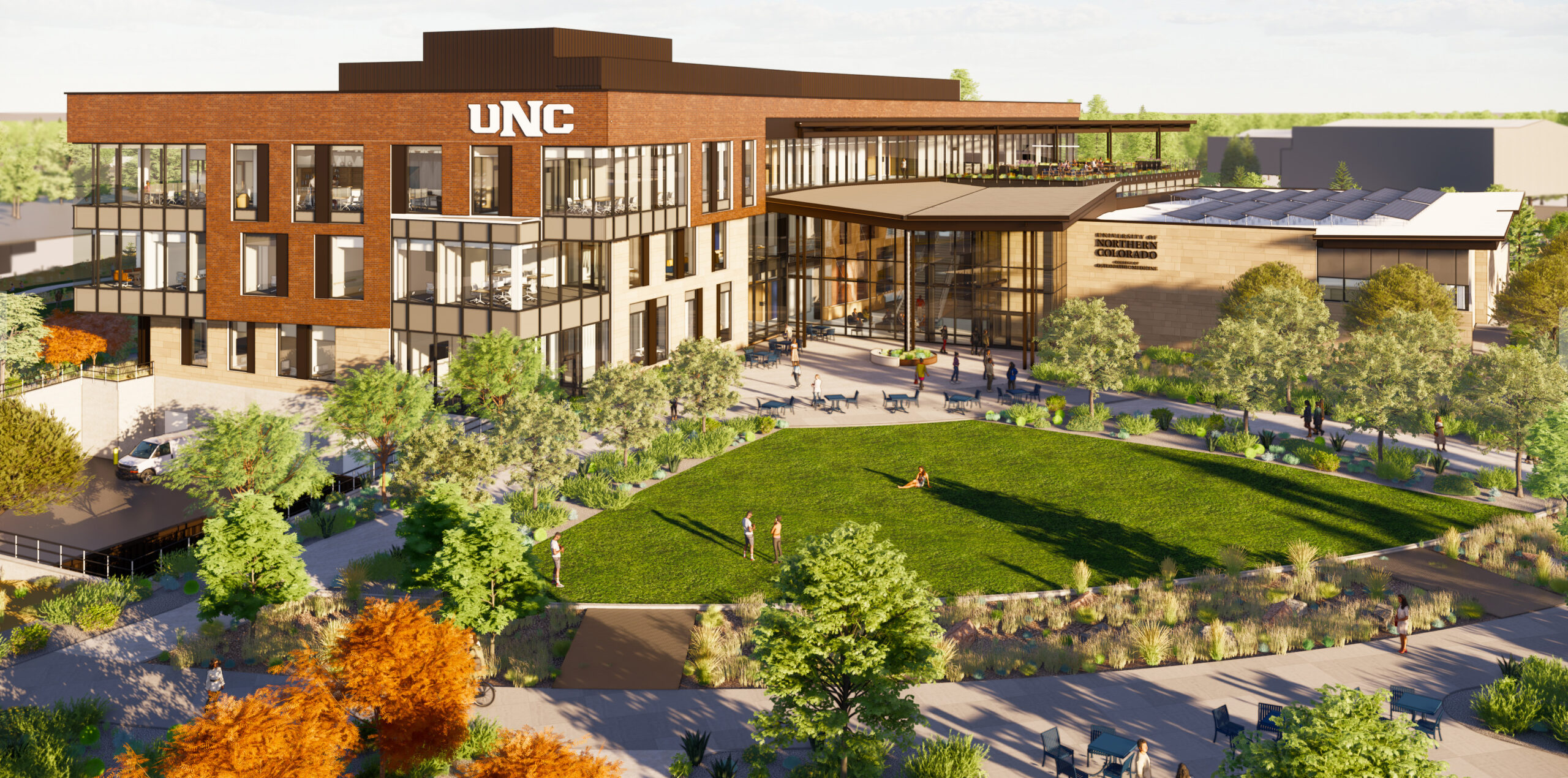
On July 24, 2026, the University of Northern Colorado officially opened its College of Osteopathic Medicine in Greeley, a move that immediately became one of the most significant institutional developments in the university's modern history. The celebration was not only a ribbon-cutting for a new building. It was the launch of a fully operational medical college, complete with its first students, its first White Coat Ceremony, and a stated mission tied directly to Colorado's physician shortage.
For a university better known nationally through its Division I profile and long academic history, the opening represented a high-stakes academic expansion with statewide implications. School leaders described the new college as a continuation of the institution's service mission, arguing that just as the university was founded in 1889 to prepare teachers for communities across Colorado, this new chapter is meant to help address another pressing need, access to doctors, especially in primary care and rural areas.
The pace of the project also drew attention. New medical schools are typically multiyear efforts shaped by regulatory reviews, fundraising campaigns, construction timelines, faculty hiring, and accreditation hurdles. In Northern Colorado's case, the path from concept to construction to launch moved unusually quickly, culminating in a public opening attended by more than 1,000 registered guests, including Colorado Gov. Jared Polis, university president Andy Feinstein, state and local officials, donors, health care partners, faculty, staff, students, and community members.
The most striking part of the July 24 opening was its immediacy. On the same day as the grand opening celebration, UNC also held the inaugural White Coat Ceremony for its first class of medical students. That class includes 80 students, who began classes on Monday, July 27. The school's first graduating class is expected in 2030.
That timeline matters because it shifts the story from aspiration to execution. Many higher education announcements are framed around future possibilities. This one arrived with students already enrolled and instruction beginning within days. For the University of Northern Colorado, that gave the event unusual weight. It was not simply a promise about where the university hopes to go. It was evidence that the institution had already taken a major step into a new academic and professional space.
The university's official coverage of the opening emphasized that point, framing the moment as the beginning of a new chapter for both UNC and the broader state health care landscape. In that sense, the White Coat Ceremony carried almost as much symbolic value as the ribbon-cutting itself. Buildings matter, but medical education only becomes real when students enter the profession's training pipeline.
The new college is notable not just because it exists, but because of what it adds to the state's higher education and health care map. UNC's program is Colorado's third and newest medical college. It is also the first public College of Osteopathic Medicine in the state.
That distinction gives the opening more than local significance. Osteopathic medicine occupies a distinct place in American medical training, with many programs emphasizing whole-person care, community health, and primary care practice. According to the American Association of Colleges of Osteopathic Medicine, osteopathic physicians make up one of the fastest-growing segments of the physician workforce in the United States, and they are especially prominent in primary care pathways.
UNC leaders have tied that osteopathic focus directly to Colorado's workforce needs. Founding dean Beth Longenecker has said the program was intentionally developed with the reality of doctor shortages in mind, especially in underserved communities. Reporting around the opening noted that more than half of osteopathic physicians go into primary care, which makes the model especially relevant in a state where many counties continue to struggle with access to health professionals.
Another point the university has emphasized is location. The new College of Osteopathic Medicine is the only medical college in Colorado situated on a traditional college campus. That setup, according to university officials, creates opportunities for interdisciplinary learning with programs in behavioral sciences, public health, communication, business, education, and other health-related fields. In practical terms, UNC is arguing that future physicians can train in an environment that is more integrated with broader campus life and adjacent academic disciplines than is typical at stand-alone or separately situated medical campuses.
The building itself reflects the seriousness of the project. The new medical college facility spans 110,000 square feet and was designed for current medical education models. University descriptions of the building highlight advanced simulation labs, anatomy spaces, and active-learning areas, all core pieces of contemporary physician training.
At full operation, the college is planned to enroll 150 medical students annually. That number is important because it suggests the opening class of 80 students is only the first stage of a larger long-term plan. Once the college reaches steady-state enrollment, UNC will occupy a much more substantial position in Colorado's medical education pipeline than the inaugural class alone might indicate.
The financing behind that expansion also helps explain why the opening landed as a major statewide story. In 2024, Colorado lawmakers approved House Bill 24-1231, allocating $127.5 million for construction, startup, and accreditation expenses tied to the college. The state also committed roughly $41 million from its reserve for escrow requirements related to accreditation.
On the philanthropic side, The Weld Trust contributed a $25 million gift, the largest single donation in University of Northern Colorado history. The university has said total donor support for the initiative reached $31 million. Officials have described the overall effort as requiring at least a $200 million investment.
Those figures place the medical school well beyond the scale of an ordinary campus capital project. They also show how the initiative sits at the intersection of higher education policy, public health planning, and regional economic development. For readers looking for broader institutional context beyond one campus, a college directory can be useful for comparing how different schools build specialized academic programs, but UNC's move stands out because of its size and public purpose.
The strongest argument for the new college has always been workforce need. University and state officials have repeatedly pointed to Colorado's shortage of doctors, particularly in primary care and rural communities. UNC cited federal data showing that in 2023 all but three of Colorado's 64 counties lacked enough primary care health professionals. Reporting on the launch also referenced a projection that the state could be short about 2,400 doctors by 2030.
That context is central to understanding why the opening drew attention well beyond Greeley. Medical schools do not just educate students. They shape where future doctors train, where they complete clinical rotations, what specialties they pursue, and in many cases where they eventually practice. If UNC succeeds in steering even a modest share of graduates toward underserved regions, the effect could be meaningful over time.
The incoming class appears designed with that mission in mind. According to the university, 54 percent of the first class comes from Colorado, representing nine counties. About four in ten students come from towns with fewer than 50,000 residents. The program also plans rural clinical rotations across Colorado's Eastern Plains, with the idea that repeated exposure to smaller communities may improve the odds that graduates remain in those areas after training.
This is a familiar theme in medical workforce policy. The Association of American Medical Colleges has long documented national physician shortages and the importance of clinical training locations in influencing eventual practice patterns. States seeking to improve rural doctor supply often try to recruit students with rural backgrounds, place them in rural rotations, and align training with primary care pathways. UNC's model appears to fit squarely within that approach.
For UNC, the College of Osteopathic Medicine is more than a response to state need. It is also an institutional redefinition. Universities can spend decades gradually expanding their academic profile, but adding a medical school changes public perception quickly. It affects faculty recruitment, research identity, donor attention, legislative relationships, and how the institution is discussed in both higher education and civic circles.
That helps explain why the university framed the July 24 event as one of the biggest milestones in school history. The University of Northern Colorado has long had a strong identity around educator preparation and public service. The medical college does not replace that history, but it broadens it in a dramatic way. It signals that UNC intends to be a larger player in professional education and public-impact training than before.
There is also a geographic dimension to the story. Greeley is not traditionally the first place many outsiders associate with a new medical school. That fact may ultimately become part of the college's identity. By locating the program in northern Colorado and tying it to regional and rural health care needs, UNC is making an argument that high-level medical education does not need to be concentrated only in the largest urban centers to have statewide impact.
University officials have not discussed the school solely through the lens of physician supply. They have also presented it as a long-term economic engine. An impact study cited by the university projected a $1.4 billion boost to Colorado's economy over 20 years and at least $197.2 million in added annual income after that period.
Economic impact projections should always be read carefully, since such studies depend on assumptions about spending, job creation, and downstream professional activity. Still, the broader logic is easy to see. Medical schools attract faculty, researchers, staff, students, clinical partnerships, and capital investment. They can become anchors for regional health systems and for adjacent sectors tied to research, training, and service delivery.
That matters for UNC because it reinforces the idea that the College of Osteopathic Medicine is not a niche addition. It is a project intended to influence the university's stature, the local economy, and Colorado's public health system at the same time.
In a national college environment where many institutions are navigating enrollment pressures, budget constraints, and questions about long-term differentiation, UNC's move is striking. Rather than shrinking ambition, the university made a large public bet on a professional field with clear workforce demand. It is a risky move in the sense that medical education requires sustained funding, accreditation stability, faculty depth, and strong clinical partnerships. But it is also a strategic one because it ties the institution to a shortage area that is unlikely to disappear soon.
For families and students trying to understand how colleges evolve, a sport directory or academic search resource often shows schools through athletics or major offerings first. UNC's medical college launch is a reminder that institutional identity can change quickly when a university invests in a major new program. Even at schools with established Division I recognition, academic developments can reshape reputation just as much as athletic success can.
The immediate questions now shift from opening-day ceremony to execution. Can UNC scale from an inaugural class of 80 students toward its planned annual enrollment of 150 while maintaining program quality and accreditation benchmarks? Can it build the rural clinical rotation network needed to support its mission? And over the next several years, will the composition of incoming classes continue to reflect the goal of serving Colorado communities that have historically lacked enough doctors?
Another important milestone will be outcomes. The university's first graduating class is expected in 2030. From there, observers will look closely at residency placements, specialty choices, and where graduates ultimately practice. If significant numbers enter primary care and remain in Colorado, especially in underserved areas, the program's core public argument will gain real force.
There is also the campus-level question of how deeply the medical college integrates with other UNC programs. University leaders have highlighted opportunities for interdisciplinary learning across health and non-health fields. If that vision takes hold, the College of Osteopathic Medicine could become not just a stand-alone professional school but a driver of broader academic collaboration across the institution.
The July 24 opening of UNC's College of Osteopathic Medicine stands out because it combined symbolism with immediate operational reality. The university cut the ribbon, welcomed its first 80 students in a White Coat Ceremony, and began classes within days. That sequence turned a long-planned initiative into a present-tense institutional shift.
For the University of Northern Colorado, the significance goes beyond one new building in Greeley. This is a public university making a major academic leap, backed by state funding, philanthropic support, and a mission rooted in Colorado's doctor shortage. The real measure of success will come over the next several years, when the focus moves from grand opening headlines to enrollment growth, graduate outcomes, rural service, and whether the state's newest medical college can deliver on the broad expectations that accompanied its launch.
Sources: University of Northern Colorado official announcement, UNC grand opening event page, UNC report on House Bill 24-1231 funding, Colorado Public Radio coverage.
Rosters, coaches, and division breakdowns for every NCAA and NAIA program we track.