Pathley News
Tennessee basketball names Axle Logistics first jersey patch partner
Tennessee basketball announced Axle Logistics as its first jersey patch partner, tying a five-year deal to athlete influencer marketing efforts.
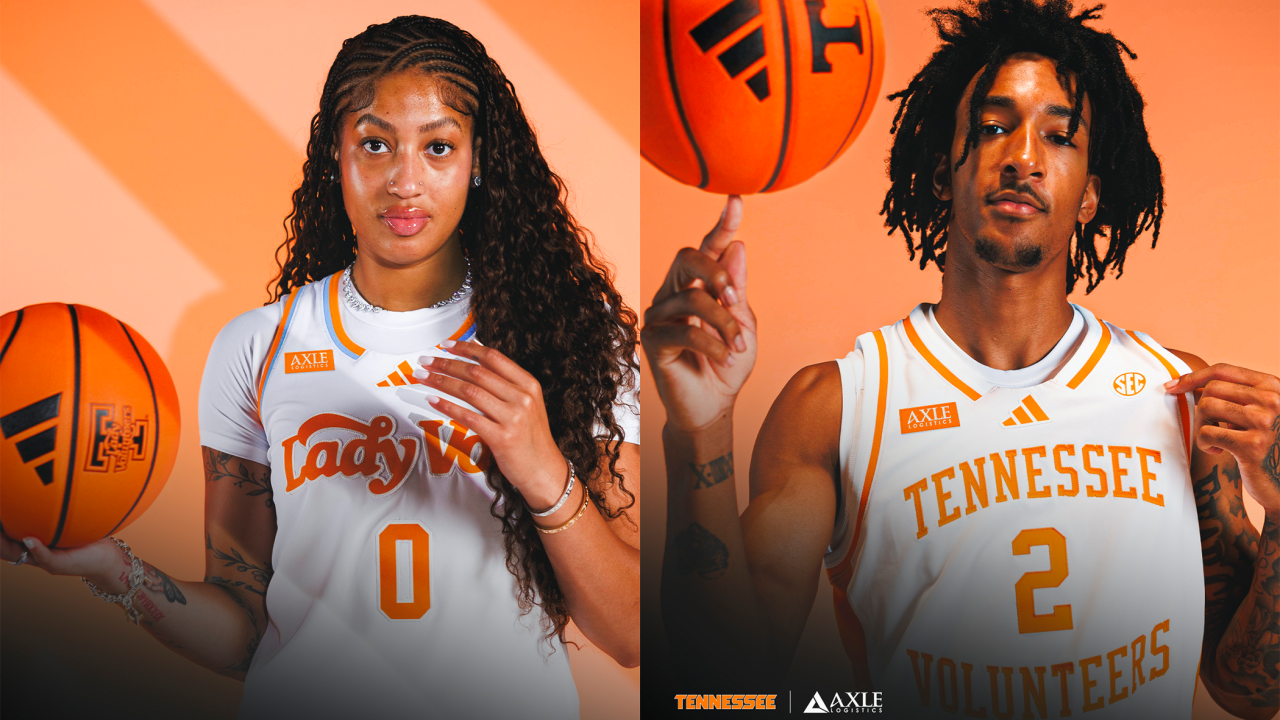
On Aug. 18, 2026, the University of Tennessee, Knoxville announced a first for its athletics department, naming Knoxville-based Axle Logistics the first official jersey patch partner for both its men's basketball team and the Lady Vols. Under the five-year agreement, the Axle Logistics logo will appear on game uniforms worn by both programs, creating a new and highly visible sponsorship asset for one of the most recognizable brands in SEC athletics.
That headline alone would make the move notable. But Tennessee framed the agreement as something broader than standard jersey advertising. According to the university's announcement, the partnership also includes a substantial investment in student-athlete influencer marketing initiatives, a detail that places the deal directly inside one of the most important conversations in modern college sports. In practical terms, Tennessee is connecting a uniform sponsorship with athlete brand-building, professional networking and real-world marketing experience.
For recruits, families, coaches and administrators across Division I basketball, that makes this more than a cosmetic uniform change. It is a signal about where major athletic departments think the marketplace is heading. The Tennessee men's basketball team and the University of Tennessee, Knoxville are now at the center of an evolving model in which sponsorships are expected to do more than generate revenue. They are also being asked to intersect with NIL, athlete visibility and long-term program building.
Tennessee described Axle Logistics as the first official jersey patch partner in the history of Tennessee Athletics for men's and women's basketball. That matters because basketball uniforms are among the department's most visible assets. Every patch placement carries branding value, but it also carries symbolism. When a department chooses its first patch partner, it is not just selling inventory. It is deciding which relationship will help define the public debut of that inventory.
In this case, Tennessee emphasized that Axle Logistics fits the department's stated values around innovation, integrity and community. Vice Chancellor and Director of Athletics Danny White said the school wanted a partner aligned with those priorities. The university also highlighted another central part of the story, Axle's connection to Knoxville and to Tennessee alumni.
Axle Logistics was founded by Tennessee alumni Jon Clay and Drew Johnson. Tennessee said the company has grown into one of the largest employers of UT graduates, giving the agreement a stronger local and alumni-based foundation than a typical national sponsorship. Instead of presenting the arrangement as a distant corporate branding deal, Tennessee positioned it as a Knoxville-rooted collaboration between two institutions with overlapping ties to the city, campus and alumni network.
That local framing is important in the current college athletics climate. Sponsorships tied to local identity can carry more credibility with fans and more resonance within athletic departments. They suggest that the partnership is intended to be embedded in the school's broader ecosystem, not simply layered on top of it.
The most consequential part of Tennessee's announcement may be the influencer marketing piece. The school said the agreement includes a substantial investment in student-athlete influencer marketing initiatives, creating opportunities for athletes to build personal brands, expand professional networks and gain experience in marketing and business development.
That language is significant because it reflects how NIL has matured. Early public discussion around NIL often centered on endorsement opportunities in a broad sense. Now, athletic departments and their partners are becoming more specific. The Tennessee announcement did not just mention athlete compensation or exposure in general terms. It described business-oriented opportunities connected to marketing, networking and professional skill development.
For a flagship SEC basketball environment, that matters on several levels:
The NCAA's broader NIL environment has made this kind of partnership more relevant than ever. The NCAA's NIL overview has documented how athlete compensation and brand activity have reshaped the college sports landscape. Tennessee's Axle Logistics deal shows one version of what the next phase looks like, a department-level sponsorship that visibly touches uniforms while also creating direct athlete-focused marketing opportunities.
For anyone tracking recruiting trends, the message is clear. Major programs are no longer treating NIL-related support as an optional extra. They are baking it into how they structure partnerships, communicate value and compete for talent.
Tennessee's release made a point of presenting the agreement as both strategic and cultural. White said the department sought a partner that matched Tennessee's focus on innovation, integrity and community. That phrasing positioned the deal as part of a broader institutional direction rather than a one-off commercial transaction.
Men's coach Rick Barnes and women's coach Kim Caldwell also endorsed the agreement in the university's release. Their support matters because basketball coaches are ultimately responsible for the day-to-day health of the programs most affected by the partnership. By publicly backing the deal, both coaches reinforced Tennessee's internal message that this is not simply about monetizing a jersey surface. It is about strengthening the environment around the program.
The coaches also emphasized Axle's Knoxville base and Tennessee alumni roots. Those details helped the school frame the sponsorship as a natural fit for the basketball programs and not just a branding overlay. In college athletics, especially in the SEC, authenticity matters when new commercial elements are introduced. Tennessee appears to understand that, and its messaging leaned heavily on the idea that this partnership belongs to Knoxville as much as it belongs to the business side of athletics.
Axle Logistics describes itself as a non-asset-based third-party logistics firm offering truckload, less-than-truckload, intermodal and warehousing services across the continental United States, Canada and Mexico, according to the company's official about page. That footprint gives the company a profile larger than a purely local sponsor, even though Tennessee's announcement stressed its Knoxville roots.
That mix, local identity plus regional and national growth, likely made Axle a particularly appealing partner. It gives Tennessee a hometown narrative while still aligning with a company that has scale and ambition. For the sponsor, the value is straightforward. The logo will appear on uniforms worn by two high-profile basketball programs with substantial television exposure and fan interest. For Tennessee, the added value appears to be the ability to connect that visibility to athlete marketing initiatives and local alumni ties.
Axle's co-founders said the relationship was meaningful because it connects the company with a program that develops leaders on and off the court, while also supporting the company's workforce pipeline and interest in investing in future high performers. That language mirrors a theme now common in higher-level college athletics partnerships. Businesses are not only buying exposure. They are increasingly trying to align with talent ecosystems.
This is not a distant branding announcement with an unclear launch date. Tennessee provided specific debut windows for both programs, giving the story immediate relevance heading into the 2026-27 season.
The Tennessee men's basketball team is scheduled to wear the Axle Logistics patch for the first time on Oct. 15 in an exhibition against Xavier at Food City Center. The Lady Vols are set to debut the patch on Oct. 27 in an exhibition against Florida A&M.
Those dates matter for two reasons. First, they move the agreement from abstract policy news into something fans, recruits and media will see almost immediately. Second, they ensure that the partnership becomes part of the visual identity of both programs right at the beginning of the season buildup, when preseason attention is often high.
In the modern college sports cycle, visibility timing matters nearly as much as visibility itself. A launch attached to preseason exhibitions allows Tennessee to introduce the patch in a controlled but public environment, before the full intensity of regular-season conference play begins.
The timing of the announcement also connects to a larger business picture inside Tennessee Athletics. Just eight days before the Axle Logistics news, Tennessee Athletics announced that the Tennessee Fund raised a record $175.5 million in fiscal year 2026, the highest fundraising total in school history. In that release, White said self-generated revenue is more important than ever as college athletics continues to evolve, according to Tennessee Athletics.
Seen alongside that fundraising record, the patch deal looks like part of a coordinated effort to diversify how the department generates resources. Traditional pillars such as donor support, ticket sales and conventional sponsorships remain important, but Tennessee appears to be pushing into more visible and athlete-connected commercial categories as well.
That strategy aligns with what many power conference departments are confronting. Competitive success at the top of Division I increasingly depends on financial flexibility, creative partnerships and the ability to adapt quickly as the rules and economics of college sports shift. A jersey patch on its own is one thing. A jersey patch tied to influencer marketing and rolled out in a period of major fundraising momentum says more about a department's long-term posture.
For the University of Tennessee, Knoxville, the public message is that staying nationally competitive now requires a broader commercial toolkit. This agreement is one example of how that toolkit is expanding.
For recruits, this development offers a practical reminder that the evaluation of a college basketball program now extends well beyond coaching staff, conference affiliation and depth chart. Those elements still matter. But so do the business structures around the program.
When a school publicly links a major corporate partnership to student-athlete influencer marketing, it is telling prospects that athlete brand support is part of the ecosystem, not something left entirely to chance. That does not guarantee identical outcomes for every athlete, and it should not be read that way. But it does suggest that the school is intentionally building relationships that can intersect with player visibility and development off the court.
Families trying to understand how schools differ on this front often look for public indicators. Partnerships like this are one of them. Another is how programs describe their athletes' role in the school's broader athletics brand. For athletes comparing options nationally, tools such as a college directory or a sport directory can help frame the landscape, but the underlying takeaway from Tennessee's move is bigger than any one search method. Top-level basketball recruiting is now deeply connected to how departments think about branding, business and visibility.
That is especially true in the SEC, where the pressure to remain competitive across multiple sports keeps rising. Basketball programs that can present a strong on-court identity and a sophisticated off-court ecosystem may have an advantage in attracting and keeping talent.
One of the most interesting aspects of the announcement is that Tennessee did not rely solely on novelty. Yes, the first jersey patch partner angle is important. But the university consistently returned to the Knoxville and alumni ties in describing why this partnership made sense.
That emphasis may prove important because local credibility can help commercial changes land more smoothly with a fan base. In college athletics, branding decisions are rarely judged only by revenue logic. Fans often care whether a move feels consistent with the institution's identity. Tennessee's messaging suggests the department understood that, and it built its explanation around shared roots and mutual investment in the community.
There is also a workforce and career-development dimension here. Tennessee said Axle has become one of the largest employers of UT graduates. Axle's co-founders referenced leadership development and future high performers. Those details help explain why this agreement was presented as more than signage. It sits at the intersection of athletics branding, alumni engagement, local business identity and athlete opportunity.
For readers looking at the wider college landscape in Knoxville, another institution in the city is Johnson University. It is a much different athletics environment than Tennessee's SEC stage, but its presence is a reminder that Knoxville's college ecosystem includes multiple types of programs and student-athlete paths. That broader context can matter for families comparing size, visibility, campus setting and athletic model across schools in the same region.
The next step is simple but meaningful, how the partnership shows up once competition begins. The men will debut the patch Oct. 15 against Xavier, and the Lady Vols will follow Oct. 27 against Florida A&M. Those exhibitions will turn a business announcement into an on-court reality.
Beyond that, the bigger question is whether Tennessee's structure becomes a model others copy. The patch itself is visible, but the real significance may be the combination of revenue generation, local corporate alignment and direct investment in student-athlete influencer marketing. If that formula proves effective, it would not be surprising to see more Division I basketball programs pursue similar arrangements.
For Tennessee, the deal reads as a public statement about where the department believes elite college athletics is going. For recruits, it is another example of how program value is increasingly defined by the total environment around a team, including the business relationships that can shape athlete opportunity. And for the wider college basketball world, this is one more sign that the line between branding strategy and roster-building context continues to get thinner as the 2026-27 season approaches.
Rosters, coaches, and division breakdowns for every NCAA and NAIA program we track.