Insight
Tarleton State Football Stuns Bowling Green for Another FBS Win
Tarleton State football beat Bowling Green 20-13 for its second straight FBS win, powered by Tylan Hines and a late goal-line stand.
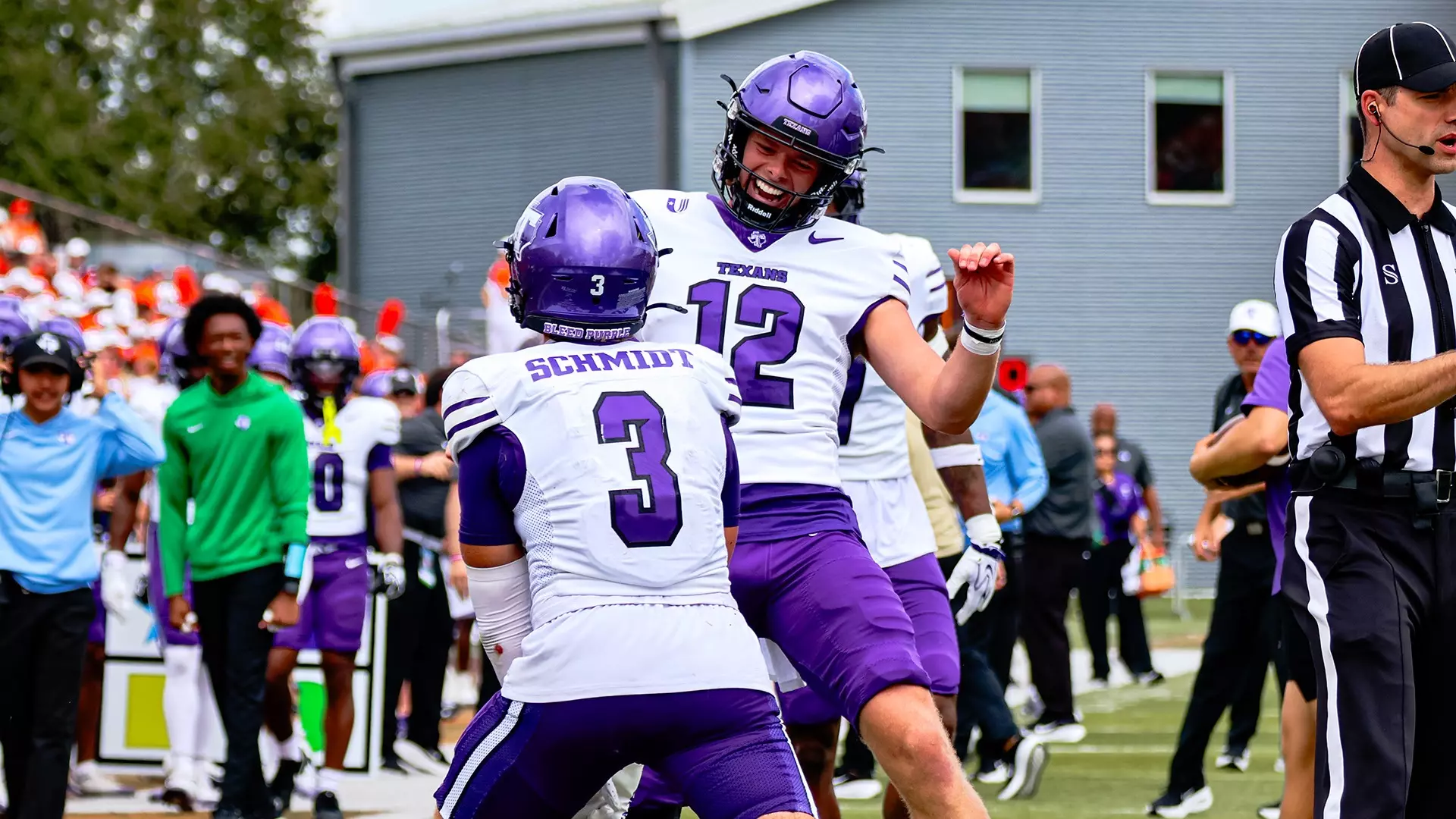
Tarleton State University delivered one of the defining early results of the 2026 college football season on Sept. 5, beating Bowling Green State University 20-13 on the road in Week 1. For an FCS program already carrying national expectations, the result was about much more than one upset. It gave the Texans a second straight win over an FBS opponent, pushed them to 2-0, and strengthened the idea that Tarleton State football has become a real factor in the Football Championship Subdivision race.
Coming into the game, the Texans were ranked No. 5 in the AFCA FCS coaches poll. By the end of the weekend, they had become one of the clearest national stories in the subdivision. Last season's double overtime win over Army had already put the program on the radar. This trip to Bowling Green showed that result was not a fluke or a one-time breakthrough. It was another high-level road performance by a roster that looked composed, explosive, and resilient.
For families, recruits, and coaches tracking the national landscape, these are the kinds of early September outcomes that can reshape how a program is viewed. Results against FBS competition do not define an entire season, but they can reveal line play, toughness, depth, and the ability to execute in high-pressure moments. In that sense, this was a revealing afternoon for the Texans football team.
The game tilted toward Tarleton State almost immediately. On Bowling Green's opening possession, defensive back Jadan Aubert forced a fumble and Fredd Adams recovered it, handing the Texans a short field and an early chance to strike. Good teams still have to cash in those moments, and Tarleton State did exactly that.
The Texans converted two fourth downs on their opening drive, a sequence that said a lot about their confidence and offensive approach. Quarterback Kaden Anderson then found Tanner Schmidt for a 24-yard touchdown with 9:39 left in the first quarter, giving Tarleton State a 7-0 lead and setting the tone for the day.
That early sequence mattered because road upsets often depend on changing the emotional flow of a game before the home team settles in. Tarleton State forced the issue. The defense created the opening, and the offense responded with a poised drive that ended in the end zone.
Later in the second quarter, Alejandro De La Poza added a 23-yard field goal to stretch the lead to 10-0. It was not just the points that stood out. Tarleton State was already showing an ability to create leverage with aggression on fourth down, field position wins, and timely finishing.
The defining offensive stretch came after Bowling Green pinned the Texans at their own 1-yard line. In that situation, many underdogs play conservatively and simply hope to flip the field. Tarleton State did the opposite. The Texans turned a dangerous spot into the biggest drive of the afternoon.
Tylan Hines broke it open with a 72-yard run, turning a backed-up possession into an explosive scoring threat in an instant. Anderson eventually completed the drive with a 7-yard touchdown pass to Marquis Willis, and suddenly Tarleton State led 17-0 on the road.
That drive was important on several levels. It showed the breakaway ability in the run game. It showed that Anderson could keep the offense in rhythm after a game-changing rush. It showed that the Texans were not intimidated by venue or situation. Most of all, it gave Tarleton State margin, and margin matters when an FCS team is trying to close out an FBS opponent on the road.
According to the official box score, Tarleton State finished with 464 total yards and dominated the rushing battle 258-103, despite holding the ball for only 25:07. Those numbers illustrated how efficient and explosive the Texans were when they had opportunities. They did not need long stretches of possession to create damage. They created chunk plays and finished drives.
Bowling Green was never going to disappear quietly at home. The Falcons got on the board late in the second quarter when Austyn Dendy scored on a 3-yard touchdown run, trimming the margin to 17-7. In the third quarter, a 40-yard field goal by Travis Kenner cut it to 17-10 and changed the feel of the game.
That was the point when many FBS comeback scripts start to look familiar. The home crowd gets involved, the underdog feels pressure, and field position swings the wrong way. Tarleton State had to prove it could absorb that shift. It did, largely because Aubert and the defense delivered again.
After the Texans turned the ball over on downs deep in Bowling Green territory, the Falcons had a chance to build momentum from favorable field position. Instead, Aubert forced his second fumble of the day on the very next snap, and Koby Dickens recovered. It was one of the biggest plays in the game, not because it scored points directly, but because it stopped Bowling Green's surge before it could become a tie game or a lead change.
That takeaway eventually led to another De La Poza field goal, this time from 26 yards just seconds into the fourth quarter. Tarleton State was back in front by 10 points at 20-10. In close games against upper-division opponents, those possession-changing plays often decide everything. Aubert's second forced fumble was one of those moments.
Hines was the headliner statistically, and the numbers backed up the eye test. He rushed 26 times for 250 yards, averaged 9.6 yards per carry, and added 47 receiving yards for 297 total yards from scrimmage. Tarleton State's official follow-up release said the 250 rushing yards were the most by any player in either FBS or FCS so far this season.
That kind of production is not just good, it is nationally significant. It also came in a game where every explosive touch carried extra value because Tarleton State had the ball for less than 26 minutes. Hines made those possessions count.
His long run during the 99-yard touchdown drive changed the shape of the first half. His 83-yard run late in the fourth quarter nearly closed out the game on the spot. Even though that play ended with a fumble at the Bowling Green 7-yard line, it still reflected the larger truth of the afternoon. Bowling Green had trouble containing him in space all day.
Two days later, Hines was named the Stats Perform FCS National Offensive Player of the Week, another sign that the performance resonated beyond Tarleton's campus. For anyone studying the upper tier of the FCS, this was the kind of outing that puts a skill player squarely into national conversation.
Hines was the biggest name in the box score, but Anderson's efficiency was central to the win. He completed 16 of 24 passes for 206 yards and two touchdowns without an interception. That stat line reflected exactly what Tarleton State needed from its quarterback in a high-leverage road game.
He finished drives, protected the football through the air, and gave the offense enough balance that Bowling Green could not simply overload the box snap after snap. His touchdown throws to Tanner Schmidt and Marquis Willis were the two offensive scores that created separation.
In games like this, quarterback efficiency can matter more than pure volume. Anderson did not have to throw 40 passes or carry the offense alone. He just had to complement the rushing attack, hit scoring opportunities, and avoid the mistakes that can undo an upset bid. He checked all three boxes.
The finish was tense, and that only added to the significance of the result. Bowling Green cut the lead to 20-13 on a 35-yard field goal with 10:45 remaining, then later drove all the way to the Tarleton State 8-yard line with a little more than two minutes left.
This was the game inside the game. Tarleton State had done enough to build a lead, but now it had to prove it could close. On third and fourth down, with the Falcons needing one yard, the Texans stuffed Bowling Green on consecutive plays. That sequence preserved the lead and produced the biggest defensive stand of the afternoon.
Even after Hines broke off an 83-yard run on the next play, then lost the ball near the goal line to give the Falcons one more chance, Tarleton State still held. Bowling Green advanced to the Texans' 23-yard line in the closing seconds, but the final play ended at the 8 as time expired.
That ending matters when evaluating program growth. Winning with early momentum is one thing. Winning after absorbing a push, surviving late-game chaos, and making decisive stops is another. The Texans did both. For Tarleton State University, that may be the most encouraging takeaway of all.
According to Tarleton State's official recap, the win made the program the 16th school to earn FBS victories in the same or consecutive seasons since the FCS and FBS labels were created in 2006. It also made the Texans the 23rd FCS program with at least three FBS wins overall. Those are not just trivia points. They help define where the program now sits in the broader subdivision picture.
Two days after the win, Tarleton State rose to No. 4 in the Stats Perform FCS Top 25 poll. That climb reflected both the quality of the result and the sense that this roster belongs in the national conversation. The Texans were already highly regarded entering Week 1. The Bowling Green game reinforced that ranking and may have raised the ceiling of what outside observers expect this fall.
The NCAA's Week 1 roundup of FCS over FBS upsets also placed Tarleton State's win among the weekend's most important national results. When those stories move from local recaps into national summaries, it usually means a team has crossed into a different level of relevance. Tarleton State appears to be there now.
For readers comparing programs and divisions, resources like the college directory and the sport directory can help place a result like this in a broader landscape. Tarleton is a useful example of how quickly a Division I program can sharpen its profile with performance, roster development, and meaningful wins.
Programs moving through the Division I landscape often search for a signature. Some get it with playoff runs. Others get it with coaching continuity or national award winners. Tarleton State is increasingly building its identity through competitive toughness and proof against upper-division opponents.
That is why the Bowling Green win felt larger than a typical September upset. It showed that last year's Army result was not standing alone. It also showed that the Tarleton State football program can handle a difficult road setting and still play its style, particularly on the ground.
The Texans won despite a possession deficit. They won with explosive offense rather than slow-control offense. They won by creating turnovers at the right times. They won because their best players made game-changing plays. All of that translates well as the schedule shifts deeper into FCS competition.
For recruits and families trying to understand how quickly a program is rising, a game like this offers concrete evidence. It is not hype. It is a road result against an FBS opponent, backed by production, physicality, and late-game execution.
Tarleton State's statistical profile from the game tells a clear story:
Usually when an FCS team beats an FBS opponent, one category swings sharply. Sometimes it is turnovers. Sometimes it is special teams. Sometimes it is red zone efficiency. Tarleton State had several of those edges, but the most striking was how dominant the Texans were on the ground while still hitting enough in the passing game to prevent predictability.
If there was a theme, it was explosive efficiency. Tarleton did not need volume to control the game. It needed impact, and it found it repeatedly.
The details of Tarleton State's win are documented in the school's official recap and box score, while the broader context was reflected in national and opponent coverage. Tarleton's recap outlined the historical significance of the program's latest FBS win and the jump in national attention that followed. The official box score confirmed the Texans' 464-366 edge in total offense and the 258-103 rushing advantage. The NCAA's Week 1 roundup placed the victory among the top FCS over FBS results of the opening weekend, and Bowling Green's official site documented just how narrow the finish was from the Falcons' perspective.
Those layers of confirmation matter in a game like this because they show the same conclusion from multiple angles. Tarleton State did not steal one on fluky special teams or survive with a negative profile. The Texans outplayed an FBS team in key phases and earned the result.
For readers who follow recruiting mechanics and roster building more broadly, the family recruiting Q&A library can also help explain how programs at different levels build toward games like this, especially when conversations turn to depth charts, development, and scholarship structure across divisions.
There were no additional college records provided alongside Tarleton State University for this story, so this report centers fully on the Texans and their place in the current FCS picture.
What stands out most is not simply that Tarleton State beat Bowling Green. It is how the Texans did it. They created a takeaway on the opening drive, converted pressure fourth downs, survived being backed up at their own 1-yard line, generated nearly 300 yards from scrimmage from Hines, and delivered the most important short-yardage stop of the game in the final minutes.
That combination suggests staying power. It points to a team that can win in more than one way and handle the emotional swings that often decide close games. With the Texans rising to No. 4 in the Stats Perform FCS Top 25 after the weekend, the conversation around this program now changes. The question is no longer whether Tarleton State can produce a headline result. The question is how far that level of play can carry the Texans this season, and whether the rest of the subdivision is ready for a team that looks increasingly comfortable on a national stage.
Rosters, coaches, and division breakdowns for every NCAA and NAIA program we track.