Insight
Sam Houston State sets fundraising record with athletics endowment
Sam Houston State posted a record $31.37 million fundraising year, highlighted by a $10 million athletics endowment tied to student-athlete development.
Sam Houston State University delivered one of the more notable off-field announcements of the early fall on Sept. 11, when the Huntsville, Texas, institution revealed it raised $31,368,353.70 in gifts and commitments during fiscal year 2026. According to the university, that is the highest annual fundraising total in school history, topping a record that had stood since 2012 and finishing 17 percent above the $26.8 million reported in fiscal year 2025.
On the surface, the headline is about dollars. But the deeper significance is about what those dollars say. For Sam Houston State University, a fifth straight year of fundraising growth points to sustained donor confidence, not a one-year anomaly. And because SHSU competes in 18 NCAA Division I sports, the biggest athletics-related piece of the announcement immediately drew attention from college sports observers.
The most eye-catching commitment was a $10 million gift from Quanta Services to establish the Quanta Services Athletic Quasi Endowment. SHSU said the fund, once fully endowed, will support a comprehensive student-athlete engagement model focused on opportunities during and after college. The university described programming that would include career readiness, mentorship, leadership development, and connections to trade, vocational, professional, and entrepreneurial pathways.
That framing matters. In the current college athletics environment, schools are increasingly judged not only by competitive results, facilities, or conference visibility, but also by how clearly they can explain the full student-athlete experience. The announcement from Sam Houston State University suggests that SHSU is trying to build that case in a concrete way.
SHSU did not present the result as a narrow victory built on one donor alone. The university reported 18,419 total gifts during the fiscal year and said 1,027 people made their first-ever gift to the school. Those figures matter because they show range. Major gifts often drive the top-line number in any fundraising campaign, but broad participation can be just as revealing when evaluating long-term institutional momentum.
In practical terms, a record total supported by thousands of gifts and more than a thousand first-time donors tells a more durable story than a single extraordinary check. It indicates that support is moving at several levels at once, from headline commitments to grassroots participation. SHSU also noted that this was its fifth consecutive year of fundraising growth, adding more evidence that the increase is part of a larger trend rather than a temporary spike.
University officials said the previous record had been in place since 2012. Breaking a long-standing mark while also surpassing the prior year by 17 percent gives the announcement additional weight. In higher education fundraising, a record year can reflect more than donor enthusiasm. It can also signal confidence in leadership, clarity in institutional priorities, and belief that new funds will be translated into visible outcomes.
For context on the university's announcement, SHSU's official release lays out the complete year-end fundraising figures and the institution's featured priorities in detail at shsu.edu.
The defining detail within the announcement was the $10 million commitment from Quanta Services for the Quanta Services Athletic Quasi Endowment. It stood out not just because of the amount, but because of the stated purpose.
Many prominent athletics gifts around Division I are tied to facilities, capital projects, premium fan experiences, or direct competitive infrastructure. Those investments can be important, but SHSU presented this one differently. The university said the endowment is intended to support a broad student-athlete engagement model, one that extends well beyond game-day performance.
The areas outlined by the school include:
That list is notable because it reflects a wider understanding of what student-athlete support now means. For many recruits and families, the college decision is no longer evaluated only through playing time projections, conference membership, or coaching reputation. Development after college, including access to networks and career preparation, is increasingly part of the conversation.
This gives the story real relevance for followers of Sam Houston State men's basketball and every other varsity program on campus, even though the announcement was not tied to one specific team. SHSU fields 18 Division I sports, and the university's own framing suggests the benefit is meant to touch the broader student-athlete population rather than a single roster.
That is part of what makes the commitment distinct. It is athletics-related, but not limited to a scoreboard function. It blends sport, workforce preparation, and institutional strategy into one long-range initiative.
Even though this announcement is not a recruiting class story or a coaching move, it still matters in recruiting terms. Across Division I, schools are competing to show that athletes will be developed as students, competitors, and future professionals. SHSU's announcement speaks directly to that third category.
Families often ask how a university supports athletes once their playing careers end, whether that happens after four seasons, through injury, or after a transfer reshapes a roster. Programs that can point to structured mentorship, leadership support, and career planning tend to present a fuller developmental picture. That does not guarantee recruiting wins by itself, but it can strengthen a school's profile in a crowded landscape.
For prospects researching colleges in Texas and beyond, resources like a college directory or a broader sport directory can help put one school's announcement into context alongside others in the same division or region. In that sense, SHSU's record year is not just a university advancement story. It is also part of the larger competition among institutions to define what athlete support really looks like in 2026.
Because the reported endowment is aimed at student-athlete engagement, the implications could eventually be felt across the athletic department, including programs that may not always command national headlines. For a university like Sam Houston State University, that breadth is important. Department-wide support mechanisms can create a more consistent athlete experience than initiatives attached only to the most visible sports.
The broader fundraising picture helps explain why SHSU treated the announcement as a major institutional milestone. The university said donor support established 44 new endowments in fiscal year 2026, representing more than $15.1 million in gifts and commitments. Of those 44 new endowments, 30 were designated for scholarships. SHSU also created 15 current-use scholarship funds during the year.
Those numbers deserve attention because endowments and scholarship funds create different kinds of long-term stability. Current-use funds can address immediate needs, while endowments are designed to provide continuing support over time. When a significant share of a record fundraising year is directed into scholarships and sustained funding mechanisms, it suggests the institution is emphasizing durable support rather than relying only on short-term spending.
That matters for the academic side of the university and, indirectly, for athletics as well. Scholarship strength, retention support, and institutional financial health all shape the broader environment in which teams operate. Recruits often focus first on coaches and competition, but the underlying university structure matters too. Schools that can demonstrate long-term investment in students tend to be better positioned to support both enrollment goals and campus life overall.
SHSU's fundraising mix also indicates that this was not an athletics-only year. The university highlighted several non-athletics initiatives to show the breadth of donor support. Among them were a new endowment for students in the FORWARD Program who have experienced foster care, adoption, or state guardianship, the Edwin Rumsey Accessibility Enrichment Endowment for services such as narration, interpreting, and audio description, and an endowment for the School of Nursing aimed at helping recruit and retain faculty.
That wider context is important. The athletics endowment may have drawn special attention, but it arrived within a fundraising year that also touched student access, disability support, and academic staffing. In other words, donor momentum at SHSU appears to be reinforcing the institution across multiple fronts at the same time.
One of the most telling numbers in the university's release was not the $31.37 million total, but the count of 1,027 first-time donors. First-time donor growth can be an early indicator of whether a university's message is reaching beyond its most established philanthropic base.
That is especially meaningful when paired with 18,419 total gifts. Participation at that scale suggests a wider donor community is active, whether through alumni, parents, local supporters, corporate partners, or friends of the university. Major gifts often shape strategy, but widespread engagement can strengthen annual giving and help create a more resilient fundraising culture.
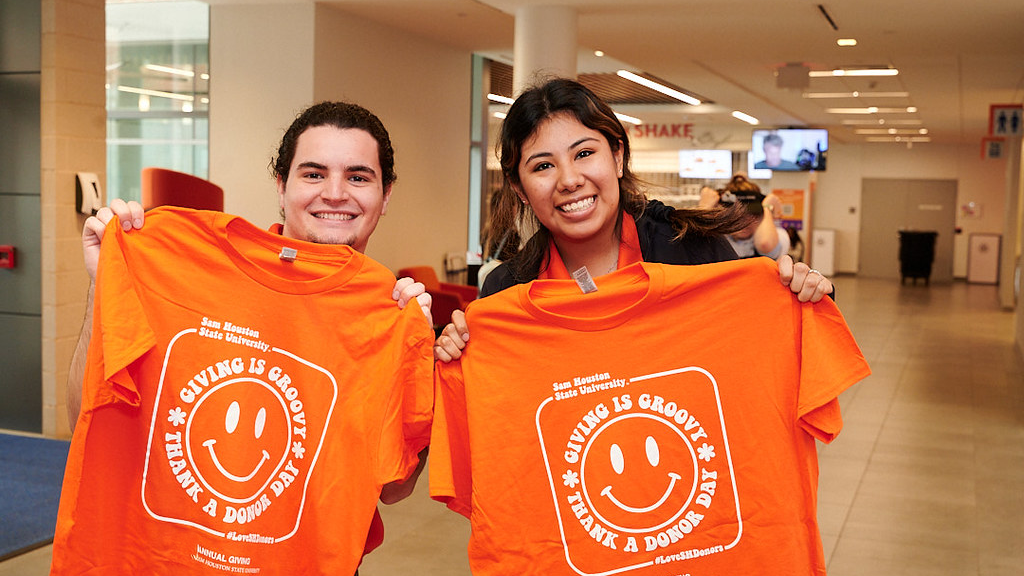
SHSU also reported that Giving Day generated $564,375. That figure does not rival the largest endowment commitments, but it adds another layer to the story. It shows that the university was able to convert institutional energy into action from donors at multiple giving levels. Fundraising success tends to be strongest when large commitments and broad participation rise together. Based on the details SHSU released, that appears to be what happened in fiscal year 2026.
The structure of student support also matters when evaluating the broader campus impact of fundraising. SHSU maintains a range of student support services through the university, and its archived graduate and professional catalog outlines part of that framework at catalog.shsu.edu. That context helps explain why new endowments for scholarships, accessibility, and faculty support can have effects well beyond a budget line.
For the Sam Houston State men's basketball team and the rest of the Bearkats athletic department, the Quanta commitment may be most significant as a model rather than a one-sport boost. SHSU's description of the endowment points toward support systems that can shape athlete development across the department.
That approach aligns with how many athletic departments are trying to present themselves now. The message is no longer just that athletes can compete at a high level. It is that they can leave school with stronger professional networks, practical leadership experience, and a more intentional transition plan for life after sports.
Not every school can support that message with a dedicated athletics-focused endowment. When SHSU says this fund will eventually back a comprehensive student-athlete engagement model, it gives the university a concrete talking point in an area that is becoming increasingly important across Division I.
It is also worth noting that this kind of support structure can matter for athletes in every stage of their college careers. Recruits may view it as part of the decision process. Current athletes may benefit from more robust career and mentorship programming. Alumni may see it as evidence that the university is taking long-term athlete welfare seriously. Donors may see it as a way to tie athletics support to educational and workforce outcomes that extend beyond the field or court.
There is a broader college sports lesson here. For years, many of the biggest athletics stories around fundraising centered on construction, naming rights, or direct competitive investments. Those stories still matter, but universities are increasingly being asked a wider question: how does athletics fit into the institution's educational mission?
SHSU's announcement offers one possible answer. By linking a major athletics-related commitment to mentorship, leadership, and career preparation, the university framed athlete support as part of a larger campus strategy. That does not make competition any less important. It simply places competition inside a fuller development model.
For observers trying to compare institutions, broader college data tools such as a rankings directory can provide additional context about how schools are positioned academically and institutionally. But announcements like this one show something rankings often cannot capture on their own, which is where a university is choosing to invest and what story it wants to tell about the student experience.
At SHSU, the story this fall is clear. A record fundraising year was not only about raising more money than ever before. It was about directing that support into scholarships, accessibility, faculty needs, and an athletics-related endowment built around student-athlete growth beyond competition.
The immediate result is simple. Sam Houston State University had a historic fundraising year. The more interesting question is what comes next.
If the university follows through on the model it described, the Quanta Services Athletic Quasi Endowment could become a meaningful part of how SHSU supports athletes across its Division I programs. At the same time, the scholarship-heavy endowment growth and campus-wide investments suggest the school is trying to strengthen the full student experience, not just one department.
That combination is what makes the Sept. 11 announcement notable. In a college sports landscape often dominated by weekly results and roster movement, SHSU made news for institutional momentum. The fundraising record matters because it reflects confidence in the university's direction, and because the priorities attached to that money could shape the school well beyond 2026.
For recruits, families, coaches, and college athletics observers, the lesson is not simply that SHSU raised a large amount. It is that the university used this announcement to define what support should look like in the modern era, with athletics, academics, scholarships, and life-after-sport preparation all presented as part of the same long-term picture.
Rosters, coaches, and division breakdowns for every NCAA and NAIA program we track.








