Pathley News
University of Oklahoma extends Brent Venables through January 2032 after CFP return
Oklahoma moved before the 2026 season to extend Brent Venables through 2032 after a CFP return, elite defensive numbers and renewed stability.
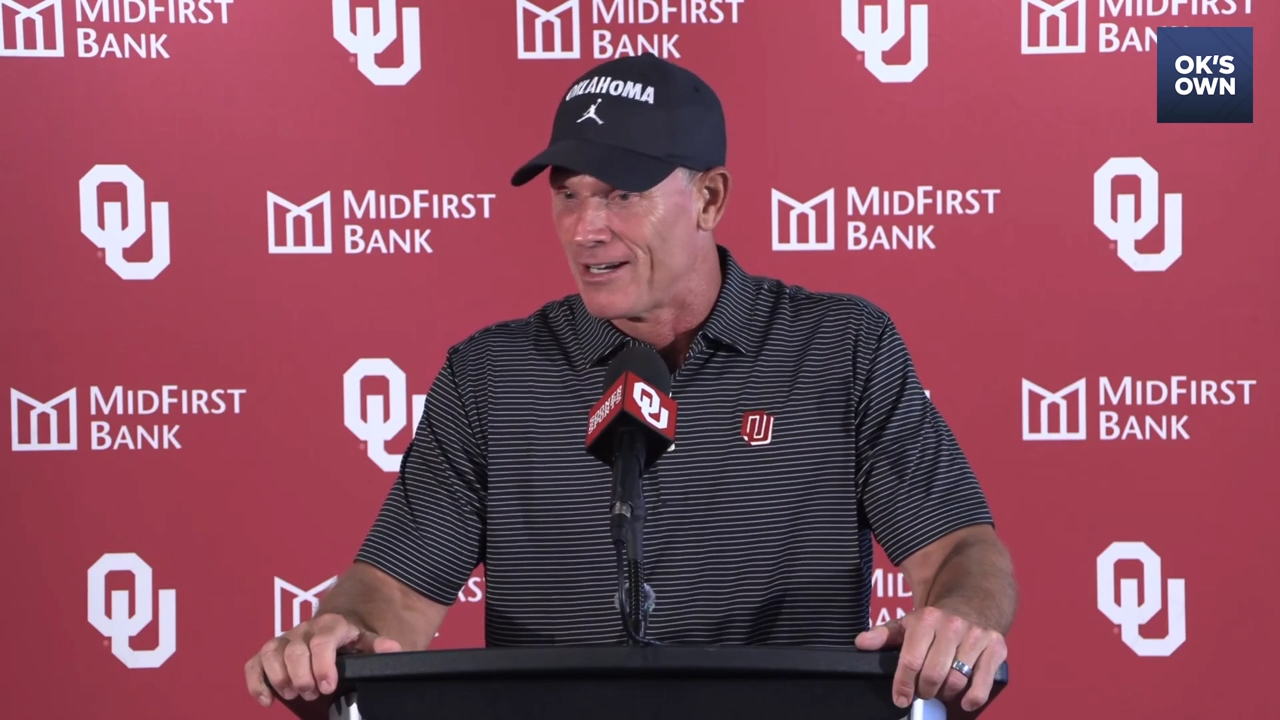
The University of Oklahoma made one of the more significant late-summer moves in college football on August 20, agreeing to a new six-year contract with head coach Brent Venables that would keep him in Norman through January 31, 2032. The agreement still requires approval from the OU Board of Regents, which is scheduled to meet September 15 and 16, but the public message was immediate and unmistakable. Oklahoma wanted to show continuity around one of the sport's most scrutinized positions before the 2026 season even begins.
At a place where every coaching decision is examined nationally, timing matters as much as terms. Oklahoma did not wait to see whether last season's rise would carry forward. Instead, the school acted on the strength of a 2025 campaign that ended with the Sooners back in the College Football Playoff for the first time since 2019. That move says a great deal about how the administration views both the trajectory of the Oklahoma football program and Venables' role in shaping the next phase of it.
For recruits, families and anyone tracking SEC roster building, the extension is more than a contract update. It is a statement that Oklahoma believes its current structure is worth protecting in a period defined by conference pressure, transfer movement, NIL realities and the broader revenue-sharing changes reshaping the sport. In a climate where programs often make decisions reactively, OU chose to move early and publicly.
The central question surrounding this news is not simply why Venables got an extension. It is why Oklahoma decided to do it now. Big-time programs usually gain little by rushing unless they feel strongly about the direction of the program. In this case, the Sooners had a recent set of results that made the decision easier to defend.
Venables led Oklahoma to its first CFP appearance since 2019 during the 2025 season. The Sooners earned the No. 8 seed and first-round hosting rights, a meaningful benchmark in the expanded playoff era because it signaled not just national relevance but a return to true upper-tier status. Oklahoma also recorded Venables' second 10-win regular season as head coach, matching the standard his team hit in 2023.
Those details matter because Venables' tenure has not followed a straight line. There have been stretches when the program looked like a work in progress, and there have been stretches when it looked very much like Oklahoma again. By choosing this moment to add two years to his previous deal, the University of Oklahoma showed that it views the 2025 season as evidence of a program regaining firm footing, not as an isolated spike.
That confidence also aligns with national expectations entering 2026. Oklahoma opened the preseason ranked No. 9 in the coaches poll and No. 10 in the AP poll, placing the Sooners squarely back in the contender conversation. Extensions at this level are never only about rewarding what already happened. They are also about signaling what a school expects to happen next.
Another layer of this story is administrative. Oklahoma athletics director Roger Denny, who began his tenure in February, made clear in the school's announcement that the extension became an early priority after the playoff run. His comments emphasized culture, trust and consistency, language that framed the agreement as both a football decision and an organizational one.
That distinction matters. Coaching extensions can sometimes read like ceremonial rewards, but Oklahoma's messaging suggested something more deliberate. The administration was not simply acknowledging wins and losses. It was identifying Venables as the coach it wants leading the Sooners football team through a changing era of college sports.
For a program operating in the SEC spotlight, stability is not a small concept. It affects staff retention, player development, donor confidence and the way recruits interpret a program's future. When a new athletics director moves quickly to reinforce a head coach, it tells the rest of the operation that leadership alignment is already in place.
That is especially relevant at Oklahoma, where the football program sits at the center of the institution's athletic identity. Contract moves involving the Sooners are public declarations about who controls the next chapter. In this case, Denny's first major football decision was to tie the program's direction more firmly to Venables.
The strongest football case for the extension came from what Oklahoma did on defense in 2025. Venables, long regarded as one of the game's premier defensive minds, called the defense himself, and the results were among the best in the country.
The Sooners finished sixth nationally in yards allowed per game at 272.5 and seventh in points allowed per game at 15.5. They also led the nation in tackles for loss per game at 9.4 and sacks per game at 3.5. Within the SEC, Oklahoma paced the conference in seven defensive categories.
Those are not decorative numbers. They are the kind of metrics that support the idea that Oklahoma's playoff breakthrough was built on substance. Elite defensive performance tends to travel well over the course of a season because it reflects depth, front-seven disruption, scheme clarity and player buy-in. It also fits Venables' coaching identity more directly than any other part of the roster.
For the Oklahoma football team, that defensive profile gave the program a clear competitive signature. In the modern game, where offensive innovation often dominates headlines, defenses that consistently create negative plays can still define championship-caliber teams. Oklahoma's ability to lead the nation in tackles for loss and sacks is the type of indicator coaches and evaluators notice because it points to line-of-scrimmage control.
That piece of the story also matters in recruiting conversations. Defensive recruits want to know whether a system highlights their traits, and Oklahoma now has fresh evidence that it does. Venables' reputation was built on exactly this type of production, first as a key assistant at Oklahoma and later as Clemson's defensive coordinator. In 2025, the Sooners looked like a program increasingly shaped in that image again.
Oklahoma did not frame the extension around one stat category or one playoff berth alone. The school pointed to a broader collection of indicators that, taken together, painted the picture of a program with momentum in multiple areas.
One notable individual accomplishment came from placekicker Tate Sandell, who became the first Oklahoma player to win the Lou Groza Award. Awards do not decide contract terms by themselves, but they reinforce the idea that a staff is developing impact players across the roster, not just surviving on brand recognition.
The school also highlighted NFL Draft production under Venables. Since he became head coach, Oklahoma has produced 17 draft picks, including seven selections in April, which tied the program's highest total since 2018. At schools chasing national relevance, draft numbers remain one of the clearest public measures of player development. Recruits and families pay attention to them because they indicate how well a staff translates talent into pro outcomes.
Academic performance was part of the university's case as well. Oklahoma said the football program is riding a five-semester streak of posting above a 3.0 cumulative team GPA. That figure fits with the broader culture language used by the administration and offers another sign of operational consistency inside the building.
Taken together, those points gave Oklahoma a way to present the extension as a program-level endorsement. The argument was not that Venables deserved more time solely because of one season's win total. The argument was that the full picture, on-field results, player development, individual recognition and academic progress, supports the idea that the program is trending the right way.
Part of what makes this extension resonate more deeply in Norman is Venables' longstanding connection to the school. Before he returned as head coach in 2021, he had already spent significant years inside Oklahoma football as an assistant and defensive coordinator. He later built his national reputation at Clemson, but Oklahoma has always been central to his coaching identity.
That history is one reason the university continues to view him as more than a short-term steward. According to the school's announcement, Venables has coached in eight national championship games across his Oklahoma and Clemson years, winning titles with the Sooners in 2000 and with Clemson in 2016 and 2018. Few coaches can point to that combination of institutional familiarity and championship-level experience.
In his response to the extension, Venables said Oklahoma is home for his family and stressed his commitment to building a championship-level program the right way. Comments like that can sound routine in college athletics, but in this case they align with the exact themes Oklahoma's leadership wanted to emphasize: continuity, structure and trust.
At a place with such a strong internal sense of football identity, shared history carries weight. It does not replace the need to win, but it does shape how a coach is perceived during high-pressure moments. Oklahoma's decision suggests the administration believes Venables is not only qualified to lead the next era of the program, but also uniquely suited to do it within the institution's own standards and expectations.
Every major football decision now unfolds against a much wider backdrop than it would have a decade ago. Programs are managing transfer portal turnover, NIL-driven competition for talent, shifting roster economics and a national playoff structure that changes how contenders measure progress. Oklahoma's move can be read through all of those lenses.
In that environment, coaching continuity has become an asset in itself. Players want clarity about systems and staff relationships. High school recruits want to know whether the people recruiting them will still be in place after signing day. Administrators want a stable operating model. By extending Venables before the season, Oklahoma reduced at least some of the uncertainty that can shape all three dynamics.
That does not mean the pressure disappears. If anything, the extension raises the stakes for what comes next. Oklahoma has effectively said that 2025 represented a meaningful return to form. The natural follow-up question is whether the Sooners can sustain that level against SEC competition and remain in the playoff mix year after year.
For readers looking for broader context on how schools are organized across divisions and regions, a national college directory or a broader sport directory can help illustrate how different football programs are positioned within the wider recruiting landscape. Oklahoma's situation is distinct because of its scale, but the underlying themes, roster retention, staff stability and developmental proof points, are increasingly relevant everywhere.
This story has obvious significance for Oklahoma fans, but it also offers practical insight for football recruits and their families. Coaching extensions are one of the clearest public indicators of institutional alignment. They do not guarantee future success, but they do provide evidence that a school, its athletics leadership and its head coach are moving in the same direction.
In Oklahoma's case, the extension points to several recruiting-relevant takeaways:
For athletes comparing schools, those are meaningful data points. They help explain not just what a program has been, but what it believes it can be over the next several cycles. Families trying to evaluate coaching movement, depth chart context and institutional fit often use broad resources such as college rankings or searchable recruiting questions to organize that process. A national rankings directory can provide one type of comparison framework, while a searchable family recruiting Q&A archive can help decode the kinds of issues that arise when coaching stability becomes part of the decision.
Oklahoma's official announcement established the terms and rationale behind the agreement, including the Board of Regents approval process and the extension through January 31, 2032. Additional reporting from regional and national outlets helped place the move in wider context, especially regarding the timing and significance of extending Venables ahead of the season. The official school release can be found at SoonerSports. Additional coverage appeared from the San Francisco Chronicle and Yahoo Sports.
Those sources all pointed to the same core conclusion. Oklahoma was not merely handling paperwork. It was sending a message about confidence, timing and the direction of one of college football's flagship programs.
The procedural step remains important. The OU Board of Regents is scheduled to meet on September 15 and 16, and the agreement is still pending formal approval. But the larger story is already in motion. Oklahoma has declared that it wants Brent Venables leading the program into the next several seasons, and it did so before the first major results of 2026 are on the board.
That makes the coming season more interesting, not less. The Sooners now carry both top-10 expectations and a renewed public commitment to the head coach who guided them back to the playoff. If the defense remains disruptive, if the roster continues to develop and if Oklahoma stays in the SEC and CFP conversation, this extension will look like a timely affirmation of a program that recognized its own momentum. If the results slide, the decision will still stand as a revealing example of how strongly OU believed in the trajectory established in 2025.
For now, the clearest takeaway is that Oklahoma saw enough to act. The University of Oklahoma did not treat last season as a nice rebound story. It treated it as proof that the foundation of the Sooners football program is sturdy enough to build on. In modern college football, where hesitation often becomes its own headline, that level of institutional certainty is news by itself.
Rosters, coaches, and division breakdowns for every NCAA and NAIA program we track.