Pathley News
North Dakota State opens FBS era with a 33-7 statement win
North Dakota State opened its FBS era with a 33-7 win over Jacksonville State, showing early Mountain West readiness behind defense and balance.
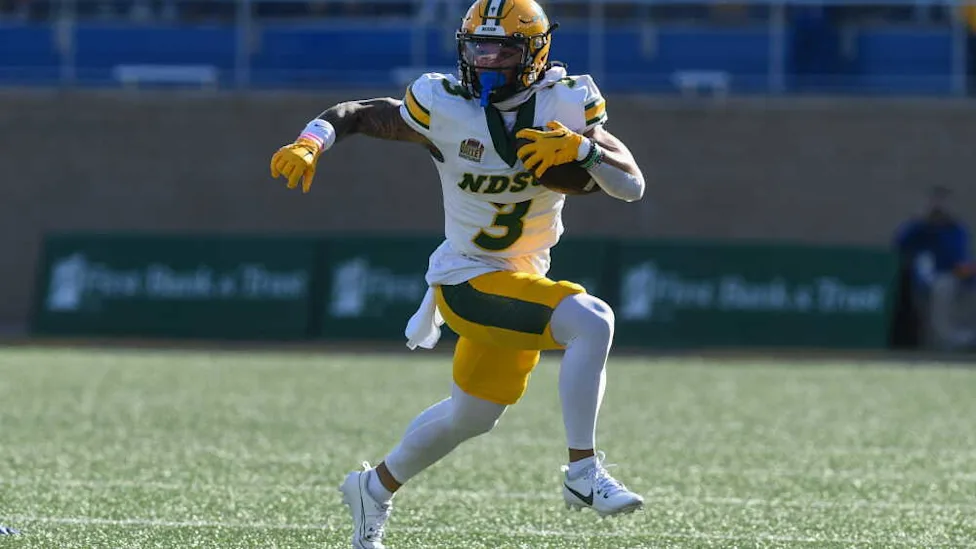
North Dakota State University entered August 29 with a milestone hanging over every snap. The program was not just opening a season. It was opening its first season in the Football Bowl Subdivision, six months and 20 days after announcing its reclassification and Mountain West Conference invitation. By the end of the night at Gate City Bank Field at the Fargodome in Fargo, the result looked less like a ceremonial first step and more like a familiar North Dakota State performance, physical, efficient, and controlled.
The Bison beat Jacksonville State 33-7 in the first FBS game in school history, using a balanced offensive start and a punishing defensive effort to turn a one-score first quarter into a clear four-quarter statement. According to North Dakota State's official recap, the win came against a Jacksonville State team that arrived as an established FBS opponent, a Conference USA member coming off a 9-5 season and a bowl victory. That context mattered. For a program making the jump from the FCS, this was not a soft landing spot.
It was also a game layered with history. The teams had met before on a much different postseason stage, the 2015 FCS championship game, which North Dakota State won 37-10. Since then, college football's realignment era has redrawn the map in ways that continue to blur old subdivision lines. On this night, North Dakota State football looked fully comfortable in the new setting.
For readers tracking schools across divisions, the broader landscape can shift quickly. Resources like the college directory and the sport directory help frame where programs sit by level, region, and sport, but North Dakota State's opener offered something more valuable than a label. It offered live evidence of what the transition might look like on the field.
The significance of the opener went well beyond one nonconference result. Before the move, North Dakota State University spent 22 seasons in the FCS, won 10 FCS national championships, and accumulated 18 football national titles overall. It was one of the most decorated programs in subdivision history, but the key question around the transition was never whether the Bison had pedigree. It was whether that pedigree would translate immediately against week-to-week FBS competition.
Against Jacksonville State, the answer was encouraging. The official box score showed North Dakota State controlling possession for more than 36 minutes, limiting Jacksonville State to 170 total yards, and holding the Gamecocks to 2-for-10 on third down. That kind of statistical control usually reflects line-of-scrimmage dominance, and the game looked that way from the second quarter onward.
It is important not to stretch one opener into a season-long forecast. One game does not settle how a team will handle conference depth, injuries, or the cumulative demands of an FBS schedule. But it can reveal whether a roster appears overwhelmed by the level. North Dakota State did not look overwhelmed at any point. If anything, the Bison looked like the more settled program.
The night opened with exactly the kind of sequence a transitioning team would want. Quarterback Nathan Hayes led an eight-play, 75-yard opening drive and finished it with a 6-yard touchdown pass to tight end Reis Kessel. It was an efficient, composed start, and just as important, it established that the North Dakota State football program was going to dictate tempo rather than spend the first quarter adjusting to the moment.
Jacksonville State did answer quickly. Caden Creel scored on an 8-yard touchdown run to tie the game 7-7 in the first quarter, and for a brief stretch the opener looked like it might settle into a tight, back-and-forth contest. Instead, North Dakota State kept finding steadier answers.
One of the key plays of the first half came on fourth-and-12, when Jackson Williams made a 20-yard catch to help set up a 34-yard field goal by Drew Klein. In a debut game packed with symbolism, that conversion was a practical football moment that mattered. Teams moving up a level often need proof that their offense can execute on obvious passing downs against better athletes. North Dakota State got that proof there.
Then came the half's biggest swing. With 18 seconds left before intermission, Hayes connected with Jordan McCants for a 44-yard touchdown, capping an 88-yard drive and giving the Bison a 17-7 lead at halftime. Jacksonville State identified McCants as a former Gamecock, which added another memorable layer to one of the night's defining plays. Beyond the storyline, the touchdown mattered because it stretched the margin and rewarded North Dakota State for controlling the half's rhythm.
If the first half established that North Dakota State belonged, the second half pushed the conversation further. The Bison did not merely protect a lead. They expanded it in ways that highlighted defensive opportunism and special teams reliability.
After Marion Moore intercepted Creel in Gamecock territory, Klein hit a 44-yard field goal to make it 20-7. Then the game broke open almost instantly. On Jacksonville State's next possession, a bad snap sailed into the end zone, and defensive end Blake Schiltz recovered it for a touchdown just 18 seconds later. That pushed the score to 27-7 and effectively changed the rest of the night from competitive opener to controlled finish.
Klein kept adding points with field goals from 42 and 48 yards, finishing 4-for-4 on field goal attempts. By the end, North Dakota State had scored 26 unanswered points after Jacksonville State's lone touchdown. In transition games, complementary football often tells the story, and that was true here. The offense generated enough explosive moments, the defense repeatedly created difficult situations, and the kicking game turned field position into a widening lead.
The most notable part of the box score may have been what North Dakota State did to Jacksonville State's ground game. North Dakota State's official recap noted that Jacksonville State ranked fifth in the FBS in rushing offense last season. On this night, the Gamecocks were held to 85 rushing yards.
That stat deserves attention because stopping a run-oriented FBS team usually starts with gap control, depth, and tackling consistency. North Dakota State checked those boxes throughout the night. Jacksonville State managed just 170 total yards overall, and Creel finished 12 of 23 passing for 85 yards with one interception while adding 44 rushing yards. Jalen Likely led the Gamecocks with 48 rushing yards, but the Bison never allowed that production to become a sustained offensive platform.
Defensively, Donovan Woolen recorded a game-high 10 tackles, Kelton McCaslin had 2.5 tackles for loss including 1.5 sacks, and Moore collected his first collegiate interception. Those individual efforts supported a broader structural point. North Dakota State did not need a fluky turnover margin or an outlier special teams return to win big. The defense consistently forced Jacksonville State behind schedule.
Hayes gave North Dakota State the kind of quarterback performance a first-game transition story often hinges on. He completed 14 of 22 passes for 160 yards, two touchdowns, and one interception. The raw yardage was not gaudy, but the larger picture was positive. He protected the game's rhythm, capitalized on scoring chances, and hit the most important downfield throws when the Bison needed them.
The offensive support around him was equally telling. Myles Mitchell ran for 74 yards on 11 carries, Nyeoti Punni added 60 yards on eight carries, and DJ Scott contributed 51 yards on 13 attempts. That distribution suggested not just depth, but confidence in a multi-back approach. Jacksonville State did not face a one-dimensional attack, and that made defensive adjustments harder.
Williams led North Dakota State with five catches for 58 yards, while Kessel and McCants turned their touchdown receptions into the night's headline moments. Taken together, the stat line fit what successful step-up programs often try to show in September. They do not need to become a different version of themselves immediately. They need to prove that the identity that won at the previous level still scales upward. In this opener, it did.
North Dakota State's move has attracted attention because few programs have entered the FBS with this kind of football history. The school's championship background is obvious, but another detail from the official recap mattered too. Before this transition, North Dakota State had gone 9-5 against FBS opponents from its lower-division years. That record had already hinted that the roster and program infrastructure were closer to FBS level than many transitional narratives assume.
Saturday's result strengthened that idea. Jacksonville State was not introduced as a rebuilding opponent. It was introduced as a Conference USA team with recent success, including a bowl win. North Dakota State then controlled that team at the line of scrimmage, won time of possession, executed on key downs, and kept the opponent's offense from finding a consistent footing.
That does not mean every week in the Mountain West will look like this. It does mean that the early baseline appears competitive. For a school entering a new subdivision, that is one of the most meaningful takeaways possible.
Families and prospects following changing college football tiers often need help sorting through what division labels actually mean for a given program. Broad reference pages such as the rankings directory can provide a wider landscape, but this game offered a more direct lesson. Program stability, continuity, and proven line play can matter as much as the subdivision name next to the logo.
The opener also extended one of the sport's quieter streaks. North Dakota State has now won 28 straight home openers. The number reinforces how difficult Fargo has been for visiting teams over time, regardless of level.
Home-field advantage can be easy to overstate in season openers, but in this case it is part of a real program pattern. The Fargodome has long provided a challenging environment, and North Dakota State used that setting well in its first FBS game. The opening-drive touchdown energized the building, the defense fed off momentum in the second half, and Jacksonville State never found a sustained answer after halftime.
That matters going forward because transitions are often judged not only by roster quality but by whether existing strengths continue to travel into a new context. For North Dakota State, the home environment remains one of those strengths.
Even without making sweeping claims from one game, there are several details that recruits, high school coaches, and families will notice about this performance from North Dakota State University.
The Bison won with depth at running back, which points to a roster built around rotation and physicality rather than reliance on a single featured ball carrier.
The quarterback play was efficient and timely, showing that explosive moments can come within a controlled structure.
The defensive front and second level handled a proven rushing team, which suggests that body development and defensive system fit remain central to the program's identity.
Special teams added nine points through field goals and capitalized on a major second-half mistake, a reminder that hidden-yardage phases still separate teams in transition.
For football recruits broadly, one of the more useful takeaways is that level changes do not always mean stylistic reinvention. Programs with clear identities often try to carry those identities upward. In North Dakota State's case, that identity remains visible, disciplined defense, multiple-run-game answers, and selective but effective passing.
For those tracking college options by geography or sport fit, tools like a state-by-state college view can help map the region, though the provided state directory link is not formatted as a secure absolute URL and is therefore not cited here. What can be said clearly is that North Dakota State's profile now sits in a different national conversation than it did a year ago, even if many of the football traits look familiar.
There were no additional college records provided in the source list for this story, so there are no related Pathley college pages to compare directly in this article. In practical terms, that leaves North Dakota State University and the Bison football team as the central reference points for evaluating how an elite former FCS program is handling its first steps at the FBS level.
The clearest reason this opener resonated is that it answered the most immediate question surrounding the program. North Dakota State did not look like a team simply hoping to survive the first chapter of its FBS move. It looked like a team capable of competing right away.
The next step is seeing whether that formula holds across a fuller sample. Can the offensive balance remain consistent when opponents adjust to the run game? Can the defense keep producing the same kind of third-down control against varied schemes? Can the Bison continue to generate field-position edges and finish drives without asking for a perfect script every week?
Those questions are more important than any one-night declaration. Still, the first data point was difficult to ignore. North Dakota State opened its FBS era against an established FBS opponent and won 33-7. The margin, the method, and the composure all suggested that the transition story in Fargo may center less on whether the Bison can belong, and more on how quickly they can matter.
Sources: North Dakota State official game recap, official box score, ABC News game report, Jacksonville State recap.
Rosters, coaches, and division breakdowns for every NCAA and NAIA program we track.








