Insight
Michigan State formally approves Dan Bartholomae as next athletic director
Michigan State approved Dan Bartholomae as athletic director on Sept. 11, 2026, finalizing a long-term leadership hire through June 2031.
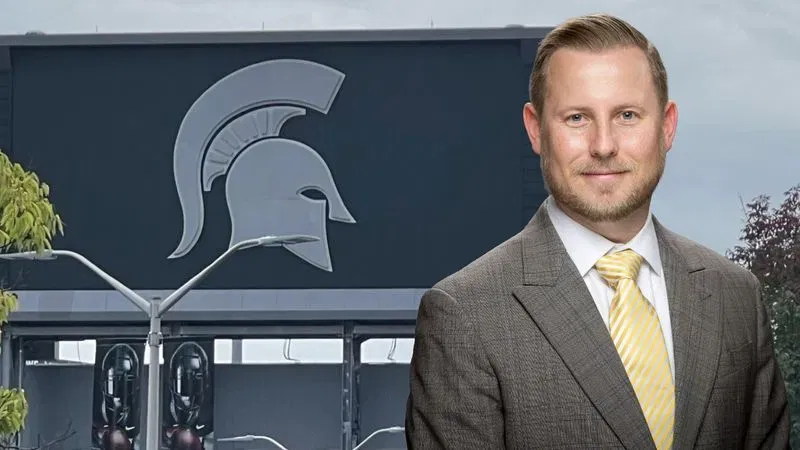
Michigan State University completed a major athletics leadership transition on Sept. 11, when its Board of Trustees formally approved Dan Bartholomae as the university's next vice president and director of intercollegiate athletics. The vote finished the final step in a process that began publicly on Aug. 17, when President Kevin M. Guskiewicz selected Bartholomae to lead Spartan Athletics.
For Michigan State University, the significance goes well beyond a title change. Board documents show Bartholomae's appointment runs from Aug. 31, 2026, through June 30, 2031, giving one of the Big Ten's most visible athletics departments a long-term leader during a period of unusual pressure and change across Division I sports.
The Spartans were not filling a routine vacancy. They were making a decision that will shape how Michigan State navigates the next phase of college athletics, where leadership increasingly requires fluency in fundraising, facilities, compliance, governance, donor relations and competitive success across a broad portfolio of varsity teams.
Michigan State's board approval came after an important summer handoff. The athletics director position had been open since J Batt left in June to become athletics director at the University of Kentucky. Jon Palumbo served as interim athletics director, helping the department maintain continuity while the university worked through the search and appointment process.
By finalizing the hire in September, the university ensured that Bartholomae enters the role with a full mandate as the 2026-27 athletics year gains momentum. In practical terms, that matters because leadership decisions in modern college sports are rarely isolated to one season. Athletic directors now help set direction on staffing, donor strategy, facilities, conference positioning, compliance oversight and long-range financial planning, often all at once.
That broader context helps explain why this move stood out nationally. Michigan State oversees 23 varsity sports and carries a major profile in football, men's basketball, women's basketball, hockey, soccer and several Olympic sports. In a changing Big Ten environment, stability at the top of the department is not just symbolic. It affects how the university plans the next several years.
Bartholomae arrives from Western Michigan University, where he served as vice president and director of athletics starting in 2022. In announcing the hire, Michigan State emphasized a background that blends competitive performance with fundraising growth, compliance experience and major capital project work.
That combination is increasingly valuable. College athletics departments are no longer judged only by wins and losses. Presidents and boards also look for executives who can manage institutional relationships, support student-athletes, handle public-facing change and keep major projects moving. Bartholomae's track record at Western Michigan gave Michigan State a candidate with experience across all of those areas.
According to the university, Western Michigan won 37 conference championships during Bartholomae's tenure. The Broncos also made 35 NCAA postseason appearances, produced 17 All-Americans and had 38 conference coach-of-the-year or specialty-award recipients. Those totals suggest he was leading a department with broad-based success rather than one carried by a single headline program.
The biggest on-field or on-ice marker came in 2025, when Western Michigan men's ice hockey won the NCAA championship for the first time in school history. The university described it as the school's first national championship in 60 years. That same calendar year, Western Michigan also won an FBS conference football championship, making the Broncos only the third Division I institution ever to win a hockey national title and an FBS conference football title in the same year, according to Michigan State's announcement.
Michigan State also highlighted Bartholomae's off-field performance. The school said that since his arrival at Western Michigan, average annual giving increased by 473 percent and the number of unique donors rose by 105 percent. Those numbers matter because major athletics departments increasingly rely on steady donor engagement and long-term development strategy, especially as budgets become more complex.
There was also a visible facilities component. In 2024, Western Michigan partnered with a local developer on a privately funded $515 million downtown arena project intended to become the future home for Bronco basketball and hockey. That kind of project experience is notable for a school like Michigan State, where future facility planning will remain an important part of the department's long-term direction.
Before his time in Kalamazoo, Bartholomae spent five years at Oregon State University, where he rose to executive deputy athletic director and chief operating officer. Michigan State noted his involvement in the $153 million Completing Reser Stadium renovation, another sign that his résumé extends beyond day-to-day sport administration.
Earlier in his career, he spent 15 years at the University of Pittsburgh in a range of roles that included compliance, game operations and deputy athletics director for internal affairs. That progression matters because it points to a career shaped by multiple parts of athletics administration, not just one lane of expertise.
At his introductory press conference on Aug. 19 inside the Tom Izzo Hall of History at the Breslin Center, Bartholomae described the Michigan State opportunity as a dream job and a destination role. He pointed to the people around the program, the existing institutional foundation and what he called the school's blue-collar mentality as central reasons the job appealed to him.
He also introduced a phrase that is likely to define his early tenure, Spartan Excellence Without Exception. In his remarks, that language reflected a broad vision centered on student-athlete support, competitive success, campus partnership and deeper engagement with alumni and donors.
For anyone tracking leadership hires across the Big Ten, that message was revealing. It suggested that Bartholomae is not framing his tenure around one flagship team or one narrow objective. Instead, he appears to be presenting the role as a department-wide stewardship job, one that balances public expectations with internal infrastructure.
That framing fits the profile of Michigan State University itself. The school has national brands at the top of the department, but it also has a broad athletics identity that spans revenue sports, Olympic sports and academic outcomes. The next athletics director needed to speak to all of that.
One of the most important details in this story is that Bartholomae is not walking into a full rebuild. Michigan State presented the department as one with strong existing momentum, both competitively and academically.
During Bartholomae's August introduction, Guskiewicz pointed to a series of recent achievements across the department:
That breadth is significant. A new athletics director stepping into a department with success in multiple sports inherits opportunity, but also expectation. At Michigan State, the public conversation will naturally focus on football, basketball and hockey, yet the department's recent progress has extended across many programs.
Academic results were also part of the university's case for the direction of the department. University leaders said Spartan student-athletes matched the highest graduation rate in department history, posted some of the best graduation success rates in the Big Ten and finished May with a cumulative GPA above 3.5 for the first time in department history.
Those benchmarks matter because they reinforce a key point in this transition. Bartholomae takes over a department that can argue it already has strong foundations in both competition and student-athlete outcomes. The challenge is not simply to stabilize. It is to extend and sharpen what is already in place.
Any athletics director hire at Michigan State draws attention because of the school's place in the Big Ten. This is one of the country's best-known brands, with national relevance in multiple sports and a fan base that expects visibility, competitiveness and institutional seriousness.
That makes the hire notable beyond East Lansing. Athletic directors in major conferences now operate in an environment where almost every major decision touches several other categories, from budgeting and facilities to postseason ambition and athlete support systems. Michigan State's choice of Bartholomae reads as a move toward an administrator with a broad enough résumé to handle that complexity.
For recruits and families who follow conference-wide trends, leadership changes like this can shape everything from coaching stability to long-term facility planning. They do not always alter a program overnight, but they often influence how schools prioritize resources over the next recruiting cycles. Anyone comparing Big Ten institutions can use resources like a college directory or a sport directory to understand how broad athletic profiles differ from campus to campus.
At Michigan State specifically, the athletics director role is not confined to one roster or one season. It touches the entire structure of the department, including programs such as Michigan State football, Michigan State men's basketball, Michigan State men's ice hockey and Michigan State women's soccer.
It is worth pausing on Bartholomae's Western Michigan tenure because that record appears central to why Michigan State moved in this direction. The headline accomplishments were easy to market, particularly the NCAA hockey championship and football conference title in the same year, but the full profile was deeper than that.
Michigan State appears to have valued the fact that Western Michigan's success occurred across several dimensions at once. Competitive performance improved. Donor participation grew. Average annual giving surged. A major downtown arena project advanced. Those outcomes suggested an administrator who could align internal performance with external momentum.
That matters in East Lansing because one of the main tests for a Big Ten athletics director is coordinating different power centers. Coaches want competitive support. Donors want confidence in direction. Presidents and trustees want accountable administration. Student-athletes and families want clarity, resources and a sense of stability. A candidate who has already navigated several of those demands at another Division I institution enters the job with a more complete leadership profile.
The raw story around Bartholomae's approval also included another important clue about why this hire carries long-range significance. The board's action aligned with other forward-looking decisions at the same meeting, including campus construction moves that could eventually free space for a future Spartan Stadium modernization project.
That does not mean immediate change, but it does suggest the athletics department is thinking beyond current competitive seasons. Facility planning, donor strategy and public infrastructure often move together in modern college sports. An athletics director with recent experience in arena and stadium work is likely to be viewed as especially valuable in that setting.
That part of the job rarely generates the same headlines as a coaching hire or a postseason run, yet it can define a department's trajectory for a decade. For Michigan State, bringing in a leader with fundraising and capital project experience looks consistent with the idea that the next era of Spartan Athletics will involve both maintaining competitive success and positioning the department for long-term structural needs.
Although this story is administrative rather than sport-specific, leadership changes at the top of an athletics department still matter to recruits, parents and coaches. A new athletics director can affect the overall climate around facilities, staffing support, student-athlete services and the stability of institutional priorities.
At a school like Michigan State University, that influence is magnified because the department spans so many nationally visible teams. Families evaluating programs often focus first on coaches and rosters, but department-level leadership can shape the experience around those teams in less obvious ways. Questions about academic support, investment levels, competitive expectations and future planning often trace back to the athletics administration.
For recruits trying to understand how institutions compare, broader research tools such as a family recruiting Q&A library can help explain how leadership, division context and department structure fit into the larger recruiting process. In a major conference, those variables can matter more than they first appear.
There were no additional Bubble college records provided for this story beyond Michigan State, so no direct related-program comparison is included here. Within the Pathley structure, readers looking at the university can still move between the main Michigan State college page and team-specific pages such as Michigan State men's ice hockey or Michigan State women's soccer to better understand how broad the department's competitive footprint has become.
The central reporting points in this story are supported by Michigan State's Sept. 11 Board of Trustees materials, the university's Aug. 17 announcement naming Bartholomae, and his Aug. 19 introductory press conference coverage. Additional context is also available through Michigan State's Sept. 11 board release, the official athletics announcement, and the board personnel actions document. NCAA institutional information is also publicly listed through the NCAA directory.
The timeline is straightforward but important. Michigan State announced the selection on Aug. 17. Bartholomae was introduced publicly on Aug. 19. Board records show the appointment is effective from Aug. 31, 2026, through June 30, 2031. The Sept. 11 vote made the move official at the governance level.
The most meaningful part of this story is not the ceremony of board approval. It is what the approval represents. Michigan State has now formally handed one of college athletics' most visible administrative jobs to a leader whose recent record includes winning programs, major donor growth and large-scale facility involvement.
Bartholomae steps into a department with clear momentum, not one searching for basic footing. That raises the stakes of the hire in a useful way. The question is not whether Michigan State can remain relevant nationally. The question is how effectively the university can convert its existing strength into sustained advantage during a period when the structure of college sports continues to shift quickly.
For the Spartans, Sept. 11 was the final procedural step. In practical terms, though, it marked the beginning of a new phase, one in which the leadership of the entire athletics department will be judged by how well it protects tradition, manages change and positions Michigan State for whatever the next era of the Big Ten demands.
Rosters, coaches, and division breakdowns for every NCAA and NAIA program we track.