Insight
University of Oregon Engineering College Pledge: What Comes Next
The Knight family's landmark pledge could reshape engineering at the University of Oregon, but approval, program development and budget questions remain.
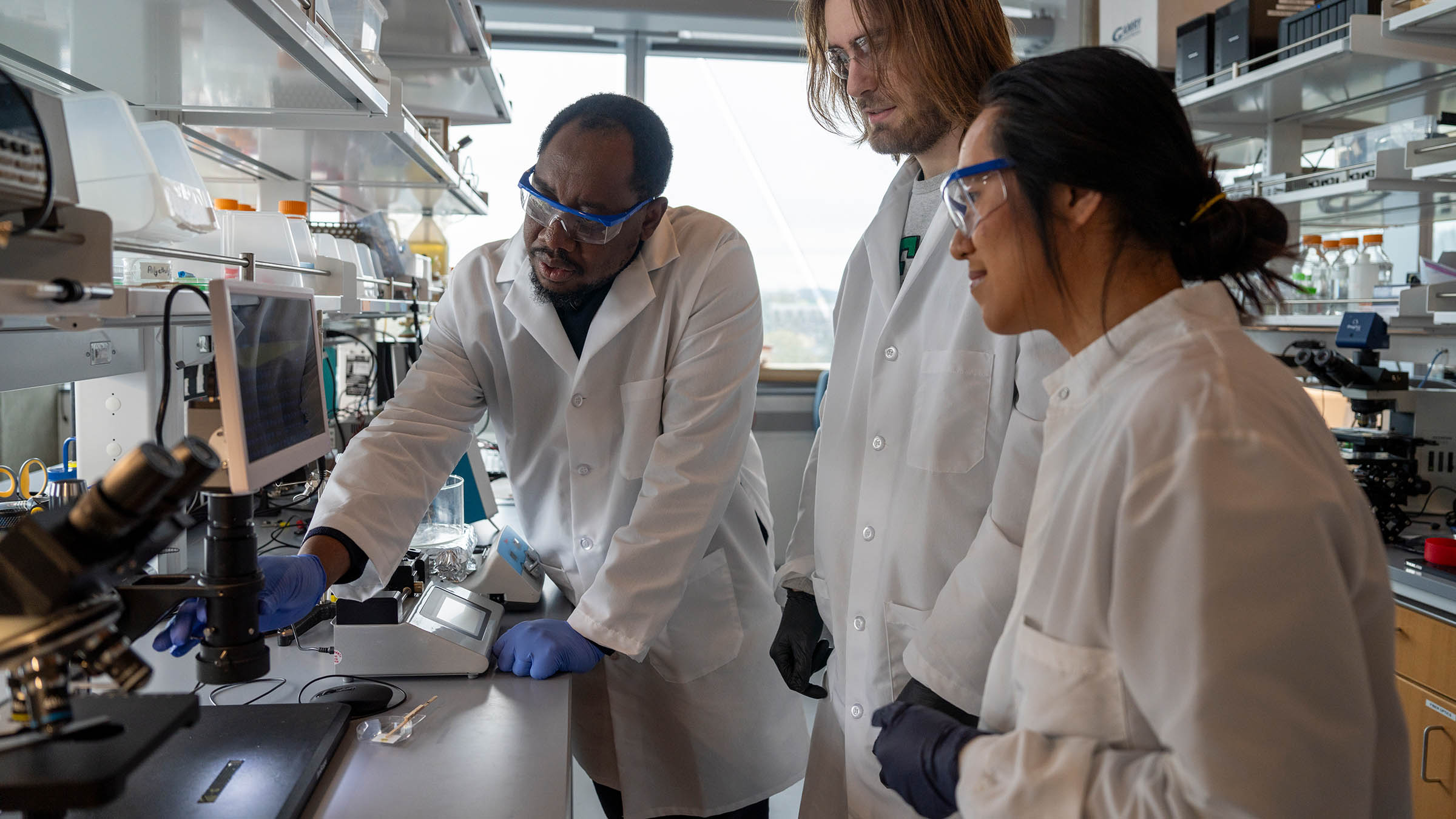
Phil and Penny Knight have made a landmark commitment toward establishing an engineering college at the University of Oregon. Announced on September 23, 2026, the pledge is intended to turn an existing research and training operation in Eugene into a much larger center for engineering education. It does not mean the proposed college is already open or that all its degrees have received final approval.
The distinction matters for students considering Oregon. The university already has bioengineering research, graduate training and other offerings at its Phil and Penny Knight Campus for Accelerating Scientific Impact. A proposed Knight College of Engineering would build on that work, potentially bringing more faculty, researchers and students to the campus. Which additional degrees become available, and when, depends on the state and university governance processes still ahead.
In its announcement of the commitment, the university described it as the largest gift ever made to a comprehensive public university. That description speaks to the scale of the pledge, not to the completion of the college it is meant to support. For prospective students, the immediate news is an unusually substantial commitment to Oregon's future engineering capacity, paired with an important unresolved question: how will the academic plan take shape?
The Knight Campus gives the proposal a starting point that an entirely new engineering initiative would not have. Phil and Penny Knight made one major commitment to create the campus in 2016 and another, of the same size, to expand it in 2021. The newly announced pledge is their third commitment of that scale in a decade. Together, the three represent a sustained investment in the university's research and education ambitions rather than a single, isolated announcement.
Phil Knight, a Nike co-founder and member of the University of Oregon's class of 1959, has supported his alma mater for decades. The latest pledge has a specific purpose: broadening the university's ability to educate engineers and applied scientists while helping research move toward practical use. It is aimed at an academic undertaking rooted in the Knight Campus, not an unrestricted addition to the university's general operating budget.
According to the university, the Knight Campus already houses its first engineering department and has graduated the first engineers in Oregon's history as an institution. It has grown to 17 research laboratories involving more than 500 students and trainees each year. Its current academic offerings include bioengineering doctoral training, an undergraduate bioengineering minor and an applied master's internship program. Those existing activities explain why officials describe the planned college as an expansion of engineering at Oregon, not the beginning of engineering work from scratch.
At the same time, a department, laboratories and selected academic offerings are not the same thing as a fully established college with a broad catalog of approved degrees. The university says it will pursue the appropriate state and shared-governance steps to establish the college and its programs. Until those processes are complete, students should distinguish current offerings from proposed ones, especially when comparing degree paths across institutions.
The proposed college would build on Oregon's bioengineering foundation while developing education in other high-demand disciplines. The university also expects the plan to support recruitment of additional faculty and researchers and to serve more students. Bob Guldberg, the university vice president who leads the Knight Campus, told Oregon Public Broadcasting that the gift and added programs would more than double the number of faculty and students at the campus.
That would be a major change in the campus's scale if carried out. It is not a completed hiring increase or an enrollment figure. Faculty recruitment takes time, and new student capacity depends in part on which programs are approved and how they are organized. The university has presented a direction for growth, while the exact academic structure remains to be worked through.
For students interested in combining technical study with other subjects, the shape of that structure will matter as much as its eventual size. An engineering minor, an internship-based master's program and a full degree pathway serve different educational purposes. The September announcement does not make those options interchangeable or establish that every envisioned course of study is already available.
The university's account of the proposed college is about more than adding engineering classes. It emphasizes the path from scientific discovery to practical application, including products, therapies and other technologies. University officials envision technical education connected to entrepreneurship, communication and ethics, reflecting the choices researchers face when an idea moves from a laboratory into wider use.
Oregon says the Knight Campus has worked with more than 200 companies and supported more than a dozen startups led by students or faculty. The university also points to incubator laboratories at the Papé Family Innovation Center and access to capital through Launch Oregon as resources associated with that work. These are descriptions of existing activity and infrastructure, not guarantees about the number of future startups or the eventual results of the proposed college.
That distinction is especially relevant when reading an announcement centered on long-term possibilities. A research partnership can give students exposure to questions arising outside a classroom, but the opportunities available to any individual student depend on the program, laboratory and stage of study. Similarly, plans to link engineering with entrepreneurship and ethics describe an educational direction. They do not establish that each anticipated program, partnership or outcome is already in place.
The Knight Campus frequently asked questions provide further context on the existing campus and the proposed college. The central timeline remains straightforward: research and training are happening now; a larger engineering enterprise has been proposed; formal establishment and additional degree approvals still lie ahead.
The University of Oregon framed the pledge in part as a response to demand for skilled workers. Its announcement cited an estimate of about 2,500 engineering job openings each year in Oregon and identified biotechnology, semiconductors, manufacturing and artificial intelligence among the fields seeking engineering talent. Those areas require different kinds of preparation, which is one reason the specifics of any new academic programs will be consequential.
President Karl Scholz said the proposed college would expand the university's research strengths and prepare students for high-demand careers under its Oregon Rising strategic plan. That is a statement of the university's goals. The workforce estimate helps explain why officials want greater capacity, but it does not by itself show which degrees will receive approval or how many graduates will enter any particular industry.
For college-bound students, an announcement like this can change the questions worth asking without changing the answers overnight. Academic fit depends on an available major or degree, the courses and research tied to it, and the institution's capacity to deliver it. Those details are particularly important when a proposed college is expected to grow out of existing programs rather than open all of its envisioned offerings at once.
There is also a geographic dimension. Oregon is presenting the proposal as a way to strengthen the state's engineering workforce, while the university's existing industry relationships connect campus research to employers and other organizations. The long-term effect will depend on how faculty hiring, program approval and student training develop after the pledge, not solely on the size of the commitment announced in September.
The purpose of the Knights' commitment is another essential part of the story. In a message to faculty, staff and students on the day of the announcement, Scholz said the gift was designated for engineering and accelerating scientific impact. He also acknowledged difficult budget discussions and said the pledge would not resolve the university's structural deficit.
Oregon Public Broadcasting reported that the university was facing a substantial budget shortfall. The engineering commitment and that broader financial challenge therefore need to be understood separately. A donor's designation can create a significant opportunity in one area without supplying unrestricted funds for unrelated operating needs. Treating the pledge as a solution to the university's general budget problem would misstate what officials said it is for.
The same distinction applies to timing. A commitment is a pledge toward future work, not an announcement that every part of the undertaking has been completed or that the full commitment has already been received. The university's plans involve academic approvals, potential hiring and the development of programs over time. Its immediate task is to translate a defined philanthropic purpose into an established college with degrees students can pursue.
None of this diminishes the importance of the announcement. It clarifies its significance. The Knight Campus has a functioning research base, students already train there, and the university has laid out an intention to expand. The proposed college could substantially change Oregon's academic profile, but its eventual form remains subject to decisions that follow the pledge.
Because the news concerns academics rather than an athletics program, it should not be read as an announcement about a team, roster or recruiting opportunity. Student-athletes considering the University of Oregon may nevertheless find the academic direction relevant to their college search. A school's developing strengths can matter to an athlete who also wants a particular course of study, provided the distinction between current offerings and proposed programs stays clear.
In the same Eugene area, Bushnell University is another institution in the supplied college records. Its proximity makes it a geographic point of comparison, not evidence that it offers the proposed engineering curriculum or shares Oregon's research model. The college directory offers broader institutional context, while the directory of colleges by state places Eugene schools within the wider Oregon landscape.
For any prospective student weighing a newly announced academic initiative, the most reliable dividing line is between what a university offers today and what it intends to create. Oregon's current bioengineering training and Knight Campus research are established parts of that picture. The proposed college and its additional degrees belong to the next phase, with their scope and timing still to be determined.
The next developments will come through the processes needed to formally establish the Knight College of Engineering and its degree programs. Program proposals, governance decisions and evidence of faculty and student growth will show how closely the eventual college follows the university's stated ambitions. Until then, the September 23 announcement is best understood as a major commitment to expand an existing research campus, not the opening of a finished engineering college.
For the University of Oregon, the opportunity is substantial: an established bioengineering base, experience working with industry and a long-term philanthropic commitment now point toward a broader engineering mission. The unresolved questions are equally concrete. They concern which programs receive approval, how the campus grows and how effectively its research connections translate into education. Those decisions, rather than the announcement alone, will define what the proposed college becomes.
Rosters, coaches, and division breakdowns for every NCAA and NAIA program we track.