Pathley News
Justin Wise Commitment Gives Georgia Early 2027 Recruiting Momentum
Justin Wise committed to Georgia on August 7, giving the Bulldogs a top-30 2027 guard and an important in-state recruiting win for Mike White.
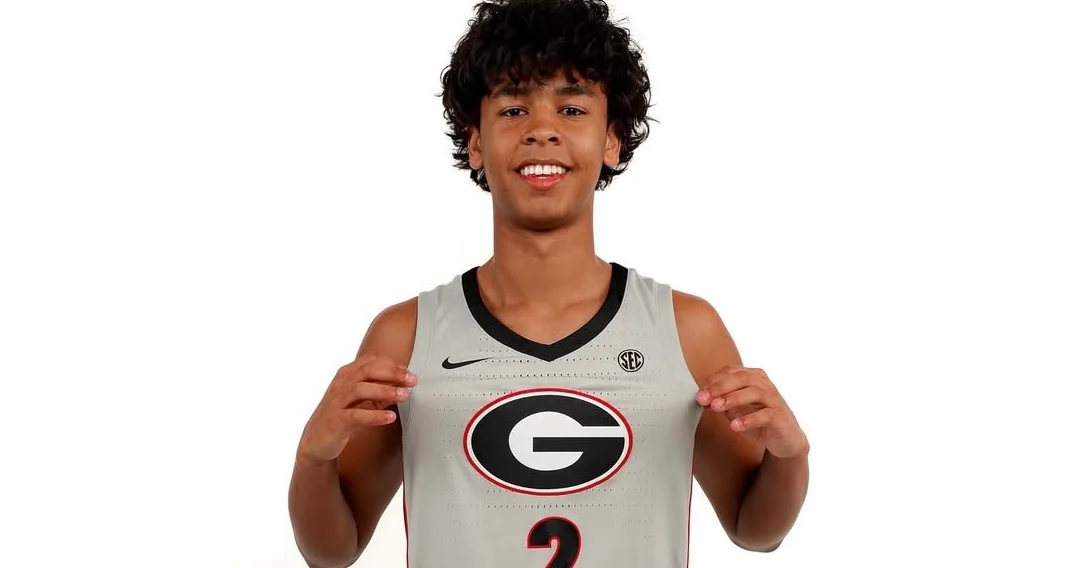
The University of Georgia added one of its most meaningful recent recruiting wins on August 7, when four-star shooting guard Justin Wise announced his commitment to the Bulldogs. Wise is ranked No. 30 overall in the 2027 class by Rivals, and his pledge gives Georgia its first commitment in that cycle.
On the surface, that is already a headline result for Georgia men's basketball. But the story carries extra weight because of where it happened, who Georgia beat, and what the commitment may signal about the program's recruiting traction. Wise is a 6-foot-4 guard from North Oconee High School in Bogart, Georgia, just outside Athens. Keeping a nationally ranked player so close to home matters differently than winning a long-distance battle, especially when the final group also included Texas, Tennessee, Miami, Vanderbilt, and Clemson.
For head coach Mike White, this was not simply about adding a talented prospect. It was also about converting recent on-court momentum into a recruiting result in Georgia's own backyard. That is often one of the clearest indicators that a program's pitch is getting stronger with elite prospects and the people around them.
Wise's decision became public less than two weeks after he had trimmed his list to six programs. That quick finish is part of what makes the commitment notable. Georgia was able to close against a strong mix of SEC, ACC, and national competition while selling a vision built on familiarity, fit, and recent program growth.
According to Rivals, Wise is the No. 30 overall prospect in the 2027 class, making him one of the higher-profile early pieces Georgia has landed for a future cycle. The commitment was first detailed in reporting from On3 and Rivals, which noted both his ranking and the significance of the Bulldogs keeping him home.
The local angle is impossible to ignore. Bogart sits just outside Athens, so this is more than an in-state commitment in the broadest sense. It is a nearby prospect choosing the hometown SEC program at a time when the Bulldogs are trying to sustain and deepen their place in the national conversation. For the University of Georgia, those are the kinds of wins that can resonate with fans, high school coaches, and future recruits alike.
Wise's profile lines up cleanly with what Georgia seems to value in the backcourt. He is listed at 6-foot-4, has the size to defend multiple guard spots, and has described himself as a do-it-all player who can operate at either point guard or shooting guard. That combination of size and flexibility is especially valuable in modern college basketball, where roster construction increasingly favors guards who can handle, create, switch defensively, and function both on and off the ball.
That description is not just recruiting language. It showed up in his production during the summer. Playing for Jet Academy on the Nike EYBL circuit, Wise averaged 11.9 points, 3.5 rebounds, 2.5 assists, and 1.4 steals per game while shooting nearly 36 percent from three-point range. For a young perimeter prospect, those numbers suggest a player who can contribute in several phases of the game instead of relying on one narrow scoring skill.
Rivals also identified him as one of the stronger performers at the NBPA Top-100 Camp, where evaluators highlighted his ability to shift between on-ball creation and off-ball scoring. That versatility matters for a college staff because it makes a prospect easier to project into different lineup structures. A guard who can initiate offense one possession and space the floor the next gives coaches more lineup options over the course of a season.
For the Georgia men's basketball program, that kind of fit is important. The Bulldogs are not just collecting stars for the sake of rankings. The more meaningful question is whether a commitment matches the style and roster vision a staff is building. In Wise's case, the answer appears to be yes.
Recruiting rankings draw attention, but résumé matters too. Wise arrives in this story as more than a camp standout or a prospect with projection. He is already one of the most accomplished high school players in Georgia.
The Georgia Coaches Association named him the North AAAA Player of the Year for the 2025-26 season, a recognition that reflects his standing inside one of the country's deepest basketball states. The official all-state release from the Georgia Coaches Association placed him among the top performers in the state for that school year.
Earlier in March, Wise helped North Oconee defend its state championship by scoring 22 points and grabbing seven rebounds in the title-game win over Pace Academy. Coverage from Georgia Public Broadcasting documented that championship performance, which reinforced the idea that Wise is not merely a prospect with recruiting buzz. He has already played a central role in winning meaningful high school games.
That distinction matters in projecting college players. Winning players are not automatically better prospects, but there is value in seeing how a guard handles pressure possessions, postseason expectations, and the responsibility of carrying major offensive stretches. Wise's title-game production gives Georgia a recruit whose résumé includes both evaluation-circuit credibility and championship-level high school impact.
Programs in talent-rich states often talk about protecting the home base. The phrase can sound generic, but in college basketball it has real strategic importance. When a staff wins battles for nearby blue-chip talent, it strengthens trust with local high school programs, keeps the program visible in the state's recruiting ecosystem, and gives future prospects a recent example of elite players staying home.
That is a major part of the significance here. Wise chose Georgia over Texas, Tennessee, Miami, Vanderbilt, and Clemson, a list that underscores the level of competition involved. This was not a case of a local prospect settling for the nearest school. Georgia had to beat multiple major programs that could offer brand appeal, conference visibility, and their own recruiting momentum.
The in-state angle also makes the commitment more symbolic. Bogart's proximity to Athens means this recruitment was visible and familiar in a way that national battles often are not. If Georgia can continue turning nearby elite prospects into commitments, that creates a different kind of stability in roster building. It does not eliminate the need to recruit nationally, but it gives the program a firmer local foundation.
For recruits and families trying to understand how geography can shape recruiting outcomes, broad college search tools such as the college directory can be useful in seeing how many options exist within a single region. Wise's decision is a reminder that location, comfort, and long-term trust can matter just as much as national branding when a prospect narrows toward a final choice.
This commitment is easier to understand when placed against the backdrop of Georgia's recent on-court progress. The Bulldogs are coming off a 2025-26 season in which they won a school-record 22 regular-season games, earned back-to-back NCAA Tournament bids for only the fourth time in program history, and posted the highest scoring average in school history at 89.4 points per game.
Georgia's athletic department highlighted that offensive and overall team success during the season, and the Bulldogs' second straight NCAA Tournament berth was detailed by the school in its official release on earning another NCAA Tournament bid. Those details matter because recruits are increasingly evaluating not just brand names, but evidence. They want to know what a coaching staff has built recently, how a team is playing, and whether a program appears to be rising, stable, or resetting.
Georgia now has stronger answers to those questions than it did a few years ago. The Bulldogs can point to tournament participation, record-setting offense, and a broader sense of program momentum in Athens. That changes the tone of the recruiting conversation. Instead of asking prospects to buy into a distant vision, the staff can point to recent results that make the vision more concrete.
For Georgia men's basketball, Wise's commitment looks like an early sign that recruits are responding to that progress. It does not prove a long-term trend on its own, but it is the kind of result that suggests the program's recent gains are beginning to carry more weight on the trail.
Because Wise is a 2027 prospect, there is still plenty of time before his eventual college arrival. In modern recruiting, that means evaluations can continue to evolve. Rankings may move. Physical development will continue. Skill expansion is expected. None of that changes the significance of the commitment, but it is important context when discussing any player several years away from college competition.
Still, the current outline is easy to see. A 6-foot-4 guard who can handle point guard duties, play off the ball, defend, and make perimeter shots fits almost any modern roster. That profile gives Georgia flexibility. It also gives the staff an anchor around which to shape future additions in the class.
Early commitments often matter beyond one player's individual talent. They can help establish a class identity. If a program starts with a versatile, high-level in-state guard, it can become easier to define complementary targets later, whether that means adding more length on the wing, another creator in the backcourt, or frontcourt pieces that fit the same style.
For families trying to understand how coaches view positional fit, resources like a sport directory can help place recruiting conversations in a broader context across programs and sports. The key takeaway from Wise's profile is straightforward. He looks like the kind of backcourt recruit who gives a coaching staff options rather than limitations.
Even in August, one commitment can change the way a program is discussed within its conference recruiting landscape. The SEC has become one of the most competitive environments in college basketball, both on the floor and on the trail. To sustain NCAA Tournament relevance there, programs need more than occasional splash additions. They need continuity, developmental fit, and recruiting credibility that extends beyond a single season.
That is why Wise's commitment has significance beyond the headline itself. He gives Georgia a recognized name in the 2027 class, a nearby win over strong competition, and an early indicator that the Bulldogs may be building more traction with top-end talent. The commitment is not a signed class, and it does not guarantee that every future target will break Georgia's way. But it does add evidence that the program's message is landing with players who have high-major options.
It also reinforces a broader truth in recruiting. Momentum is most meaningful when it shows up in multiple places at once, in wins, in roster development, and in talent acquisition. Georgia's recent results gave the Bulldogs a stronger platform. Wise's pledge suggests that platform is beginning to matter in elite recruiting conversations.
There are no additional Bubble college records attached to this story beyond the University of Georgia, so the strongest related context remains within the Bulldogs' own program arc. For readers comparing commitment timelines, prospect evaluation, and how families often sort through recruiting questions during the early stages of a cycle, a broader set of examples can often be found in a family recruiting Q&A archive.
Justin Wise's commitment stands out because it checks several boxes at once. Georgia landed a top-30 guard in the 2027 class. The Bulldogs beat a serious list of national and regional competition. They kept an accomplished in-state player close to Athens. And they did it at a moment when recent winning has started to make the program's recruiting pitch more persuasive.
For Georgia, the next thing to watch is whether this becomes the first piece of a broader 2027 foundation or remains a single early splash. For recruits, the lesson is just as clear. Program trajectory matters, local relationships matter, and fit still matters, even in a recruiting landscape dominated by rankings and national visibility. Wise's decision does not end the story of Georgia's rise, but it is a meaningful sign that the Bulldogs are becoming more capable of turning on-court progress into the kind of recruiting win that can shape future seasons.
Rosters, coaches, and division breakdowns for every NCAA and NAIA program we track.








