Insight
Illinois and Busey Bank launch landmark jersey patch deal across Fighting Illini athletics
Illinois will add Busey Bank as its first jersey patch partner in a reported $30 million, five-year deal across multiple Fighting Illini sports.

The University of Illinois Urbana-Champaign delivered one of the most significant late-July business stories in college athletics when it announced on July 27 that Busey Bank will become the inaugural jersey patch partner for Illinois Athletics beginning in fall 2026. The expanded agreement also names Busey the Official Financial Services Partner of the Fighting Illini, giving Illinois a highly visible, department-wide commercial partner just as a new NCAA era is about to begin.
According to Illinois, the Busey patch will appear across football, men's and women's basketball, volleyball, baseball, softball, soccer, and men's and women's golf. Busey branding will also appear on sideline apparel worn by head coaches including Bret Bielema, Brad Underwood, and Shauna Green. That means the partnership will not be confined to a single marquee team or one season. It will be spread across the athletic department, game broadcasts, event presentation, and community-facing programming.
For families, recruits, and fans following the broader business of college sports, this is more than a logo story. It is a clear example of how top-tier Division I departments are moving quickly to turn new commercial flexibility into long-term revenue and brand strategy. For Illinois, the move positions the University of Illinois Urbana-Champaign as one of the Big Ten programs most aggressively embracing the next phase of on-uniform sponsorship.
Illinois officially said the agreement begins in fall 2026 and expands a longstanding relationship with Busey Bank. The university framed the move as a major milestone, not just because it is the school's first jersey patch arrangement, but because it is part of a broader Pillar Partnership Program that extends beyond apparel placement.
Under the expanded relationship, Busey will continue as title sponsor of the Illinois Athletics Fighting Illini radio network and will remain connected to several community-centered events. Illinois specifically highlighted:
That matters because it shows Illinois did not treat this as a simple uniform patch sale. Instead, the school presented the agreement as a full brand integration with media, live events, and community outreach all tied together.
The official Illinois announcement emphasized the local connection as well. The university noted that Illinois and Busey were founded only months apart, in 1867 and 1868, and that both institutions are deeply rooted in Champaign-Urbana. In a crowded sponsorship world, that hometown alignment gave Illinois a narrative that goes beyond revenue and into institutional identity.
The scale of the agreement is what pushed this story from notable to nationally important. Sports Business Journal reported that the Illinois-Busey partnership is worth $30 million over five years. If that reported figure holds, it places the agreement among the largest jersey patch deals in college sports so far.
That number is significant for several reasons. First, it signals that jersey patch inventory in the college space is no longer experimental. Second, it shows that multi-sport visibility, especially at a Big Ten flagship with football and major basketball exposure, can command major value. Third, it suggests departments like Illinois are thinking several years ahead about recurring commercial income streams in a rapidly changing athletic economy.
SBJ also reported that Illinois athletic director Josh Whitman said Busey was the first and only company the school approached for the opportunity. That detail matters. Rather than opening a broad auction and searching for the highest outside bidder, Illinois appears to have prioritized trust, familiarity, and long-term alignment with a legacy partner that already had established credibility within the department and the community.
The timing of the announcement is not accidental. In January, the NCAA Division I Council's Division I Cabinet approved legislation allowing Division I programs to place additional commercial logos or patches on uniforms, equipment, and apparel in non-NCAA championship competition, including the regular season. The change becomes effective August 1, 2026, according to the NCAA.
Illinois clearly moved fast to capitalize on that new flexibility before the first full academic year under the updated rules. In practical terms, the school turned a future permission structure into immediate commercial planning. In symbolic terms, Illinois showed it is willing to be early rather than cautious when major business opportunities emerge.
For anyone who follows college sports finance, this is the bigger takeaway. The patch itself is visible, but the real story is the pace of adaptation. Programs are no longer just reacting to policy changes after the fact. The most organized departments are lining up inventory, categories, and partners in advance so they can launch the moment the rules permit it.
SBJ reported that Illinois became the third Big Ten school to announce a jersey patch deal, joining Wisconsin and Michigan State. Even without getting into a direct comparison of each agreement, that point places Illinois inside a small group of major-conference institutions actively shaping the next commercial norm in college athletics.
Big Ten programs already operate in one of the most visible and heavily monetized environments in the country. When schools in that conference begin adding uniform patch partners, the rest of Division I pays attention. The conference's media footprint, football exposure, and broad national fan bases make it a likely testing ground for sponsorship models that later spread across the NCAA landscape.
From an Illinois perspective, being early matters reputationally as much as financially. It reinforces the school's desire to be seen as both locally grounded and nationally ambitious. That is the balance Illinois repeatedly tried to communicate in the announcement.
Illinois did not frame Busey as just a buyer of logo space. The school described the bank as a charter member of its new Pillar Partnership Program, which signals a deeper relationship structure. The message was clear: this is a strategic alliance designed to touch multiple parts of the Illinois Athletics ecosystem.
Busey also brings scale. Illinois identified the company as a regional financial institution with $18.04 billion in assets serving clients across 10 states. That gives Illinois a sponsor with recognizable local roots in Champaign-Urbana but enough size to support a broader Big Ten brand platform.
That profile matters in modern college athletics. Departments want sponsorship partners that do more than write checks. They want brands that can fit on national broadcasts, look credible on premium inventory, and still resonate with local alumni and fans. Busey appears to check all three boxes for Illinois.
The official Busey page tied to the partnership also reinforces that long-view message, presenting the relationship as a community investment connected to student-athletes, alumni, and supporters across Illini sports. Taken together with Illinois' own announcement, the partnership appears designed to feel less like a transaction and more like a shared identity campaign.
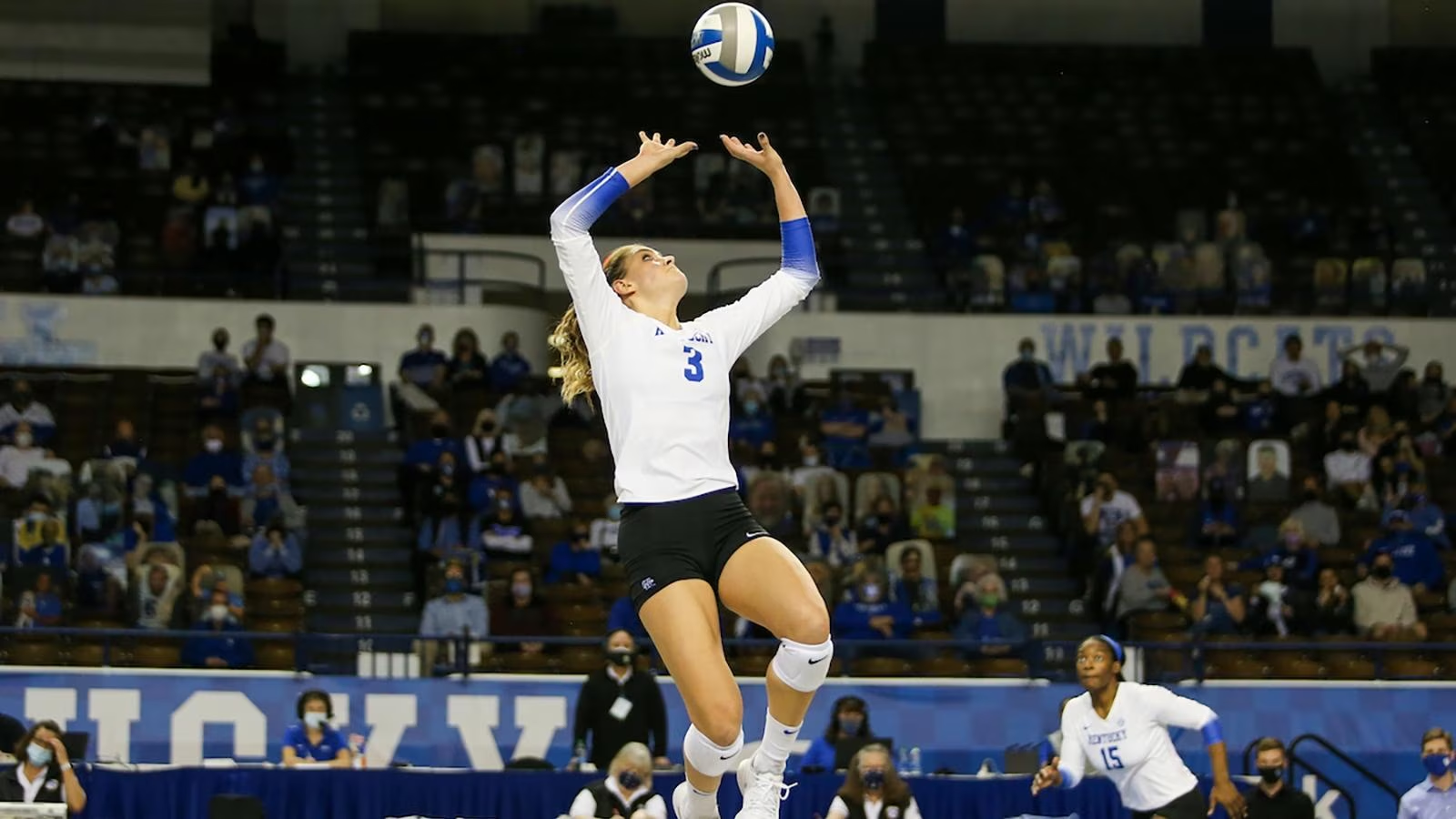
One of the most striking parts of the announcement is how many sports are involved. Illinois said the Busey patch will appear on uniforms in football, men's basketball, women's basketball, volleyball, baseball, softball, soccer, and men's and women's golf. That broad reach gives the partner repeated exposure across multiple seasons, fan segments, and media windows.
From a business standpoint, a department-wide patch strategy can be more valuable than a one-team arrangement because it creates cumulative visibility. Football may drive the biggest audience, but basketball adds winter relevance, baseball and softball extend the spring calendar, and Olympic sports deepen the brand's presence across the year.
It also means Illinois is not limiting the concept to a single flagship team. Even though the raw economics of football and basketball often dominate the conversation, the school appears to be using the patch model to reinforce a broader athletics identity.
That kind of all-department visibility could eventually shape how other schools package inventory. Instead of selling one sport at a time, departments may increasingly bundle exposure across multiple teams to create larger, more integrated deals.
For recruits, parents, and high school athletes, a story like this may seem far removed from the day-to-day process of finding a college fit. But it actually says a lot about the environment athletes are entering. College athletics is becoming more commercial, more professionalized, and more strategic in how departments generate revenue and present themselves publicly.
That does not mean every school will look the same. It does mean athletes should understand that the resources, branding, and visibility around a program can affect the overall experience. At major schools, partnerships like this can touch the game-day environment, fan engagement, media presence, and the broader image a program projects to recruits.
For athletes interested in a large public flagship environment, Illinois offers a useful example of how a school can blend tradition with modern sports business strategy. If you are exploring options at schools like the Pathley College Directory, this is the type of context that helps explain why one program may feel very different from another, even within the same division.
Even though this is a multi-sport business story, team identity remains central. The patch will be seen most publicly on major Illinois teams that drive fan interest and recruiting attention. The Illinois football team is one obvious example, especially with Busey branding also set to appear on sideline apparel worn by Bret Bielema. Likewise, visibility around Brad Underwood's men's basketball program and Shauna Green's women's basketball program gives the partnership premium placement in two of the most watched college sports.
Because the article is about the entire athletics department rather than one roster, it also highlights something important for recruits: the brand power of a school is often built across many teams at once. A school with broad athletic momentum can create spillover visibility that benefits multiple programs, not just the one with the biggest stadium.
For readers who want to follow how Illinois presents itself at the team level, the Illinois football team page offers one direct look at how the school fits into Pathley's college sports ecosystem.
Uniform sponsorship has existed in professional sports for years, and in some college settings internationally facing sports had already normalized visible commercial branding in other ways. But the NCAA's updated rule framework gives Division I departments a clearer path to expand that activity across regular-season competition. Illinois is among the earliest major schools to turn that permission into a high-dollar, high-visibility arrangement.
That makes the Illinois-Busey agreement a useful marker in the timeline of college sports business. The school did not simply wait to see how the market evolved. It acted quickly, tied the move to a long-trusted local institution, and secured what has been reported as one of the largest patch values in the country.
As more schools follow, athletes and families will likely see this become a normal part of the visual landscape. What feels new in 2026 may feel routine by 2028. Illinois has positioned itself to be remembered as one of the schools that helped make that transition real.
One reason this story stands out is that Illinois did not choose between hometown identity and national strategy. It tried to do both. The university stressed that it and Busey have neighboring origin stories in Champaign-Urbana dating back to the late 1860s, while also making clear that the partnership is large enough to matter nationally.
That blend can be powerful in recruiting and brand building. Schools often talk about community, but not every department can point to a commercial partner with this level of local history and regional reach. Illinois can. And by making Busey a pillar-level partner rather than just a patch logo, the school created a story that feels more rooted than opportunistic.
In a time when college athletics is often defined by rapid change, that grounding may help Illinois present this move as a natural extension of its identity rather than a break from it.
The Bubble college data supplied for this article did not include other usable school records, so there are no related program links to add here. Readers looking to compare Illinois with other schools can browse the Pathley Sport Directory or use Pathley Chat to explore similar college athletics environments by sport, level, and fit.
The bottom line is straightforward. Illinois has entered the jersey patch era with a reported $30 million, five-year agreement that touches multiple sports, major coaches, broadcast assets, and community events. It is a revenue story, a branding story, and a timing story all at once.
For the University of Illinois Urbana-Champaign, the move reflects a department trying to keep its historic identity intact while adapting quickly to the modern economics of college sports. For the broader market, it is another sign that on-uniform commercialization is moving from theoretical to standard practice at the highest levels of Division I athletics.
Illinois Athletics official announcement
Sports Business Journal report on the Illinois-Busey deal
Rosters, coaches, and division breakdowns for every NCAA and NAIA program we track.