Pathley News
Florida State University Sets Record With $235.4 Million Fundraising Year
Florida State University reported a record $235.4 million fundraising year, with major gifts supporting business, nursing, research and athletics.
Florida State University announced on July 23, 2026, that it completed the most successful fundraising year in school history, reporting $235.4 million in philanthropic support during the 2025-26 fiscal year. The total established a new institutional benchmark, surpassing the university's previous record of $225 million from the 2015-16 fiscal year.
The announcement was notable not simply because of the size of the total, but because of how the university framed it. Rather than centering the year around one isolated gift, Florida State presented the milestone as a university-wide result powered by alumni, parents, faculty, staff, friends and partners. In practical terms, that matters. At a major public university with a visible athletic brand and growing academic ambitions, broad-based donor participation can say as much about institutional confidence as the headline number itself.
According to Florida State, the total was generated across several parts of the university enterprise, including the FSU Foundation, Seminole Boosters, the Research Foundation, the Alumni Association and The John and Mable Ringling Museum of Art. That made the July 23 release larger than a standard advancement update. It offered a snapshot of how a modern Division I university is trying to grow at once in academics, research, student opportunity, health care and athletics.
For families following the college landscape, the story is also a reminder that fundraising has become one of the clearest indicators of institutional direction. Facilities, scholarships, endowed faculty support, research initiatives and athletic infrastructure are increasingly tied to donor capacity. Florida State's record year suggests the university is not treating those as separate lanes. It is presenting them as connected pieces of one larger plan.
The record total of $235.4 million topped Florida State's previous best by more than $10 million. University President Richard McCullough described the year as evidence of institutional momentum and donor confidence in the school's future. The university said the fundraising surge advanced priorities ranging from scholarships and faculty support to health care, research and major capital projects.
That broad framing is important for understanding what the announcement means. Fundraising stories can sometimes be limited to ceremonial naming news or campaign tallies, but this one had deeper strategic significance. Florida State used the moment to show that support is flowing into multiple corners of the institution at the same time, reinforcing a vision of growth that extends well beyond one department.
On the academic side, the university tied donor support to faculty development, scholarship access and preeminence initiatives. In health care, it highlighted nursing expansion and workforce preparation. In athletics, it pointed to support that helped open major football facilities. Taken together, those pieces help explain why the record matters beyond a single fiscal year.
For readers looking for a broader sense of where major public universities sit in the national landscape, resources like the college directory and rankings directory can help place schools in context. In Florida State's case, the fundraising update adds another data point to the university's profile, one that speaks to both institutional reach and donor engagement.
The largest gift highlighted in the July 23 announcement was a $65 million philanthropic investment from Dr. Herbert Wertheim for the College of Business. Florida State said that contribution established the Herbert Wertheim College of Business and renamed Legacy Hall as the Herbert Wertheim Center for Business Excellence.
According to the university, it was the largest philanthropic endowment gift in school history and the second-largest philanthropic gift Florida State has ever received. That distinction alone would have made it one of the defining developments of the fiscal year. But the substance of the gift also stood out because of the range of priorities it was meant to support.
When the gift was announced in December 2025, Florida State said the investment would support faculty development, scholarships, professional development opportunities, preeminence initiatives and a new Business of Healthcare effort. That final piece is especially telling. It reflects the increasingly common push among universities to connect academic programs with pressing workforce needs, particularly in sectors where business, management and health systems overlap.
For a school like Florida State University, the Wertheim investment also strengthens a message that many large public universities are trying to send. Athletic visibility may drive national recognition, but long-term institutional growth often depends on whether a university can elevate core academic units in visible, well-funded ways. Florida State clearly wanted this fundraising year to be seen through that wider lens.
Florida State also pointed to a major health-focused gift during the same fundraising year, a $10 million commitment from Bruce and Tracey Berkowitz and The Fairholme Foundation to the College of Nursing. The university said the gift was the largest in College of Nursing history and will help expand undergraduate nursing education and innovation at the Panama City campus.
That gift added a significant workforce development angle to the year's philanthropic story. Florida State tied the investment directly to needs in Northwest Florida, saying the funding would support scholarships for students from Bay, Walton and Gulf counties. It will also help fund technology and faculty research aimed at improving care, particularly for aging populations.
In an era when colleges are under pressure to demonstrate both academic quality and practical public impact, this kind of gift tends to resonate well beyond campus. The nursing investment was not just about expansion for expansion's sake. It was described as a targeted response to regional health care needs, with a direct connection to student support and community outcomes.
That matters for understanding the full shape of the record year. Florida State was not relying solely on prestige gifts or athletics visibility to define its momentum. It also highlighted donor support aimed at one of the state's most urgent labor and health sectors. In that sense, the university's 2025-26 fiscal year became a case study in how philanthropy can serve academic, workforce and public-service goals at the same time.
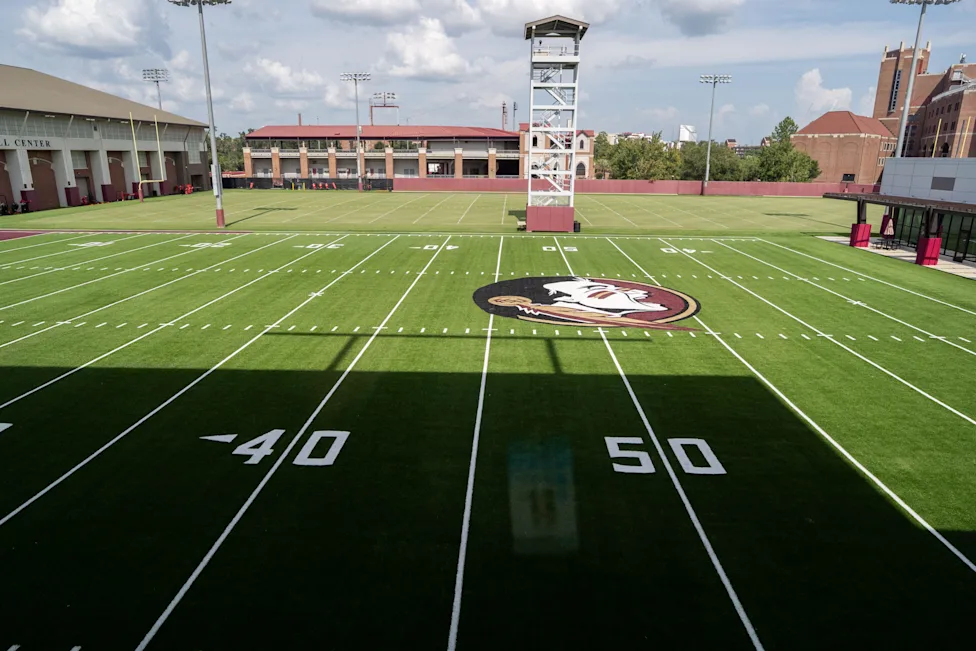
Even though the July 23 announcement was issued as a university-wide advancement milestone rather than a sports-specific release, athletics was a clear part of the overall picture. Florida State said it was one of the strongest fundraising years in Seminole Boosters history, and donor support helped open the renovated Doak Campbell Stadium and the Dunlap Football Center.
That part of the story is especially relevant in the current college sports environment. Across Division I, schools are navigating mounting expenses tied to facilities, staffing, athlete support and the broader competitive arms race that surrounds football and other high-profile sports. At Florida State, athletic infrastructure remains tightly connected to recruiting visibility, donor enthusiasm and national brand strength.
For that reason, the athletics component of the fundraising year should not be viewed as a side note. It was embedded within the university's larger presentation of growth. Florida State used the update to connect athletic projects with the broader mission of supporting student-athletes and strengthening institutional profile. That is consistent with the way many major NCAA programs now describe athletics, not as a separate enterprise, but as one highly visible part of a larger university strategy.
While this story is not about one specific sport roster or one coaching move, the university's athletic identity still forms part of the context. Readers tracking the broader campus athletic footprint can review the Florida State men's football team and the broader football program as examples of how flagship sports often sit at the center of donor attention and facility investment.
What makes Florida State's announcement especially newsworthy is the way it captures the current model of major-college growth. The university did not present the year as one transformative check changing everything overnight. Instead, it emphasized a layered result, a record total, thousands of supporters, flagship academic gifts, a major nursing investment and athletics projects that remain central to the school's brand.
That layered approach is increasingly important across Division I. Universities with national athletic aspirations are also under pressure to improve research output, strengthen academic reputation, expand student opportunity and address workforce demands in their regions. Fundraising has become one of the few mechanisms flexible enough to touch all those priorities at once.
Florida State's update illustrates that balancing act clearly. The same fiscal year included a historic business endowment gift, a major nursing expansion commitment and notable support for athletics facilities. Rather than treating those as competing priorities, the university presented them as complementary investments in a shared future.
From a college discovery standpoint, stories like this help explain why institutional momentum can matter to families beyond rankings or game results alone. A university's ability to attract sustained donor support often shapes the student experience in concrete ways, from scholarship opportunities and faculty hiring to program growth and facility improvements. A broader look at schools by geography can be useful too, especially through a resource like the state directory, which places programs within their regional higher education landscape.
Florida State's July 23 announcement carried another message beneath the surface. It suggested that the university sees this moment not merely as a celebration of one strong year, but as evidence that donors are buying into a long-range institutional direction. The school linked the record year to the continuation of its comprehensive campaign and said donor generosity is helping it expand opportunity, advance discovery and prepare future leaders.
That language points to a strategic objective. Florida State is trying to show that it can compete across the full spectrum of modern university priorities. It wants to be seen as a place where athletic visibility, academic investment, health-sector relevance and research ambition reinforce each other rather than crowd each other out.
That is not an easy model to sustain. Many colleges face tension between resource-intensive athletics and broader academic needs. What Florida State highlighted in this release is that, at least in this fiscal year, it generated enough philanthropic support to strengthen multiple priorities at once. Whether that pace can continue over time is a separate question, but the result itself is significant.
The reporting in Florida State's announcement aligns with the university's own releases on the milestone year and the two major gifts that helped define it. The July 23, 2026 university news release detailed the record $235.4 million in philanthropic support and identified the different institutional channels involved in reaching that total, according to Florida State University News.
The university's earlier December 22, 2025 release outlined the $65 million investment from Dr. Herbert Wertheim, including its role in establishing the Herbert Wertheim College of Business and supporting faculty development, scholarships and the Business of Healthcare initiative, according to Florida State University News.
Florida State also separately detailed the $10 million nursing gift in a September 22, 2025 release, explaining its expected effect on undergraduate nursing education and innovation at the Panama City campus, according to Florida State University News.
Within the Tallahassee college landscape, Florida Agricultural and Mechanical University is another prominent institution worth noting. While this fundraising story is specific to Florida State, the presence of another major university in the same city adds local context to how Tallahassee functions as a higher education center in North Florida.
The most important question after a record fundraising year is not whether the headline number was impressive. It was. The more revealing question is how effectively the university turns that philanthropic support into durable outcomes. At Florida State, that means watching whether the Wertheim business investment translates into visible academic expansion, whether the nursing gift produces measurable workforce impact in Northwest Florida and whether athletics facility investments continue to shape the university's competitive profile.
For observers of the broader college sports and recruiting landscape, Florida State's announcement is a useful example of where top-tier institutions are headed. The schools that gain traction are often the ones able to align donor support across academics, student opportunity and athletics without presenting those priorities as mutually exclusive. Florida State's 2025-26 fiscal year did exactly that. The record total was the headline, but the deeper story was the university's attempt to build strength across the entire institution at once.
Rosters, coaches, and division breakdowns for every NCAA and NAIA program we track.