Pathley News
No. 3 Duke opens 2026 with a statement win at USC
Duke women's soccer opened 2026 with a 3-1 road win at USC, scoring twice in the first 12:04 and showing why the Blue Devils entered ranked No. 3.
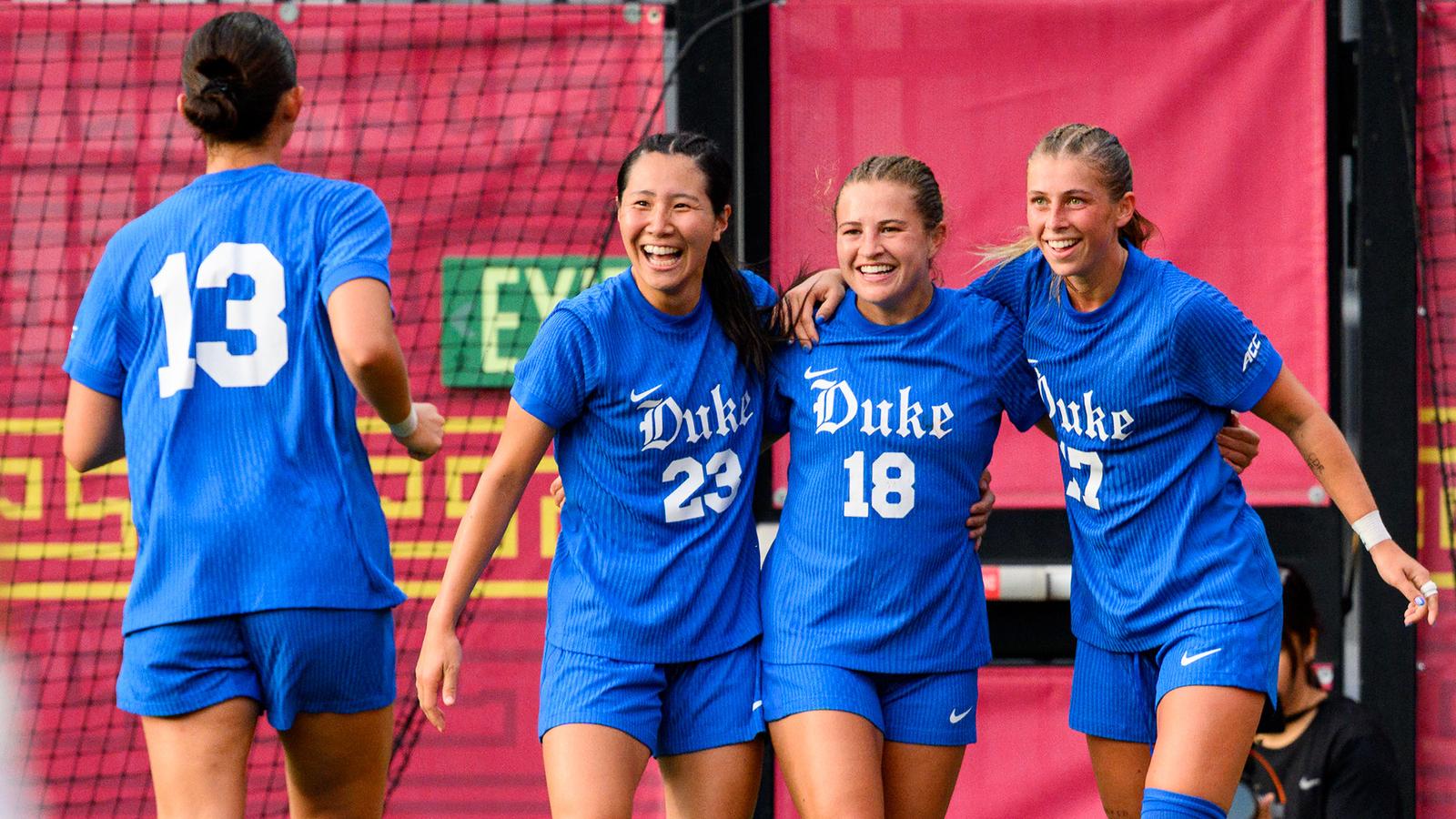
Duke University did not need long to announce itself at the start of the 2026 season. In Los Angeles on August 12, the No. 3 Blue Devils opened their campaign with a 3-1 road win over Southern California, scoring in the second minute, adding another before the match was 13 minutes old, and carrying that early burst all the way to the final whistle.
Season openers can be noisy, especially in women's soccer. Teams are sorting out chemistry, game fitness, and rotations. Even talented groups often need time to settle into their competitive rhythm. Duke looked like a team that skipped that stage. The Blue Devils were sharp from the opening sequence, composed in possession, and clinical in front of goal. By halftime, they had built a 3-0 lead against a major opponent on the road and turned an early nonconference test into one of the most notable results of opening week.
The performance also matched the expectations attached to the program. After reaching the College Cup in 2025, Duke women's soccer entered the new season with a No. 3 national ranking. A preseason number does not guarantee anything in August, but it does create a standard. Against USC, Duke played like a team comfortable with that standard.
The opening goal arrived at 1:18. Mia Minestrella finished a sequence created by Katie Shea Collins and Sam Courtwright, giving Duke a lead before many matches have even found a steady tempo. That mattered for more than the scoreboard. On the road, against a power conference opponent, an early strike can reshape everything, from spacing to urgency to how each team manages risk.
USC was forced into chase mode almost instantly, and Duke kept pressing rather than backing off. At 12:04, Avery Oder doubled the lead after combining with Courtwright, who helped set the play up just outside the box. Oder drove toward the six yard area and finished inside the right post for a 2-0 advantage.
According to Duke's postmatch recap, those two goals marked the third quickest pair of goals in program history. That note adds useful context because it shows the first 12 minutes were not simply productive, they were historically explosive by the program's standards. For a team with national ambitions, that kind of precision in a season opener is a powerful signal.
The first half was not just about scoring early. It was about how the Duke women's soccer program maintained control after grabbing the lead. Teams that strike quickly sometimes become stretched as the opponent pushes back. Duke stayed organized, continued to attack with balance, and never let the game drift into the kind of emotional back and forth that often helps the home side recover.
The third goal arrived at 30:25 and underlined an important feature of the performance. Collins scored, with assists from Oder and Jocelyn Travers, pushing the lead to 3-0 before halftime. By that point, Duke had received goals from three different players and assists from multiple creators. That variety matters, especially early in a season, because it suggests the attack is not dependent on one player having to manufacture everything.
Minestrella, Oder, and Collins each found the net once. Courtwright finished with two assists. Oder added an assist to go with her goal, making her one of the most influential players on the field. In a single opener, Duke showed a blend of finishing and chance creation that can be difficult to defend because the threats arrive from different spots and through different combinations.
That is one of the clearest takeaways from the night. Duke was efficient rather than wasteful. The Blue Devils did not need a flood of chances to score three times. They capitalized on their best moments and spread the production around. For opponents scouting the season ahead, that kind of distribution can be as concerning as the score itself.
For families and players who follow the national women's soccer landscape, a result like this also reflects the value of continuity. Productive teams in August often rely on players whose decision making is already synchronized. Duke's opener looked like that. The movements were timely, the final passes were clean, and the finishing was decisive.
USC did score in the second half when Eleanor Morrissey found the net at 62:36 off assists from Jaiden Rodriguez and Savannah Leifried, cutting the margin to 3-1. That gave the Trojans a potential opening, at least briefly, but they never generated the sustained pressure needed to seriously threaten Duke's command of the match.
The underlying numbers help explain why. Duke outshot Southern California 13-5 and held a 6-1 edge in shots on goal. The Blue Devils also earned eight corner kicks to USC's four. Those are the types of categories that usually reflect territorial control and repeated pressure, not just isolated moments.
Defensively, the outing was just as impressive as the attack. Goalkeeper Molly Vapensky played all 90 minutes, allowed one goal, and did not have to make a save because USC managed only one shot on frame. That detail says a great deal about the defensive structure in front of her. It is not only about preventing shots, it is about limiting clean looks and forcing attacks into less dangerous areas.
On the other end, USC's two goalkeepers combined for three saves while conceding three goals. The contrast was clear. Duke was the sharper side in both boxes, and in high level college soccer, that usually decides the result.
One of the more interesting layers in this opener was how it connected to longer player trends rather than standing alone as a one match spike.
Oder's goal and assist made her one of the most impactful players on the field, and Duke's recap noted that she has now scored in the first half of a season opener for the second straight year. That kind of early season reliability is meaningful. It suggests a player who is comfortable stepping into immediate responsibility instead of needing a few matches to build confidence.
Minestrella's goal carried historical weight as well. Duke reported that she has scored in five of the program's last six matches dating back to 2025. The strike against USC also moved her to 31 career goals, tying Michelle Cooper for eighth on Duke's all time list. That is not a small benchmark at a program with Duke's level of recent success and national relevance.
When a team opens the season this way, it is tempting to focus only on the scoreline. But the player notes add depth to the story. Duke was not relying on random finishing luck or one isolated surge. The Blue Devils were leaning on players with proven form and extending patterns that already existed late last season. That is often what separates a genuine contender from a team that simply caught a hot night.
Entering the year, the Blue Devils were already under the spotlight because of their 2025 College Cup run and their No. 3 ranking. The question in August was whether the new season version of Duke would immediately look like a national title level side, or whether it would take time to regain top gear.
Against USC, the answer was encouraging. Duke University looked organized enough to punish mistakes early, deep enough to produce from multiple attackers, and disciplined enough to keep the match from turning after USC cut the lead in the second half. Those are all qualities that matter over the course of a long season, especially in the ACC and in the NCAA tournament.
The result gained even more weight four days later when Duke followed it with a 1-1 draw at No. 9 UCLA. That unbeaten California trip added context to the opener and made the 3-1 win in Los Angeles feel less like an isolated road performance and more like an early statement about the team's floor and maturity.
From a schedule management perspective, road nonconference games against top opposition can reveal a lot. They test composure, adaptation, and game state control before conference play tightens. Duke passed that test convincingly.
For recruits, coaches, and families tracking elite women's soccer, this match offered a good snapshot of what high level program identity looks like in practice. It was not just talent. It was execution under pressure, quick recognition of space, and the ability to convert opportunities without losing defensive shape.
That matters in recruiting conversations because top programs are rarely looking at one quality in isolation. They value players who can fit into fast collective sequences, make disciplined decisions when the game state changes, and contribute without needing every possession built around them. Duke's opener highlighted those traits repeatedly.
For athletes exploring the broader college landscape, a college directory or a sport directory can help place a result like this in context, especially when comparing where programs sit by geography, division, and conference profile. Duke is operating in one of the most competitive environments in the sport, and road wins against major opponents carry national significance because the margins at that level are usually small.
The recruiting side of women's soccer also tends to reward consistency over time. Duke's opener reflected that. Minestrella's scoring run dating back to 2025, Oder's repeat impact in season openers, and Courtwright's playmaking all point to a roster with returning contributors who understand the demands of the level.
For families with questions about how recruiting timelines, divisions, and roster realities intersect in soccer, a resource like family recruiting Q&A can be useful background reading. The main lesson from this match, though, is visible on the field. Programs that contend nationally usually combine depth, experience, and a clear style of play. Duke showed all three.
Within Durham, North Carolina Central University offers a different college athletics context from Duke, with its own place in the in state sports landscape. While this story centers on a top five national women's soccer result, nearby programs still help illustrate how varied the college search can be depending on division, conference fit, campus setting, and athletic priorities.
That local contrast is one reason broader tools like the rankings directory can be useful for context when discussing schools in the same city or region. It reminds readers that college athletics stories often sit within a wider map of institutional options, even when one program is drawing the national headline.
Opening week results can be deceptive, but they can also reveal which teams are already performing with postseason level clarity. Duke's 3-1 win at USC belonged in that second category. A highly ranked team went on the road, scored twice by 12:04, built a three goal halftime lead, and controlled the match statistically from start to finish.
Attendance was 1,066, a normal figure for the college soccer environment, and the setting did not diminish the significance of the result. What mattered was the quality of the opponent, the venue, and the authority of Duke's performance. Road wins over major programs are difficult to secure, especially in openers, and this one came with very little ambiguity.
Authoritative reporting from Duke's official match recap and box score supports the broad picture of control, from the goal sequence to the shot margin to the corner kick advantage. The NCAA's broader women's soccer coverage also provides context for how these early nonconference tests fit into the national season structure and tournament race. Sources: Duke Athletics match recap, official box score, and NCAA Division I women's soccer.
It is still early, and smart evaluations in August avoid declaring too much off a single result. But it is fair to say this was the kind of opener contenders want. Duke women's soccer looked ready for high stakes matches immediately, not just physically but tactically and mentally. The Blue Devils attacked with speed, defended with discipline, and showed enough balance to suggest that opponents will have a hard time solving them by focusing on one player.
Going forward, the most important question is not whether Duke can build off a strong opener, but how consistently it can sustain this level against the deeper grind of top tier competition. If the first week is any indication, the Blue Devils have given themselves a strong platform. For the rest of the field, the message from Los Angeles was simple. Duke arrived in 2026 looking very much like a team prepared to chase another College Cup run.
Rosters, coaches, and division breakdowns for every NCAA and NAIA program we track.