January Training Clinic
- Jan 11 to 12, 2026
- University of Washington, Seattle, WA
Two-day January training clinic hosted by the Washington Soccer Academy (men's program) for high-school-aged players, featuring technical and tactical instruction.
Browse programs
College directoryEvery program, filtered by what fits Sport directoryMen's and women's, every division State directoryPrograms in the states you would play inGo deeper
Major directoryYour major and your sport in one list Camp directoryID camps and showcases at college programs Conference directoryEvery conference and its member collegesOne plan built for University of Washington Men's Soccer, with the roster read, the coach's contact and a dated plan, delivered within 24 hours. An expert checks every plan.
Overview
Key facts about the University of Washington men's soccer team.
From its campus in Seattle, Washington, University of Washington competes in Division I men's soccer as a member of the Big Ten Conference. After the 2026-27 season, it loses four midfielders, the most of any position group, followed by two defenders. Winning percentage rose 16 points, from 8-6-7 in 2024 to 16-6-2 in 2025.
Head Coach
players a season
Fit check
Pick your position and level, add a test score if you have one, and get an instant read on your chances here. Free, and no account needed.
Coaching staff
Head coach
Jamie ClarkHead CoachRoster
The roster by class
30 players on the latest roster (2026).
Roster openings after 2026-27
Goalkeeper 1 · Defender 2 · Midfielder 4 · Forward 2
Watch midfielders for the Class of 2027, since four leave after the 2026-27 season, followed by two defenders. A recruit at those positions would arrive just as the roster turns over.
See who you would be replacingPositions
How many players a season the program carries at each position, and how tall they are.
Average height 6'4"
Average height 6'1"
Average height 5'11"
Forwards are thinner here than at most programs, at 15% of the roster, around five a season, versus an average of 22% among Division I men's soccer teams.
Transfers
transfers in for 2026-27
transfers out
Footprint
Where the players are from
Counted from players on recent rosters with a known hometown.
Top home states
Players from Washington fill 63% of the roster, which makes this one of the more local programs among Division I men's soccer teams. Recruits from Washington could find the clearest path onto the roster.
Results
Swipe to see every season
2021
86%18-2-2overall
6-1-2conference
2022
83%15-2-3overall
7-1-2conference
2023
47%5-6-7overall
2-4-4conference
2024
55%8-6-7overall
4-3-3conference
2025
71%16-6-2overall
7-3conference
This team has a 69% winning percentage over the last five seasons, in the top 10% among Division I men's soccer teams, and raised its winning percentage 16 points, from 8-6-7 in 2024 to 16-6-2 in 2025.
Standings
Where University of Washington stands in the Big Ten Conference.
Schedule and travel
The season's games, home and away, and how far the team travels.
Recruiting
Washington men's soccer is an elite NCAA Division I program competing in the Big Ten. The Huskies won the program's first national championship in 2025 after advancing through the NCAA Tournament, so recruiting is highly selective and roster opportunities are limited.
Recruiting difficulty
Washington is currently an elite national program where most roster spots are filled by proven high-level recruits.
What coaches value
How to get recruited here
Build a strong competitive résumé through elite club soccer, showcase events, and high-level match experience. Send a concise recruiting profile with position, graduation year, academic information, verified testing or match data, full-game film, and selected highlights, then maintain timely communication with the staff.
How hard is it to make the team
It is extremely difficult to make Washington's men's soccer team because the program competes at the highest Division I level and recently won a national championship. Recruits generally need standout technical and tactical ability, strong athletic tools, and experience performing against nationally competitive opposition.
Who fits this program
Videos
Program stats
Athletes on the roster
Coaches on staff
Spent per athlete
Spending and revenue a year
Revenue covers 22% of what the program spends.
The operating budget is above its peers: about $19,000 per athlete in the 2025 EADA report, more than three times the Division I median. The team spends roughly $3.1 million and takes in $700,000 in the same report, covering 22% of its spending.
Source: the federal Equity in Athletics report, 2025.
Feeders
The high schools and clubs that sent the most players to this roster.
Lake Washington High School is the top feeder, with three players in recent seasons, ahead of Gonzaga Preparatory School with two. At least two players apiece have come from five schools or clubs.
The school
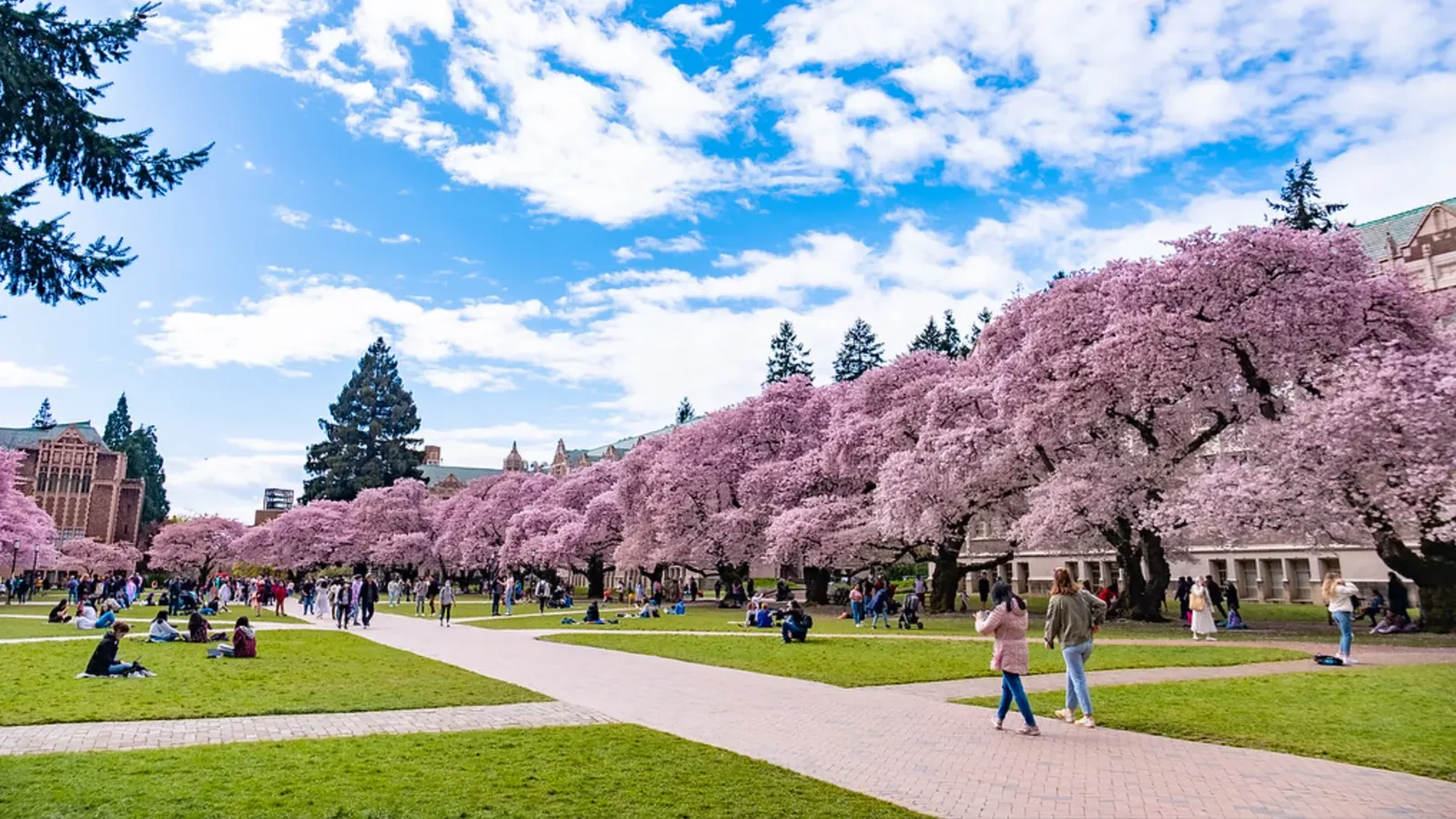
The University of Washington combines research-driven strengths in computing, engineering and health with challenging coursework, making academic preparation and a realistic plan for balancing classes and competition especially important.

Acceptance rate
Graduation rate
Camps
New camp dates are not posted yet. These ran last season.
Two-day January training clinic hosted by the Washington Soccer Academy (men's program) for high-school-aged players, featuring technical and tactical instruction.
Official links
Similar programs
Programs at a similar level, with similar academics, worth adding to your recruiting list.
Big Ten competition, established academic strengths and an active residential campus draw athletes seeking a full college experience.
Big Ten competition, strong academics and nearby Washington opportunities give athletes compelling reasons to consider this campus.
Close faculty connections and Seattle internship access complement competitive athletics and a service-centered Jesuit education.
Division I competition, environmental academics and Burlington's outdoor culture give athletes distinct reasons to pursue a place here.
Strong academics, ACC competition and in-state value appeal to athletes seeking a demanding college experience.
Health sciences, research opportunities and ACC competition draw athletes who want an academically demanding urban college experience.
Teams in Washington
Spokane, WA
Nationally prominent basketball, reachable faculty and strong career outcomes give athletes compelling reasons to consider this campus.
Seattle, WA
Close faculty connections and Seattle internship access complement competitive athletics and a service-centered Jesuit education.
Roster openings · 2026-27
Every program ranked by players in their final year, with the positions they are losing.
Three ways to start
Pick the option that matches where you are, and we will show you the plan that fits.
News
Resources