Pathley News
Washington Men’s Soccer Wins First NCAA Title on Golden Goal vs. NC State
Washington men’s soccer captured its first NCAA Men’s College Cup title with a 3-2 golden goal win over NC State, completing a historic all-road tournament run.
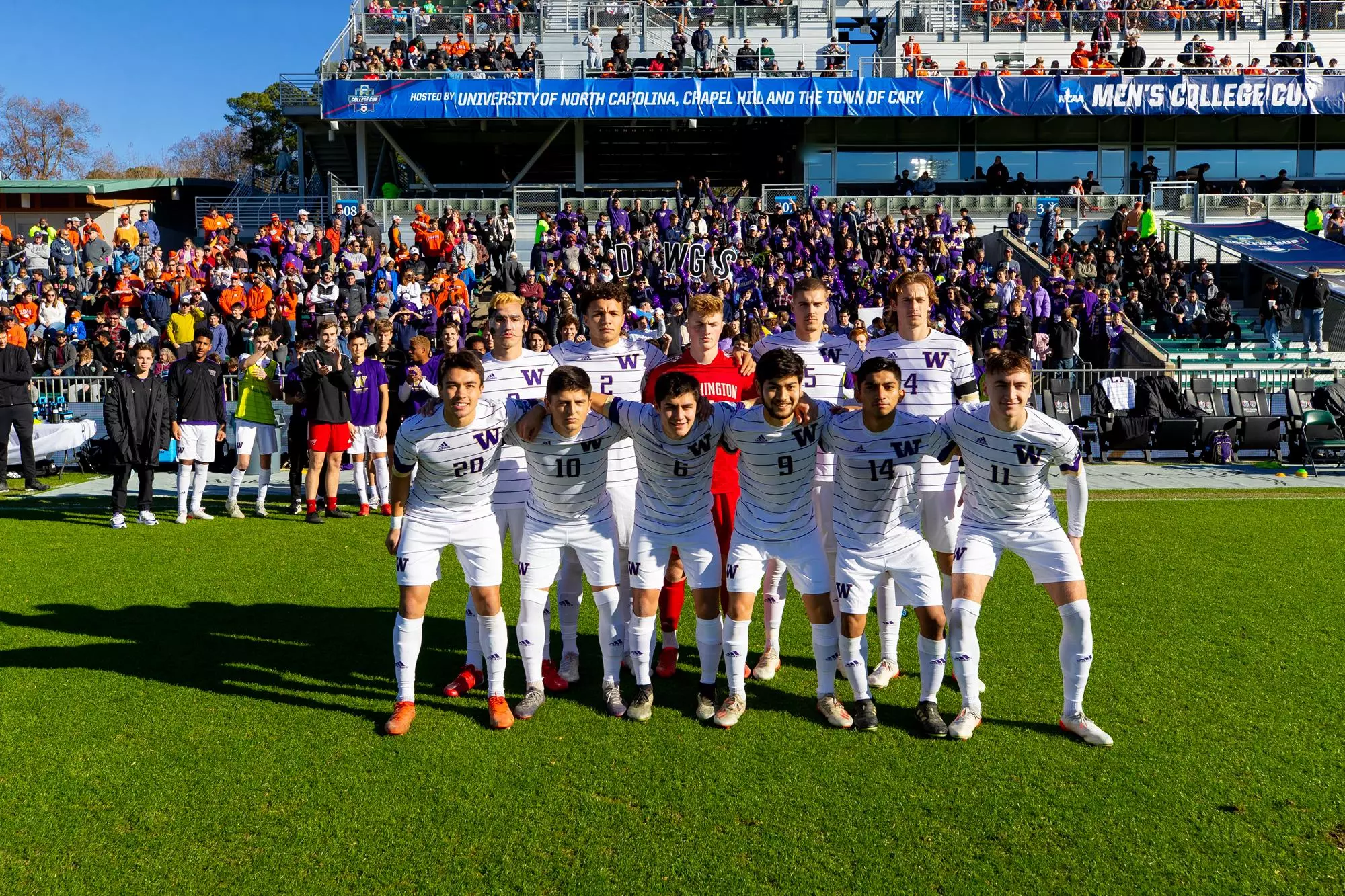
On a freezing night in Cary, North Carolina, the University of Washington men’s soccer team finally broke through a ceiling that had hovered over the program for decades. With a golden goal in overtime to beat NC State 3-2 in the 2025 NCAA Division I Men’s College Cup final, the Huskies claimed the first NCAA national championship in program history and one of the most dramatic titles in recent men’s college soccer.
For recruits, parents, and coaches watching from Seattle and around the country, this was more than a single result. It was a blueprint for how a program can combine local talent, a clear identity, and the grind of an all-road NCAA tournament run to reach the top of the sport.
Played at First Horizon Stadium in Cary in temperatures around 28 degrees, the final pitted two programs chasing their first men’s soccer national title. Fifteenth-seeded NC State arrived at 16-3-4 after a breakthrough season, while unseeded Washington came in at 15-6-2 and riding a postseason surge that had never taken them back to Seattle.
Despite the neutral-site designation, the atmosphere tilted heavily toward NC State. More than 10,000 fans, many in red and within easy driving distance of the Wolfpack’s Raleigh campus, turned the national final into what felt like a road game for Washington. Head coach Jamie Clark’s team had already built its identity around composure in hostile environments. In Cary, that resilience was tested and ultimately defined the night.
The opening 45 minutes were tight and tactical. Both teams traded half-chances as they searched for ways to unlock disciplined defensive blocks. Washington keeper Jadon Bowton, the lone remaining player from the Huskies’ 2021 runner-up squad, handled NC State’s early looks with poise. At the other end, Wolfpack goalkeeper Logan Erb dealt with Washington’s direct play, service from wide areas, and dangerous crosses into traffic.
The stalemate finally broke just before halftime. In the 44th minute, Erb misplayed a ball near the top of the penalty area. In the ensuing scramble, Washington forward Zach Ramsey pounced on the loose ball and drove a first-time shot into the open net. It was Ramsey’s second goal of the College Cup and pushed the Huskies into the break with a 1-0 lead. For NC State, it was just the second time all season they had trailed at halftime.
Early in the second half, Washington looked like it might run away with the national championship. The Huskies’ second goal was the culmination of the attacking identity they had sharpened all year.
In the 62nd minute, senior midfielder and Big Ten Midfielder of the Year Richie Aman found space near the right side of the box. With the calm of a playmaker who had been dictating games all season, he whipped in a low cross toward the center of goal. Midfielder Joe Dale timed his run perfectly, slipping between two NC State defenders and redirecting the ball past Erb for a 2-0 Washington lead.
Aman’s assist was his 14th of the season and another example of why he emerged as a MAC Hermann Trophy finalist and First Team All-American. At 2-0, Washington had converted two of its growing number of shots on target and looked in full control against a Wolfpack team that rarely chased games.
NC State, however, refused to let the season quietly end. Just four minutes after Dale’s goal, the Wolfpack halved the deficit and completely changed the feel of the match.
In the 66th minute, star forward Donavan Phillip struck again, finishing from close range after a headed pass from Nikola Markovic. It was Phillip’s fourth goal of the NCAA tournament and fit the pattern that had defined NC State’s run: when he scored, the Wolfpack usually surged.
From there, NC State took territorial control. They pushed higher, pressed harder, and forced Washington into deeper defensive phases. By the end of regulation, NC State held a 17-13 advantage in shots and a 10-5 edge in corner kicks. The pressure finally produced the equalizer in the 87th minute, when midfielder Taig Healy fired from the top of the box after quick combination play from Justin McLean and Calem Tommy.
Healy’s strike made it 2-2 and sent the largely pro-NC State crowd into full celebration. With momentum fully on the Wolfpack’s side at the end of regulation, Washington suddenly faced a psychological and tactical test that often decides championships.
As the match moved into golden-goal overtime, Washington had to flip the emotional script. NC State had just clawed back from 2-0 down. The weather was brutal. The crowd was loud. The Huskies’ all-road tournament run had already asked a lot of them. One more big moment would define their season.
They found it less than two minutes into extra time.
After a series of short passes in traffic near the NC State goal, Washington defender and All-America standout Harrison Bertos found himself free inside the six-yard box. Fellow defender Egor Akulov slipped him the final ball, and Bertos calmly slotted a low shot into the corner at the 91:54 mark to win the national championship 3-2.
The celebrations paused briefly as the officials checked for offside via video review. When the goal was confirmed, Washington’s bench spilled onto the field. Years of work and a month of knockout games away from home had ended with one golden touch.
Bowton finished the night with five saves, Erb with six, and Washington closed with nine shots on target to NC State’s seven. The stat line reflected what the scoreboard showed: in a final that swung back and forth, Washington had just a bit more quality in the decisive moments.
For the program, the 2025 title was more than a trophy. It was a statement about what Washington men’s soccer has become and where it is headed, especially as the university continues to settle into Big Ten membership.
According to the official Washington recap and national coverage from outlets like the NCAA and ESPN, the 2025 Men’s College Cup crown is regarded as the university’s first official NCAA men’s team national title, since earlier football and men’s rowing championships did not fall under the NCAA championship structure.
External sources: NCAA.com, ESPN.
Washington entered the 2025 season with relatively modest external expectations. The Huskies started the year unranked and were picked fifth in the Big Ten preseason poll. Inside the locker room, though, Clark’s staff and players believed they could contend.
Over the course of the season, Washington climbed the conference table on the strength of one of the most dangerous attacks in college soccer. The Huskies finished second in the Big Ten regular-season standings at 7-3-0 and went into the NCAA tournament with a 15-6-2 record.
Offensively, they were prolific. Washington scored 51 goals, the most in any season of Clark’s 15-year tenure, and ranked among the national leaders in goals, points, and assists. Eight Huskies earned nine Big Ten postseason awards, with Aman taking home Big Ten Midfielder of the Year and joining Bertos, Ramsey, and others on all-conference teams.
For prospects looking at the University of Washington, that attacking profile matters. It shows that Washington is not just a defensive, grind-it-out tournament team. The Huskies can score, develop creative midfielders, and put multiple players in positions to earn conference and national honors.
Washington’s path to the title may be remembered as one of the most difficult in Men’s College Cup history.
As an unseeded at-large team, the Huskies did not receive a first-round bye and never hosted a match. Every step came away from Seattle, against opponents that were usually higher seeded and playing in front of home or regional crowds.
Their six-match run included:
In all, Washington won five straight games over top-16 seeds and became the first program to win six NCAA tournament matches all away from its home campus, according to national outlets and the official tournament records documented here.
For current recruits, that track record is powerful. It signals a team built to travel, to adapt to hostile environments, and to maintain tactical discipline against elite opposition. For college coaches, it is a reminder that seeding and preseason rankings are only a small part of the story once the bracket is set.
Washington’s championship was a collective achievement, but several players turned the 2025 season into personal showcases.
Senior midfielder Richie Aman was the centerpiece of Washington’s attack. His 14th assist of the season came in the final on Joe Dale’s goal, and his full body of work earned him a spot as a MAC Hermann Trophy finalist. He was recognized as a First Team All-American on the field and a First Team Academic All-American off it, underscoring a profile that resonates with families who care about both performance and classroom success.
In recruiting conversations, players like Aman represent what a program can promise: development into a complete midfielder who can impact games at the highest level of college soccer while maintaining top academic standards.
Defender Harrison Bertos anchored Washington’s back line all season and earned All-America honors for his two-way impact and leadership. His golden goal in the national final was a fitting capstone to a year where he helped the Huskies shut down top-seeded opponents and then stepped into the spotlight when the title was on the line.
For center backs and fullbacks studying title-winning teams, Bertos’ season is a textbook example of modern defensive play: ability to organize, defend 1v1, and contribute decisively in the attacking third.
At the College Cup itself, Washington claimed both major individual honors:
Bowton’s journey is particularly notable. As the last link on the field to Washington’s 2021 runner-up squad, he experienced both heartbreak and redemption on college soccer’s biggest stage. That kind of long-term development arc is exactly what many goalkeepers and defenders look for when they evaluate programs.
One of the most striking details of Washington’s title team is how local it was. Nineteen of the Huskies’ 29 players hailed from the state of Washington, with several, including Joe Dale and Asher Hestad, coming from Seattle itself.
That local core matters for Pacific Northwest recruits. It sends a clear message: if you are a top player in Washington or the broader region, you do not have to leave home to compete at the very top of Division I men’s soccer. You can win a national championship at a program like the University of Washington while playing in front of family and friends and building connections in a city with a deep soccer culture.
While Washington’s golden goal delivered jubilation in Seattle, the same moment brought heartbreak for NC State. Under head coach Marc Hubbard, the Wolfpack entered the final at 16-2-4 and had carved through their side of the bracket with wins over Marshall, UNC Greensboro, Georgetown, and Saint Louis.
Their late rally in Cary, capped by Healy’s 87th-minute equalizer, showed how thin the line is between national champion and runner-up. A different bounce on Bertos’ goal, a different look on a corner kick, and the story might have flipped.
For recruits, NC State’s run reinforces a broader truth about the modern NCAA men’s soccer landscape: parity is real. Programs outside the traditional “blue blood” list can put together a strong recruiting class, find the right tactical identity, and play their way into a Men’s College Cup final.
This championship arrives as Washington adjusts to life in the Big Ten, one of the most competitive men’s soccer conferences in the country. With multiple conference titles, 12 NCAA tournament trips in 15 seasons, and now two College Cup final appearances under Jamie Clark, the Huskies have firmly entered the national elite.
For prospects evaluating Big Ten men’s soccer, Washington’s title adds another marquee destination to a conference that already includes traditional powers. It also underscores how West Coast programs now fit into a Big Ten footprint that spans time zones and recruiting territories.
From a recruiting strategy standpoint, a national title provides:
Families looking at academic fit, campus culture, and the broader experience will also note that Washington’s success coincides with the university’s broader national profile. Combining high-level soccer with a top public university is an especially strong selling point.
The Huskies’ championship will likely ripple across the entire Seattle soccer ecosystem. Nearby programs like Seattle University and Seattle Pacific University offer additional pathways for student-athletes who want to compete in the city’s soccer-rich environment but are looking for different campus sizes, conference profiles, or levels of competition.
For many high school and club players in the Pacific Northwest, that cluster of quality options within the same metro area makes Seattle one of the most appealing recruiting hubs in the country.
Washington’s national title offers several lessons for anyone navigating the college soccer recruiting process:
If you are starting to map your own journey, a smart next step is to explore colleges by soccer level, location, and academic fit using tools designed specifically for student-athletes. Platforms like Pathley help you see where a program like Washington fits among other options, from Power Five schools to strong mid-majors and D2 or D3 programs.
The 2025 NCAA men’s soccer championship showed how a program can build toward a breakthrough moment. Your recruiting process works the same way. It is about stacking smart decisions, finding the right system, and choosing a school where you can grow on and off the field.
With Pathley Chat, you can get AI-powered guidance on which colleges might fit your academic goals, playing style, and preferred regions. You can explore programs like Washington, Seattle University, or Seattle Pacific, and discover other options you might not have considered yet.
Washington’s golden goal in Cary was years in the making. With the right information and tools, you can start building your own path toward the next big moment in college soccer.
Rosters, coaches, and division breakdowns for every NCAA and NAIA program we track.








