Youth campBaseball · Men's
USC Youth Baseball Camps
- Jun 29 to 30, 2026
- University of Southern California Baseball, Dedeaux Field, 1021 Childs Way, Los Angeles, CA
Ages 7-12; summer youth baseball camp at USC's Dedeaux Field.
Browse programs
College directoryEvery program, filtered by what fits Sport directoryMen's and women's, every division State directoryPrograms in the states you would play inGo deeper
Major directoryYour major and your sport in one list Camp directoryID camps and showcases at college programs Conference directoryEvery conference and its member colleges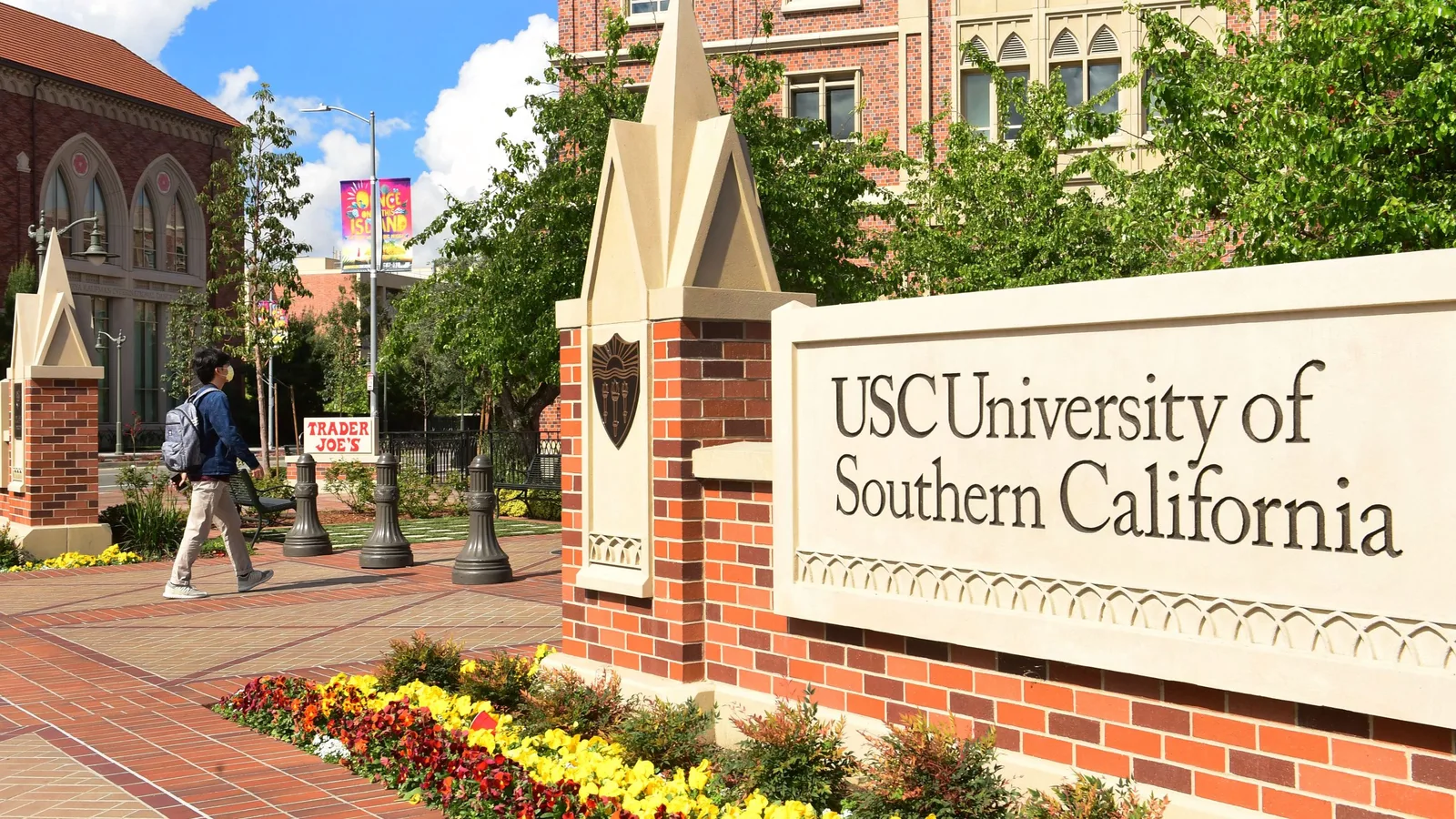

One plan built for University of Southern California Baseball, with the roster read, the coach's contact and a dated plan, delivered within 24 hours. An expert checks every plan.
Overview
Key facts about the University of Southern California baseball team.
In Los Angeles, California, University of Southern California competes in Division I baseball through the Big Ten Conference. After the 2026-27 season, it loses four infielders, the most of any position group, followed by four pitchers. Winning is a habit, with four straight seasons above .500.
Head Baseball Coach
players a season
Fit check
Pick your position and level, add a test score if you have one, and get an instant read on your chances here. Free, and no account needed.
Coaching staff
Head coach
Andy StankiewiczHead Baseball CoachRoster
The roster by class
41 players on the latest roster (2027).
Roster openings after 2026-27
Pitcher 4 · Catcher 1 · Infielder 4 · Outfielder 1
Looking at the Class of 2027, departures cluster among infielders, with four finishing up after the 2026-27 season, followed by four pitchers.
See who you would be replacingMany of last season's non-seniors are gone, as just 50% are back, against a 61% median among Division I baseball teams.
Positions
How many players a season the program carries at each position, and how tall they are.
Average height 6'2"
Average height 6'0"
Average height 6'1"
Average height 6'1"
Average height 6'0"
A heavy catchers group stands out, at 17% of the roster, or around five a season, versus 11% for the average Division I baseball team.
Transfers
transfers in for 2026-27
transfers out
Footprint
Where the players are from
Counted from players on recent rosters with a known hometown.
Top home states
Local ties run strong, with 75% of players from California compared with 40% for the median team among Division I baseball teams. Recruits from California could find the clearest path onto the roster.
Results
Swipe to see every season
2022
47%25-28overall
8-22conference
2023
59%34-23-1overall
17-13conference
2024
53%31-28overall
17-12conference
2025
62%37-23overall
18-12conference
2026
73%48-18overall
20-10conference
With a 73% win rate in the 2026 season, the squad posted its strongest results of the last five seasons at 48-18. Consistency shows in the results: four winning seasons in a row, a 62% win rate.
Standings
Where University of Southern California stands in the Big Ten Conference.
Recruiting
USC baseball is an elite NCAA Division I program competing in the Big Ten. The Trojans have 12 national championships, returned to the NCAA Tournament in consecutive seasons, and advanced to the 2026 Super Regional round, making roster access highly competitive.
Recruiting difficulty
USC is a national-level program where most roster opportunities are reserved for proven high-level recruits, impact transfers, and players with standout tools.
What coaches value
How to get recruited here
Build a verified recruiting profile with current video, measurable data, academic information, and a clear position plan. Compete consistently against strong competition, attend relevant showcases or camps, and contact the program early with concise updates that show development and fit for Big Ten baseball.
How hard is it to make the team
It is extremely difficult to make USC baseball because the program operates at an elite Division I level and recently reached the NCAA Super Regionals. Recruits generally need standout athletic tools, strong game performance, position-specific skill, and the ability to compete for playing time against other high-level players.
Who fits this program
Videos
Program stats
Athletes on the roster
Coaches on staff
Spent per athlete
Spending and revenue a year
Revenue covers everything the program spends.
The program puts around $24,000 per athlete into operations in the 2025 EADA report, about twice the Division I median.
Source: the federal Equity in Athletics report, 2025.
Feeders
The high schools and clubs that sent the most players to this roster.
Across recent rosters, Palos Verdes High has supplied four players, the most of any school or club, ahead of Loyola with three. On recent rosters, five schools or clubs show up with two or more players each.
The school
The University of Southern California combines demanding research university coursework with strengths in cinematic arts, engineering and business, making academic preparation and career direction important parts of your recruiting decision.
University of Southern CaliforniaLos Angeles, CaliforniaSee the full profile Acceptance rate
Graduation rate
Camps
New camp dates are not posted yet. These ran last season.
Ages 7-12; summer youth baseball camp at USC's Dedeaux Field.
Official links
Similar programs
Programs at a similar level, with similar academics, worth adding to your recruiting list.
Big Ten competition, strong academics and nearby Washington opportunities give athletes compelling reasons to consider this campus.
Big Ten competition, broad academic choices and strong career outcomes appeal to athletes with ambitious goals.
Co-op experience, demanding academics and Boston opportunities appeal to athletes with clear competitive and career goals.
Competitive athletics, demanding academics and Boston access appeal to recruits who want substantial opportunities beyond their sport.
Demanding academics, competitive athletics and Silicon Valley connections appeal to recruits who want to pursue both sport and scholarship.
Close faculty mentoring, competitive athletics and a residential community appeal to athletes who want demanding academics.
Teams in California
San Luis Obispo, CA
Applied learning, competitive athletics and strong career outcomes appeal to recruits who take academics seriously.
Fullerton, CA
Competitive athletics, career-focused study and affordable options attract athletes who want a broad university experience.
Berkeley, CA
Demanding academics, competitive athletics and Bay Area career opportunities appeal to athletes with ambitious goals beyond their sport.
Riverside, CA
Professional programs, faith-centered campus life and Division I competition give athletes distinct reasons to consider studying here.
Bakersfield, CA
Accessible admissions, affordable costs and professional programs give athletes practical reasons to pursue competitive athletics here.
Los Angeles, CA
Accessible admissions, affordable costs and Los Angeles career connections complement the demands of Division I competition.
Los Angeles, CA
Athletes come for competitive conference play, personal faculty attention and academic connections to Los Angeles industries.
Sacramento, CA
Competitive athletics, practical majors and capital-city internships give recruits several ways to build their future.
Moraga, CA
Personalized teaching and a small-college community pair with demanding coursework and West Coast Conference competition.
San Diego, CA
Competitive athletics, strong career outcomes and a close-knit campus community give recruits several reasons to consider studying here.
San Diego, CA
Competitive athletics, regional career connections and an active urban campus give recruits several reasons to consider studying here.
San Francisco, CA
Competitive athletics, career-focused academics and an urban Jesuit mission give recruits distinct reasons to consider studying here.
Roster openings · 2026-27
Every program ranked by players in their final year, with the positions they are losing.
Three ways to start
Pick the option that matches where you are, and we will show you the plan that fits.
News
Resources