Preseason Hitting Clinic
- Jan 7 to 29, 2026
- Moshofsky Center / PK Park, University of Oregon, Eugene, OR
Preseason hitting clinic hosted by Oregon baseball staff for youth/high school players with instruction on hitting mechanics and drills.
Browse programs
College directoryEvery program, filtered by what fits Sport directoryMen's and women's, every division State directoryPrograms in the states you would play inGo deeper
Major directoryYour major and your sport in one list Camp directoryID camps and showcases at college programs Conference directoryEvery conference and its member colleges
One plan built for University of Oregon Baseball, with the roster read, the coach's contact and a dated plan, delivered within 24 hours. An expert checks every plan.
Overview
Key facts about the University of Oregon baseball team.
In Eugene, Oregon, University of Oregon competes in Division I baseball through the Big Ten Conference. Five straight winning seasons run through 2026. Even so, only 49% of last season's non-seniors returned, which marks high turnover among Division I baseball teams.
Head Coach
players a season
Fit check
Pick your position and level, add a test score if you have one, and get an instant read on your chances here. Free, and no account needed.
Coaching staff
Head coach
Mark WasikowskiHead CoachRoster
The roster by class
See this team's roster by class, who is graduating and the spots opening at your position.
Get the roster breakdownPositions
How many players a season the program carries at each position, and how tall they are.
Average height 6'3"
Average height 6'2"
Average height 6'2"
Average height 6'1"
Average height 5'10"
Roster spots lean away from outfielders, which fill 6% of the roster against 15% on the average Division I baseball team.
Footprint
Where the players are from
Counted from players on recent rosters with a known hometown.
Top home states
Results
Swipe to see every season
2022
59%36-25overall
18-12conference
2023
65%41-22overall
16-14conference
2024
67%40-20overall
19-11conference
2025
72%42-16overall
22-8conference
2026
70%43-18overall
20-10conference
The team has finished above .500 in each of the last five seasons, with a 67% winning percentage across that run.
Standings
Where University of Oregon stands in the Big Ten Conference.
Schedule and travel
The season's games, home and away, and how far the team travels.
Recruiting
Oregon baseball is a highly competitive NCAA Division I program competing in the Big Ten, a conference with strong national depth. The program has a documented history of NCAA Tournament participation and Super Regional-level success, while its current roster and player-development structure indicate that recruits are evaluated for immediate impact and long-term development.
Recruiting difficulty
Making the roster is difficult because Oregon competes at a high Division I level and most opportunities are likely to favor proven recruits, impact transfers, and players with strong measurable tools.
What coaches value
How to get recruited here
Build a complete recruiting profile with verified statistics, video against strong competition, and measurable data such as exit velocity, throwing velocity, speed, or pitching metrics. Contact the baseball staff early, attend appropriate showcases or camps, and clearly explain your position, academic fit, schedule, and development goals.
How hard is it to make the team
It is highly difficult to make Oregon's baseball team because the program competes in Big Ten Division I baseball and has national-level expectations. Recruits should expect competition from accomplished high school players, junior college players, and transfers, so consistent performance, athletic tools, positional value, and defensive reliability all matter.
Who fits this program
Program stats
Athletes on the roster
Coaches on staff
Spent per athlete
Spending and revenue a year
Revenue covers 21% of what the program spends.
At roughly $35,000 per athlete in the 2025 EADA report, operating spending runs more than three times the Division I median. The team spends around $5.4 million and takes in $1.2 million in the same report, covering 21% of its spending.
Source: the federal Equity in Athletics report, 2025.
Feeders
The high schools and clubs that sent the most players to this roster.
The school
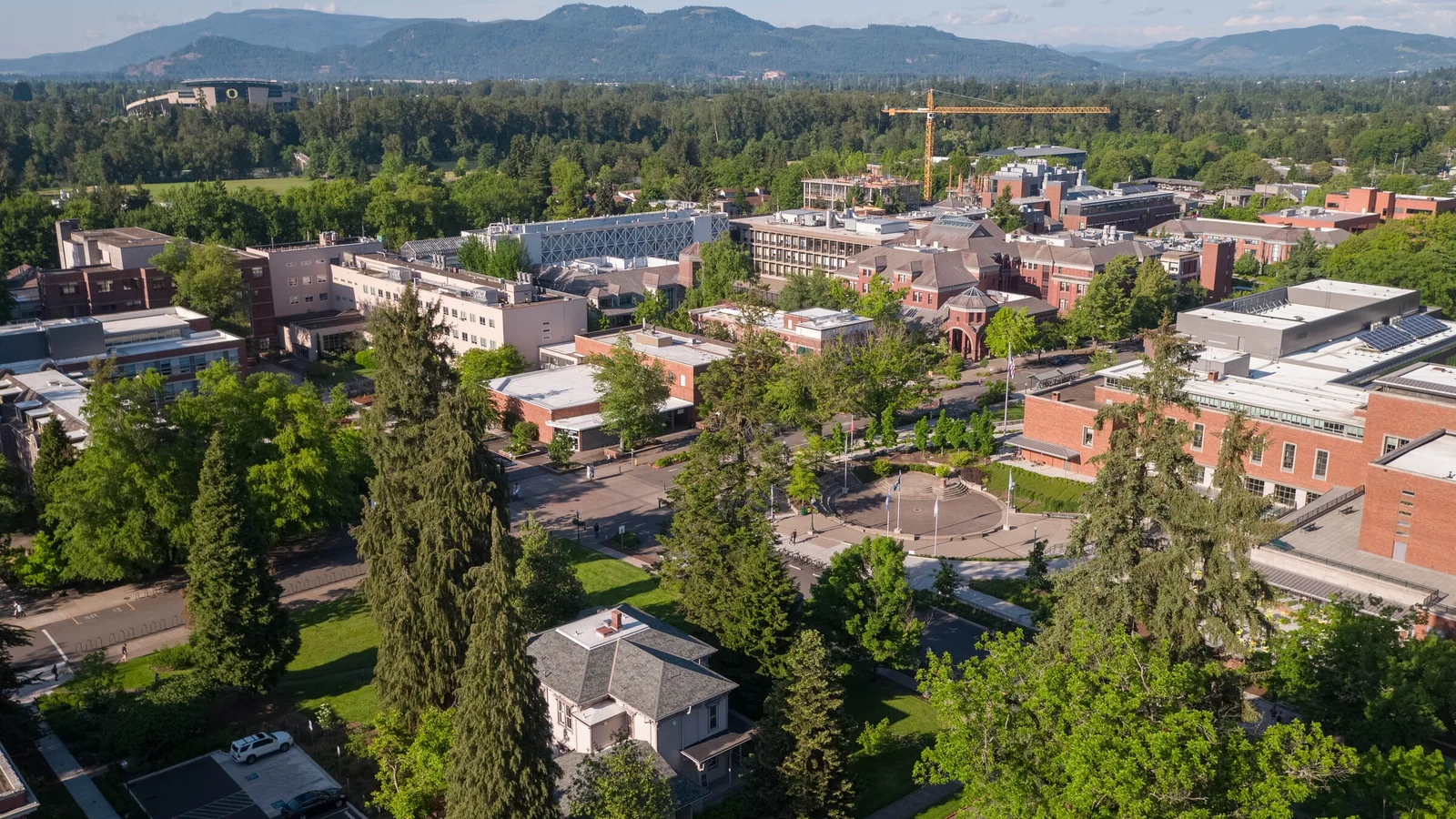
At the University of Oregon, research opportunities and strengths in journalism, business and the arts frame an academic profile that helps recruits weigh classroom expectations, degree progress and career direction.

University of OregonEugene, OregonSee the full profile Acceptance rate
Graduation rate
Camps
New camp dates are not posted yet. These ran last season.
Preseason hitting clinic hosted by Oregon baseball staff for youth/high school players with instruction on hitting mechanics and drills.
Preseason pitching clinic led by Oregon baseball coaches focusing on pitching mechanics, bullpen work and development for pitchers.
Catching-specific preseason clinic covering receiving, blocking, throw-downs and catcher defense taught by Oregon baseball staff.
Official links
Similar programs
Programs at a similar level, with similar academics, worth adding to your recruiting list.
Big Ten competition, broad academic choices and in-state tuition value give athletes several reasons to consider enrolling.
Division I competition, research opportunities and a college-town setting appeal to athletes with interests beyond their sport.
Big Ten competition, established academic strengths and an active residential campus draw athletes seeking a full college experience.
Major conference competition, broad academic choices, and Orlando career opportunities give athletes several reasons to consider studying here.
Competitive athletics, broad academic choices and an urban setting appeal to athletes planning for life beyond competition.
Athletes choose a personal academic environment alongside demanding competition and clear connections between coursework and careers.
Teams in Oregon
Corvallis, OR
Division I competition, research opportunities and a college-town setting appeal to athletes with interests beyond their sport.
Portland, OR
Close faculty relationships and established professional programs give athletes academic reasons to pursue competitive Division I opportunities.
Roster openings
Every program ranked by players in their final year, with the positions they are losing.
Three ways to start
Pick the option that matches where you are, and we will show you the plan that fits.
News
Resources