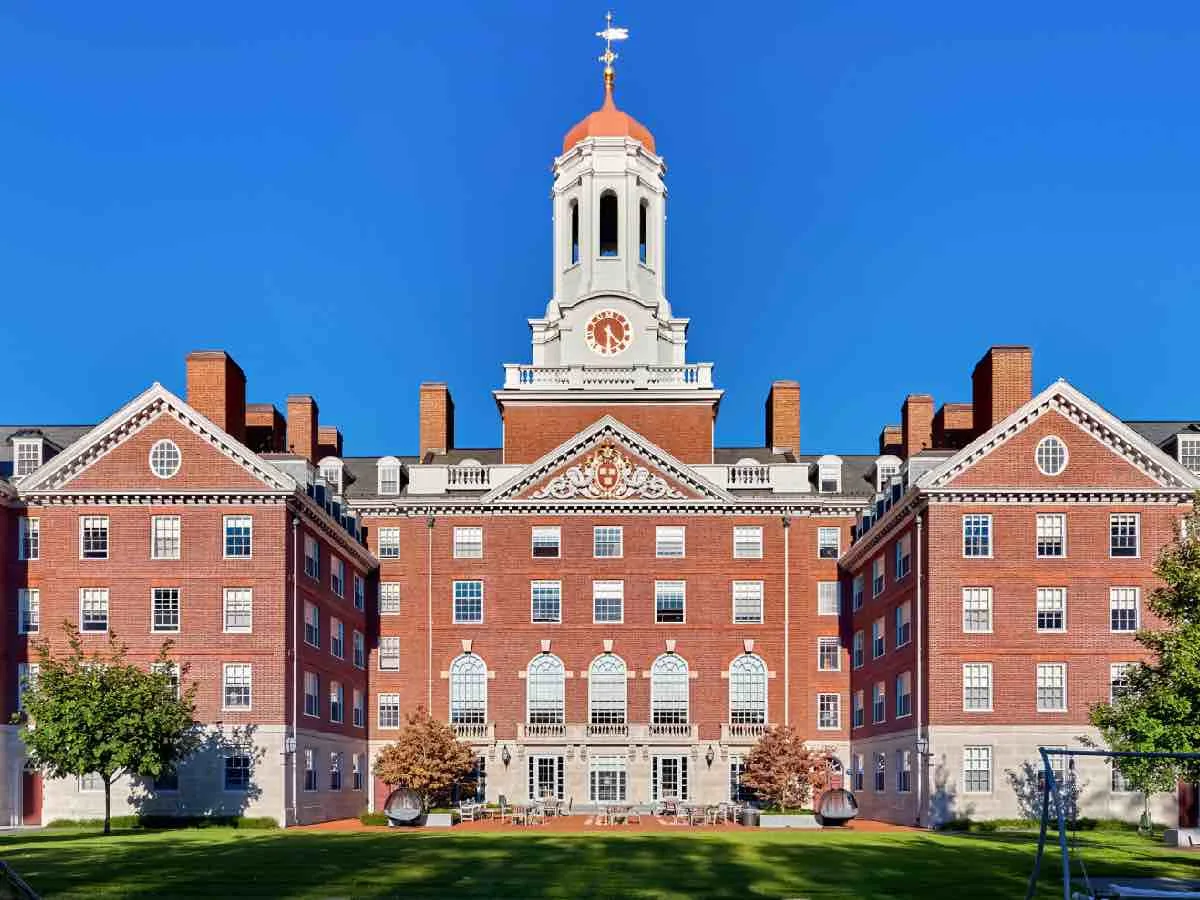
Crimson Baseball Academy - Winter Clinic
- Jan 24, 2026
- Bubble at Harvard Stadium, Cambridge, MA
One-day winter clinic hosted by the Crimson Baseball Academy featuring instruction from Harvard baseball staff and current players.
Browse programs
College directoryEvery program, filtered by what fits Sport directoryMen's and women's, every division State directoryPrograms in the states you would play inGo deeper
Major directoryYour major and your sport in one list Camp directoryID camps and showcases at college programs Conference directoryEvery conference and its member colleges
One plan built for Harvard University Baseball, with the roster read, the coach's contact and a dated plan, delivered within 24 hours. An expert checks every plan.
Overview
Key facts about the Harvard University baseball team.
Harvard University runs a baseball team in Cambridge, Massachusetts, competing in the Ivy League at the Division I level. After the 2026-27 season, it loses three pitchers, the most of any position group, followed by two infielders. Roster continuity is a strength, as 100% of last season's non-seniors are back, above the 61% median among Division I baseball teams.
The Joseph J. O'Donnell '67 Head Coach for Harvard Baseball
players a season
Fit check
Pick your position and level, add a test score if you have one, and get an instant read on your chances here. Free, and no account needed.
Coaching staff
Head coach
Bill DeckerThe Joseph J. O'Donnell '67 Head Coach for Harvard BaseballRoster
The roster by class
30 players on the latest roster (2027).
Roster openings after 2026-27
Pitcher 3 · Catcher 1 · Infielder 2 · Outfielder 1
Position by position, pitchers lead the departures, with three leaving after the 2026-27 season, followed by two infielders. Players at those positions have the clearest chance to step into new roles.
See who you would be replacingRoster continuity stands out, since 100% of last season's non-seniors returned, ahead of the 61% median among Division I baseball teams. Coaches work with 30 players here, well below the 39 typical among Division I baseball teams. Recruits may find a smaller group easier to break into.
Positions
How many players a season the program carries at each position, and how tall they are.
Average height 6'2"
Average height 6'0"
Average height 6'1"
Average height 6'2"
Average height 6'0"
The program carries more infielders than most Division I baseball teams, 26% of the roster compared with 14%, and carries fewer outfielders than most teams, 13% of the roster compared with 17%.
Transfers
transfers in for 2026-27
transfers out
Footprint
Where the players are from
Counted from players on recent rosters with a known hometown.
Top home states
Out-of-state recruits dominate, since only 17% of the roster comes from Massachusetts, versus 40% for the median team among Division I baseball teams.
Results
Swipe to see every season
2022
46%19-22overall
10-11conference
2023
45%20-24overall
15-6conference
2024
33%13-26overall
9-12conference
2025
33%14-28overall
9-12conference
2026
30%11-26overall
9-12conference
Under .500 in each of the last five seasons, the team has a 38% winning percentage from 2022 through 2026. The 2026 season was the weakest of the last five seasons, an 11-26 finish at 30%.
Standings
Where Harvard University stands in the The Ivy League.
Recruiting
Harvard baseball is a competitive NCAA Division I program in the Ivy League with a long record of conference success, including 19 Ivy League titles and a recent Ivy League Tournament qualification in 2025. Recruiting is difficult because athletes must meet a strong Division I baseball standard while also clearing Harvard's demanding academic admissions process.
Recruiting difficulty
Harvard combines a selective Division I baseball environment with significant academic admissions barriers, making roster opportunities highly competitive.
What coaches value
How to get recruited here
Build a complete recruiting profile with verified athletic measurements, high-quality video, statistics, academic information, and a concise baseball résumé. Contact the recruiting staff early, attend high-level showcases, and send updates when your performance, grades, or physical tools improve.
How hard is it to make the team
Making Harvard's baseball team is highly competitive because it is a Division I Ivy League program with a strong conference history and limited roster opportunities. Prospects generally need advanced baseball ability, reliable performance against quality competition, and an academic profile that can withstand Harvard's admissions standards.
Who fits this program
Videos
Program stats
Athletes on the roster
Coaches on staff
Spent per athlete
Spending and revenue a year
Revenue covers everything the program spends.
The staff covers fewer athletes than usual: 30 athletes and four coaches in the 2025 EADA report, about eight athletes per coach compared with a median of 10 among Division I baseball teams.
Source: the federal Equity in Athletics report, 2025.
Feeders
The high schools and clubs that sent the most players to this roster.
Pipelines repeat here: four schools or clubs have each placed two or more players, including Belmont Hill School.
The school
Harvard University pairs intensive study in the arts and sciences with extensive research opportunities, making academic preparation, faculty access and long-term career goals central considerations for prospective student-athletes.

Acceptance rate
Graduation rate
Camps
New camp dates are not posted yet. These ran last season.
One-day winter clinic hosted by the Crimson Baseball Academy featuring instruction from Harvard baseball staff and current players.
Official links
Similar programs
Programs at a similar level, with similar academics, worth adding to your recruiting list.
Demanding academics, Ivy League competition and close faculty connections appeal to athletes ready for a rigorous college experience.
Academic flexibility, close faculty access and Ivy League competition draw athletes who want substantial challenges beyond their sport.
Challenging academics, close faculty connections and a residential college community complement the demands of Division I competition.
Big Ten competition, demanding academics and access to Chicago appeal to athletes with ambitious goals beyond sports.
Competitive athletics, research opportunities and an active residential community give recruits reasons to look closely here.
Rigorous academics, competitive athletics and a residential community give recruits reasons to pursue a place here.
Teams in Massachusetts
Chestnut Hill, MA
Competitive athletics, demanding academics and Boston access appeal to recruits who want substantial opportunities beyond their sport.
Worcester, MA
Athletes choose a close residential community where demanding liberal arts study complements competitive Division I athletics.
Amherst, MA
Competitive athletics, research opportunities and an active residential community give recruits reasons to look closely here.
North Andover, MA
A residential community near Boston pairs demanding athletics with practical academics and an Augustinian Catholic mission.
Boston, MA
Co-op experience, demanding academics and Boston opportunities appeal to athletes with clear competitive and career goals.
Easton, MA
A small residential community, approachable faculty and competitive athletics help you connect your sport with broader goals.
Lowell, MA
Career-focused academics, hands-on learning and Division I competition appeal to athletes looking beyond their playing careers.
Roster openings · 2026-27
Every program ranked by players in their final year, with the positions they are losing.
Three ways to start
Pick the option that matches where you are, and we will show you the plan that fits.
Resources