
Big Ten competition, broad academic choices and research opportunities appeal to athletes seeking a large university experience.
- 61,443
- Students
- 61%
- Admit rate
- $17,339
- Net price
Browse programs
College directoryEvery program, filtered by what fits Sport directoryMen's and women's, every division State directoryPrograms in the states you would play inGo deeper
Major directoryYour major and your sport in one list Camp directoryID camps and showcases at college programs Conference directoryEvery conference and its member colleges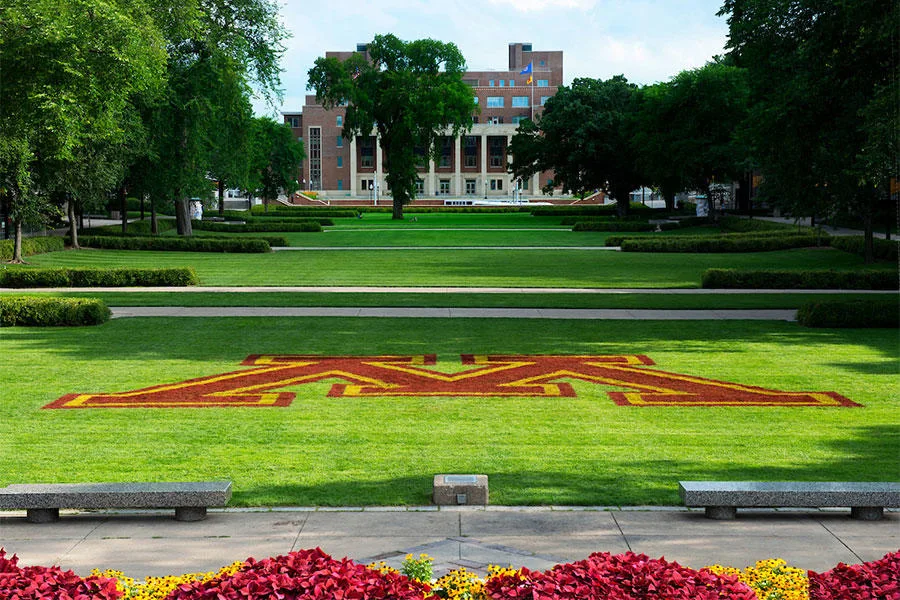

Minneapolis, MinnesotaBig Ten Conference
The University of Minnesota, Twin Cities is a public land-grant research university in Minneapolis and St. Paul, Minnesota, known for its medical, agricultural and engineering research and NCAA Division I Golden Gophers athletics in the Big Ten Conference.
Overview
Mission and culture
The University of Minnesota, Twin Cities is the flagship public research university of Minnesota, with campuses in Minneapolis and St. Paul along the Mississippi River. Its Big Ten athletics, wide range of majors and strong research profile make it a fit for athletes who want high-level competition at a large university in a major metro area.
Why athletes choose University of Minnesota, Twin Cities
Big Ten competition, research strength and access to Twin Cities employers give athletes strong reasons to consider Minnesota.
Fit check
Pick a sport, your position and level, add a test score if you have one, and get an instant read on your chances here. Free, and no account needed.
Academics
The University of Minnesota, Twin Cities combines major research strength with a broad range of majors in computing, business, health and the sciences, making academic fit and support resources important parts of your recruiting decision.
Academic strength
A composite of graduation rate, earnings after college, how selective admissions are and how hard the coursework is.
Acceptance rate
More selectiveMore accessible
Admissions are accessible by rate, but the admitted student profile is strong, so solid grades and a rigorous course load matter even with a coach's interest.
Six-year graduation rate
0%100%
Students have a strong path to graduation, with a large support network that helps athletes stay on track.
Academic difficulty
Rated 4 out of 5
Coursework is demanding, so strong study habits and careful time management are important alongside Big Ten athletic commitments.
Student to faculty ratio
students for every faculty member
Expect larger classes in some courses, so taking initiative with faculty and advisors helps you build useful academic relationships.
Median earnings
per year, ten years after starting college
Six years after: $61,634Graduate earnings are strong, which supports the value of the degree for many career paths.
Undergraduate enrollment
undergraduate students
The large undergraduate community offers a wide range of people, activities and majors, so you will have plenty of room to find your place beyond your team.
SAT and ACT scores
The test profile is strong, suggesting that well-prepared recruits with solid scores and grades will be competitive in the admissions review.
Most popular majors
Popular choices such as Computer Science, Psychology and Finance reflect a mix of technical, scientific and business interests.
Admissions
Plan your application to the University of Minnesota, Twin Cities by reviewing deadlines, test policy, application fees and recommendation requirements together with your recruiting timeline.
Not binding. Hear back early and decide by May 1.
The standard deadline. Not binding.
Majors
98 undergraduate majors across 7 academic areas.
No major matches that search.
Campus life
Daily life spans a large campus on both banks of the Mississippi River in Minneapolis plus the St. Paul campus, with a big student body, Big Ten game days and Twin Cities neighborhoods close by.
Athletics
Athletes compete at the NCAA Division I level in the Big Ten Conference, with a broad program that includes football, basketball, ice hockey, wrestling and gymnastics. Women's ice hockey competes in the Western Collegiate Hockey Association.
Athletic department
Explore how the University of Minnesota, Twin Cities supports its NCAA Division I Big Ten department through athlete participation, program spending, recruiting investment and athletic aid, including how scholarships and recruiting resources are distributed by gender.
Athletes
Athletic aid
Recruiting spend
Source: the federal Equity in Athletics report, 2025.
Cost
At the University of Minnesota, Twin Cities, residency shapes tuition, so compare the published cost with the net price after grants and see how need-based and merit-based aid could affect your budget.
Average net price
What families pay on average after grants and scholarships, including tuition, housing and fees.
Published tuition
The sticker price a year, before any aid.
Financial aid
Need-based and merit-based aid availableAthletic scholarships, where a program offers them, are awarded by the coaching staff and come on top of these figures.
NIL
NIL rating
The University of Minnesota, Twin Cities offers a strong name, image and likeness (NIL) environment for NCAA Division I student-athletes. Big Ten visibility, a large fan base and a major metro market give athletes many ways to build personal brands and pursue NIL opportunities.
See the full NIL breakdownStudent fit
The kind of student-athlete who tends to do well at University of Minnesota, Twin Cities.
The University of Minnesota, Twin Cities fits athletes who want Big Ten competition alongside a demanding academic experience at a large public research university. You should bring strong classroom preparation and the independence to manage a heavy schedule, since coursework is challenging and the campus is big enough that you will need to seek out support. It suits students drawn to fields such as computer science, finance, biology or health sciences who want research and internship access in a major metro area. Families should plan for cold winters and compare in-state and out-of-state costs, while athletes looking for a small, quiet campus may prefer another option.
Who thrives here
Big Ten CompetitorsResearch Minded StudentsIndependent Self StartersBig Campus ExplorersMetro Network BuildersQuestions
The university has campuses in Minneapolis and St. Paul, Minnesota. Its urban setting provides access to major employers, cultural attractions, healthcare organizations, and government institutions.
It is a public research university known for broad academic offerings, extensive research activity, and strong programs in engineering, business, agriculture, and the health sciences.
Undergraduates can study fields such as engineering, computer science, business, biological sciences, liberal arts, education, and agriculture. Major requirements and admission processes vary by college and program.
Admission is selective and varies by undergraduate college. Applicants are evaluated on their academic preparation, grades, course rigor, and other application information, so meeting minimum requirements does not guarantee admission.
Tuition depends on residency, undergraduate college, and academic program. Minnesota residents generally pay lower tuition than nonresidents, while eligible students may qualify for reciprocity rates. Housing, meals, fees, and books add to the total cost.
Eligible students may receive need-based grants, scholarships, work-study, and loans. Completing the FAFSA helps determine eligibility for many forms of aid, while some scholarships have separate applications or additional requirements.
University housing includes residence halls and apartments, while nearby neighborhoods offer off-campus rentals. Housing availability, application deadlines, and contract terms vary, so students should review current options early.
Many students get around without a car by walking, biking, and using campus buses and public transit. Light rail connects the Minneapolis campus with downtown Minneapolis and St. Paul, while campus buses connect university locations.
The Twin Cities experience four distinct seasons, including cold, snowy winters and warm summers. Students should prepare for freezing temperatures, icy sidewalks, and changing conditions during spring and fall.
Student life combines a large university community with an urban setting. Students can participate in clubs, cultural organizations, recreation, campus events, and Big Ten sports while exploring nearby arts, dining, and entertainment.
The Minnesota Golden Gophers compete in NCAA Division I. The varsity athletics program includes football, basketball, ice hockey, wrestling, gymnastics, and other sports.
Most Golden Gophers teams compete in the Big Ten Conference, including football, basketball, and men's ice hockey. Women's ice hockey competes in the Western Collegiate Hockey Association.
Compare
Other colleges worth comparing with University of Minnesota, Twin Cities.
Big Ten competition, broad academic choices and research opportunities appeal to athletes seeking a large university experience.
Big Ten competition, strong technical academics and a residential college-town experience give athletes distinct reasons to consider Purdue.
Big Ten competition, established academic strengths and an active residential campus draw athletes seeking a full college experience.
Big Ten competition, broad academic options and an active Madison campus attract athletes with ambitious college goals.
ACC competition, applied academics and Raleigh career connections give athletes clear reasons to consider studying here.
SEC competition, strong academics and Austin's active city life attract athletes seeking a demanding college experience.
Strong academics, prominent athletics and in-state affordability give recruits compelling reasons to consider this spirited campus.
Big Ten competition, strong academics and in-state value attract athletes who want a challenging college experience.
Strong academic options, SEC competition and Athens campus life give athletes compelling reasons to pursue a place here.
New Brunswick, NJ
Why it is similar: Similar academics and size.Big Ten competition, broad academic choices and nearby career opportunities make this a fit for ambitious athletes.
SEC competition, established academics and an active Knoxville campus give athletes distinct reasons to pursue a place here.
Strong research academics, SEC competition and in-state value attract athletes who want an active campus experience.
Three ways to start
Pick the option that matches where you are, and we will show you the plan that fits.
Resources