
Recruiting campSoccer · Women's
Spring ID Camp
- Apr 25 to 26, 2026
Spring ID Camp listed on Army West Point Women's Soccer site (April 25-26, 2026).
Browse programs
College directoryEvery program, filtered by what fits Sport directoryMen's and women's, every division State directoryPrograms in the states you would play inGo deeper
Major directoryYour major and your sport in one list Camp directoryID camps and showcases at college programs Conference directoryEvery conference and its member collegesOverview
Mission and culture
The United States Military Academy is a federal service academy in West Point, New York, preparing cadets for Army leadership while competing in NCAA Division I athletics. Its fully funded education comes with a service commitment, and daily life combines demanding academics, military training and sport.
Why athletes choose United States Military Academy
Athletes choose a fully funded education, competitive athletics and leadership preparation tied directly to Army service.
Fit check
Pick a sport, your position and level, add a test score if you have one, and get an instant read on your chances here. Free, and no account needed.
Academics
The United States Military Academy combines rigorous engineering and science coursework with ethics and officer development, making academic preparation and time management central to your experience as a cadet-athlete.
Academic strength
A composite of graduation rate, earnings after college, how selective admissions are and how hard the coursework is.
Acceptance rate
More selectiveMore accessible
Highly selective admissions mean recruits need standout academics and accomplishments, not just athletic ability, to build a competitive application.
Six-year graduation rate
0%100%
Strong graduation outcomes suggest an excellent path to finishing your degree while meeting cadet and athletic responsibilities.
Academic difficulty
Rated 5 out of 5
Coursework is very demanding and time intensive alongside military training and athletic commitments.
Student to faculty ratio
students for every faculty member
A very personal academic environment makes close faculty mentoring likely as you navigate demanding coursework.
Undergraduate enrollment
undergraduate students
The small undergraduate community offers a close-knit setting where cadet life and athletics shape your daily relationships and routines.
SAT and ACT scores
Required entrance exams and a strong test score profile make careful preparation important, even when athletic recruiting is part of your application.
Most popular majors
Admissions
Preparing your application to the United States Military Academy means reviewing deadlines by plan, test policy, application fees and recommendations alongside your athletic recruiting conversations.
Majors
40 undergraduate majors across 6 academic areas.
No major matches that search.
Campus life
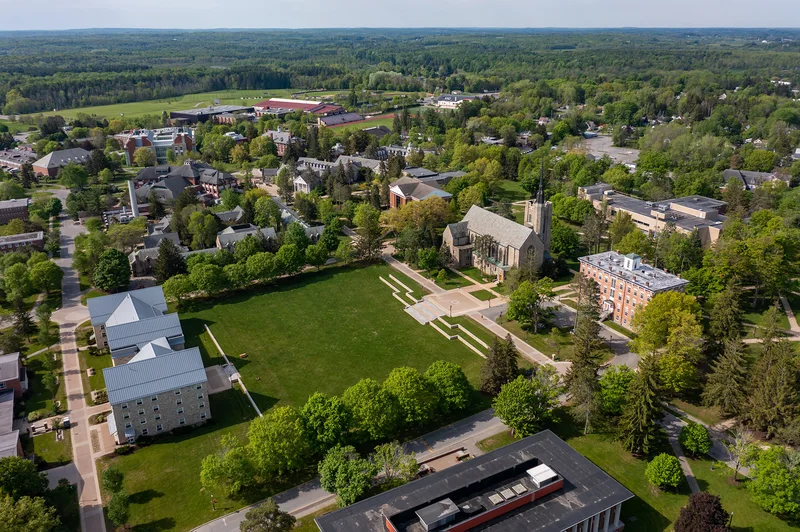
Daily life follows a highly structured cadet routine, with military training, athletics and camaraderie defining a small community on a rural Hudson River campus.
Athletics
The Army Black Knights compete in NCAA Division I, primarily in the Patriot League, while football competes in the American Athletic Conference. Athletes balance competition with demanding cadet responsibilities.
NIL
NIL rating
The name, image and likeness (NIL) environment at the United States Military Academy in West Point, New York, reflects a balance between Division I college sports exposure and the unique mission of a federal service academy. Student-athletes at West Point can explore NIL opportunities within carefully structured rules that prioritize cadet duties, military standards, and academic life.
See the full NIL breakdownStudent fit
The kind of student-athlete who tends to do well at United States Military Academy.
The United States Military Academy fits athletes who want NCAA Division I competition and genuinely want to serve as Army officers after graduation. You should bring strong academic preparation, comfort with demanding technical coursework and the discipline to balance practices with military training and a highly structured daily routine. Its small, rural Hudson River community suits recruits who value camaraderie, close faculty access and shared responsibility more than flexibility in how they spend their time. The fully funded education is meaningful for families, but athletes seeking a conventional college experience or uncertain about Army service should carefully consider that commitment.
Who thrives here
Service Driven LeadersStructure SeekersPressure Ready CompetitorsHighly Disciplined TeammatesLong Term PlannersCamps
United States Military Academy has not posted new camp dates yet. These ran last season.
Spring ID Camp listed on Army West Point Women's Soccer site (April 25-26, 2026).
Questions
It is known for developing leaders of character for service as Army officers through a rigorous combination of academic study, military training, and physical development on a historic campus overlooking the Hudson River.
Admission is highly selective, requiring strong academic credentials, leadership experience, physical fitness, a medical qualification, and typically a nomination from a member of Congress or another authorized source.
It offers a range of undergraduate majors in engineering, the sciences, social sciences, and humanities, all structured within a core curriculum designed to provide a broad, rigorous education for future Army officers.
Students do not pay traditional tuition; education, room, and board are funded by the federal government in exchange for a service commitment as an officer in the U.S. Army after graduation.
Student life is highly structured and centered on military discipline, academic work, physical training, and leadership development, with cadets living in barracks and participating in formations, inspections, and mandatory activities.
Graduates are commissioned as officers in the U.S. Army and incur an active duty service obligation followed by an additional period in the reserves or on inactive status, with exact length depending on branch and training.
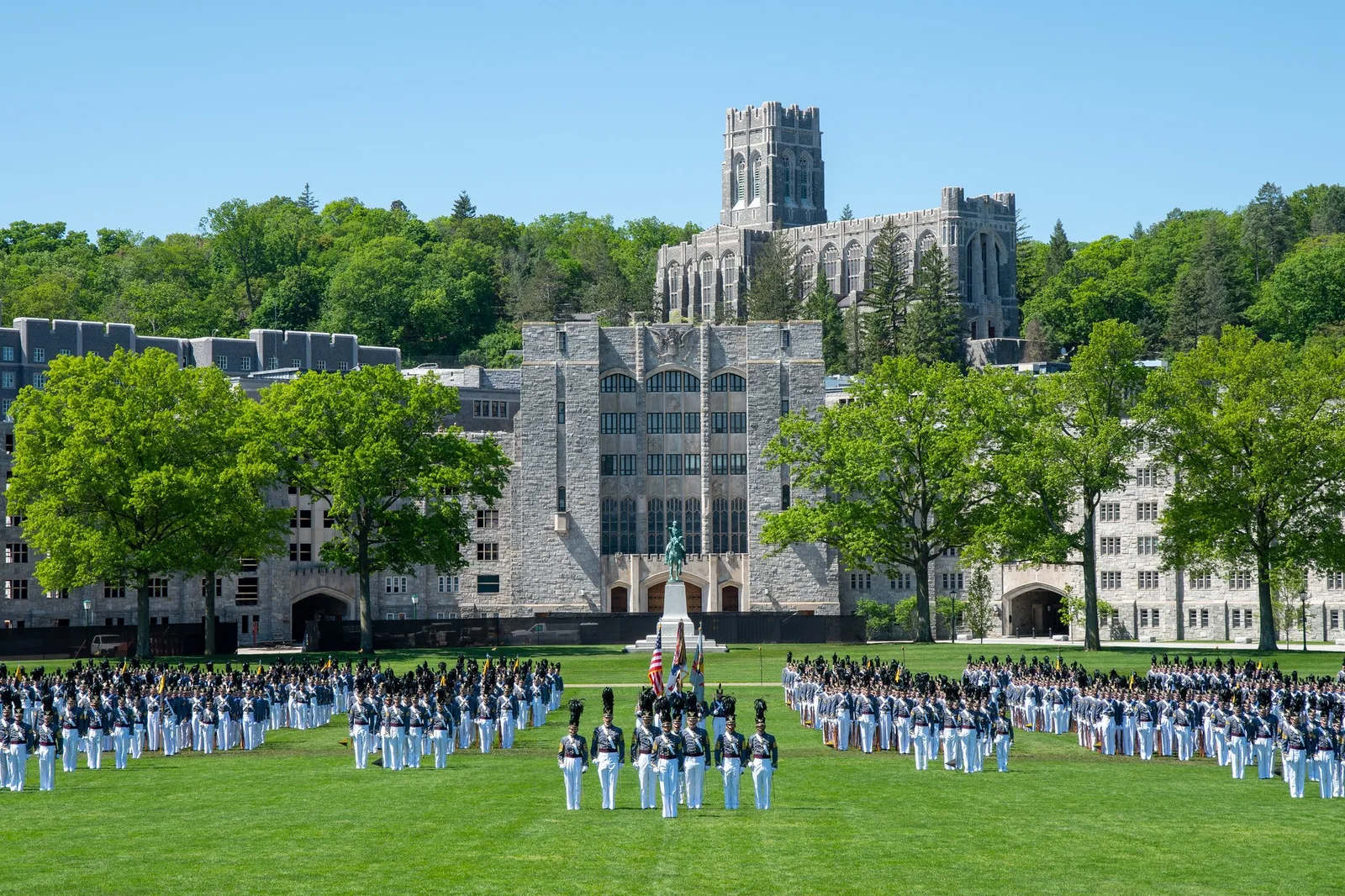
It is located in West Point, New York, on a secure military installation along the Hudson River, featuring historic stone architecture, parade fields, training areas, and a close-knit residential community of cadets.
Varsity athletic teams, known as the Black Knights, compete at the NCAA Division I level in multiple conferences, with football competing as an independent and several other sports aligned with established Division I leagues.
All cadets must meet strict physical fitness standards and participate in physical education and intramural or competitive sports, with many also competing on varsity or club teams as part of the overall developmental program.
Cadets receive progressive military training that includes basic cadet training, field exercises, leadership roles within the Corps of Cadets, and summer training focused on small-unit tactics, land navigation, and Army branch exposure.
A limited number of qualified international students may attend as sponsored cadets from partner nations, studying alongside U.S. cadets and returning to serve in their own country’s armed forces after graduation.
The education combines a demanding core curriculum, mandatory engineering exposure, intensive leadership and ethics instruction, and daily military and physical training, all integrated to prepare graduates for immediate responsibility as Army officers.
Compare
Other colleges worth comparing with United States Military Academy.
Athletes choose a fully funded education that combines competitive athletics, engineering preparation and military leadership development.
A fully funded education and officer career path give athletic competition a clear purpose beyond college.
Research opportunities, Big East competition and a lively residential campus give athletes compelling reasons to consider studying here.
A residential community, strong career outcomes and demanding conference competition appeal to athletes seeking academic and athletic commitment.
Career-focused academics and a close-knit campus appeal to athletes seeking demanding coursework alongside competitive athletics.
Big Ten competition, research opportunities and active campus life appeal to athletes seeking a broad college experience.
Athletes choose a technology-focused education, Division I competition and regional career opportunities without leaving an urban campus.
Close faculty relationships, a residential community and competitive athletics appeal to students seeking a well-rounded college experience.
Division I competition, environmental academics and Burlington's outdoor culture give athletes distinct reasons to pursue a place here.
Athletes choose a close residential community where demanding liberal arts study complements competitive Division I athletics.
Blacksburg, VA
Why it is similar: Similar academics.ACC competition, strong technical academics and a spirited residential community give athletes compelling reasons to consider Blacksburg.
Health sciences, research opportunities and ACC competition draw athletes who want an academically demanding urban college experience.
Three ways to start
Pick the option that matches where you are, and we will show you the plan that fits.
News
Resources