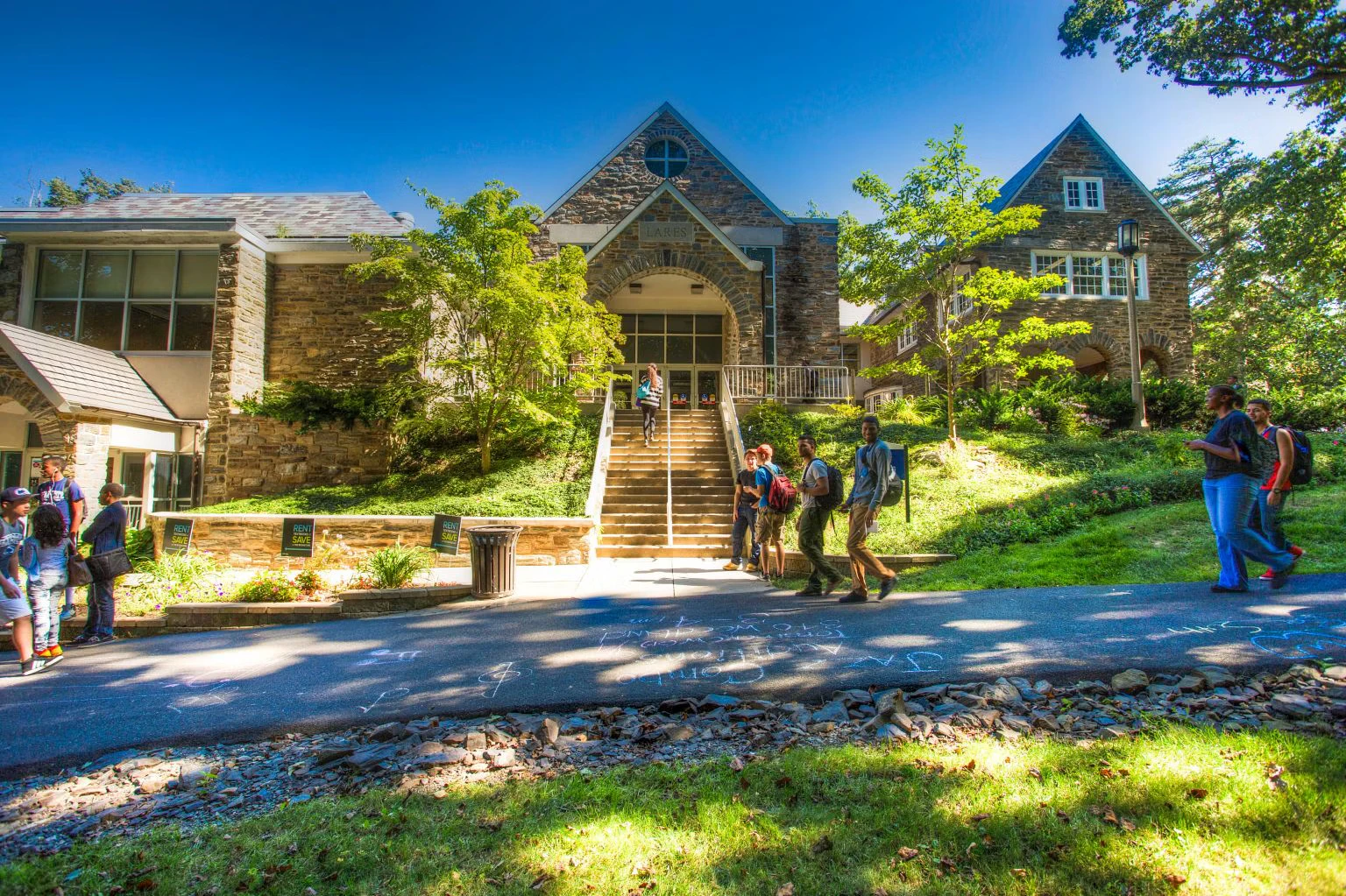


Accessible faculty, public tuition and a commuter-friendly campus help athletes build a practical college experience.
- 4,002
- Students
- 84%
- Admit rate
- $16,114
- Net price
Browse programs
College directoryEvery program, filtered by what fits Sport directoryMen's and women's, every division State directoryPrograms in the states you would play inGo deeper
Major directoryYour major and your sport in one list Camp directoryID camps and showcases at college programs Conference directoryEvery conference and its member collegesOverview
Mission and culture
Penn State Abington offers a small-campus experience in suburban Abington, Pennsylvania, with access to the broader Penn State system and NCAA Division III athletics. Its bachelor's programs, undergraduate research opportunities and location near Philadelphia make it worth considering for athletes who want a manageable campus setting.
Why athletes choose Penn State Abington
Accessible admissions, undergraduate research and United East competition give athletes several practical reasons to consider this campus.
Fit check
Pick a sport, your position and level, add a test score if you have one, and get an instant read on your chances here. Free, and no account needed.
Academics
Penn State Abington combines business, technology and science options with undergraduate research, giving recruits a practical starting point for comparing academic demands, faculty access, degree completion and career outcomes.
Academic strength
A composite of graduation rate, earnings after college, how selective admissions are and how hard the coursework is.
Acceptance rate
More selectiveMore accessible
Admissions are highly accessible, so recruits can focus on demonstrating classroom readiness rather than navigating a highly selective process.
Six-year graduation rate
0%100%
Finishing a degree takes real self-direction here, so athletes should make consistent use of academic support.
Academic difficulty
Rated 3 out of 5
Coursework presents a balanced challenge, making steady study habits important alongside athletic commitments.
Student to faculty ratio
students for every faculty member
Faculty should be reasonably reachable, making it easier to seek guidance when coursework and competition overlap.
Median earnings
per year, ten years after starting college
Six years after: $55,620Graduate earnings suggest solid outcomes, giving families a useful reason to weigh costs against career goals.
Undergraduate enrollment
undergraduate students
The small undergraduate community offers a more manageable campus scale for building connections with classmates outside your sport.
SAT and ACT scores
Testing is optional, and the score profile suggests recruits with solid classroom preparation can remain competitive while deciding whether scores strengthen their applications.
Most popular majors
Admissions
Prepare your application to Penn State Abington by reviewing deadlines, test policy, the application fee and recommendation requirements alongside your recruiting conversations.
Majors
26 undergraduate majors across 7 academic areas.
No major matches that search.
Campus life
Daily life centers on a small, commuter-friendly suburban campus near Philadelphia, with residence apartments, clubs and support services contributing to a diverse community.
Athletics
Athletes compete at the NCAA Division III level, primarily in the United East Conference, with opportunities in programs such as baseball, soccer and volleyball.
Athletic department
Explore how Penn State Abington supports its small-campus NCAA Division III athletic program through department finances, recruiting expenditures and the breakdown of athlete participation and athletic aid by gender.
Athletes
Recruiting spend
Source: the federal Equity in Athletics report, 2025.
Cost
At Penn State Abington, in-state tuition and need-based or merit-based aid shape affordability, so compare the published cost with the net price after grants when planning your budget.
Average net price
What families pay on average after grants and scholarships, including tuition, housing and fees.
Published tuition
The sticker price a year, before any aid.
Financial aid
Need-based and merit-based aid availableAthletic scholarships, where a program offers them, are awarded by the coaching staff and come on top of these figures.
NIL
NIL rating
Penn State Abington in Abington, Pennsylvania offers a developing name, image, and likeness (NIL) environment typical for a competitive NCAA Division III program. Student-athletes in a variety of college sports can find localized NIL opportunities that fit the campus and community scale.
See the full NIL breakdownStudent fit
The kind of student-athlete who tends to do well at Penn State Abington.
Penn State Abington is a good fit for athletes seeking NCAA Division III competition, accessible admissions and a small campus within reach of Philadelphia. It suits students interested in business, information technology or biology who want undergraduate research opportunities and access to the broader Penn State system without choosing a large-campus daily experience. The commuter-friendly setting, residence apartments and clubs offer different ways to build a community, but you should be comfortable taking initiative socially and academically. Athletes who need a tightly guided path to graduation should ask detailed questions about advising and support before committing.
Who thrives here
Close Knit CommunityEarly Playing TimeSelf Driven StudentsProfessor AccessCost Conscious FamiliesQuestions
It is known for offering strong undergraduate programs in business, information sciences and technology, engineering, and the liberal arts, with small class sizes, accessible faculty, and the ability to start most Penn State majors on campus before transitioning to University Park or completing certain degrees entirely at Abington.
Admission is considered moderately selective. Applicants with a solid high school record, particularly in core academic subjects, and competitive standardized test scores if submitted, have a good chance of being admitted, especially when they demonstrate readiness for college-level work.
Yes, students can complete a range of four-year bachelor’s degrees on campus, and they can also start many other Penn State majors at Abington and then transition to another Penn State campus through the 2+2 Plan to finish their degree.
Campus life blends a close-knit community with access to the greater Philadelphia region. Students participate in clubs, student government, cultural organizations, community service, and campus events, while also benefiting from nearby internships, employment, and entertainment opportunities.
Yes, there is residence hall housing available within a short distance of the main academic campus, along with support services, programming, and transportation options that help residential students stay engaged and connected to campus resources.
Students typically experience relatively small classes and close interaction with faculty, which supports personalized advising, mentoring, undergraduate research opportunities, and collaborative classroom discussion in a more intimate campus setting.
It is a popular choice for transfer students because credits from accredited institutions are often evaluated favorably, there are dedicated transfer advising resources, and students can move into on-campus majors or continue on to other Penn State campuses to finish their degrees.
The campus competes in NCAA Division III and fields multiple varsity men’s and women’s teams in sports such as soccer, basketball, baseball, softball, tennis, cross country, and others, emphasizing academic balance, skill development, and student-athlete well-being.
Student-athletes benefit from Division III competition, with a focus on balancing academics and athletics. They have access to coaching, training facilities, academic support, and opportunities to compete regionally while remaining fully engaged in campus life and their chosen majors.
The campus offers career services that include resume reviews, interview preparation, career fairs, employer networking events, and help locating internships and co-ops, leveraging strong connections with employers in the Philadelphia region and the broader Penn State alumni network.
Yes, students can participate in study abroad and global learning programs through Penn State’s education abroad offerings, including semester, summer, and short-term faculty-led programs that can often be integrated into their degree plans with appropriate advising.
It has both commuter and residential students, with many students living off campus in the surrounding area and others in campus-affiliated housing, creating a mixed environment that supports flexible schedules, commuter services, and a growing residential community.
Compare
Other colleges worth comparing with Penn State Abington.
Accessible faculty, public tuition and a commuter-friendly campus help athletes build a practical college experience.
Utica, NY
Why it is similar: Similar academics and size.A small campus and career-focused academics appeal to athletes who want technical preparation alongside competitive athletics.
Close faculty relationships and a residential community give athletes a smaller setting for balancing academics and competition.
A small campus, accessible admissions and personalized attention give athletes room to pursue both coursework and competition.
Small classes, hands-on academics and Division III competition appeal to athletes looking for a close campus community.
A small residential community and undergraduate-focused teaching give athletes a personal setting for balancing academics and competition.
Athletes choose this small campus for competitive athletics, accessible admissions, public tuition value and nearby outdoor recreation.
Division III competition, career-focused academics and a suburban campus give athletes several reasons to consider this college.
Career-focused programs, accessible admissions and regional Division III competition give athletes practical reasons to consider this campus.
Accessible admissions, career-focused majors and a welcoming campus give athletes practical reasons to consider competing here.
Career-focused academics, accessible admissions and a compact campus appeal to athletes seeking a balanced college experience.
Accessible faculty, liberal arts study and a close-knit rural campus give athletes room to develop beyond competition.
Three ways to start
Pick the option that matches where you are, and we will show you the plan that fits.
Resources