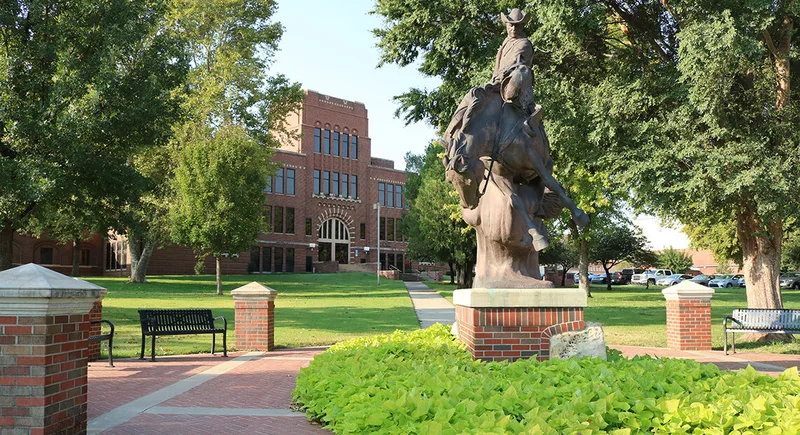
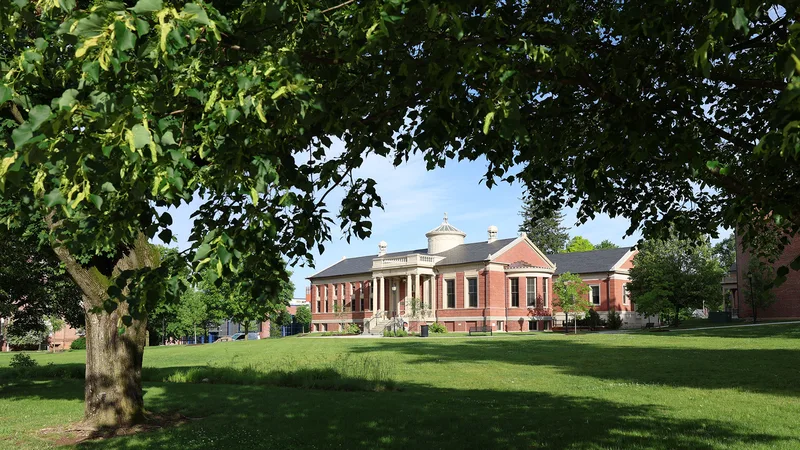
Accessible admissions, career-focused academics and a close-knit rural setting give athletes practical reasons to consider competing here.
- 1,943
- Students
- 93%
- Admit rate
- $9,966
- Net price
Browse programs
College directoryEvery program, filtered by what fits Sport directoryMen's and women's, every division State directoryPrograms in the states you would play inGo deeper
Major directoryYour major and your sport in one list Camp directoryID camps and showcases at college programs Conference directoryEvery conference and its member colleges

Bluefield, West VirginiaCentral Intercollegiate Athletic Association
Overview
Mission and culture
Bluefield State University is a historically Black university in rural Bluefield, West Virginia, with career-focused academics and NCAA Division II athletics. Its emphasis on engineering technology and health sciences, along with a small campus community, makes it worth considering if you want applied learning alongside competitive sports.
Why athletes choose Bluefield State University
Career-focused programs, accessible admissions and a small campus community give athletes practical reasons to consider competing here.
Fit check
Pick a sport, your position and level, add a test score if you have one, and get an instant read on your chances here. Free, and no account needed.
Academics
Bluefield State University emphasizes applied STEM and health sciences, so assessing its academic fit means considering career-focused majors alongside coursework demands, faculty access, graduation outcomes and preparation for employment.
Academic strength
A composite of graduation rate, earnings after college, how selective admissions are and how hard the coursework is.
Acceptance rate
More selectiveMore accessible
Admissions are highly accessible, making academic readiness and a suitable program more important than navigating a selective process.
Six-year graduation rate
0%100%
Completing a degree takes real self-direction here, making consistent academic focus and use of support services important.
Academic difficulty
Rated 3 out of 5
Coursework presents a balanced challenge that calls for steady planning alongside athletic commitments.
Student to faculty ratio
students for every faculty member
Faculty should be reachable in this personal academic environment, giving you opportunities to build useful classroom connections.
Median earnings
per year, ten years after starting college
Six years after: $35,030Graduate earnings are modest, so weigh affordability carefully and connect your major with concrete career preparation.
Undergraduate enrollment
undergraduate students
The small undergraduate community offers a more familiar daily environment, with opportunities to find connections beyond your athletic program.
SAT and ACT scores
Testing is optional, and the typical score profile suggests an accessible academic entry point for recruits who demonstrate readiness through their classroom work.
Most popular majors
Admissions
Preparing an application to Bluefield State University starts with reviewing deadlines by plan, test policy, application fees and recommendation requirements alongside your recruiting conversations.
Majors
15 undergraduate majors across 7 academic areas.
No major matches that search.
Campus life
Daily life centers on a small, career-focused campus with residence halls, student support services and a locally oriented community in rural Bluefield.
Athletics
The Big Blue compete at the NCAA Division II level, primarily in the Central Intercollegiate Athletic Association, with opportunities in programs such as football, basketball and volleyball.
Athletic department
The NCAA Division II athletic department at Bluefield State University can be assessed through its athlete participation, revenue, recruiting investment and how athletic aid and recruiting spending differ by gender.
Athletes
Athletic aid
Recruiting spend
Source: the federal Equity in Athletics report, 2025.
Cost
At Bluefield State University, lower in-state tuition and available need-based and merit-based aid make comparing published costs with your actual price after grants especially useful.
Average net price
What families pay on average after grants and scholarships, including tuition, housing and fees.
Published tuition
The sticker price a year, before any aid.
Financial aid
Need-based and merit-based aid availableAthletic scholarships, where a program offers them, are awarded by the coaching staff and come on top of these figures.
NIL
NIL rating
Bluefield State University in Bluefield, West Virginia offers a developing name, image and likeness (NIL) environment where college athletes can build personal brands in a close-knit community. While on a smaller scale than major programs, Bluefield State student-athletes can still find meaningful NIL opportunities connected to local college sports visibility.
See the full NIL breakdownStudent fit
The kind of student-athlete who tends to do well at Bluefield State University.
Bluefield State University is a good fit for athletes seeking NCAA Division II competition, accessible admissions and a small campus with a practical academic focus. It particularly suits students interested in nursing, engineering technology or business who want their coursework connected to employment and are comfortable living in a rural West Virginia community. You should be ready to manage athletic commitments alongside a balanced academic challenge, build relationships with faculty and use student support services consistently. Families should weigh aid offers and career plans carefully, since modest graduate earnings and a challenging path to degree completion make affordability and follow-through especially important.
Who thrives here
Upward Trending Program BuildersPlaying Time EarnersHBCU Community SeekersHands On STEM LearnersPractical Cost Focused StudentsQuestions
It is known for its strong focus on career-ready undergraduate programs, especially in engineering, business, education, and nursing, along with a historic commitment to access and affordability for a diverse student body.
It is located in Bluefield, West Virginia, in the southern part of the state near the Virginia border, offering a small-town environment with access to outdoor recreation in the Appalachian region.
The university offers associate and bachelor’s degrees in fields such as engineering and technology, business, education, nursing, and the arts and sciences, as well as a growing selection of graduate and online programs.
Admission is generally considered accessible, with a focus on supporting students who show college readiness and motivation rather than highly selective test score or GPA cutoffs.
The academic environment is typically described as supportive and moderately challenging, with smaller classes, approachable faculty, and an emphasis on practical, hands-on learning rather than highly competitive grading.
Yes, it offers a variety of online and hybrid courses and programs, particularly in business, education, and general studies, designed to serve working adults, commuters, and nontraditional students.
Campus life is focused on a close-knit community experience, with student clubs, organizations, and events, while many students also commute or balance work and family responsibilities alongside their studies.
It is generally regarded as an affordable public option, with relatively low in-state tuition and access to financial aid, scholarships, and grants that help reduce overall costs for many students.
Students can choose from on-campus housing as well as nearby off-campus apartments and rentals, with many undergraduates, especially newer students, opting to live close to campus for convenience and community.
The university sponsors intercollegiate athletics for men and women in multiple sports, including basketball, baseball or softball, football, and other team and individual sports, competing against regional and national opponents.
Student-athletes benefit from a small-campus setting that allows close interaction with coaches and faculty, with an emphasis on balancing academics, training, and competition while pursuing a degree.
Career services typically include help with resumes and interviewing, internship and job search support, employer connections in the region, and guidance to prepare students for professional roles or further study.
Compare
Other colleges worth comparing with Bluefield State University.
Accessible admissions, career-focused academics and a close-knit rural setting give athletes practical reasons to consider competing here.
A small campus, accessible admissions and Mountain East competition give athletes clear reasons to consider this university.
Affordable tuition, a small campus community and Division II competition give athletes practical reasons to consider enrolling.
Accessible admissions, affordable costs and a small campus community complement competitive athletics in a rural setting.
Small classes, accessible admissions and a rural setting appeal to athletes seeking a more personal college experience.
Athletes choose a close-knit campus where land-grant academics, affordable tuition and conference competition shape the college experience.
A small campus, accessible admissions and historically Black identity give athletes distinct reasons to consider studying here.
Athletes can pursue Peach Belt competition alongside career-focused academics, affordable public tuition and a quieter campus environment.
A small campus, personalized instruction and island-based learning give athletes reasons to look beyond the competition.
Affordable tuition, aviation-focused academics and a small residential community give athletes distinct reasons to consider competing here.
A small campus, specialized academics and Gulf South competition give athletes distinct reasons to consider studying here.
A small mountain campus, reachable faculty and relatively low costs appeal to athletes seeking a personal college experience.
Three ways to start
Pick the option that matches where you are, and we will show you the plan that fits.
Resources