Recruiting campBaseball · Men's
Prospect Camp
- Jan 3, 2026
- Ultimate Baseball Academy, 4225 S 121st Plaza, Omaha, NE 68137
- $175
Pro-style workout and skill evaluation for high school players, concluding with game/scrimmage play and coach feedback.
Browse programs
College directoryEvery program, filtered by what fits Sport directoryMen's and women's, every division State directoryPrograms in the states you would play inGo deeper
Major directoryYour major and your sport in one list Camp directoryID camps and showcases at college programs Conference directoryEvery conference and its member colleges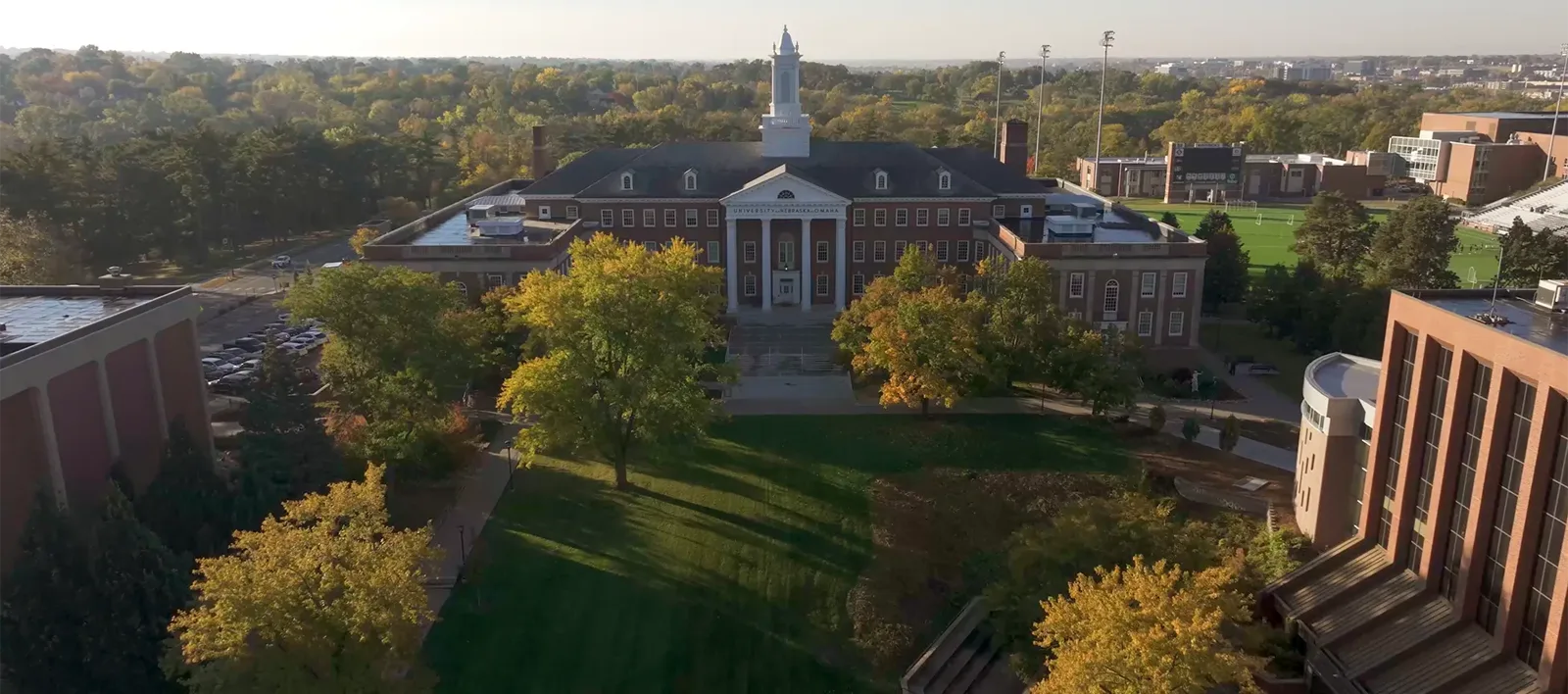

One plan built for University of Nebraska at Omaha Baseball, with the roster read, the coach's contact and a dated plan, delivered within 24 hours. An expert checks every plan.
Overview
Key facts about the University of Nebraska at Omaha baseball team.
In Omaha, Nebraska, University of Nebraska at Omaha competes in Division I baseball through the Summit League. After the 2026-27 season, it loses six pitchers, the most of any position group, followed by three outfielders. Only 53% of last season's non-seniors returned, which marks high turnover among Division I baseball teams.
Head Coach
players a season
Fit check
Pick your position and level, add a test score if you have one, and get an instant read on your chances here. Free, and no account needed.
Coaching staff
Head coach
Rob FournierHead CoachRoster
The roster by class
39 players on the latest roster (2027).
Roster openings after 2026-27
Pitcher 6 · Catcher 1 · Infielder 1 · Outfielder 3
After the 2026-27 season, six pitchers will leave, the largest group of departures by position, followed by three outfielders. Recruits at those positions would face the least entrenched competition.
See who you would be replacingRoster churn is a theme here, with 53% of last season's freshmen, sophomores and juniors returning against a 61% median among Division I baseball teams.
Positions
How many players a season the program carries at each position, and how tall they are.
Average height 6'1"
Average height 5'10"
Average height 6'0"
Average height 6'0"
Average height 6'0"
The outfielders group fills 21% of the roster, about seven a season, above the 15% average among Division I baseball teams.
Transfers
transfers in for 2026-27
transfers out
Footprint
Where the players are from
Counted from players on recent rosters with a known hometown.
Top home states
Results
Swipe to see every season
2022
46%26-31overall
12-12conference
2023
43%21-28overall
9-14conference
2024
36%18-32-1overall
16-13-1conference
2025
40%20-30overall
12-16conference
Not one of the last four seasons has finished above .500, and the winning percentage over that run is 41%.
Schedule and travel
The season's games, home and away, and how far the team travels.
Recruiting
Omaha is an NCAA Division I program competing in the Summit League and recently advanced to the conference championship stage. The roster includes a mix of junior college transfers, four-year transfers, international players, and Nebraska prospects, indicating a broad recruiting model with limited room for athletes who are not ready to contribute at the Division I level.
Recruiting difficulty
Omaha is a competitive Division I program where most roster opportunities require verified performance, positional value, and the ability to contribute against conference-level pitching and hitting.
What coaches value
How to get recruited here
Build a complete recruiting profile with verified video, current statistics, defensive position, measurable testing data, and academic information. Contact the baseball staff early, identify your specific role, and compete against strong regional or junior college competition so your performance can be evaluated in a Division I context.
How hard is it to make the team
Making Omaha's baseball team is challenging because it is an NCAA Division I program competing for opportunities in the Summit League. The roster shows that the program evaluates both developing local players and experienced transfers, so high school athletes generally need clear position-specific tools while transfer prospects need proven production and a realistic path to playing time.
Who fits this program
Program stats
Athletes on the roster
Coaches on staff
Spent per athlete
Spending and revenue a year
Revenue covers 32% of what the program spends.
Staffing is lean relative to roster size, with three coaches for 44 athletes in the 2025 EADA report, around 15 athletes per coach versus a median of 10 among Division I baseball teams. By the same report, the program reports roughly $1.2 million in expenses versus $390,000 in revenue, so revenue covers 32% of spending.
Source: the federal Equity in Athletics report, 2025.
Feeders
The high schools and clubs that sent the most players to this roster.
Millard South High School is the top feeder, with four players on recent rosters, ahead of Lincoln East High School with three. Several pipelines feed this roster, with five sources each placing at least two players.
The school
The University of Nebraska at Omaha combines research activity with applied strengths in business, technology and biomechanics, giving athletes practical academic directions to consider alongside coursework demands and career outcomes.
University of Nebraska at OmahaOmaha, NebraskaSee the full profile Acceptance rate
Graduation rate
Camps
New camp dates are not posted yet. These ran last season.
Pro-style workout and skill evaluation for high school players, concluding with game/scrimmage play and coach feedback.
Technical and foundational hitting instruction for youth ages 8-14 led by UNO coaches.
Pitcher evaluations and one-on-one feedback with UNO pitching staff (camp listing shown on official camp site).
Official links
Similar programs
Programs at a similar level, with similar academics, worth adding to your recruiting list.
Competitive athletics, practical academic programs and affordable tuition make this a compelling option for recruits.
Competitive athletics, applied academics and comparatively affordable tuition give recruits a balanced mix of opportunities.
Career-focused academics, Division I competition and access to Detroit-area employers give athletes practical reasons to consider this campus.
A small residential community and accessible faculty help athletes keep academics connected to their competitive goals.
Division I competition, approachable faculty and residential learning communities give athletes reasons to consider the campus.
A small campus community and faith-informed education give athletes a personal setting for Division I competition.
Teams in Nebraska
Omaha, NE
Big East competition, career-focused academics and a service-minded community give athletes distinct reasons to consider Creighton.
Lincoln, NE
Big Ten competition, hands-on research and in-state value appeal to athletes seeking a broad university experience.
Roster openings · 2026-27
Every program ranked by players in their final year, with the positions they are losing.
Three ways to start
Pick the option that matches where you are, and we will show you the plan that fits.
Resources