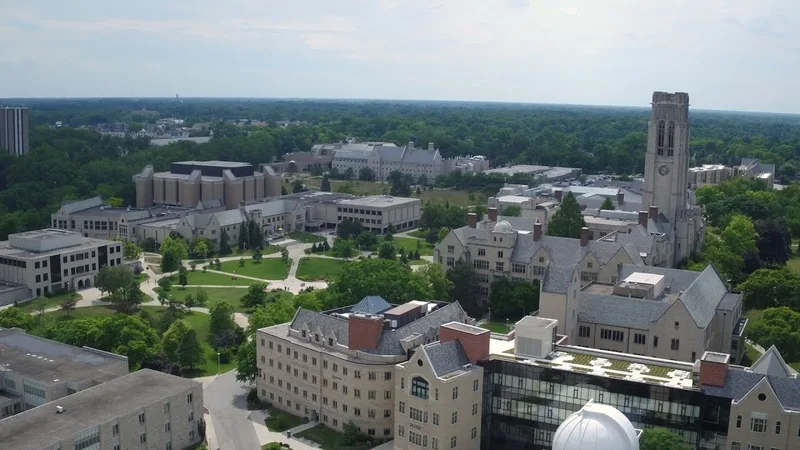

Conference competition, career-focused academics and available scholarships give athletes practical reasons to consider studying and competing here.

NCAA Division IMid-American ConferenceOhio

Miami University Football
One plan built for Miami University Football, with the roster read, the coach's contact and a dated plan, delivered within 24 hours. An expert checks every plan.
- 119
- Roster
- 21
- Leaving
- 35%
- In-state
- 21%
- Transfers
Overview
Miami University Football Team Details
Key facts about the Miami University football team.
Based in Oxford, Ohio, Miami University competes in the Mid-American Conference at the Division I FBS level in football. The most room for the Class of 2027 is among defensive backs, with five leaving after the 2026-27 season, followed by five offensive linemen. Freshmen make up 43% of the roster, which makes it a young team.
NCAA Division IMid-American ConferenceOhio
- Head coach
- Chuck Martin
- Home venue
- Yager Stadium
- Average roster
- 132
- Five-year win rate
- 59%
Head Coach
players a season
Fit check
Do You Fit at Miami University?
Pick your position and level, add a test score if you have one, and get an instant read on your chances here. Free, and no account needed.
Coaching staff
Get on This Staff's Radar
Head coach
Chuck MartinHead CoachEmail●●●●●●@●●●●.edu
Phone(●●●) ●●●-●●●●
Roster
Roster Breakdown
The roster by class
51FreshmenFr.
23SophomoresSo.
24JuniorsJr.
21SeniorsSr.
119 players on the latest roster (2026).
Roster openings after 2026-27
21players in their final year, 18% of the roster
Quarterback 1 · Running Back 1 · Wide Receiver 3 · Offensive Line 5 · Defensive Line 2 · Linebacker 2 · Defensive Back 5 · Specialist 2
Only 21 players leave after the 2026-27 season while 51 freshmen are already on the roster, so the Class of 2027 faces a tight room. The biggest openings for that class are among defensive backs, where five are set to leave after that season, followed by five offensive linemen.
See who you would be replacingA young group: 43% of the roster is in its first year, with 62% made up of freshmen and sophomores together. Among players who were not in their final year last season, 73% are back, a sign of a stable program.
Positions
Football Roster by Position
How many players a season the program carries at each position, and how tall they are.
Quarterback
4.7players a season
Average height 6'2"
Running Back
7players a season
Average height 5'11"
Wide Receiver
15.7players a season
Average height 6'1"
Tight End
8.3players a season
Average height 6'4"
Offensive Line
17.7players a season
Average height 6'5"
Defensive Line
20.7players a season
Average height 6'3"
Linebacker
14players a season
Average height 6'1"
Defensive Back
18.3players a season
Average height 6'1"
Specialist
5.7players a season
Average height 6'1"
Transfers
Transfers In and Out
25
transfers in for 2026-27
14
transfers out
- Share of the roster
- 21%
- Per 100 freshmen
- 49
- By position
- Quarterback 2 · Running Back 3 · Wide Receiver 7 · Offensive Line 4 · Defensive Line 2 · Linebacker 2 · Defensive Back 4 · Specialist 1
- Came from
- 23 from Division I, 2 from Division II
Footprint
Where This Team Recruits
Where the players are from
338players
In-state34.6%
Other US states63.3%
International2.1%
Counted from players on recent rosters with a known hometown.
Top home states
Ohio35%
Indiana12%
Illinois11%
Michigan9%
Pennsylvania5%
Results
Miami University Football Recent Results
Swipe to see every season
2021
54%7-6overall
5-3conference
2022
46%6-7overall
4-4conference
Best season
2023
79%11-3overall
7-1conference
2024
64%9-5overall
7-1conference
Latest
2025
50%7-7overall
6-2conference
Standings
Mid-American Conference Standings
Where Miami University stands in the Mid-American Conference.
Schedule and travel
Football Schedule
The season's games, home and away, and how far the team travels.
Recruiting
Recruiting Outlook
Miami competes in NCAA Division I FBS football in the Mid-American Conference, where the program has established itself as a competitive conference team with championship-level history. Recruiting is selective, and most roster spots are likely filled by athletes who show clear position fit, FBS-level athletic ability, and readiness for a physical college schedule.
NCAA Division I FBS and MAC competitionRecent conference championship contentionLarge, experienced roster with transfer additions
Recruiting difficulty
60/ 100Hard
OpenCompetitiveSelectiveElite
Miami is a competitive FBS program where recruited players typically make up most of the roster, but it is not an elite national-level program with minimal access to all prospects.
What coaches value
- Position-specific size, speed, strength, and movement skills that translate to FBS football
- Consistent technique, physical play, and reliable execution under pressure
- Football intelligence, preparation habits, and the ability to learn multiple schemes
- Special teams value, toughness, coachability, and dependable off-field behavior
How to get recruited here
Build a position-specific recruiting profile with verified measurements, academic information, quality film, and complete game footage. Contact the recruiting staff early, explain your role and athletic development, and attend camps or evaluation opportunities where your position skills can be assessed directly.
How hard is it to make the team
Making Miami's football team is difficult because it is an NCAA Division I FBS program competing in a strong conference and maintaining a deep roster. Recruits should expect competition from scholarship athletes and transfers, so clear FBS-level traits, position versatility, special teams potential, and consistent production are important.
Who fits this program
- This program fits football players seeking competitive NCAA Division I, MAC-level play.
- Athletes should balance structured Division I football with classroom expectations.
- The large, rural campus suits athletes preferring traditional residential college life.
- This team fits position-ready players prepared for physical college schedules.
Program stats
The Program by the Numbers
161
Athletes on the roster
15
Coaches on staff
$11,136
Spent per athlete
Spending and revenue a year
Spending$11,017,434
Revenue$11,017,434
Revenue covers everything the program spends.
The operating budget is below its peers: about $12,000 per athlete in the 2025 EADA report, about a third of the FBS median.
Source: the federal Equity in Athletics report, 2025.
Feeders
Top Feeder Schools and Clubs
The high schools and clubs that sent the most players to this roster.
1Belleville High School4 players on recent rosters
2Glenville High School4 players on recent rosters
3Lakota West High School4 players on recent rosters4Archbishop Hoban High School3 players on recent rosters5Carmel High School3 players on recent rostersThree sources, including Belleville High School, are tied at four players each across recent rosters. Repeat pipelines are common here, with Glenville High School, Lakota West High School, and Archbishop Hoban High School also each showing up with at least two players.
The school
School Environment
Miami University's undergraduate teaching focus and strengths in business, engineering and liberal arts provide context for evaluating admissions, coursework, popular majors, faculty access and outcomes alongside your athletic goals.
 Miami UniversityOxford, OhioSee the full profile
75%
Acceptance rate
80%
Graduation rate
- Undergraduates
- 16,816
- Net price a year
- $28,384
- Earnings after ten years
- $55,076
Official links
Official Miami University Football Links
Similar programs
Similar Football Teams
Programs at a similar level, with similar academics, worth adding to your recruiting list.


Research resources, professional programs and Mid-American Conference competition give athletes several reasons to consider Buffalo.


Competitive athletics, career-focused academics and a residential community give recruits reasons to look closely at Dayton.


A fully funded education and officer career path give athletic competition a clear purpose beyond college.
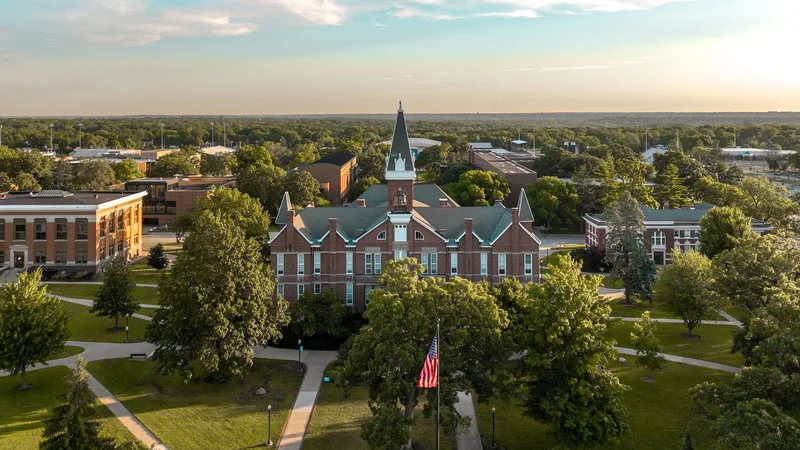

Close faculty connections and Des Moines career opportunities complement the demands of competing in Division I athletics.


Competitive athletics, paid co-op opportunities and city life give recruits compelling reasons to consider studying here.
Teams in Ohio
More Football Teams in Ohio
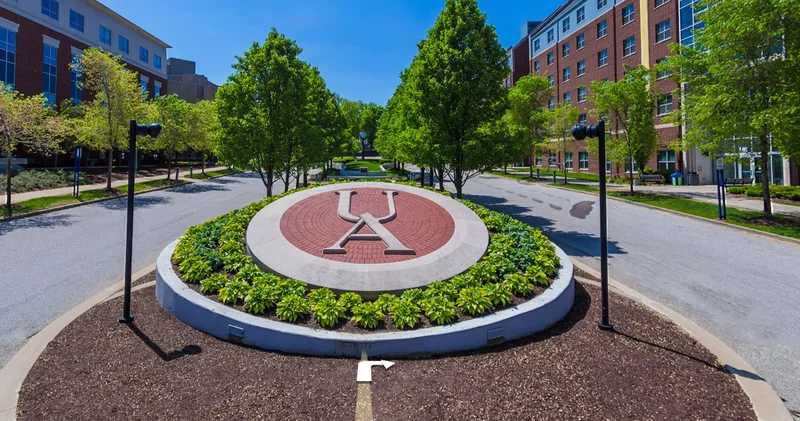

The University of Akron
Akron, OH
Career-focused academics, regional industry connections and competitive athletics give recruits practical reasons to consider an urban campus.
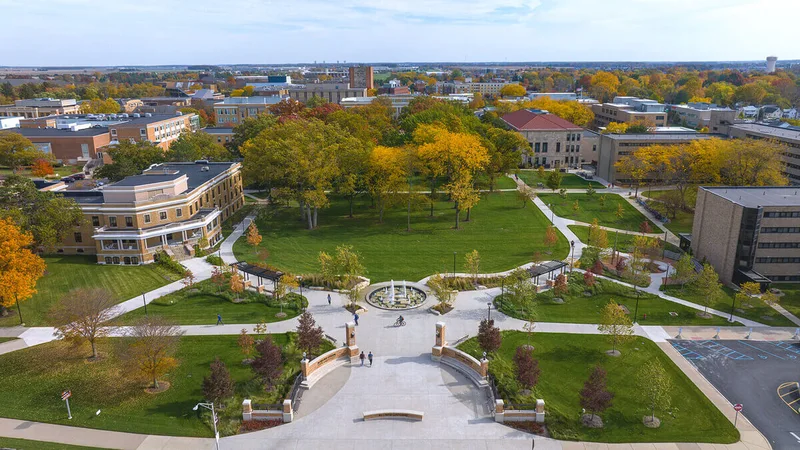

Bowling Green State University
Bowling Green, OH
Division I competition, broad academic choices and a residential college-town setting give athletes several reasons to consider enrolling.
University of Dayton
Dayton, OH
Competitive athletics, career-focused academics and a residential community give recruits reasons to look closely at Dayton.
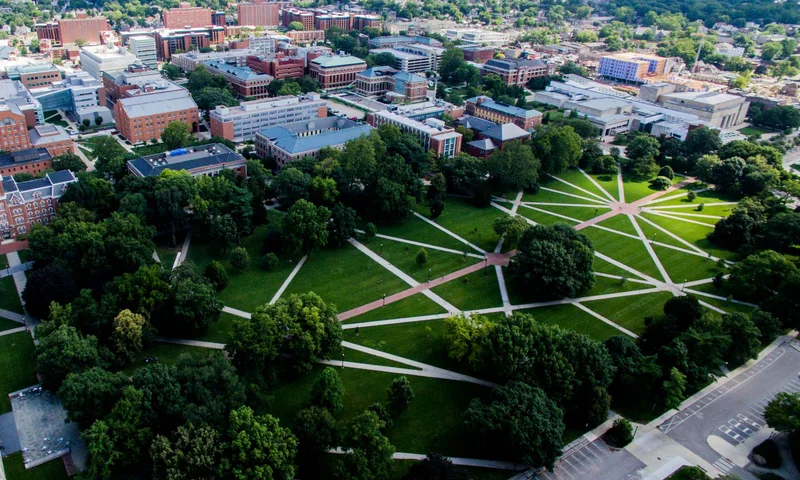

The Ohio State University
Columbus, OH
Big Ten competition, broad academic choices and research opportunities appeal to athletes seeking a large university experience.


Kent State University
Kent, OH
Competitive athletics, broad academic choices and a residential college-town setting give recruits several reasons to consider Kent State.


Ohio University
Athens, OH
A residential college town, communication strengths and conference competition give athletes clear reasons to consider studying here.
University of Cincinnati
Cincinnati, OH
Competitive athletics, paid co-op opportunities and city life give recruits compelling reasons to consider studying here.
The University of Toledo
Toledo, OH
Conference competition, career-focused academics and available scholarships give athletes practical reasons to consider studying and competing here.
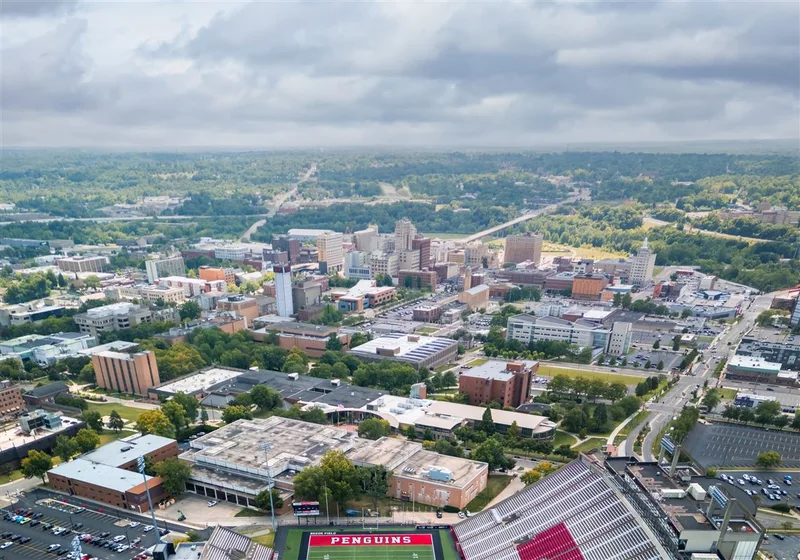

Youngstown State University
Youngstown, OH
Career-focused programs, affordable tuition and an urban campus give athletes practical reasons to pursue Division I competition here.
Roster openings · 2026-27
Which D1 Football programs have the most roster spots opening up?
Every program ranked by players in their final year, with the positions they are losing.
29.7players leaving per program, on average
See the programs Three ways to start
Where are you in the search?
Pick the option that matches where you are, and we will show you the plan that fits.
Recruiting Plan
Your 20 to 25 best-fit schools, picked for you.



- Starter: the list, fit reads, real costs and a dated timeline
- Complete: adds roster reads and coach emails for every school
$99 or $249Starter or Complete, one time
Build my plan
Roster Report
The roster at your position, at the schools you pick.


- Who is graduating at your position, class year by class year
- Where spots are likely to open, in plain words
From $193, 8 or 15 schools
Choose my schools
School Plan
One school, covered end to end.
- Your honest odds, the roster and the verified coach
- Intro email, three follow-ups, admissions steps and timeline
$49One school, one time
Pick my school Resources