How D3 Women's Volleyball Coaches Evaluate Players
What D3 volleyball coaches actually look for, how they weigh it, and where you need to stand out to earn a roster spot.
What D3 coaches weigh, in order
- 1Positional value
A staff shopping for a setter or middle cannot replace that need with an unrelated strong athlete.
- 2Match performance
Once the role fits, full-set performance shows whether volleyball skills survive tough serves, imperfect passes and...
- 3Academic fit
A recruit who matches the college's academic expectations gives the staff a more workable option.
Reviewed Sep 2026
What should I do next?Overview
How D3 Women's Volleyball Coaches Evaluate Recruits
Division III women's volleyball coaches evaluate recruits through full-match film, live club play and position-specific skills. They look at what happens beyond the highlight kill: serve receive under pressure, transition decisions, block positioning and whether a player can fill a role in their offense. Compared with Division II, Division III evaluation gives academic and financial fit particular weight because athletic aid is not available. A strong volleyball match still needs to work for the student's college plans.
- Division
- NCAA Division III
- Sport
- Women's Volleyball
- Last reviewed
- Sep 2026
What matters
Coach Priorities
Most important
Positional value
A staff shopping for a setter or middle cannot replace that need with an unrelated strong athlete. A recruit's ability to handle the open role therefore comes before an impressive general highlight reel.
Then
Match performance
Once the role fits, full-set performance shows whether volleyball skills survive tough serves, imperfect passes and organized blocks. That evidence carries more weight than isolated approach-touch measurements.
And then
Academic fit
A recruit who matches the college's academic expectations gives the staff a more workable option. It ranks behind role and court performance because neither a transcript nor a strong application fills a rotation.
Evaluation
Key Evaluation Factors
What coaches weigh when sizing up a recruit.
Positional need
whether the player can fill a setter, middle, pin or libero role.
Match impact
side-out contributions and decisions across complete sets.
Physical measurements
standing reach, approach touch, block touch and movement.
Competition context
performance against strong club opponents, not just highlight clips.
Academic fit
classroom record in relation to the college's expectations.
Focus
What Coaches Watch at Each Position
Setter
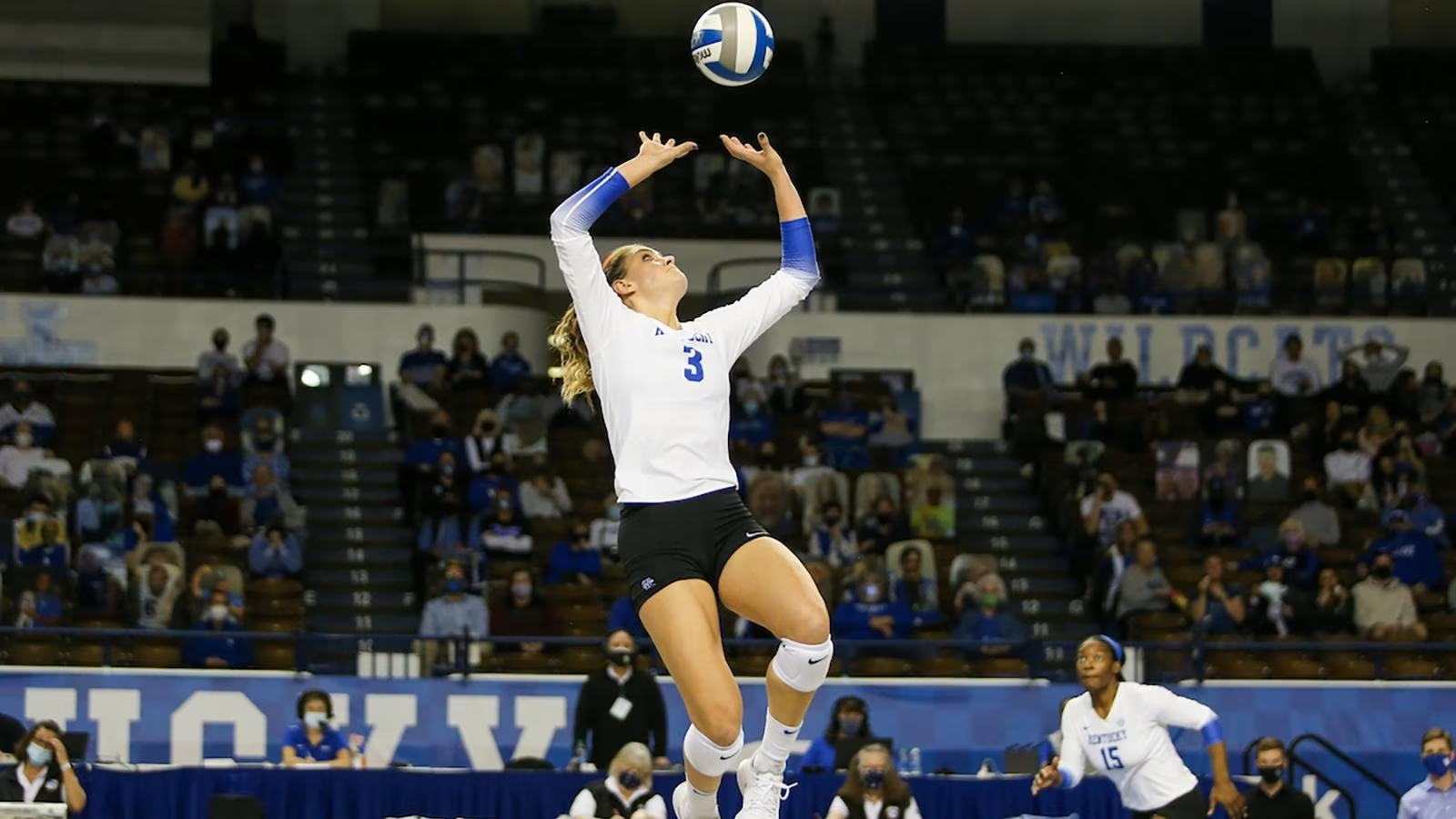
Coaches watch release tempo, location to each pin and decisions when the first pass pulls the setter off the net. They also check whether a setter can defend, serve and run an offense without predictable choices.
Middle blocker
First-step reads, lateral closing speed and disciplined hands matter on the block. On offense, coaches watch quick-attack timing, transition off the net and whether approach touch translates into available hitting windows.
Outside hitter
A six-rotation outside must pass a tough serve, then get available to attack. Coaches compare serve receive rating, attacking range against a formed block and the ability to score or keep the ball in play on a bad set.
Libero
Coaches track serve receive range, platform control and whether passes give the setter options. Defensive evaluation includes reading the hitter, digging hard-driven balls to a playable target and taking responsibility for seams.
Right-side hitter
Coaches watch the block against opposing outsides and whether the hitter can score from the right antenna. Left-handed contact can help, but timing, out-of-system swings and back-row defense still have to hold up in match play.
Where to be seen
Where Coaches Watch
Club match film and live evaluation at club events carry substantial weight, especially during the winter and spring club season. Send coaches a short introduction with your position, club schedule, academic information and links to complete-set film. High school matches can add useful context when they show sustained play against strong opposition.
- Large club tournaments with many recruiting-age teams competing across several courts
- National qualifying events and championship tournaments that draw broad recruiting fields
- Local school matches after a program has identified you as a prospect
- Camps where coaches can see your skills, learning and competitive play
Level check
Signs You Are a D3 Level Recruit
- Competes in club matches where opposing blockers and servers consistently test their position.
- Maintains useful serve receive or defensive touches against stronger opponents, not only familiar teams.
- Shows a repeatable approach touch and controlled arm swing in live rallies.
- Performs a defined role for their club team across full sets, including difficult rotations.
- Produces playable transition touches after a block or dig rather than stopping at the first contact.
Stand out
What Helps and What Hurts
What helps
Habits that move you up coaches' boards
- Full-set video with the athlete identified before play and the scoreboard visible when available.
- Clearly labeled standing reach, approach touch and block touch measured the same way each time.
- Position-specific clips showing serve receive, blocking reads and out-of-system rallies.
- A current club schedule that lets a coach locate the athlete's court and match.
What hurts
Mistakes that quietly cost opportunities
- The undersized middle with limited lateral blocking range and no clear pin or back-row role.
- Serve receive breakdowns that force an outside hitter off the court in difficult rotations.
- A setter who delivers clean balls only when the pass reaches the target.
- Clips that hide missed serves, blocking errors or long stretches without a playable touch.
Avoid these
Common Mistakes
- Assuming high school awards alone establish a Division III volleyball fit.
- Treating a single approach-touch measurement as a complete evaluation.
- Sending only attack highlights for a six-rotation outside or libero prospect.
- Building a college list around volleyball reputation without checking academic interests.
Action plan
What to Do This Month
- Record a complete club set this month and note your jersey number, position and rotations.
- Gather your standing reach, approach touch, block touch and recent academic information.
- Ask a club coach to identify the role your film supports at the college level.
- Use Pathley at pathley.ai to compare Division III women's volleyball options against your position and academic interests.
- Use Pathley to refine a concise coach email with your film link and upcoming club schedule.
- Send targeted emails and track which coaches request more film or a live look.
College fit finder
Find the Colleges Where You Fit
Now that you know what coaches look for, see which schools to aim it at. Pick your position and level, and we score every college program in your sport on roster openings at your position, athletic level and academics.
Free recruiting guide
The complete women's volleyball recruiting guide
Divisions, contact rules, what coaches look for and what a year really costs, laid out in the order the process happens.
- 01Where you actually fit
- 02The recruiting timeline
- 03What coaches evaluate
- Plus six more sections
Explore programs
Search top D3 Women's Volleyball colleges
Four ways to rank the programs in this division, from the strongest overall to the easiest to get into.
FAQ
Frequently Asked Questions
Do D3 women's volleyball coaches care about height?
Yes, but height is evaluated with position and function. Pin hitters and middles usually need enough size or jump ability to finish and block, while liberos and setters can offset height with strong technical quality, movement, and consistency.
Is club volleyball important for D3 recruiting?
Club matters because it gives coaches more chances to see recruits against stronger competition and in larger events. A strong high school player can still be recruited, but limited club exposure usually means video and direct outreach become more important.
What type of video should I send first?
Start with a short skills-focused video that quickly identifies you, then include a full set or match link. D3 coaches want context, especially for passing, defense, serve receive, and how you perform across an entire match.
When should recruits start contacting D3 volleyball coaches?
Many prospects begin serious outreach during sophomore and junior year, especially before major club events and summer camps. Earlier contact can help coaches track development, but the key is having useful film, academics, and a realistic school list.
Can strong academics improve my chances in D3 volleyball recruiting?
Often, yes. At academically selective D3 colleges, grades and course rigor can make a recruit more supportable in admissions, which can matter when volleyball ability between prospects is relatively close.
Three ways to start
Where are you in the search?
Pick the option that matches where you are, and we will show you the plan that fits.
Your 20 to 25 best-fit schools, picked for you.



- Starter: the list, fit reads, real costs and a dated timeline
- Complete: adds roster reads and coach emails for every school
The roster at your position, at the schools you pick.

- Who is graduating at your position, class year by class year
- Where spots are likely to open, in plain words
One school, covered end to end.
- Your honest odds, the roster and the verified coach
- Intro email, three follow-ups, admissions steps and timeline
News and guides
Volleyball: The Latest from Pathley

Resources
Keep exploring
Sport hub
Everything for Women's Volleyball recruiting
The Women's Volleyball hub brings every division together: how D1, D2, D3 and NAIA compare, the strongest programs in each state, camps, and the recruiting guides for each level.
How this page was built. General volleyball recruiting guidance and Pathley analysis of position-specific evaluation. Updated Sep 2026.