How D1 Men's Track & Field Coaches Evaluate Players
What D1 track & field coaches actually look for, how they weigh it, and where you need to stand out to earn a roster spot.
What D1 coaches weigh, in order
- 1Verified marks
A legal, accurately recorded result gives Division I men's staffs a clearer starting point than video, workouts or an...
- 2Scoring potential
After confirming the mark, coaches consider where it could contribute within their event squad.
- 3Development upside
A consistent progression can strengthen a recruit's case, but projected gains rank behind proven results and a...
Reviewed Sep 2026
What should I do next?Overview
How D1 Men's Track & Field Coaches Evaluate Recruits
Division I men's track and field evaluation starts with verified times and legal marks. Coaches compare results within an event group, then examine meet conditions, competitive fields and season-to-season progression. Video helps explain technique, but it does not replace a credible result.
Compared with Division II, Division I men's programs generally look for a stronger current mark and a plausible path to contributing against deeper collegiate fields. Event fit matters: a fast sprinter, for example, may also offer value across individual events and relays.
- Division
- NCAA Division I
- Sport
- Men's Track & Field
- Last reviewed
- Sep 2026
What matters
Coach Priorities
Most important
Verified marks
A legal, accurately recorded result gives Division I men's staffs a clearer starting point than video, workouts or an impressive-looking win against a thin field.
Then
Scoring potential
After confirming the mark, coaches consider where it could contribute within their event squad. That makes event depth and relay utility more consequential than raw improvement alone.
And then
Development upside
A consistent progression can strengthen a recruit's case, but projected gains rank behind proven results and a specific way to contribute.
Evaluation
Key Evaluation Factors
What coaches weigh when sizing up a recruit.
Verified event results
fully automatic times, legal wind readings and measured marks.
Meet context
finishes against strong fields and performances under championship pressure.
Event fit
individual-event depth, relay potential and complementary event range.
Progression
season-best trends and improvement without relying on a single peak.
Technical evidence
race execution, hurdle rhythm, throwing mechanics and approach consistency.
Focus
What Coaches Watch at Each Event
Sprints
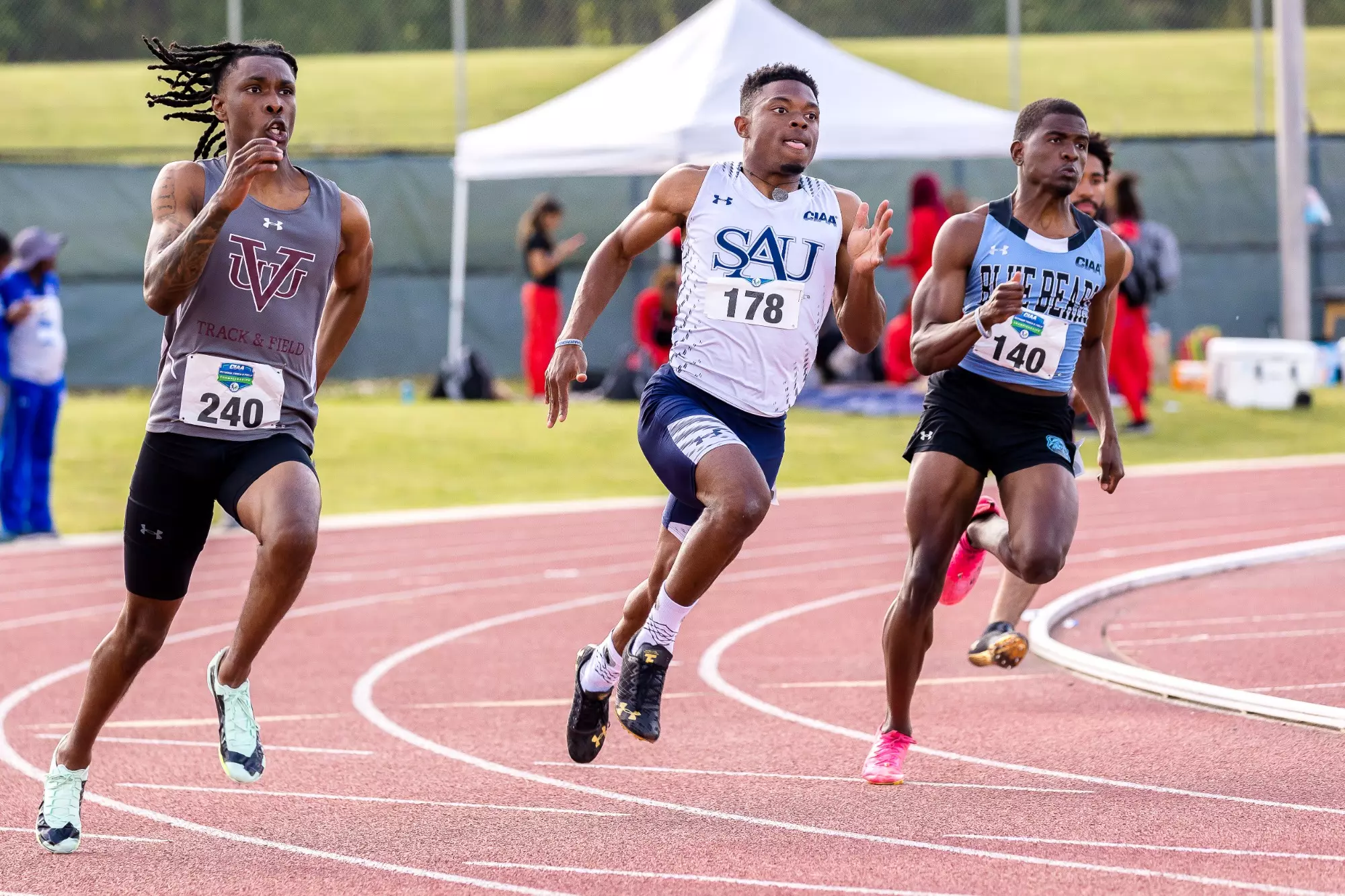
Coaches compare fully automatic times in the short and long sprints, including legal wind readings and split times. They watch acceleration, max velocity, bend running and whether race execution holds up through the finish. Relay exchanges and usable relay legs can add value beyond an open-event mark.
Distance
Evaluation separates middle-distance speed from distance strength using event times, closing splits and cross country results where relevant. Coaches look at pacing, the ability to cover moves and performances in deep races, not just a solo time trial.
Throws
Coaches check measured marks alongside implement weight, release mechanics and results across shot put, discus, hammer or javelin. A thrower's event range matters when marks show more than one credible way to contribute.
Jumps
Legal marks, approach consistency and takeoff quality matter in the horizontal jumps; clearance history and approach control matter in high jump and pole vault. Coaches distinguish a repeatable series from one big attempt with unusual conditions.
Hurdles
Fully automatic times matter, but coaches also inspect lead-leg mechanics, trail-leg recovery and rhythm between barriers. In the long hurdles, they watch stride pattern changes and whether form survives fatigue on the home straight.
Where to be seen
Where Coaches Watch
Make official meet results easy to find, then send event-specific times or marks and a concise season schedule to programs that fit your current level. Outdoor championship meets and competitive summer meets give coaches results from stronger fields and, in some events, a chance to watch technique in person. For technical events, include clear footage labeled with the implement, attempt and meet conditions.
- State championships and major spring invitationals with deep event fields
- Winter indoor meets that reveal readiness before the outdoor season
- Club competitions, qualifying meets and relay events with verified results
- Results databases and meet sites documenting marks, conditions and progression
Level check
Signs You Are a D1 Level Recruit
- Legal season-best times or marks hold up against results from strong regional meets.
- Results stay competitive when the athlete faces deeper fields rather than only local opponents.
- A sprinter posts credible open-event results alongside useful relay splits.
- A thrower produces repeatable measured marks with the relevant implement.
- A hurdler maintains rhythm and avoids major time loss late in races.
Stand out
What Helps and What Hurts
What helps
Habits that move you up coaches' boards
- Official result links that identify the meet, event, date and finish.
- A performance record showing legal marks across more than one meet.
- Clear video of full approaches, complete throws or entire hurdle races.
- An event list that distinguishes open marks from relay splits.
- Updates when a new season best changes the athlete's college fit.
What hurts
Mistakes that quietly cost opportunities
- The workout warrior profile: impressive hand times or training splits without comparable fully automatic race results.
- A wind-aided personal best presented without the wind reading.
- Throwing distances without the implement weight.
- Jump clips that show the landing but cut off the approach and takeoff.
Avoid these
Common Mistakes
- Treating a recruiting camp result as more persuasive than an official meet result.
- Assuming a high school meet win tells a coach how the mark compares across college events.
- Combining relay splits and open-event personal bests in one unlabeled list.
- Sending the same event pitch to programs with very different event needs.
Action plan
What to Do This Month
- Gather official links to your best event results and record wind readings or implement weights where relevant.
- Compare your marks with recent results from men's Division I programs you are considering.
- Use Pathley at pathley.ai to compare those track programs with your academic profile and event results.
- Film a complete race or a set of clearly labeled attempts at your next meet.
- Use Pathley to draft an event-specific coach email with result links, then check every detail before sending.
- Record which programs you contacted and update them when you post a meaningful new mark.
College fit finder
Find the Colleges Where You Fit
Now that you know what coaches look for, see which schools to aim it at. Pick your position and level, and we score every college program in your sport on roster openings at your position, athletic level and academics.
Explore programs
Search top D1 Men's Track & Field colleges
Four ways to rank the programs in this division, from the strongest overall to the easiest to get into.
FAQ
Frequently Asked Questions
Do D1 men's track coaches care more about rankings or raw marks?
Marks matter more because they translate across states and meets. Rankings can help with visibility, but coaches usually compare your verified performances to conference-level standards.
How important is video in men's track and field recruiting?
Video is most useful for technical events such as jumps, throws, hurdles, and pole vault. For distance and sprint recruits, official results and competition history usually carry more weight than highlight edits.
Can one strong event be enough for D1 recruiting?
Yes, if that event projects to help the program score. Extra value comes when you can also relay, double, or contribute in a related secondary event.
What kind of meets help a recruit most?
Coaches respond best to performances from credible, competitive meets with official timing and measurement. State championships, strong invitationals, national meets, and respected club circuits tend to carry more recruiting value.
Do coaches recruit based on future potential if the current marks are not there yet?
Potential matters, but D1 men's track still starts with current evidence. Coaches are more likely to bet on upside when the athlete already has a strong progression curve and a physical profile that supports bigger marks.
Three ways to start
Where are you in the search?
Pick the option that matches where you are, and we will show you the plan that fits.
Your 20 to 25 best-fit schools, picked for you.



- Starter: the list, fit reads, real costs and a dated timeline
- Complete: adds roster reads and coach emails for every school
The roster at your position, at the schools you pick.

- Who is graduating at your position, class year by class year
- Where spots are likely to open, in plain words
One school, covered end to end.
- Your honest odds, the roster and the verified coach
- Intro email, three follow-ups, admissions steps and timeline
News and guides
Track & Field: The Latest from Pathley


Resources
Keep exploring
Sport hub
Everything for Men's Track & Field recruiting
The Men's Track & Field hub brings every division together: how D1, D2, D3 and NAIA compare, the strongest programs in each state, camps, and the recruiting guides for each level.

How this page was built. General NCAA recruiting guidance, public track and field results and Pathley internal analysis. Updated Sep 2026.