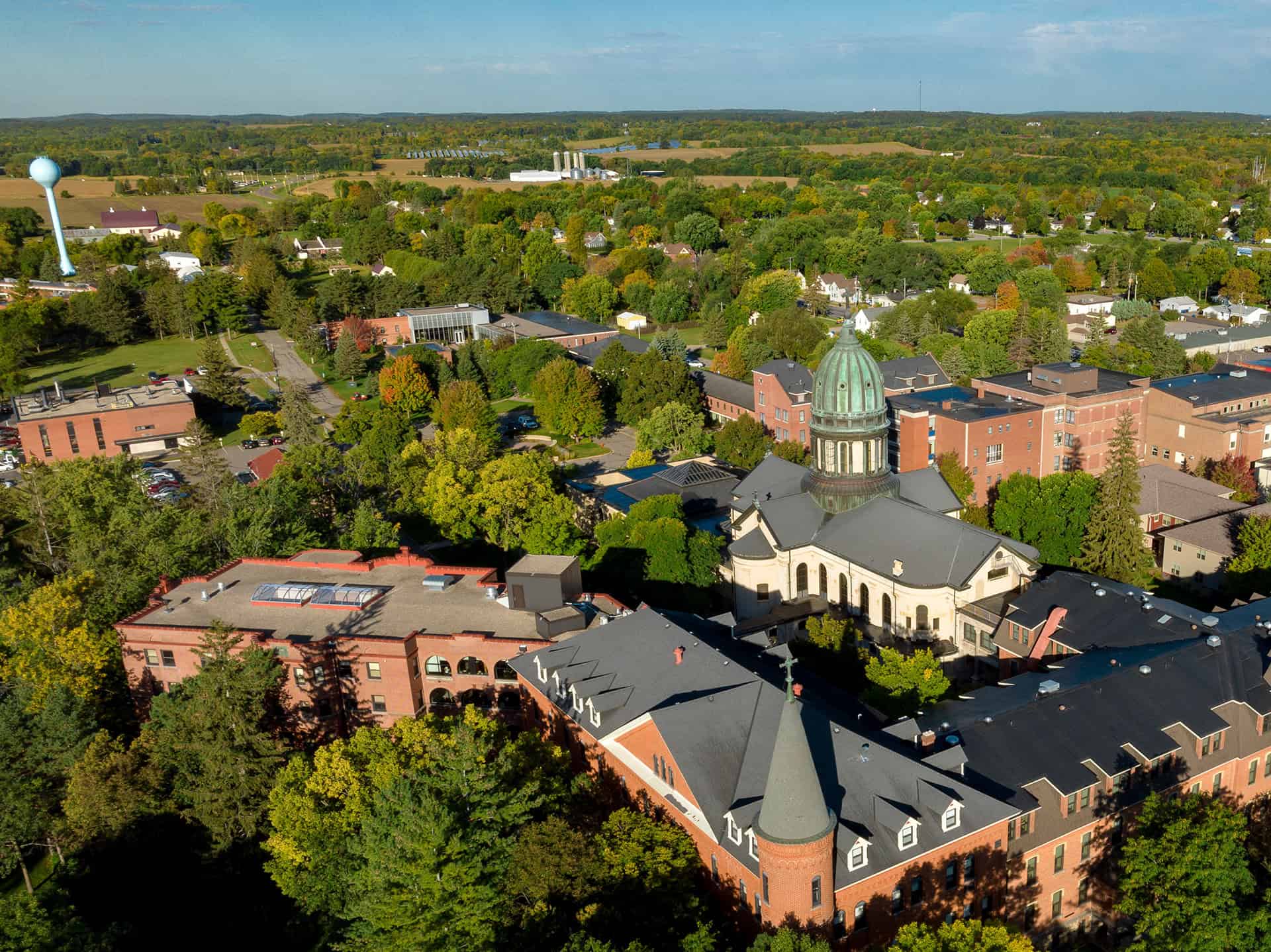
Accessible admissions, a small-campus community and Twin Cities career opportunities give athletes practical reasons to consider competing here.
- 3,234
- Students
- 93%
- Admit rate
- $27,705
- Net price
Browse programs
College directoryEvery program, filtered by what fits Sport directoryMen's and women's, every division State directoryPrograms in the states you would play inGo deeper
Major directoryYour major and your sport in one list Camp directoryID camps and showcases at college programs Conference directoryEvery conference and its member colleges

Duluth, MinnesotaMinnesota Intercollegiate Athletic Conference
Overview
Mission and culture
The College of St. Scholastica is a Benedictine Catholic college in Duluth, Minnesota, with a small undergraduate community and NCAA Division III athletics. Its nursing and health sciences programs, liberal arts foundation and supportive campus culture make it worth considering if you want professional preparation alongside your sport.
Why athletes choose The College of St. Scholastica
A supportive community and health-focused academics appeal to athletes seeking personal connections alongside competitive college sports.
Fit check
Pick a sport, your position and level, add a test score if you have one, and get an instant read on your chances here. Free, and no account needed.
Academics
At The College of St. Scholastica, nursing, health sciences and education shape an academic experience that combines professional preparation with a liberal arts foundation and opportunities for close faculty interaction.
Academic strength
A composite of graduation rate, earnings after college, how selective admissions are and how hard the coursework is.
Acceptance rate
More selectiveMore accessible
Admissions are highly accessible, making classroom readiness and finding the right academic fit more important than standing out through selectivity.
Six-year graduation rate
0%100%
Students have a solid path to graduation, with consistent academic progress important when balancing coursework and competition.
Academic difficulty
Rated 3 out of 5
Coursework presents a balanced challenge that calls for steady study habits alongside athletic commitments.
Student to faculty ratio
students for every faculty member
Faculty should be reasonably reachable, supporting personal connections when you seek help or discuss academic goals.
Median earnings
per year, ten years after starting college
Six years after: $62,332Graduate earnings suggest solid outcomes, giving families a useful reason to weigh career preparation against costs.
Undergraduate enrollment
undergraduate students
The small undergraduate community offers a more personal daily experience for athletes who value familiar faces and campus connections.
SAT and ACT scores
Testing is optional, and the score profile suggests recruits can consider whether submitting results strengthens an application built around their classroom performance.
Most popular majors
Admissions
Plan your application to The College of St. Scholastica by reviewing deadlines, test policy, application fees and recommendation requirements within its rolling admissions process.
Majors
28 undergraduate majors across 6 academic areas.
No major matches that search.
Campus life
Daily life centers on a small, supportive suburban campus in Duluth, with Catholic campus ministries and student organizations offering connections beyond athletics.
Athletics
Competing in NCAA Division III, primarily in the Minnesota Intercollegiate Athletic Conference, means joining a community-focused athletic program with opportunities in ice hockey, Nordic skiing and soccer.
Athletic department
Explore how The College of St. Scholastica supports its NCAA Division III athletic program through department finances, recruiting expenditures, athlete participation and gender breakdowns in recruiting and athletic aid.
Athletes
Recruiting spend
Source: the federal Equity in Athletics report, 2025.
Cost
At The College of St. Scholastica, compare the published private-college cost with the net price after grants, then consider how need-based and merit-based aid affect your family's budget.
Average net price
What families pay on average after grants and scholarships, including tuition, housing and fees.
Published tuition
The sticker price a year, before any aid.
Financial aid
Need-based and merit-based aid availableAthletic scholarships, where a program offers them, are awarded by the coaching staff and come on top of these figures.
NIL
NIL rating
The College of St. Scholastica in Duluth, Minnesota offers a growing name, image and likeness (NIL) environment where NCAA Division III athletes can build personal brands alongside their education. While the market is modest, student-athletes in popular college sports have opportunities to connect with the campus community and regional audience.
See the full NIL breakdownStudent fit
The kind of student-athlete who tends to do well at The College of St. Scholastica.
The College of St. Scholastica fits athletes who want NCAA Division III competition within a small, supportive college community and a career-oriented academic environment. It is especially worth exploring if nursing, health sciences or education interests you and you prefer approachable faculty, familiar faces and a Benedictine values-based education over a large-campus experience. Recruits with steady classroom habits can find a balanced academic challenge, while highly accessible admissions keep the focus on readiness and fit. You should be comfortable with Duluth's cold winters and compare need-based and merit-based aid carefully, since the athletic program does not provide athletic scholarships.
Who thrives here
Values Driven LeadersTeam First CompetitorsBalanced High AchieversHealth Pathway PlannersCommunity Minded StudentsQuestions
It is known for strong programs in health sciences, nursing, education, business, and computer science, with an emphasis on liberal arts, experiential learning, and values-based education rooted in the Benedictine tradition.
Admission is considered moderately selective. Applicants with solid grades, a college-preparatory curriculum, and evidence of involvement in activities typically have a good chance of being admitted.
Students experience a close-knit, small-campus environment with small class sizes, personal attention from faculty, and many opportunities for involvement in clubs, service, athletics, and campus events.
Yes, it is a Catholic Benedictine institution. Faith and values inform the campus culture, but students of all faiths and backgrounds are welcome and are not required to be Catholic to attend.
Students enjoy a scenic campus on a hill overlooking Duluth, with easy access to Lake Superior, outdoor recreation, cultural events, and a vibrant local community that supports internships and service opportunities.
It is a small college, which allows for a more personal learning environment, smaller classes, and closer relationships with faculty and peers compared to large universities.
Students have access to academic advising, tutoring, writing and career centers, counseling services, disability resources, and programs that support first-year and first-generation students.
The college offers a combination of merit scholarships, need-based aid, grants, work-study, and loans. Many students receive institutional scholarships based on academic performance and other achievements.
It has a strong reputation in nursing and health sciences, offering rigorous academic preparation, clinical experiences with regional healthcare partners, and pathways to professional and graduate programs.
Its varsity teams compete in NCAA Division III, emphasizing a balance between academics and athletics without athletic scholarships, while still offering a competitive athletic experience.
Student-athletes compete in a supportive Division III environment where academics come first, with structured training, conference competition, and access to athletic facilities and sports medicine resources.
It offers a variety of online and hybrid programs, especially at the adult and graduate level, allowing students to balance education with work and family commitments while earning accredited degrees.
Compare
Other colleges worth comparing with The College of St. Scholastica.
Accessible admissions, a small-campus community and Twin Cities career opportunities give athletes practical reasons to consider competing here.
Close faculty relationships, lakeside residential life and competitive athletics give recruits reasons to look closely at Carthage.
A women-focused community and close faculty relationships give athletes room to develop academically, competitively and personally.
Competitive athletics, approachable faculty and career-focused programs give recruits reasons to look closely at this small university.
A Christian community, career-focused academics and nationally successful athletics draw recruits seeking a small-campus experience.
A small residential community and individualized academic support appeal to athletes balancing coursework with competition.
A small academic community and suburban Chicago location complement competitive athletics and career-focused study.
Residential campus life and hands-on learning give athletes ways to build connections and prepare for careers.
Close faculty connections and career-focused academics give athletes a practical foundation alongside Skyline Conference competition.
Women-centered education, healthcare preparation and Division III competition give athletes distinct reasons to consider this urban campus.
Career-focused programs, a close-knit community and Division III competition give athletes clear reasons to consider this campus.
A close-knit campus and career-focused academics appeal to athletes seeking a supportive setting for college competition.
Three ways to start
Pick the option that matches where you are, and we will show you the plan that fits.
Resources