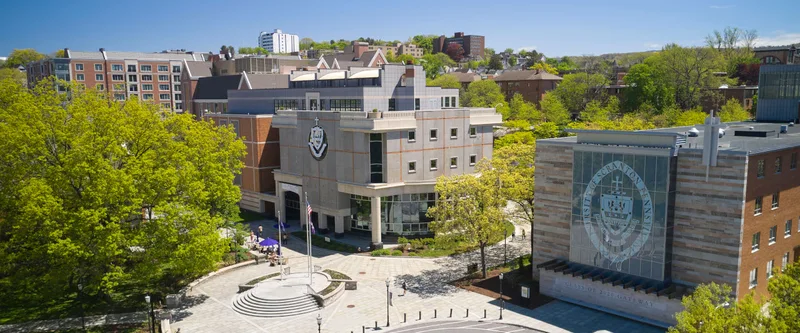
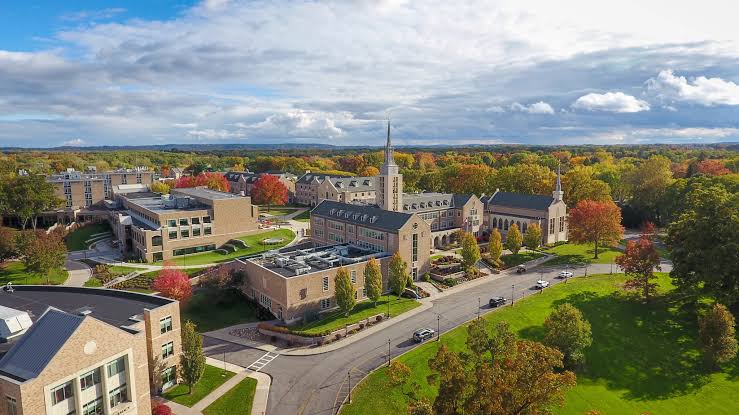
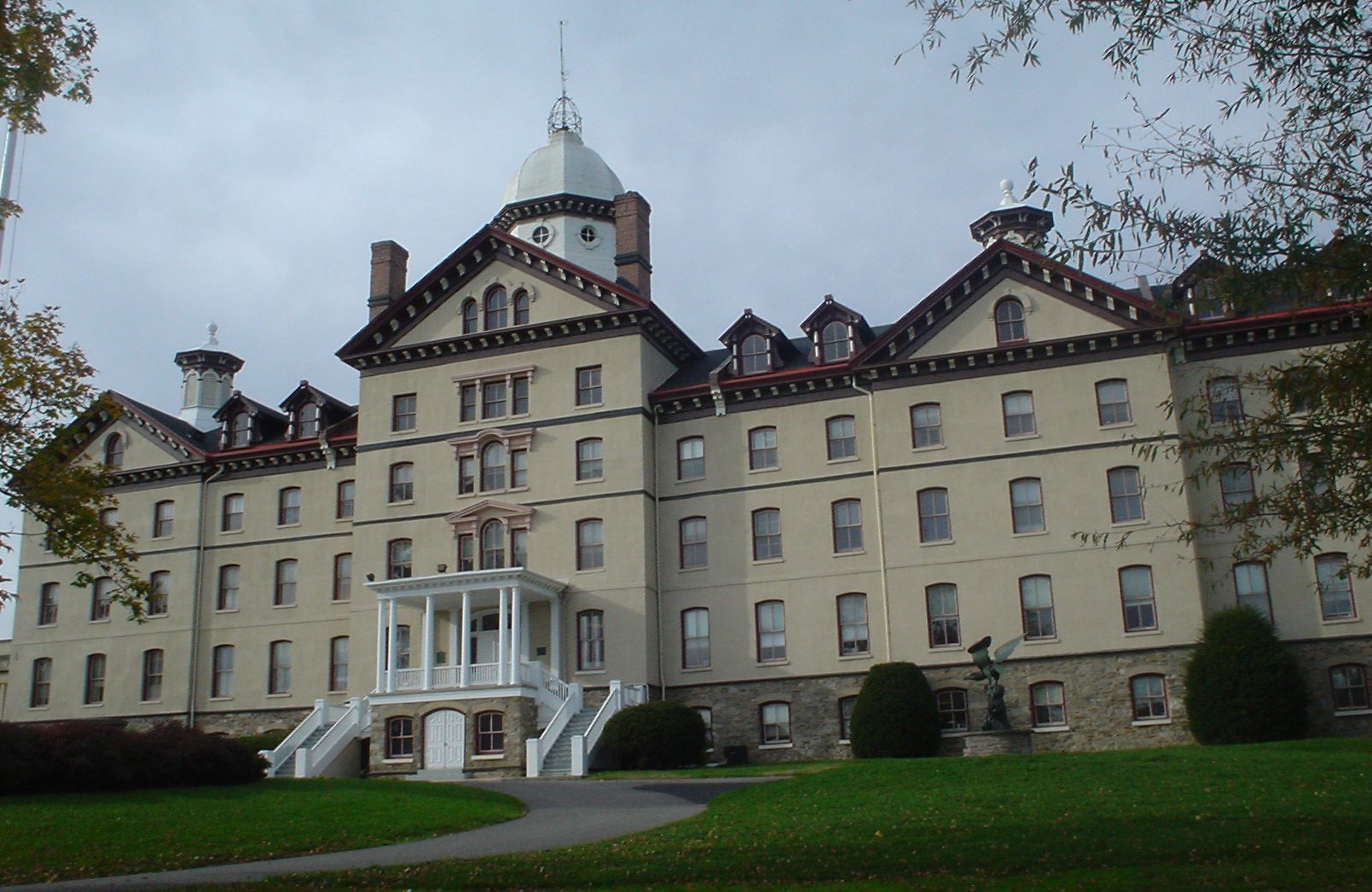
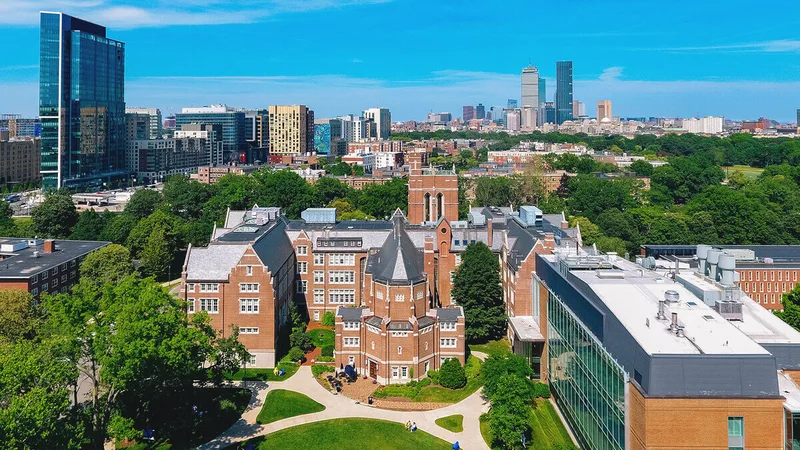
Career-focused programs, reachable faculty and regional competition give athletes practical reasons to consider studying and competing here.
- 6,015
- Students
- 96%
- Admit rate
- $30,282
- Net price
Browse programs
College directoryEvery program, filtered by what fits Sport directoryMen's and women's, every division State directoryPrograms in the states you would play inGo deeper
Major directoryYour major and your sport in one list Camp directoryID camps and showcases at college programs Conference directoryEvery conference and its member collegesOverview
Mission and culture
Suffolk University places you in downtown Boston, with NCAA Division III athletics and an academic identity shaped by its Law School and Sawyer Business School. Its urban setting puts courts, government offices and major employers nearby, making career access a central part of the college experience.
Why athletes choose Suffolk University
Downtown Boston access and professionally focused academics appeal to athletes who want competition alongside career preparation.
Fit check
Pick a sport, your position and level, add a test score if you have one, and get an instant read on your chances here. Free, and no account needed.
Academics
Suffolk University combines business and public affairs strengths with a balanced academic challenge, making major choice, faculty access and career outcomes important considerations as you plan around your sport.
Academic strength
A composite of graduation rate, earnings after college, how selective admissions are and how hard the coursework is.
Acceptance rate
More selectiveMore accessible
Admissions are accessible for prepared recruits, though you should still build a solid academic record alongside your athletic profile.
Six-year graduation rate
0%100%
Students have a solid path to graduation, with consistent academic progress important throughout an athlete's college experience.
Academic difficulty
Rated 3 out of 5
Coursework presents a balanced challenge, making steady study habits important alongside athletic commitments.
Student to faculty ratio
students for every faculty member
Faculty should be reasonably reachable, giving athletes opportunities to discuss coursework and manage conflicts before they grow.
Median earnings
per year, ten years after starting college
Six years after: $55,856Graduate earnings suggest solid outcomes, giving families a useful reason to weigh career preparation against costs.
Undergraduate enrollment
undergraduate students
The small undergraduate community offers a more familiar college environment within the much broader activity of downtown Boston.
SAT and ACT scores
The test profile leaves room for varied academic backgrounds, but scores are sometimes required, so confirm which testing expectations apply to your application.
Most popular majors
Admissions
Plan your application to Suffolk University by reviewing admissions deadlines, test policy, the application fee and recommendation requirements alongside your conversations with coaches.
Not binding. Hear back early and decide by May 1.
The standard deadline. Not binding.
Majors
38 undergraduate majors across 4 academic areas.
No major matches that search.
Campus life
Daily life blends a small university community with downtown Boston's cultural, business and government surroundings, with commuter options part of the experience.
Athletics
The Rams compete in NCAA Division III, primarily in the Conference of New England, with an emphasis on academic success alongside competition in sports such as basketball and ice hockey.
Athletic department
Explore how Suffolk University supports its NCAA Division III department through operating resources and recruiting spending, with athlete participation and gender breakdowns providing context for the athletic aid picture.
Athletes
Recruiting spend
Source: the federal Equity in Athletics report, 2025.
Cost
At Suffolk University, compare the published cost with the net price after grants, then consider need-based and merit-based aid alongside the expense of living in Boston.
Average net price
What families pay on average after grants and scholarships, including tuition, housing and fees.
Published tuition
The sticker price a year, before any aid.
Financial aid
Need-based and merit-based aid availableAthletic scholarships, where a program offers them, are awarded by the coaching staff and come on top of these figures.
NIL
NIL rating
Suffolk University in Boston, Massachusetts offers student‑athletes a solid name, image and likeness (NIL) environment for a private NCAA Division III program in a major city. While the scale is smaller than Division I powers, Suffolk athletes in popular college sports can still find meaningful local NIL opportunities tied to the Boston market.
See the full NIL breakdownStudent fit
The kind of student-athlete who tends to do well at Suffolk University.
Suffolk University fits athletes who want NCAA Division III competition, a small undergraduate community and daily access to the activity of downtown Boston. It particularly suits students interested in business, criminal justice or public affairs who see nearby employers, courts and government offices as part of their career planning. You should be comfortable balancing a moderate academic challenge with athletic commitments and navigating an urban college experience where commuter options are part of campus life. Families seeking athletic scholarships should look elsewhere, while those open to need-based and merit-based aid should compare the full financial package carefully.
Who thrives here
City Life LearnersCareer Minded AthletesIndependent Self StartersStrong Time ManagersFirst Generation StudentsQuestions
It is known for strong programs in business, law, public affairs, and the liberal arts, with particular strengths in accounting, finance, criminal justice, political science, and communication, all enhanced by its downtown Boston location and connections to local industries and government.
It is located in downtown Boston, Massachusetts, with an urban campus integrated into the city near historic sites, major businesses, courts, and government offices, offering a compact, walkable environment and easy access to public transportation.
Admission is moderately selective, with a holistic review that considers grades, course rigor, test scores if submitted, extracurricular involvement, essays, and recommendations, aiming to enroll motivated students with a range of academic backgrounds.
Classes are generally small, allowing for discussion-based learning, close interaction with faculty, and personalized attention, with professors who are accessible for mentoring, office hours, and academic support.
Students have strong access to internships and jobs through the university’s location in downtown Boston, with opportunities in finance, law, healthcare, technology, government, and nonprofits, supported by a dedicated career center and alumni network.
Popular majors include business fields such as accounting, finance, marketing, and management, as well as criminal justice, political science, psychology, communication, and arts and sciences programs, with options for interdisciplinary study and combined degrees.
Campus life centers around residence halls, student organizations, cultural and identity-based groups, professional clubs, and events that take advantage of the city, with students often exploring Boston’s neighborhoods, arts, sports, and dining scenes.
It offers residence halls primarily for first-year and newer students, with suite-style and traditional options in buildings near academic facilities, and upper-level students often live in nearby apartments or other off-campus housing in Boston.
It competes in NCAA Division III, offering a range of varsity sports such as basketball, soccer, baseball, softball, hockey, tennis, and cross country, alongside club and intramural options for students who want a less competitive level of play.
Student-athletes balance academics with athletics in a Division III environment that emphasizes education first, with access to academic advising, training and conditioning facilities, and competition against regional opponents while maintaining a typical college social life.
The student body is diverse in terms of geography, culture, and background, with many first-generation, international, and commuter students, and the campus supports this diversity through cultural centers, affinity groups, and inclusion-focused programming.
Students can participate in study abroad programs, faculty-led trips, and global internships, with options at partner institutions around the world and opportunities to integrate international experiences into majors such as business, international relations, and languages.
Compare
Other colleges worth comparing with Suffolk University.
Career-focused programs, reachable faculty and regional competition give athletes practical reasons to consider studying and competing here.
Hands-on academics, paid co-op opportunities and Boston access give athletes practical reasons to pursue this technical college.
Personal attention, career-focused academics and Landmark Conference competition give athletes clear reasons to consider this urban campus.
Career-focused programs, a close-knit campus and competitive athletics appeal to students who want balance without easy coursework.
Career-focused programs, accessible admissions and a small campus community give athletes clear reasons to consider competing here.
Career-focused programs, accessible faculty and Middle Atlantic Conference competition appeal to athletes seeking a small campus community.
Athletes choose a close-knit Christian community where hands-on academics and competitive athletics share space with professional preparation.
Close faculty relationships and career-focused academics appeal to athletes seeking a small campus and competitive athletics.
Coastal surroundings, close faculty mentorship and Division III competition give athletes a clear sense of fit.
A Christian community, professional majors and competitive athletics appeal to recruits seeking a small-campus experience.
Close faculty relationships and practical career preparation appeal to athletes seeking a small-campus Division III experience.
Athletes choose a close-knit campus where Division III competition meets career preparation and Boston internship opportunities.
Three ways to start
Pick the option that matches where you are, and we will show you the plan that fits.
Resources