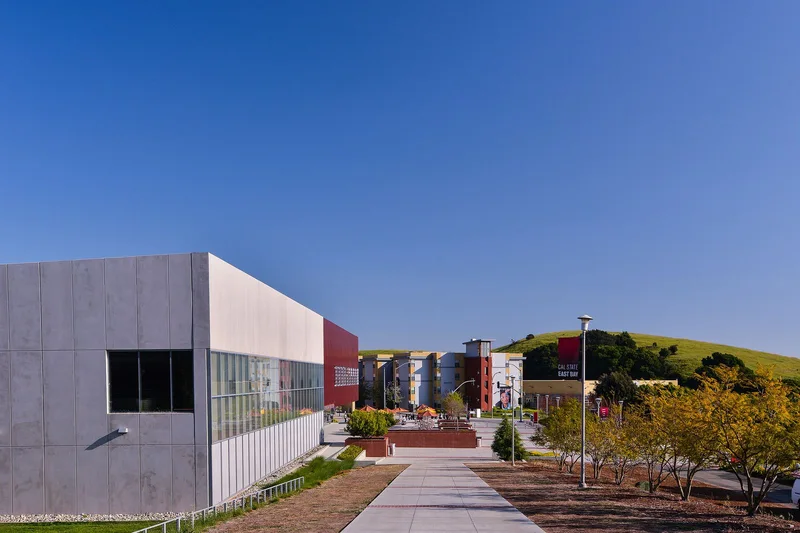

Coastal academics, accessible admissions and CCAA competition appeal to athletes seeking a balanced college experience.
- 7,713
- Students
- 97%
- Admit rate
- $13,663
- Net price
Browse programs
College directoryEvery program, filtered by what fits Sport directoryMen's and women's, every division State directoryPrograms in the states you would play inGo deeper
Major directoryYour major and your sport in one list Camp directoryID camps and showcases at college programs Conference directoryEvery conference and its member collegesOverview
Mission and culture
Sonoma State University is a public university in Rohnert Park, California, known for its Green Music Center, Wine Business Institute and medium-sized suburban campus. Its former NCAA Division II athletics program was eliminated because of budget cuts, so it is no longer an option for recruits seeking varsity competition.
Why athletes choose Sonoma State University
For athletes moving beyond varsity competition, accessible admissions, professional majors and North Bay opportunities remain relevant draws.
Fit check
Pick a sport, your position and level, add a test score if you have one, and get an instant read on your chances here. Free, and no account needed.
Academics
Sonoma State University combines business, science and human services programs with a balanced academic challenge, making major selection, faculty access and career preparation useful priorities when evaluating your academic fit.
Academic strength
A composite of graduation rate, earnings after college, how selective admissions are and how hard the coursework is.
Acceptance rate
More selectiveMore accessible
Admissions are highly accessible, so your preparation for college coursework matters more than standing out in a selective pool.
Six-year graduation rate
0%100%
Finishing is a reasonable goal, but steady academic focus and consistent use of support remain important.
Academic difficulty
Rated 3 out of 5
Coursework presents a balanced challenge, requiring steady study habits alongside your other commitments.
Student to faculty ratio
students for every faculty member
Expect a balanced academic environment with some larger classes, and take initiative to build faculty relationships.
Median earnings
per year, ten years after starting college
Six years after: $52,179Graduate earnings suggest solid outcomes, making your major choice and total cost important parts of evaluating value.
Undergraduate enrollment
undergraduate students
The medium-sized undergraduate community offers variety without an especially large student body, leaving room to build familiar connections.
SAT and ACT scores
Although the score profile suggests accessible admissions, test-blind review means your academic record matters rather than submitted test results.
Most popular majors
Admissions
Preparing your application to Sonoma State University means reviewing deadlines by admission plan, test policy, application fees and recommendation requirements alongside your academic goals.
Majors
34 undergraduate majors across 6 academic areas.
No major matches that search.
Campus life
Daily life centers on a medium-sized suburban campus, with apartment-style housing and a moderate social scene focused largely on campus activities.
Athletic department
The athletic department figures for Sonoma State University describe its former NCAA Division II program, including revenue, recruiting expenditures and athletic aid by gender, rather than current recruiting opportunities.
Athletes
Athletic aid
Recruiting spend
Source: the federal Equity in Athletics report, 2025.
Cost
For Sonoma State University, weigh public in-state tuition, the published attendance cost and net price after grants alongside available aid and the area's relatively high living costs.
Average net price
What families pay on average after grants and scholarships, including tuition, housing and fees.
Published tuition
The sticker price a year, before any aid.
Financial aid
Need-based and merit-based aid availableAthletic scholarships, where a program offers them, are awarded by the coaching staff and come on top of these figures.
NIL
NIL rating
Sonoma State University in Rohnert Park, California offers a growing name, image and likeness (NIL) environment that fits a competitive NCAA Division II athletic program. Student-athletes in popular college sports like soccer, baseball, basketball, and softball can find localized NIL opportunities that match the campus and community size.
See the full NIL breakdownStudent fit
The kind of student-athlete who tends to do well at Sonoma State University.
Sonoma State University best fits students with an athletic background who are comfortable choosing a college without an active varsity program, rather than recruits seeking NCAA Division II competition. Its highly accessible admissions and moderately challenging coursework suit students ready to build steady academic habits while pursuing fields such as business, psychology or biology. The medium-sized suburban setting, apartment-style housing and moderate campus social scene may appeal if you want a campus-centered experience with access to North Bay employment and internship opportunities. Families should weigh in-state value and available aid against local living costs, while keeping career preparation central to the decision.
Who thrives here
Identity TransitionCareer FocusedInternship DrivenBalance SeekersStudent Centered LearnersQuestions
It is best known for its strong programs in liberal arts and sciences, business, education, environmental studies, and wine business, as well as its small-class atmosphere and scenic campus in Northern California wine country.
It is located in Rohnert Park, California, in Sonoma County, a short drive north of San Francisco, with easy access to vineyards, regional parks, and the Sonoma Coast.
Admission is moderately selective, with applicants evaluated on high school coursework, grades, and test scores when submitted, along with college-preparatory rigor and overall academic performance.
The academic environment is moderately challenging and supportive, with an emphasis on smaller classes, close interaction with faculty, and opportunities for undergraduate research and hands-on learning.
Popular areas of study include business administration, psychology, sociology, computer science, environmental studies, biology, criminal justice, education-related fields, and the distinctive wine business programs.
Campus life features modern residential villages, student clubs and organizations, arts and music events, outdoor recreation, and a close-knit community that reflects its medium size and residential focus.
Yes, it offers apartment-style and suite-style residence options with amenities such as common areas, study spaces, and easy access to campus facilities, designed to support a residential learning experience.
Its intercollegiate teams compete in NCAA Division II, primarily in the California Collegiate Athletic Association, with various men’s and women’s sports offered for student-athletes.
Student-athletes balance academics and competition with access to training facilities, academic support services, and travel schedules that align with NCAA Division II expectations for both performance and coursework.
It is a popular option for transfer students, especially from California community colleges, offering clear transfer pathways, credit evaluations, and advising support to help students complete their degrees efficiently.
Students have access to academic advising, tutoring and writing support, career services, counseling and wellness resources, disability services, and programs for first-generation and underrepresented students.
Class sizes are generally moderate to small, especially in upper-division and major-specific courses, which allows for more interaction with professors and collaborative learning among students.
Compare
Other colleges worth comparing with Sonoma State University.
Coastal academics, accessible admissions and CCAA competition appeal to athletes seeking a balanced college experience.
Accessible admissions, affordable costs and professional programs give athletes practical reasons to pursue a place here.
Practical academics, accessible admissions and GLIAC competition give athletes a balanced path through college and into work.
Specialized research, varied athletic opportunities and an outdoors-focused community give recruits distinct reasons to consider studying here.
Practical academics, accessible admissions and a supportive Topeka campus give athletes clear reasons to consider competing here.
Accessible admissions, career-focused learning and Bay Area opportunities give athletes practical reasons to consider this campus.
Career-focused programs, regional internship access and a supportive campus give athletes practical reasons to consider competing here.
Athletes find competitive regional play, approachable faculty and state capital opportunities within a supportive campus community.
Career-focused programs, reachable faculty and a close-knit riverfront community give athletes reasons to consider competing here.
A smaller campus, practical academics and MIAA competition give athletes a clear balance of education and sport.
A residential liberal arts experience and Peach Belt competition appeal to athletes seeking academic and athletic balance.
Competitive athletics, hands-on academics and relatively affordable tuition give recruits practical reasons to consider this Kansas campus.
Three ways to start
Pick the option that matches where you are, and we will show you the plan that fits.
News
Resources