Insight
Ohio State and JPMorganChase Push College Sports Into the Jersey Patch Era
Ohio State’s new JPMorganChase jersey patch deal across 36 varsity sports signals a major shift in college athletics revenue, NIL support, and branding.

On July 28, 2026, The Ohio State University made one of the most important business announcements of the college athletics offseason, unveiling a landmark partnership with JPMorganChase that will place a Chase patch on uniforms across all 36 Buckeyes varsity programs. The agreement makes Chase the official bank sponsor of Ohio State Athletics and gives the university its first jersey-patch sponsor at a moment when schools across Division I are looking for new revenue opportunities.
Ohio State’s announcement was notable not only because of the logo placement, but because of the scale and timing of the deal. This is not a single-team arrangement limited to football or basketball. It is a department-wide commercial partnership that touches men’s and women’s sports throughout the 2026-27 athletic year, placing Ohio State squarely at the front of a fast-moving industry trend.
For athletes, parents, coaches, administrators, and fans, the significance goes beyond aesthetics. This is a story about how elite college athletic departments are monetizing brand value, how NIL support is increasingly tied to broader business infrastructure, and how the NCAA’s evolving commercial rules are reshaping the economics of sports at the highest level.
According to Ohio State, the investment from JPMorganChase will help create new resources for student-athletes through NIL opportunities, support the competitiveness of Buckeyes programs, and open academic partnerships across the university. In official messaging, the athletics department presented the sponsorship as more than ad space. The school framed it as a wide-ranging partnership designed to support athletes and the larger university community.
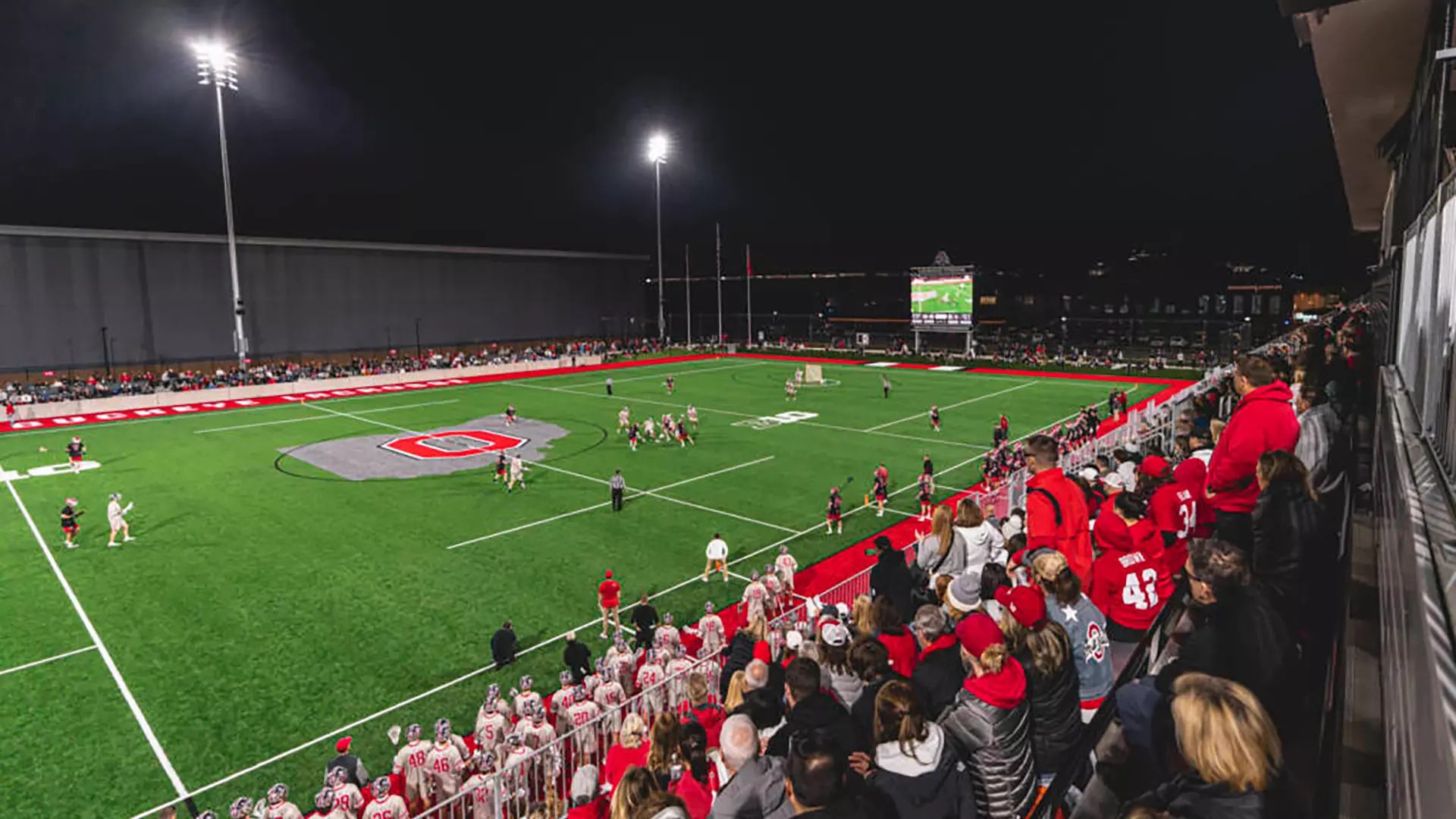
That matters because The Ohio State University is one of the country’s most visible and commercially valuable athletic brands. Ohio State highlighted the size of its department, its 36-sport structure, its 94 team national championships, and its top-10 finish in the most recent Learfield Directors’ Cup standings. Those details help explain why Ohio State became an early leader in the jersey-patch era. Few schools have enough football visibility, all-sports credibility, and national recognition to sell a package this broad.
The sponsorship also carries symbolic weight. Ohio State Athletics described it as JPMorganChase’s first venture in college athletics. For Chase, attaching its name to a department with that kind of reach offers immediate national exposure. For Ohio State, landing a first-of-its-kind college deal from one of the world’s largest financial institutions sends a message about the scale of the Buckeyes brand.
The timing of the announcement made it especially significant. In January 2026, the NCAA Division I Cabinet approved a policy allowing additional commercial patches on uniforms, equipment, and apparel in non-NCAA championship competition. That rule change was set to take effect on August 1, 2026, according to the NCAA’s official release at NCAA.org.
Ohio State moved before that effective date arrived, using the new flexibility to secure a marquee partner just days ahead of implementation. That aggressive timing is one reason the deal quickly became a national talking point. It signaled that major athletic departments were not waiting to see how the market would develop. They were already preparing to capitalize on the new rules.
From a business standpoint, this is what makes the Buckeyes a pace-setter in the modern college sports economy. The rule change opened the door, and Ohio State was among the first elite brands to walk through it in a major way.
Ohio State did not publicly release financial terms. Still, outside reporting offered a strong sense of the scale involved. Sports Business Journal reported that the multiyear agreement is believed to be worth more than $15 million annually. Axios Columbus reported a figure of about $17 million per year.
Whether the annual value is closer to $15 million or $17 million, the underlying conclusion is the same. This appears to be one of the most lucrative jersey-related sponsorships in college athletics. It reinforces how much Ohio State’s brand can command in a marketplace where schools are searching for ways to support athletes and sustain broad-based athletic departments.
That point is especially important in the current landscape. Revenue sharing, NIL collectives, direct athlete support, and rising operational costs have forced administrators to think creatively about funding. A small patch on a jersey may seem minor visually, but the commercial value attached to that real estate can be enormous when it belongs to a national brand like the Buckeyes.
One of the most interesting parts of the announcement was how Ohio State described the use of the partnership. The university said the arrangement would emphasize financial education, career development, and long-term personal success for student-athletes. That includes access to financial literacy programming, advisory resources, and student-athlete financial councils.
This language matters. It shows that Ohio State is trying to present the patch as part of a broader student-athlete services model, not simply as a transaction for logo placement. In a college sports environment shaped by NIL earnings, brand building, and increasingly sophisticated athlete support systems, financial literacy and professional development are meaningful additions.
There is a practical side to this, too. More college athletes are navigating endorsement income, personal branding decisions, tax considerations, and long-term financial planning. A partnership that ties athletic revenue to education and advisory support fits the realities of the modern recruiting and development environment.
For recruits and families, that context matters. Facilities, coaching staffs, and competitive success still matter, but so do the systems around an athlete. Schools are increasingly selling a full development model that includes academic support, career preparation, and financial education. This deal suggests that Ohio State sees those elements as part of its recruiting and retention strategy.
Another key detail is that the relationship extends well beyond jerseys. Ohio State said the partnership would include fan experiences and university-wide academic collaboration. Sports Business Journal reported that the package also includes expanded branding at Ohio Stadium and the Schottenstein Center, plus title sponsorship of the new 1922 Club.
That broader scope is part of what separates this from a narrow sponsorship agreement. Ohio State used its athletics platform to build a larger institutional relationship with JPMorganChase. In effect, the department became the entry point for a university-wide commercial and educational partnership.
This is the kind of strategy large athletic departments are increasingly trying to execute. Instead of selling isolated pieces of inventory, they are packaging facilities, fan engagement, athlete development, branding opportunities, and institutional connections into one integrated commercial product.
The bigger story is structural. Ohio State has decided that the value of a small uniform patch can be converted into major revenue, NIL-related resources, and expanded athlete programming. That is the real significance of the announcement.
Some fans will naturally focus on the visual side. Ohio State uniforms carry a lot of symbolic weight, and any commercial addition to a traditional look is going to spark reactions. But the more important development is what the patch represents. It is evidence that top programs are treating every part of the athletic enterprise as potentially monetizable in a new era of college sports.
That does not mean every school can replicate this exact model. Ohio State’s brand power is unusual. But other departments will study the blueprint. If a school has strong attendance, broad fan interest, successful teams, and a recognizable name, administrators will see this as proof that apparel-based sponsorships can become a serious revenue category.
That could have ripple effects across Division I. More schools may pursue multi-sport patch agreements. Others may test single-team deals first. Some may use the revenue to shore up Olympic sports. Others may direct more funding toward athlete services, recruiting, facilities, or revenue-sharing obligations. The exact uses will vary, but the Ohio State deal will almost certainly be viewed as a reference point.
This announcement did not come out of nowhere. On May 15, 2026, when Ohio State unveiled football uniform updates and a new playing surface at Ohio Stadium, athletics director Ross Bjork said the school was thoughtfully exploring jersey-patch sponsorship opportunities. That update was published by Ohio State at OhioStateBuckeyes.com.
By July 28, that exploration had become a finalized partnership. The speed of that progression says a lot about how ready Ohio State was to move once the regulatory environment allowed it. This was not a rushed response to a trend. It appears to have been a carefully considered plan that aligned with both the timing of the NCAA rule change and the university’s larger commercial strategy.
That is also why the announcement resonated nationally. It was not simply that Ohio State accepted a sponsor. It was that one of the most influential brands in college sports moved quickly, moved publicly, and moved at a scale others cannot ignore.
Even though this news centers on an athletic department business deal, it has real recruiting relevance. Families often evaluate schools based on coaching relationships, scholarship opportunities, academics, roster needs, conference level, and campus fit. Those factors remain central. But the infrastructure around athletes is becoming more important every year.
Stories like this are reminders that recruiting is no longer just about whether a program wins games. It is also about what kind of support ecosystem a school can offer. That includes NIL education, career planning, financial literacy resources, academic partnerships, and the overall financial health of the department.
For some athletes, especially those targeting large Division I programs, understanding the business side of college sports is becoming part of understanding the college experience itself. It does not mean commercial power should be the only factor in a decision. But it is fair for families to ask how a department invests in athlete support, where new revenue is going, and how sustainable the program’s model looks over the next four years.
If you are starting that process, tools like Pathley College Directory and Pathley’s free recruiting tools can help you compare schools, explore options, and organize early research before narrowing a list.
The department-wide scope of the Chase agreement also reflects something unique about Ohio State. The Buckeyes are not just a football brand, even though football drives much of the national visibility. Ohio State fields one of the broadest and most recognizable athletic portfolios in the country, which makes it easier to sell a partnership across men’s and women’s sports rather than around one flagship team.
That broad-based value is part of why this story is more important than a standard sponsorship update. It shows that a major university can package the totality of its athletic identity, competitive history, facilities, and fan engagement into a single commercial relationship. For schools with similar ambitions, the message is clear. The more comprehensive and successful the department, the more attractive that department becomes to large national partners.
For readers who want to explore the school itself, Ohio State’s Pathley college page is a useful starting point. And for a program-level view, athletes can also follow Ohio State team pages through Pathley, such as the Ohio State men’s basketball program or the Ohio State women’s soccer program, depending on their sport-specific interests.
Ohio State dominates the national conversation, but athletes looking at the Columbus area should remember that the city also offers other college options with very different environments and recruiting dynamics. Ohio Dominican University can appeal to athletes who want a smaller-campus setting and a different athletic profile than a Big Ten giant. Capital University is another program families may consider when comparing college size, division, and overall fit.
That is one reason broad recruiting research matters. A headline-grabbing story at a national brand can be informative, but the right fit for an athlete may be found at a school with a very different scale, roster picture, or academic environment.
Ohio State’s partnership with JPMorganChase is ultimately a business story, but it doubles as a recruiting story because it shows how quickly the college landscape keeps changing. New NCAA rules create new revenue categories. New revenue creates new support models. And new support models can shape how schools position themselves with recruits.
For athletes, the lesson is simple. Do not evaluate colleges only on name value or surface impressions. Look at the full picture: competitive level, academic fit, roster opportunity, cost, development resources, and how the department is adapting to the realities of modern college sports.
In late July 2026, Ohio State did more than announce a new sponsor. It positioned itself as one of the clearest pace-setters in the new commercial era of college sports. The Chase patch is small in physical size, but the meaning behind it is large. It represents fresh revenue, NIL-related support, athlete education, institutional collaboration, and a new willingness by elite programs to commercialize pieces of the athletic experience that once seemed untouchable.
That is why this announcement matters beyond Columbus. Other schools will watch closely. Fans will debate the look. Administrators will study the economics. Recruits and families should pay attention to what it says about the direction of college athletics.
Sources: Ohio State Athletics official announcement, NCAA Division I commercial patch policy update, Sports Business Journal report, Axios Columbus report, Ohio State football uniform update from May 15, 2026.
Rosters, coaches, and division breakdowns for every NCAA and NAIA program we track.