The University of Maryland, College Park announced a record $302 million fundraising year for fiscal 2026, with more than 42,000 donors contributing across academics, research and athletics. The milestone also added early momentum to the university's Forward campaign and included a major gift tied to a new golf performance center.
University of Maryland posts record $302 million fundraising year as Forward campaign gains momentum
The University of Maryland, College Park opened the academic year with one of the biggest institutional announcements of the fall, reporting that fiscal year 2026 became the most successful fundraising year in school history. On Sept. 4, Maryland said it received $302 million in gifts from July 2025 through June 2026, a total that represented nearly a 50 percent increase over the previous year.
The university also said 42,251 donors contributed during that span, a 5.7 percent rise in participation. For a Big Ten campus that competes in one of the most visible environments in Division I athletics, those numbers carry weight beyond a standard advancement update. They reflect broad donor confidence in the university's direction across academics, research, student support and athletics.
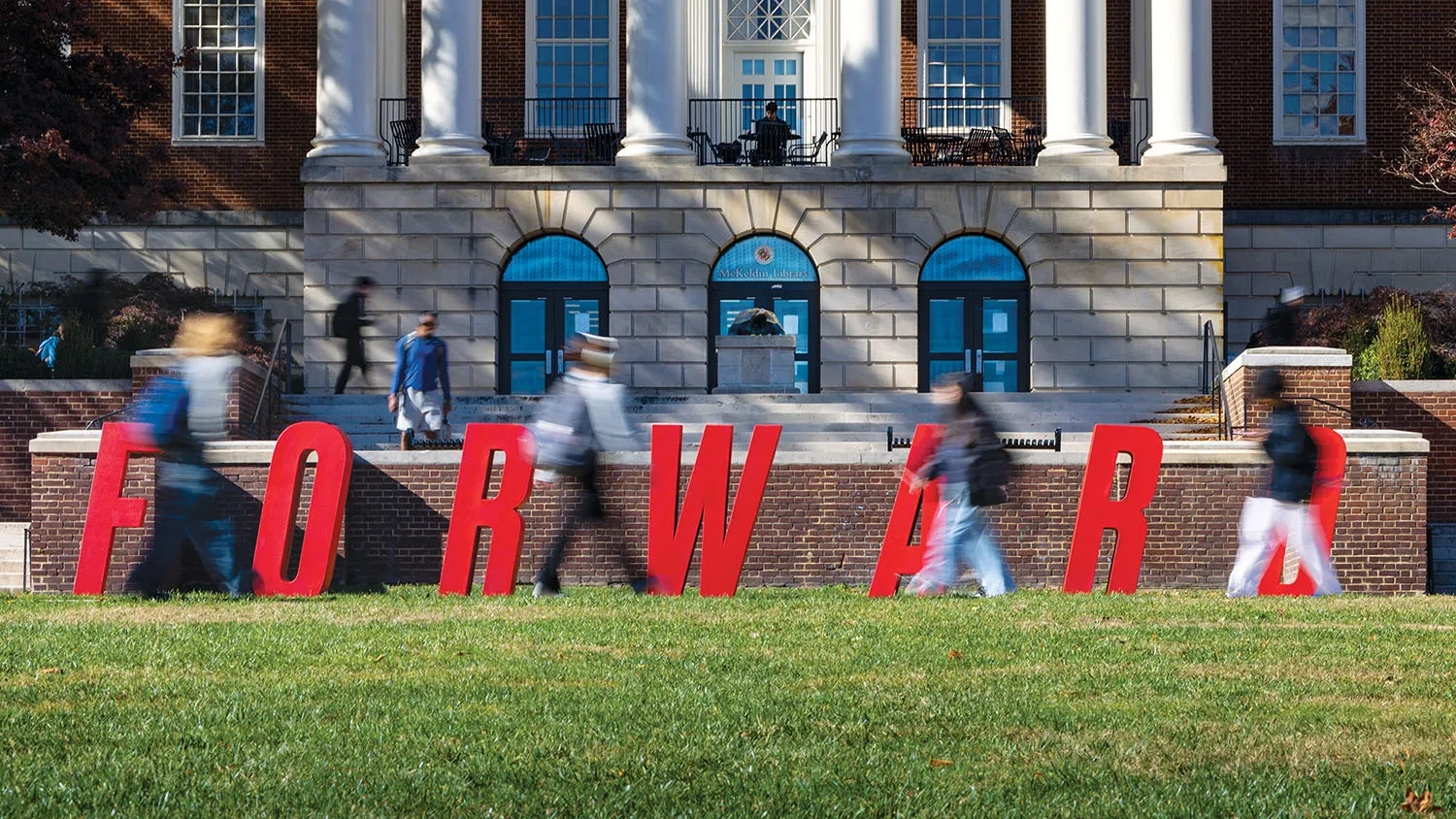
Maryland framed the announcement as an important marker for Forward: The University of Maryland Campaign for the Fearless, a universitywide campaign that launched last November with a goal of raising $2.5 billion. By the time officials shared the fiscal 2026 totals, the campaign had already topped $1.1 billion, according to the university. That early pace matters because large public universities increasingly rely on campaign momentum not only to build endowments and facilities, but also to sharpen their competitive position nationally.
For recruits, families, coaches and observers of college sports, the story is notable because it sits at the intersection of institutional growth and athletics infrastructure. Maryland's record year included major commitments that touched business, performing arts, climate science, medical research and golf. In today's college landscape, those categories are often more connected than they appear.
A record year by the numbers
The headline figure was straightforward. Maryland reported $302 million in gifts during FY26, making it the strongest fundraising year in the university's history. Just as important, the total did not come from a single headline donation alone. School leaders emphasized that the surge was broad based, involving tens of thousands of donors and multiple major commitments spread across different parts of campus.
That balance is worth noting. A record year driven by one transformational check can still matter, but a year driven by 42,251 donors says something different. It suggests wider institutional buy-in, and for a university with the scale and visibility of Maryland, that kind of participation can become its own signal of long term stability.
The university said the donor total represented a 5.7 percent increase from the prior year. Combined with the jump in dollars raised, it gave Maryland a powerful early talking point as the school moved through the opening weeks of the semester. Students had returned to campus, athletic seasons were underway, and the Forward campaign suddenly had a major benchmark attached to it.
According to the university's campaign site, Forward: The University of Maryland Campaign for the Fearless is aimed at supporting student opportunity, faculty excellence, pathbreaking research and broader campus impact. Reaching more than $1.1 billion so early in the campaign cycle does not finish the job, but it does create the kind of momentum institutions want when they are trying to sustain attention from alumni, families and major donors.
Why this matters beyond the advancement office
At many universities, fundraising stories used to stay largely within alumni magazines and board reports. That has changed. In modern college athletics, fundraising is deeply tied to facilities, staffing, sport specific resources and the broader perception of whether a program or institution is moving forward.
That is especially true in the Big Ten, where the competitive baseline is high and where institutional visibility extends across academics, research and sports. Maryland already operates in a conference that includes some of the most resource rich athletic departments and research universities in the country. A record philanthropic year therefore matters not just as an accounting achievement, but as an indicator of institutional confidence.
For athletes considering schools at this level, donor support can influence the training environment, academic support structure and overall campus trajectory. The NCAA's membership directory places Maryland in Division I, and that context matters when evaluating announcements like this one because capital campaigns and athletics development efforts increasingly help shape recruiting conversations across the country. The NCAA directory for the university is available at NCAA.org.
Families trying to compare the scale and profile of different campuses often begin with broad institutional research before narrowing to specific programs. A resource like the college directory can help provide that wider context, especially when a story like Maryland's raises questions about how one university stacks up within Division I.
The Schanwald gift and what it means for Maryland golf
One of the most athletics adjacent pieces of Maryland's announcement involved alumnus Stephen M. Schanwald, a longtime sports business executive. The university said Schanwald made a new $15 million commitment that will support construction of a golf performance center and expand the Stephen M. Schanwald Sports Management Program in the Robert H. Smith School of Business.
That gift stands out because it touches both athletics infrastructure and academic programming. According to Maryland, the planned golf facility is expected to be roughly 5,000 square feet, with officials aiming to finalize the design next year. The concept includes indoor and outdoor hitting bays, a dynamic putting lab, sensors, high speed cameras and Doppler radar technology.
Those details matter because they point to the type of on campus development environment Maryland hopes to provide for both the Maryland men's golf team and the Maryland women's golf team. Golf is a sport where technology, repetition and year round training access can influence player development in significant ways. A dedicated performance center can help reduce weather related limitations, support data driven swing analysis and centralize athlete development in ways that are increasingly common at well funded Division I programs.
Maryland also noted that Schanwald had previously made an $18 million gift in 2024, bringing his total commitment to at least $33 million. In practical terms, that gives the university both a major donor story and a facilities story at the same time. It also connects directly to recruiting narratives around investment, sport specific support and institutional seriousness.
The university detailed the golf center and sports management expansion in a separate report at Today at Maryland. For recruits in golf, announcements like that are often read as indicators of where a program expects to position itself over the next several years, not just the present season.
Maryland Athletics posted a record year too
The larger institutional fundraising record was paired with another notable milestone. Maryland Athletics separately reported its own record fundraising year in FY26, totaling $43.7 million in commitments from 10,366 unique donors.
That figure adds another layer to the story because it shows the athletics side was not merely benefiting indirectly from a strong university year. It was also experiencing a surge of donor activity on its own. In a competitive Power conference setting, that matters. Athletic departments need broad and consistent support to maintain facilities, fund scholarships, support staffing and create the kind of daily environment athletes expect at a high level.
Maryland Athletics' fundraising update was published by the Terrapin Club at UMTerps.com. Combined with the universitywide numbers, the athletics total suggests donor engagement is strengthening across multiple layers of the institution.
That does not automatically translate into wins, rankings or recruiting classes. But it does shape the conditions around all three. In modern college sports, resource strength often determines how quickly a program can improve support systems, upgrade facilities and respond to competitive pressures.
The Forward campaign is moving fast
Maryland launched the Forward campaign last November with a target of $2.5 billion. By the university's Sept. 4 announcement, the campaign had already generated more than $1.1 billion. Even without overstating what comes next, that is a meaningful marker.
Campaigns of this size are designed to fund multiple priorities at once. Maryland's messaging around Forward has emphasized academics, student support, research and athletics, and the FY26 results fit that framework closely. The record year included gifts that were varied in purpose, which is often a sign that campaign leaders are gaining traction with different donor constituencies rather than depending on only one segment.
That diversity of support also matters for public perception. Universities that can point to broad participation and cross campus giving often have an easier time making the case that momentum is real, not temporary. Maryland used the Sept. 4 announcement to underline exactly that point.
The university's official campaign update is available at terp.umd.edu, where Maryland outlined the record year and the campaign's early pace.
Major gifts reached far beyond athletics
Although the Schanwald commitment drew understandable interest from anyone following athletics infrastructure, the broader story was much wider than sports. Maryland highlighted several major gifts that touched other core parts of the institution.
David Bruce Smith made a new $10 million bequest on behalf of his family's foundation, with the money divided between business and the performing arts. The university said the gift will establish new endowed academic positions and provide added support for the Robert H. Smith School of Business and the Clarice Smith Performing Arts Center.
Another major commitment came from the Brin family, whose new $8.16 million gift honors the late Eugenia Brin. According to Maryland, that funding will support work in meteorology and climate science, new efforts in expansive theater and an endowed chair for Parkinson's disease research. The university also said the endowed chair portion of that gift will be matched by a $3.25 million award from the Maryland E-Nnovation Initiative Fund, a state program intended to encourage research investment.
These gifts help explain why the September announcement carried more significance than a routine annual update. The record year was not limited to one department or one donor theme. It reflected growth across research, arts, business and athletics, which is exactly the kind of fundraising mix large flagship universities hope to achieve.
What this says about Maryland's place in the Big Ten
The University of Maryland, College Park sits in a conference environment where institutional ambition is rarely confined to one lane. Big Ten schools are judged on research output, academic reputation, donor engagement, facilities and athletic visibility, often all at once.
Maryland's Sept. 4 announcement fits that reality. The school presented its fundraising year as a sign of broad institutional confidence, and the numbers support that interpretation. Nearly 50 percent year over year growth in total giving is substantial. More than 42,000 donors is substantial. A campaign already above $1.1 billion is substantial. And when one of the most visible athletics connected gifts involves technology driven golf development and sports management expansion, it becomes easier to see how all of these strands are linked.
For college sports followers, this is the kind of story that helps explain why some programs gain momentum over time even before a scoreboard reflects it. Resource accumulation does not guarantee athletic success, but it often shapes the infrastructure that makes success easier to pursue and sustain.
How recruits and families often read news like this
Prospective athletes and their families usually approach institutional news differently than administrators do. They are not just asking whether a university raised a large amount of money. They are asking what that says about commitment, direction and staying power.
At Maryland, the answer appears to be that support is broad and growing. When a university announces a record fundraising year, a fast moving capital campaign and a new sport specific performance center concept, the takeaway is usually that institutional backers believe the school is building toward something larger.
That can matter even in sports not directly named in the announcement. Recruits often use developments like this as clues about how a department and campus operate, how seriously leadership takes long term investment and whether there is alignment between the university's academic ambitions and athletic profile. General research tools such as a sport directory or broader school comparison resources like the rankings directory can help place that kind of institutional news into a national context, especially for families trying to compare one Division I environment against another.
Related programs
There were no additional colleges provided in the source college list for this article, so this story centers entirely on Maryland's institutional and athletics fundraising picture. The primary campus reference remains the University of Maryland, College Park, with relevant team context tied to the men's golf program and women's golf program.
The bigger takeaway
Maryland's Sept. 4 announcement matters because it captured more than one kind of momentum. It was an advancement milestone, a campaign milestone and an athletics adjacent facilities story at the same time. The university did not present one giant gift in isolation. Instead, it showed a year in which donor participation climbed, total giving surged and major commitments landed across multiple priorities.
For the program and the institution going forward, the most important question is not whether $302 million was a strong year. It clearly was. The more revealing question is whether Maryland can convert that donor confidence into lasting advantages across campus. In the short term, the numbers suggest the university is entering the academic year with unusual tailwind. In the longer term, the golf facility plans, the athletics fundraising growth and the campaign's early pace all point to a school trying to compete at scale in every direction that now defines a major public university.
That is what makes this more than a bookkeeping story. At a place like Maryland, fundraising has become part of the competitive landscape itself. When donors respond this strongly, it signals belief in the institution's ability to grow academically, invest in research and strengthen the environment around Terrapins athletics all at once. What comes next will be worth watching, especially as the Forward campaign moves deeper into its run and as projects like the proposed golf performance center begin to take clearer shape.