Furman University has closed its Clearly Furman campaign at $505.5 million, surpassing both its original and revised fundraising goals. The final total, broad donor participation, and nearly $100 million designated for athletics make it one of the more notable recent developments involving a Division I institution.
Furman University closes $505.5 million campaign with major impact on academics and Division I athletics
Furman University announced on August 26 that its Clearly Furman campaign finished at $505.5 million, a final total that places the Greenville, South Carolina, institution among the more notable recent fundraising stories in higher education and college athletics. Branded as The Campaign for Our Third Century, the effort was launched publicly in April 2023 by president Elizabeth Davis and concluded on June 30, 2026, as the university moved toward its bicentennial era.
The headline number matters on its own, but the details behind it are what make the development especially significant. Furman said the campaign surpassed its original $426 million goal by nearly $80 million. It also exceeded a revised target of $476 million after trustees voted in October 2024 to raise the goal. For a private liberal arts university with NCAA Division I athletics, this was not just a routine advancement office update. It was a statement about institutional scale, donor confidence, and long-term priorities.
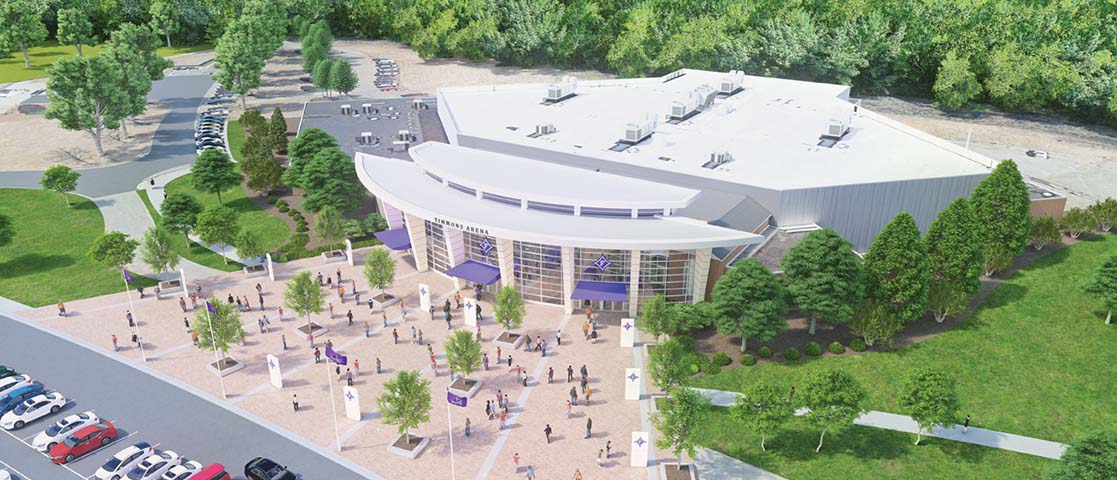
Much of the attention will naturally center on what the result means for the Furman athletics program and for the broader profile of Furman University. According to the university, nearly $100 million from the campaign was committed to Paladin athletics through scholarships and athletic facility enhancements. At the same time, $188.7 million was directed toward academic priorities, including scholarships, faculty and teaching excellence, academic programs, and facility improvements. Another $26.5 million was earmarked for Furman's four institutes.
That distribution is important because it shows how Furman framed this campaign. The school did not present athletics as a separate, isolated objective. Instead, it positioned athletics alongside academics, wellness and community, institutes, and the annual fund as major pillars of the university's next era. In practical terms, the campaign's close signals that Furman is trying to strengthen its academic standing and its competitive Division I profile at the same time.
A final total that beat both benchmarks
The final number, $505.5 million, carries extra weight because it cleared two separate marks. Furman's original campaign goal was $426 million. By October 2024, trustees raised that target to $476 million, a sign that momentum had already built beyond early projections. Even after that revision, the campaign still finished well above the new benchmark.
That sequence matters in campaign analysis. Colleges frequently celebrate reaching a goal, but the strongest fundraising stories tend to involve institutions that force a recalibration midway through the process. Furman's trustees did that in 2024, and the final result still outran expectations. It suggests that the campaign was not sustained by a short burst of major gifts alone. Instead, it appears to have benefited from broad support, continued confidence, and enough internal certainty to justify raising the target before the public finish.
Furman described the effort as part of its transition into a third century. The timing gave the campaign a larger frame than annual budgeting or a single building initiative. It connected donor giving to a long-horizon institutional identity, one tied to the bicentennial, the student experience, and the future of the university's academic and athletic footprint. Furman's official announcement and campaign materials emphasized that point throughout the campaign's close, according to the university's published updates at Furman News and the Clearly Furman campaign page.
Why donor participation stands out
The total amount is the first thing readers notice, but the participation numbers may be just as revealing. Furman said 27,152 donors contributed during the campaign, while alumni engagement reached 70 percent. Supporters also gathered across 28 cities and 32 national events, reflecting a national network rather than a campaign concentrated only in one region or among one donor segment.
Those numbers help explain why Furman's leadership highlighted relationship-building as a major part of the result. Co-chair Robert Hill said the campaign aimed to build a bigger tent for Furman's future. The final participation data suggests that the institution believes it succeeded in broadening the base of support, not just increasing top-end donations.
That distinction is worth paying attention to in the NCAA context. Colleges that can grow donor breadth often place themselves in a stronger long-term position than colleges that rely primarily on a narrow list of major benefactors. Furman said nearly 16,000 people made their first gift during the campaign, including 4,732 alumni. It also reported that among those who had given before and during the campaign, the average gift more than doubled.
For athletics administrators, coaches, and families following the broader college landscape, those details point to something larger than one successful fundraising cycle. They suggest that Furman expanded its network of invested stakeholders at the same time it increased giving volume. In a period when many institutions are under pressure to support scholarships, facilities, staffing, and student-athlete experience, that wider donor base can matter as much as the headline total.
What nearly $100 million for athletics could mean
Furman said nearly $100 million was committed to Paladin athletics through scholarships and enhancements to athletic facilities. The university's athletics profile, outlined in official Furman Paladins quick facts, places the school in NCAA Division I competition. Against that backdrop, a campaign contribution of this scale to athletics deserves attention well beyond campus.
Fundraising in college sports is often discussed through the lens of football powers and the biggest conferences, but that can obscure what major gifts mean at institutions outside that tier. At a school like Furman, athletics investments tied to scholarships and facilities can influence recruiting, retention, competitive consistency, and the overall student-athlete experience. Even when donor money is not framed as a direct competitive weapon, it can improve the environment around teams in ways that matter over time.
That does not mean every dollar instantly changes results on the field or court. What it does mean is that Furman University now has a clearer financial runway to support parts of the athletic department that often shape program stability. Scholarship backing matters in attracting and supporting athletes. Facility enhancements matter because recruits and families regularly evaluate training, recovery, competition spaces, and the overall seriousness of a school's investment in athletics. At the Division I level, those factors are part of the competitive ecosystem whether a program is in the national spotlight or not.
Because the story from Furman was not tied to one specific team, the athletic implications are best understood at the department level. Still, anyone trying to understand the school through a sports lens can begin with the university's college page and team coverage, including the Furman athletics program and the broader profile of the Paladins within the Division I landscape.
Academics remained the largest funding priority
Even with the substantial athletic allocation, academics represented the largest single category in the campaign. Furman said $188.7 million went to academic priorities such as scholarships, faculty and teaching excellence, academic programs, and facility improvements. That helps explain why the university described the campaign as an institutional milestone rather than an athletics-first fundraising victory.
The academic side of the ledger matters for recruiting as well, even if the conversation usually centers on coaches and facilities. Families evaluating colleges, particularly at academically selective institutions, often look at scholarship support, faculty strength, program development, and the quality of campus resources right alongside the athletic experience. A campaign that strengthens those areas can affect a school's attractiveness to prospective students and student-athletes alike.
This is where Furman's model becomes especially interesting. The campaign outcome suggests the university is not separating academic reputation from athletic ambition. Instead, it is presenting them as parallel parts of the same future. That approach aligns with how many mid-sized Division I institutions want to define themselves, as schools where the value proposition depends on both educational quality and a credible athletic environment.
For recruits doing broader school research, tools like a college directory or a sport directory can help place schools like Furman in context across region, level, and institutional type. In this case, the fundraising story adds another layer to what families might already know about the university's academic and athletic profile.
The endowment and planned giving story may matter most long term
The long-term structure of the campaign may be even more consequential than the final total. Furman said donors established 302 endowed funds during the campaign. Those funds support scholarships, faculty positions, student experiences, and university programs. Because endowed funds are built to generate support in perpetuity, they create a financial effect that extends beyond the immediate campaign window.
That is a meaningful distinction in an era when many colleges are searching for sustainable support rather than one-time solutions. Endowed scholarship support can have a stabilizing effect. Endowed faculty positions can strengthen academic departments. Endowed funding for student experiences can improve access and consistency over time. In the athletics context, endowed support can help create a longer horizon for scholarships and program resources.
Furman also reported 380 planned gifts totaling $126.5 million. Planned giving is often less visible in public campaign headlines, but it can be one of the strongest indicators of long-range donor confidence. When a university closes a campaign with large planned gift volume and hundreds of new endowed funds, it is not simply celebrating cash raised in one cycle. It is signaling that the support structure behind the institution may continue to deepen.
Vice president for development Shon Herrick said Furman would build on the campaign through a continued focus on more endowed scholarships and a stronger Furman network. That comment is important because it frames the $505.5 million total as a base for the next phase rather than an endpoint. For observers of higher education and NCAA institutions, that may be one of the most important takeaways from the entire announcement.
Why this matters in the broader NCAA environment
Across college athletics, institutions are under pressure to think more strategically about how to fund scholarships, facilities, student support, and overall program infrastructure. The details differ by conference, division, and campus mission, but the common challenge is sustainability. Furman's campaign close stands out because it offers a concrete example of an NCAA institution using philanthropy to strengthen multiple pillars at once.
That is especially relevant for schools that are not trying to mimic the financial model of the largest athletic departments. Furman's announcement suggests a different path, one rooted in broad alumni participation, endowment growth, planned gifts, academic investment, and targeted athletics support inside a unified institutional campaign. It is a reminder that competitive positioning in college sports can be shaped by campus-wide fundraising strength, not just by isolated athletics initiatives.
It also illustrates how universities increasingly tell a combined story to donors. At Furman, athletics was presented as part of a larger vision that included academics, wellness and community, institutes, and annual support. That kind of integrated messaging can matter because many donors care about the full student experience rather than one siloed area of campus. The final campaign numbers indicate that Furman's donor base responded to that framing.
For families trying to understand the recruiting environment, resources like a recruiting questions library can help explain how school context, division level, and institutional priorities shape an athlete's experience after enrollment. In Furman's case, the fundraising story offers a window into those priorities, especially around long-term support and infrastructure.
How this shapes Furman's positioning going forward
There is a tendency to treat campaign closings as ceremonial milestones, but at some schools they function more like inflection points. This appears to be one of those cases. Furman is heading toward its bicentennial with a campaign that not only beat expectations but also expanded donor participation, created hundreds of endowed funds, and delivered major allocations to academics and athletics.
That combination can affect how the university is perceived by prospective students, alumni, peer institutions, and athletic stakeholders. Within the Division I ecosystem, signs of sustained support can matter in recruiting conversations, in staff retention, in facility planning, and in the broader confidence around a program or department. Within higher education more broadly, a campaign result like this can reinforce institutional identity and momentum.
For the Paladins, the key question is not whether $505.5 million is a large number. It clearly is. The more useful question is how effectively Furman turns that support into visible outcomes over the next several years. Scholarship expansion, facility progress, academic enhancement, and network growth are all areas where the campaign's impact could become more tangible.
Anyone following the institution through an athletics lens will likely watch how resources are translated across the department. Anyone following it through an academic lens will watch how scholarship, faculty, and program priorities advance. In both cases, the campaign's close provides Furman with a stronger platform than it had before.
Related program in Greenville
Another Greenville institution in the available college set is Bob Jones University. It is a very different school context from Furman, but its presence in the same city is a reminder that local higher education landscapes often contain multiple institutional models operating side by side. When one university posts a campaign result of this scale, it can shape how the broader region is discussed in conversations about college investment, student attraction, and campus development.
The larger takeaway
Furman's Clearly Furman campaign is notable not just because it ended at $505.5 million, but because of what sits underneath that figure. The university exceeded both its original and revised goals, drew support from 27,152 donors, reached 70 percent alumni engagement, established 302 endowed funds, and secured 380 planned gifts totaling $126.5 million. Those are not the markers of a narrow or short-lived effort.
For college athletics observers, the nearly $100 million committed to Paladin athletics deserves close attention. For higher education observers, the bigger picture may be even more revealing. Furman used this campaign to connect scholarships, academics, institutes, facilities, alumni engagement, and Division I athletics under one future-facing message. As the university enters its third century, the real significance of the campaign will be measured by how that broad donor-backed momentum changes life on campus and the competitive position of the institution in the years ahead.