Pathley News
D1 Baseball Colleges: Real Guide to Finding Your Best Fit | Pathley
Learn how D1 baseball colleges really work, what coaches look for, and how to build a realistic target list of schools that fit your talent and goals.

If you are a serious high school or JUCO player, you have probably said or heard the phrase "I want to play D1" a hundred times. Division I has the TV exposure, the packed stadiums, and the brand names you see in the College World Series. No surprise that d1 baseball colleges are at the top of so many recruiting wish lists.
Here is the problem. "D1 or bust" sounds simple, but the reality behind those three characters is messy. Not every D1 program looks or feels the same, and not every talented player will be happy at every Division I school. If you chase the logo instead of the fit, you can end up stuck on the bench, stuck in the wrong classroom, or stuck at a school that never really felt like home.
This guide will walk you through what D1 baseball actually looks like in 2026, how to evaluate different programs, and how to build a realistic, exciting list of schools that match your talent, academics, and goals. Along the way, you will see how Pathley uses AI and real recruiting data to make that search way less confusing.
How many D1 baseball colleges could actually be a fit for me based on my stats and grades?
Before you send another DM, register for another camp, or stress about one specific school, take a step back. There are nearly 300 Division I baseball programs, spread across different regions, budgets, and academic levels. Your real challenge is not "Can I find a D1 spot" but "Which environments give me the best chance to develop, play, and graduate".
To make smart choices, you need a clear picture of what life inside Division I baseball actually involves. That starts with understanding the structure of NCAA baseball, the schedule, and the scholarship rules.
According to the NCAA, there are close to 300 Division I schools that sponsor baseball each year, divided across multiple conferences and regions. You can see the current list and championship information on the NCAA baseball page at https://www.ncaa.org/sports/baseball.
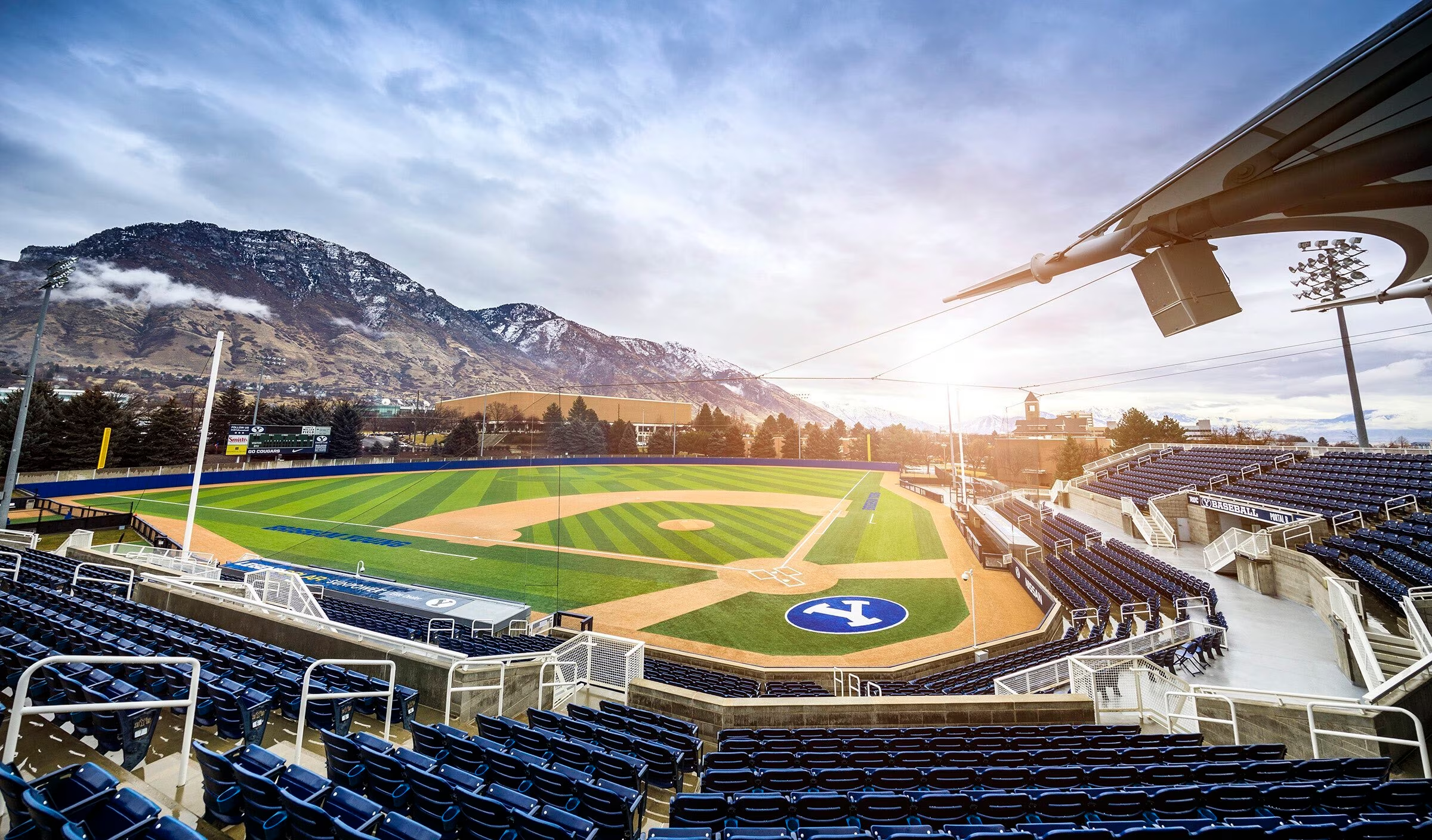
These programs range from huge public universities that pack thousands of fans into a regional final, to smaller private schools where you might play in front of a few hundred loyal students and families. The facilities, travel budgets, academic profiles, and competitive levels can look completely different, even though they all technically fall under the same "D1" label.
That is why two teammates with similar tools can have very different recruiting paths. One might be a perfect fit for an SEC program that lives in the top 25. Another might thrive at a high academic mid-major where they can start early, get a great degree, and still compete in the Division I postseason.
The other side of the highlight reel is the workload. Division I athletes are limited by the NCAA 20-hour rule during the in-season segment, but that still means a heavy weekly commitment when you add travel, treatment, film, and class. The NCAA outlines typical time demands and expectations for college athletes in its resources for prospective players at https://www.ncaa.org/sports/2014/5/14/college-bound-student-athletes.aspx.
In practical terms, a D1 baseball week in season might include daily practice, early lifting sessions, long bus trips or flights for weekend series, and limited flexibility on when you can schedule classes. You must be honest with yourself about whether you can handle that load academically and mentally, not just physically.
Off the field, you will also be representing your school constantly. Social media is monitored. Academic performance is tracked. Decisions you make at 11 p.m. are judged just as heavily as your performance in the seventh inning.
D1 baseball is an equivalency sport. That means coaches can split scholarship money across multiple players instead of giving only full rides. At the Division I level, baseball programs are typically allowed up to 11.7 athletic scholarships spread across a roster that often includes more than 30 players.
There are minimum scholarship rules for certain players, and every school handles money a little differently. Some programs lean heavily on academic aid or need-based aid to stretch limited athletic dollars. Others have more budget flexibility.
The key takeaway is that almost nobody at a Division I baseball program is on a true "full ride" for athletic money alone. Partial packages are the norm, and your real net cost will depend on a mix of athletic aid, academic merit, and need-based financial aid.
What does a realistic D1 baseball scholarship package look like for a player like me?
Once you understand the grind, the money, and the wide range of program types, the next question is simple but uncomfortable. Is Division I truly the best path for you, or have you just absorbed the "D1 or nothing" mindset from social media and teammates?
Skills and measurables matter, but so does your development timeline. Some Division I programs focus on older, physically mature players who come from strong travel ball backgrounds or JUCO programs. Others are more willing to invest in a high-upside high school player who needs two years in the weight room.
Coaches will look at your position, size, bat speed, exit velocity, velocity on the mound, defensive actions, running times, and your overall feel for the game. They will also study where you play now, who you are playing against, and how your tools project by the time you are 19 or 20, not 16.
The hard part is that there is no single public chart that says "If you throw this hard or hit this many home runs, you can play at this exact list of schools". Context matters. That is why Pathley built sport-specific hubs like the baseball recruiting hub at https://app.pathley.ai/sport/baseball, which help you see how your profile lines up with different levels and conferences.
Which D1 baseball colleges match my position, measurables, and development timeline?
This is the question most players skip. If baseball ended tomorrow because of injury, burnout, or a coaching change, would you still choose that school?
Strong Division I programs live in very different academic worlds. Some are elite research universities with highly competitive admissions and intense majors. Others are regional public schools or smaller privates with more flexible academic expectations. Neither is better by default. The right answer depends on your grades, test scores if required, learning style, and career goals.
Think about what kind of campus and community you actually want. Big city or college town. Close to home or across the country. Huge student section or tight knit campus community. You can use the Pathley college directory at https://app.pathley.ai/college_directory to explore both baseball and non baseball details for every school on your radar.
Because D1 baseball scholarships are usually partial, your family will likely be responsible for a significant portion of the bill. Sticker price can be scary, but it is not the full story. Academic scholarships, need-based aid, and state grants can all change what you actually pay.
It is important to have honest money conversations early. A "dream" Division I option that leaves you buried in debt or forces your family into impossible choices may not really be a dream at all.
Once you know Division I is a realistic goal, and you have a sense of your academic and financial boundaries, you can start breaking down individual programs in a smarter way than just checking their RPI ranking.
If you want to know whether a school actually recruits players like you, you have to look at who is on the current roster and where they came from. Pay attention to position distribution, class year, previous schools, and geographic trends.
For example, if you are a right handed pitcher from the Midwest and a program consistently signs older JUCO arms from the Southeast, that matters. If a school already has multiple freshmen and sophomores at your position, and most of them were drafted out of high school, your odds of early playing time go down.
You can combine official roster pages from school athletic sites with basic stat information from the NCAA to build this picture. A lot of this data lives at https://www.ncaa.org/sports/baseball and individual school athletics pages.
How should I break down a D1 baseball roster to see if there is actually room for my position?
Every staff has a style. Some value raw tools and focus heavily on strength and conditioning. Others prioritize pitchability, plate discipline, and IQ. Some staffs are known for developing pitchers, others for turning under the radar hitters into serious threats.
Look at how many players the program moves to professional baseball, but also how many improve significantly during their time on campus. Do you see players like you taking big jumps in velocity, power, or defensive versatility over two or three years? Or do you see a lot of early transfers and stalled careers?
Conversations with current players, social media content from the team, and even postgame interviews can give you a real sense of how coaches communicate and what they value. When you talk with coaches during recruiting, ask specific questions about how they see you fitting into their player development plan.
Great baseball without academic support is a trap. Ask about study hall requirements, tutoring, travel policies around midterms and finals, and how communication with professors is handled. Successful Division I baseball programs typically have clear systems to keep athletes eligible and on track to graduate, but the quality of those systems varies.
Use resources like the Pathley college fit snapshot at https://app.pathley.ai/college-fit-snapshot to see a quick overview of academic rigor, admissions selectivity, and campus culture for each school you are considering.
Pictures of stadiums and locker rooms look great online, but remember that you will spend most of your time in the weight room, practice field, training room, dining hall, and classroom. Try to get a feel for the actual day to day experience.
Weather matters. Playing every home game in freezing temperatures or constant rain is not for everyone. So does distance from home. A cross country move can be exciting, but homesickness is real, especially during tough stretches in the season.
Once you understand different program types and know what you want, you can build a target list that is aggressive but realistic. This is where a lot of players either go too small or way too big.
A strong list includes a mix of competitive profiles. You want some stretch options where you need to keep developing, plenty of realistic fits where you match the current roster level, and a few safer options where you should be one of the better incoming players. The point is not to lower your standards. It is to open up more paths to playing time and long term success.
Pathley helps here by turning the chaos of rosters, academics, and geography into a focused search. You can start inside the baseball hub at https://app.pathley.ai/sport/baseball, then use tools like the college rankings directory at https://app.pathley.ai/college_rankings and the compare colleges feature at https://app.pathley.ai/compare-colleges to see how different D1 baseball colleges stack up for you.
Instead of chasing every invite or blast email, focus on schools where you check three boxes. You can get admitted or are close with a realistic academic plan. You fit the current roster profile athletically within a reasonable development window. And you can see yourself being happy on that campus with or without baseball.
Even if your heart is set on D1, it is smart to keep an open mind. There are incredible coaches and player development environments in Division II, Division III, NAIA, and junior college baseball. For some athletes, those routes lead to more playing time, better academics, and still plenty of opportunities to play professionally if that remains the goal.
Remember, the letters on the front of the jersey do not hit for you, field for you, or get you a job after graduation. Coaches and scouts care about performance and growth over time, not just what level your school was labeled.
Once you have a thoughtful list, the next step is building real conversations with coaches. At the Division I level, staffs are flooded with emails, social media messages, and camp registrations. Standing out requires clarity, consistency, and timing that respects NCAA recruiting rules.
Make it easy for coaches to evaluate you. Share a clean highlight or skills video, a simple athletic resume, and key academic information in your first contact. Pathley can help you build a polished, coach ready resume in minutes at https://app.pathley.ai/resume-builder.
Pay attention to what each program actually needs. If you are a catcher, you should be prioritizing schools that are graduating catchers or have thin depth charts at your position. If you are a left handed pitcher, what kinds of lefties does that staff usually recruit and how do they use them?
NCAA recruiting contact dates and rules change over time, so always double check the latest information on the NCAA site and consider reading deeper explanations like Pathley's NCAA recruiting rules guide at https://www.pathley.ai/blog-posts/ncaa-recruiting-rules-explained.
What is the smartest way for me to contact D1 baseball coaches this year?
When you scroll through social feeds or listen to sideline talk, you will hear a lot of "facts" about Division I baseball that are not actually true. Clearing those up can take a lot of pressure off your recruiting journey.
Myth: Every D1 program is basically the same level.
Reality: The gap between the top national contenders and some lower budget D1 programs can be massive. From facilities and travel to roster depth and recruiting reach, you are dealing with very different worlds under the same logo.
Myth: If it is not D1, it is not serious baseball.
Reality: Plenty of Division II, Division III, and NAIA programs would beat a chunk of D1 teams in a weekend series. Level does not automatically equal quality. What matters most is the fit between your game, your timeline, and the program's vision for you.
Myth: Real players get full ride scholarships.
Reality: Because D1 baseball has limited scholarship money and big rosters, even many impact players are on partial athletic aid. The families who win are usually the ones who combine athletic money, academic merit, and smart financial planning.
Myth: Your recruiting story is over if you are not committed by junior summer.
Reality: Recruiting timelines have sped up in some conferences, but plenty of Division I programs still add players late in the process. Late bloomers, JUCO routes, and transfer opportunities are all real paths. Your job is to keep developing and to stay proactive and realistic about your options.
d1 baseball colleges can feel like a maze, especially if your family has never been through the process before. You are trying to compare schools, read between the lines with coaches, and guess where you stand, all while trying to win games for your current team.
Pathley is built to be the assistant coach for your recruiting life. Instead of random message boards or one size fits all checklists, you get an AI guide that understands your sport, your grad year, and your goals, and adapts as things change.
You can use the Pathley sport hubs, including the baseball hub at https://app.pathley.ai/sport/baseball, to discover programs you have never heard of that still match your level. The college directory at https://app.pathley.ai/college_directory and college fit snapshot tool at https://app.pathley.ai/college-fit-snapshot help you quickly see how your academics, athletics, and campus preferences line up with specific schools.
Instead of guessing which ten or fifteen coaches to email next, you can let Pathley analyze your profile and help you build an evolving target list. As you get bigger, stronger, or add new game film, your recommendations shift with you.
Can you help me build a realistic list of D1 baseball colleges to contact this month?
Rosters, coaches, and division breakdowns for every NCAA and NAIA program we track.