Pathley News
D2 Football Schools List: How to Build Your Best College Map
Get more than just a raw D2 football schools list. Learn how Division 2 works, which programs could fit you, and how to build a smart, personalized target map.
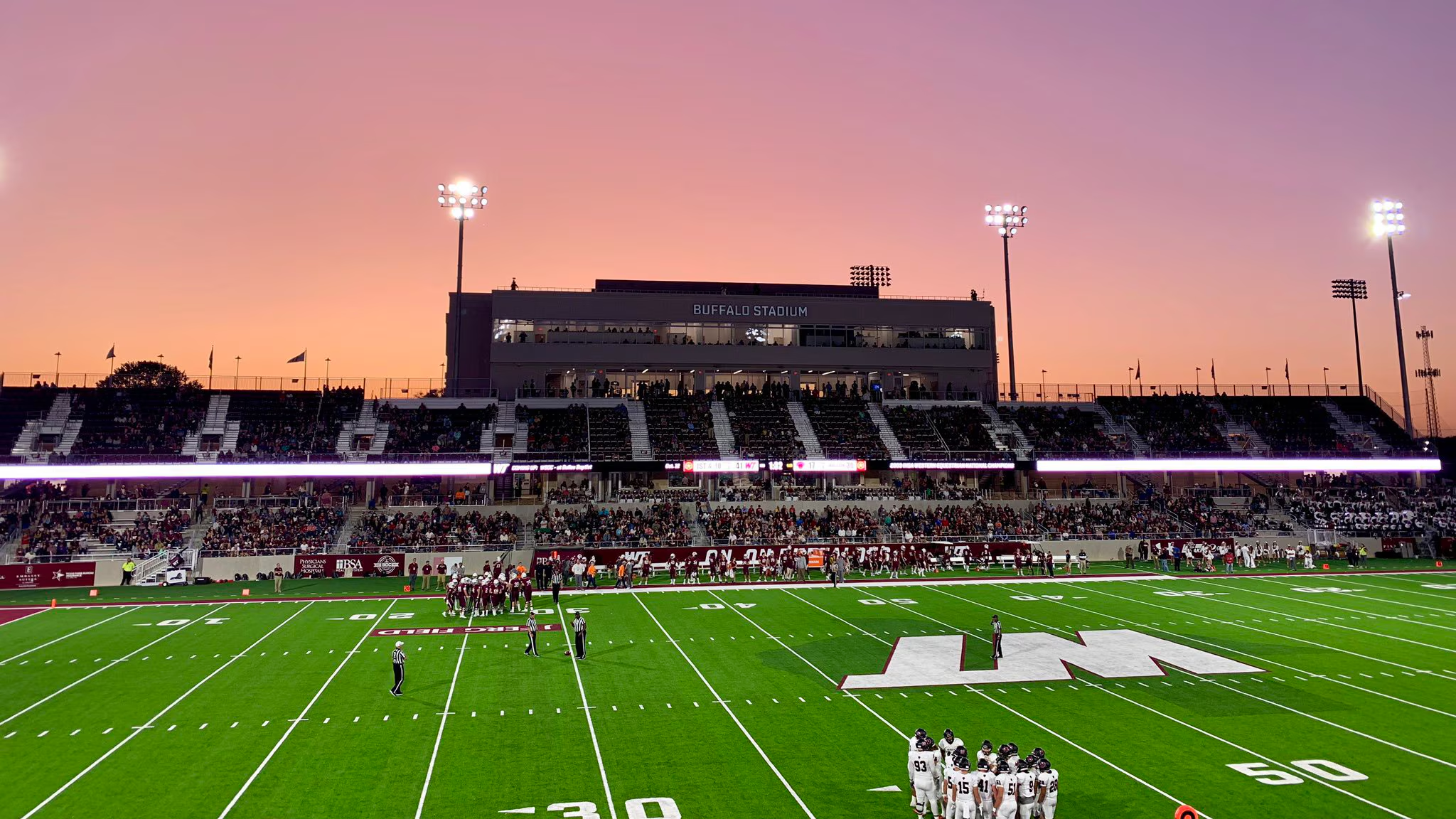
If you have ever searched for a "d2 football schools list," you already know what happens. You get a giant wall of school names, maybe a map, and zero help figuring out which programs actually make sense for you.
Parents see those lists and think, there are so many options, we must be missing something. Athletes see them and think, how am I supposed to know where I actually fit?
Instead of chasing every logo on a page, you need a way to turn that massive list of Division 2 football schools into a focused, realistic target map that lines up with your academics, level, budget, and life outside football. That is what this guide is about.
If you want to go deeper while you read, you can ask Pathley directly: How many Division 2 football schools could be a realistic fit for me based on my size and GPA?
Before you trust any random d2 football schools list, you need to understand what Division 2 actually means. The NCAA describes Division 2 as a balance of academics, athletics, and life outside sports. For many players, it is the sweet spot between big-time football and a more normal college experience.
According to the NCAA, Division 2 offers athletic scholarships but with fewer resources and a smaller scale than Division 1. Most athletes are on partial scholarships and combine athletic aid with academic awards, need based aid, and sometimes loans to make the numbers work. You can read more about the Division 2 philosophy on the NCAA site at https://www.ncaa.org/sports/2018/5/25/division-ii.aspx.
On the field, many D2 football programs are very legit. Some regularly beat FCS teams in scrimmages, and plenty of D2 athletes move on to the NFL, CFL, or pro opportunities overseas. The difference is usually depth, facilities, and overall scale, not whether coaches take the sport seriously.
Numbers shift as schools move divisions or start and drop programs, but there are well over 160 NCAA Division 2 football programs across the country. They are spread through conferences from the Northeast to the Deep South and from the Midwest to the West Coast.
That sounds exciting, but here is the catch. Even if there are 160 plus options on a national d2 football schools list, only a small fraction will realistically fit your academics, position, level, budget, and preferences. The goal is not to chase all of them. The goal is to find the 20 to 40 that deserve your time and energy.
Most "lists" are just that. Names. Logos. Maybe a conference label or state.
They rarely tell you what actually matters for recruiting, like:
• How strong the program is at your position right now.
• Whether your GPA and test scores match their typical admitted student.
• What the campus feels like and where it sits on the big city to small town spectrum.
• What the real cost might look like after stacking athletic, academic, and need based aid.
This is why a smarter approach beats a static spreadsheet. You want data that updates, filters you can control, and guidance tailored to your sport and level. That is exactly why Pathley exists. It turns the chaos of college options into a more structured, personalized recruiting map.
If you want a high level education on how college recruiting works across sports, the NFHS has helpful context at https://www.nfhs.org/articles/what-should-i-know-about-college-recruiting/, but you still need a specific plan for football and for you.
Money matters, and it should influence how you read any d2 football schools list. Division 2 football is classified as an equivalency sport, which means coaches can split scholarships into partial awards. The NCAA allows up to 36 full scholarship equivalents for D2 football programs, which coaches often divide among 80 to 100 plus players.
So what does that mean for you?
• Very few players get a true full ride from athletic money alone.
• Coaches expect you to bring academic aid and possibly need based aid to the table.
• A small scholarship at a lower cost public D2 might actually beat a larger offer at an expensive private school once you do the math.
When you start comparing schools, you are not just choosing a logo. You are choosing a financial path for the next four to five years. That is why a smarter version of a d2 football schools list should include academics, costs, and scholarship strategy, not just names.
Instead of copying someone else’s list, you need to build one that fits your reality. Here is a framework college coaches and smart families use, whether they admit it or not.
Your grades open doors or close them before a coach ever sees your film. The NCAA has minimum eligibility standards, but individual schools usually sit well above that, especially in stronger academic conferences.
Take a clear look at your unweighted GPA, course load, and test scores if you have them. Then think in ranges. For example, a 3.7 student with AP or IB classes can target more selective D2 schools than a 2.8 student still working on core requirements.
If you are not sure where you stand academically, Pathley’s College Directory at https://app.pathley.ai/college_directory lets you explore colleges and get a feel for average GPAs, admit rates, and academic vibe at different types of schools.
To get practical help on this piece, you can ask: How should my GPA and test scores shape the Division 2 football schools I put on my target list?
This is the part a lot of athletes skip. They watch a few highlight clips, look at one ranking site, then decide they are D1 or bust. But college coaches care less about labels and more about whether you can make their roster better in the next few years.
Use real feedback, not just compliments, to gauge your level. Compare your verified measurables and stats to current players at D2 programs, not just your high school league. Pay attention at camps and showcases when coaches talk about where they see you fitting.
If you play football and want a more structured way to explore levels, start with the Football Pathley Hub at https://app.pathley.ai/sport/football. You can see different types of programs, explore conferences, and start to understand where your size, speed, and film might line up.
Would you be comfortable flying across the country four times a year, or do you want your family to drive to most home games? Do you want a small rural campus where football is the biggest thing in town, or a midsize city with more going on off the field?
These questions matter more than people admit. You are not just picking a team, you are choosing where you will live, sleep, study, and grow up for the next four plus years. It is better to be honest now than to enter the portal later because the environment never fit you.
A healthy D2 football target list has a mix of program tiers:
• A few dream programs that might be a stretch athletically or academically but worth chasing.
• A strong middle group where you match the typical roster profile and admit range.
• Some safer options where you are clearly above the average recruit and admission bar.
The key is balance. If all 20 schools on your personal d2 football schools list are national contenders with NFL players on the roster and a 3.8 average GPA, you are probably setting yourself up for frustration.
If you are unsure how to do that balancing act, ask Pathley: How can I balance dream, target, and safer Division 2 football schools on my list so I do not waste time?
Instead of trying to memorize every school, it helps to think in categories. Here are a few types of Division 2 football programs you will see as you explore.
These are schools that are in the playoff conversation almost every year. They usually sit in competitive conferences, have strong football culture, and often send players to NFL camps. Think of programs like Northwest Missouri State or Valdosta State as examples of that tier.
These schools are incredibly competitive in recruiting. You usually need strong film, legit size and speed for your position, and solid academics to get serious attention.
Many D2 programs are very good within their conference or region but are not in the national spotlight every season. They recruit hard in certain states, have good facilities, and send players to regional all star games or pro opportunities.
These can be great fits if you want high level football and a realistic chance to see the field earlier, especially if they line up with your major and budget.
There are also D2 schools where academics are the main headline, and football is one important part of campus life. Places like Colorado School of Mines or Bentley University have serious academic profiles and attract students who are just as focused on internships and grad school as they are on game day.
If you are a strong student who also loves football, these can be incredible options that set you up long term.
Some D2 football schools are newer to the division or in a rebuilding phase with a new staff. They might not have huge win totals yet, but they often have opportunities for earlier playing time and for recruits who buy into the vision.
These can be smart options if you are slightly under the measurables of the national powers but are hungry, coachable, and willing to help build something.
Manually trying to track a full d2 football schools list with notes, offers, and contact history in a spreadsheet gets messy fast. You end up with duplicate data, old information, and no clear picture of what is actually happening.
Pathley is built to replace that chaos with a cleaner, smarter system.
Here is how athletes and families use it when focusing on Division 2 football:
• Start in the Football Pathley Hub at https://app.pathley.ai/sport/football to explore the landscape of college football options by division, region, and program type.
• Use the College Directory at https://app.pathley.ai/college_directory to look up specific D2 schools, see basic details, and save the ones that seem like a fit.
• Run a free College Fit Snapshot at https://app.pathley.ai/college-fit-snapshot for a particular school to see whether your academics, athletics, and campus preferences line up, and to get suggested next recruiting steps.
• Compare two options side by side using the Compare Two Colleges tool at https://app.pathley.ai/compare-colleges so you can move past logo bias and look at real fit.
Underneath those tools is Pathley’s AI chat, which lets you ask context aware questions and get answers in real time, not generic blog advice. For example, you can directly ask: What should I focus on first when I start building my own D2 football target school list?
When families look at a d2 football schools list for the first time, they often bring a lot of myths with them. Clearing those up helps you see your options more clearly.
Reality: Some D2 rosters are full of players who did have D1 interest and chose a better fit. Others are late bloomers, multi sport athletes, or guys who cared more about playing early and loving their campus than chasing a label. The football is real, and the difference at the top levels is usually depth and resources, not whether people can play.
Reality: Because D2 is an equivalency level, coaches can be creative. A roster might be built on partial athletic scholarships stacked with academic awards and need based aid. Your goal is not just to ask for the biggest football number, it is to build the most affordable full package. Pathley can help you think through that strategy in the context of your grades and family situation.
Reality: If you are good enough and in the right situation, scouts will find you. Many D2 players are in NFL camps every year. Plus, the transfer portal has made it easier for coaches at higher levels to discover proven college players, not just high school prospects. You still need the right work ethic, staff, and scheme fit, but it is absolutely possible.
Your approach to building and using a target list should change as you move through high school.
Early on, your goal is exploration and development, not locking in decisions. Use a broad d2 football schools list to learn the names of conferences, see what typical players look like, and understand how academics and measurables line up. Focus most of your energy on getting better at football and in the classroom.
This is when most serious recruiting conversations for D2 start to heat up. Narrow your list based on updated film, verified times, and junior year grades. Start proactively emailing coaches, attending a small number of high value camps, and tracking interest in a structured way.
Pathley can help you avoid sending the same generic email to every coach. Its AI assistant can help you tailor messages based on the school, your profile, and where you are in the process.
By senior fall, your target list should be focused. You are trying to turn real conversations into offers and clear financial packages. At this stage, it is often smarter to go deeper with 10 to 20 realistic options than to panic email 100 schools in October.
If you are not sure whether your list is realistic for your grade and timeline, ask: Is my current list of Division 2 football schools realistic for my grad year and recruiting timeline?
A polished d2 football schools list is useless if it just sits in your notes app. The outcome you care about is offers and long term fit, not a perfectly formatted spreadsheet.
Here is how to move from names to action:
• Prioritize 10 to 20 programs where your academic and athletic fit is strongest and where you actually want to live and study.
• Make sure your athletic resume and highlight video are clean, updated, and easy to share. Pathley’s Athletic Resume Builder at https://app.pathley.ai/resume-builder can turn your stats and links into a coach ready PDF in minutes.
• Start or continue personalized communication with coaches at your top schools. Send updates when you improve verified times, earn awards, or add new film.
• Use tools like the College Fit Snapshot to regularly reassess whether schools on your list still make sense as your situation changes.
Traditional recruiting services often sell you a profile and a giant database, then leave you to figure out the rest. That is overwhelming for most families. Pathley flips that script.
Pathley is an AI powered recruiting guide built specifically to bring clarity, structure, and confidence to confusing decisions like building a D2 football target list. Instead of just handing you more names, it helps you:
• Discover new schools that match your sport, position, academics, and preferences.
• Understand where you are likely to be competitive for a roster spot and scholarship money.
• Decide what to do next, from emailing a coach, to visiting campus, to improving a specific piece of your resume.
All of that lives in one modern, chat based experience, not a stack of notes and outdated web pages. If you want to see how it would work for you personally, ask: How can Pathley help me turn a D2 football schools list into a real recruiting plan this month?
There is nothing wrong with googling "d2 football schools list" as a starting point. The mistake is stopping there. The athletes who win this process do something different. They combine clear information, honest self evaluation, and a focused plan that evolves as they develop.
If you are ready to move past generic lists and build a personalized map:
• Explore the Football Pathley Hub and College Directory to discover Division 2 programs that match your goals.
• Use College Fit Snapshots and Pathley’s AI chat to turn that exploration into a prioritized, realistic target list with clear next steps.
You do not need a thousand schools. You need the right 20 to 40, a clear plan, and the confidence to execute it. Pathley is here to be that guide, so you are not doing it all alone with a random spreadsheet and guesswork.
Division 2 football can absolutely be the platform for a great college experience and a serious career on and off the field. Start building your smarter list today.
Rosters, coaches, and division breakdowns for every NCAA and NAIA program we track.