Pathley News
College Volleyball Recruiting Guide 2026: Real Steps to Offers
Learn how college volleyball recruiting works, from levels and timelines to emails, video, camps, and offers. Clear, practical steps for athletes and parents.

Club seasons, endless tournaments, random camp invites, and coaches who never email back. For a lot of families, that is what college volleyball recruiting feels like. Busy, expensive, and somehow still unclear.
You hear stories about early offers, transfer portal chaos, and scholarship cuts. Your teammates say one thing, a club coach says another, and social media shows only the highlight moments, not the messy decision making behind them.
If you feel like you are guessing, you are not alone. The good news is that volleyball recruiting actually follows patterns. Once you understand those patterns, you can build a clear plan instead of just hoping a coach finds you.
Pathley was built to do exactly that. It is an AI powered recruiting guide that takes your sport, position, academics, and goals, then turns everything into specific next steps. If you want an instant overview tailored to your situation, try asking Pathley, How does college volleyball recruiting really work for my grad year and position?
At its core, college recruiting is just roster building. Coaches need to win, keep their jobs, stay under scholarship limits, and bring in players who fit their culture and academics.
According to the NCAA recruiting overview at NCAA.org, coaches must follow strict rules around when and how they contact you, what they can pay for on visits, and how scholarships are awarded. Volleyball fits inside that bigger framework, with a few sport specific details.
Some quick realities that shape volleyball recruiting:
• Roster spots are limited. A college team might carry 14 to 20 players, but only a fraction will be on major scholarship money, and not every year has an open spot at every position.
• Scholarships are different by division and gender. For example, NCAA Division 1 women’s volleyball is a head count sport, which means up to 12 full scholarships. Division 1 men’s volleyball is an equivalency sport, with a smaller pool of scholarships that can be split into partial packages.
• Many players are not on full rides. A lot of athletes combine athletic aid with academic scholarships or need based aid.
• Recruiting spans multiple divisions. Great volleyball is played at NCAA Division 1, 2, 3, NAIA, and junior colleges. Your best fit might not be the level you first imagine.
Once you see recruiting as roster building with rules, your job gets clearer. You need to prove you can make a coach’s lineup better, fit their culture, and handle their school’s academics. Everything in this guide is about how to do that, step by step.
There is no single path into college volleyball. There are multiple competitive levels, each with different athletic standards, academic expectations, and scholarship situations. The right level for you is the one where you can play, grow, graduate, and be happy.
Division 1 volleyball has the biggest crowds, the heaviest travel, and often the most time demand. Many athletes here are future pros or national team pool players.
Coaches are usually recruiting nationally and sometimes internationally. For women, they often prioritize physical measurables early height, jump, arm speed and then refine their list based on skill, versatility, and fit. For men, with fewer programs nationwide, the competition for roster spots is intense and highly concentrated.
You should target Division 1 seriously if you are:
• A top impact player on a strong club team that regularly plays national level events.
• Matching or trending toward typical height and jump numbers for your position at that level.
• Comfortable with volleyball being a central part of your college life, often year round.
Division 2 and NAIA volleyball can be the perfect blend of serious competition and more flexible balance. Many programs here are good enough to compete with mid level Division 1 teams, but the athletic and academic profile is often more varied.
Scholarships are typically equivalency, so coaches might split 8 or so scholarships across a roster to create partial packages. This can actually be an advantage for recruits who bring both strong academics and strong volleyball, because coaches can stretch their budget by combining aid types.
If you are a strong starter on a good club team, but maybe undersized for high major Division 1 or a later physical developer, these levels should be on your radar.
NCAA Division 3 does not offer athletic scholarships, but that does not mean the volleyball is weak. Some Division 3 programs are extremely competitive and sit inside elite academic schools.
Financial help here often comes through academic merit awards and need based aid. For families that care a lot about academics, smaller class sizes, and a little more flexibility in training schedules, Division 3 is an underrated path.
Junior colleges can be a powerful option if you are still developing, were injured in high school, started club late, or need to improve your grades before moving to a four year school.
Some junior college programs have strong talent, great coaching, and a track record of sending players to four year schools, including Division 1. Two good years at the right junior college can completely reset your recruiting picture.
If you are not sure which level fits you best, a helpful starting point is to compare schools based on your current profile. You can explore volleyball programs by level, region, and school type through the Pathley Volleyball Hub, then dig into individual colleges from there.
One core source of confusion in college volleyball recruiting is timing. You see early commitments on Instagram and assume you are already behind, but those posts rarely explain the rules behind when recruiting can officially start.
The NCAA explains its recruiting rules and calendars at this central recruiting page, and you should always check there for the latest updates. In general though, for NCAA Division 1 volleyball, several important dates matter:
• Before June 15 after your sophomore year, coaches have heavy limits on when they can call, text, or have recruiting conversations with you. They can still watch you, talk to your club or high school coach, and follow your progress.
• On or after June 15 after your sophomore year, Division 1 coaches can begin calling, texting, and having actual recruiting conversations. That is when you often see contact pick up for top recruits.
• Official visits usually begin on August 1 before your junior year, when schools can pay for your visit under NCAA rules.
Division 2 and NAIA timelines are often a bit more flexible, and Division 3 has different contact rules, but the pattern is similar. Serious recruiting conversations usually start around the middle of high school, not in middle school.
That said, your preparation starts much earlier. Early high school years are about learning the game deeply, gaining strength, getting quality film, and figuring out what you want from a college both on and off the court. By the time coaches can contact you, you want to look prepared and organized, not lost.
Every program is different, but there are consistent themes in what volleyball coaches evaluate. Understanding these helps you train with purpose and showcase the right things on film and in person.
In volleyball, physics matters. For many positions, height and jump give you a bigger margin for error. Coaches usually pay close attention to:
• Height and wingspan, especially for middles and outside hitters.
• Approach jump and block touch.
• Lateral quickness, change of direction, and general explosiveness.
• Durability and how well you move after multiple sets.
You do not control your genetics, but you do control strength, mobility, and conditioning. A focused, year round strength plan can help you maximize whatever frame you have and show coaches you are serious.
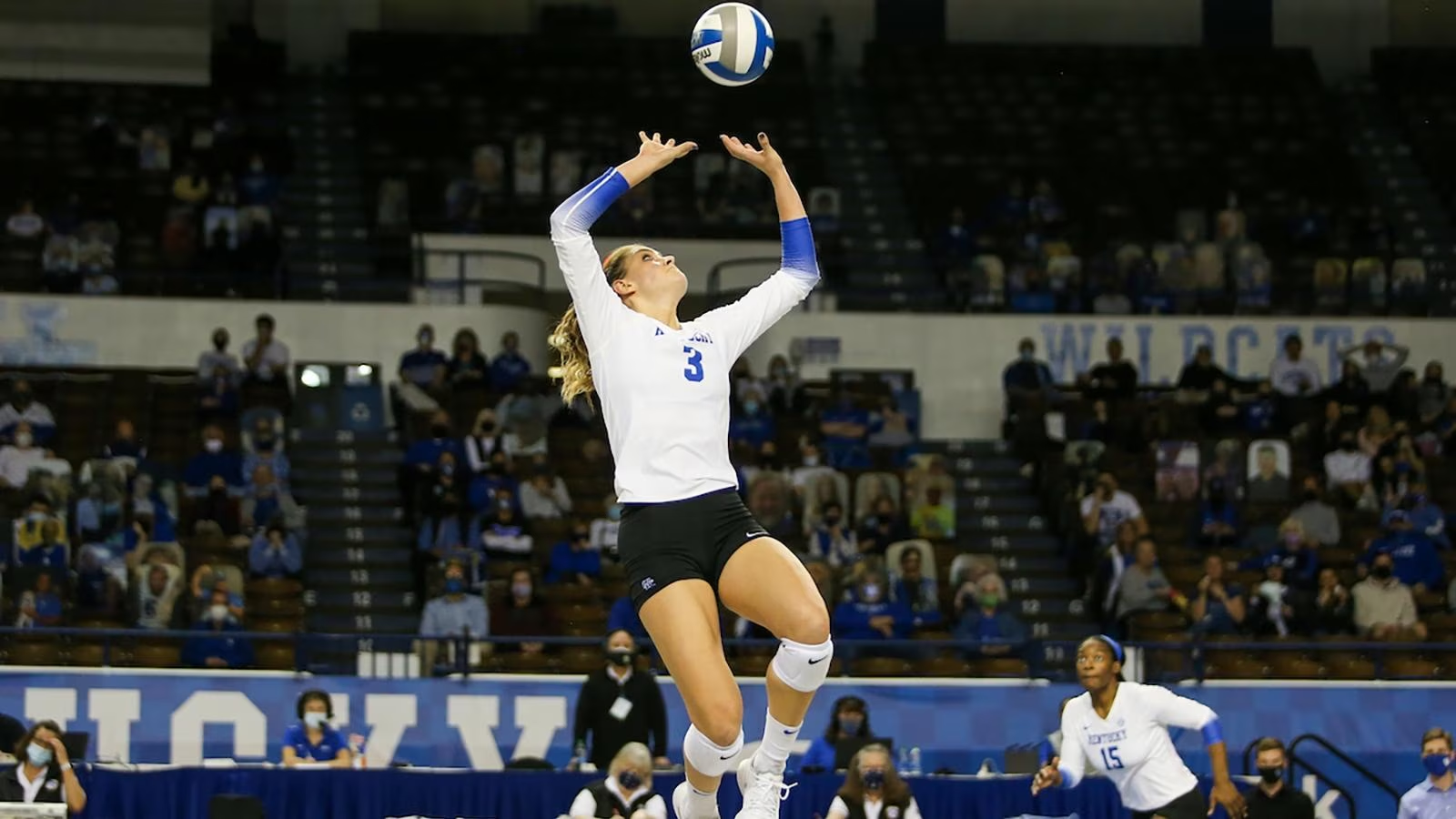
Coaches recruit by role, not just general talent. They are not just looking for a good volleyball player, they are looking for the next setter to run their offense or the libero who stabilizes serve receive for the next four years.
Examples of what they care about by position:
• Setters: Footwork and positioning, decision making, location consistency, connection with hitters, serve receive defense, and leadership presence.
• Middles: Blocking reads, closing the block, quickness along the net, slide attack, transition footwork, and ability to run fast tempo routes.
• Outsides/Opposites: Six rotation ability, ball control, blocking, ability to score in tough situations, and serve pressure.
• Liberos/DS: Platform control, first step quickness, reading hitters, serve receive consistency, and communication.
Instead of just working on everything equally, build a development plan around what your ideal college role probably will be. That is where a coach can picture you clearly.
If you are unsure how college coaches might evaluate your current game, you can talk it through with Pathley by asking, What level of college volleyball programs should I realistically target with my current height, jump, and skill set?
Coaches watch how you think the game and how you respond when things are not perfect. They are paying attention to:
• How quickly you adjust to blocking schemes and defensive reads.
• Whether you communicate or disappear when the match gets tight.
• Your body language when you make a mistake or get subbed out.
• How you treat teammates and coaches between points and during timeouts.
Highlight plays are great, but coaches want to know what you are like on your worst night, not just your best clip. That is why game film and live evaluation are so important.
According to the NCAA, student athletes still need to meet academic eligibility standards, including core course requirements and GPA minimums that vary by division. You can read more background on academics for recruits at the NCAA’s volleyball page here: NCAA women’s volleyball.
Coaches also know that players who handle school well are more likely to stay eligible, stay on the roster, and stay out of trouble. A solid transcript, strong teacher recommendations, and no drama around behavior can separate you from similar athletes with weaker off court profiles.
Even if you are a great player, coaches need a simple way to learn who you are, what you can do, and whether their time is worth investing. That is where your recruiting profile comes in.
Think of your recruiting profile as the front page of your volleyball resume. A coach should be able to scan it in less than a minute and know your key facts. At minimum, you want to include:
• Basic info: Name, grad year, high school, club, position, dominant hand.
• Contact info: Player cell and email, plus a parent contact for younger athletes.
• Physical stats: Height, wingspan if you have it, standing reach, approach and block touch, weight.
• Academic info: GPA, test scores if available, intended major or academic interests, honors or AP classes.
• Volleyball info: Primary and secondary positions, jersey number, coach contact info, and current level of play.
Instead of formatting all this from scratch, you can use the Pathley Athletic Resume Builder to turn your stats, honors, and video links into a clean, coach ready PDF in a couple of minutes.
Most coaches begin by watching film, then decide whether to watch you live. Your video should make their job easy.
Good film usually includes:
• A short highlight reel that shows your best skills early, with clear labeling of your number and position.
• Unedited game sets or full matches that prove your highlight reel is real, not just five perfect plays from an entire season.
• Clips that show you in different situations: serve receive, transition, out of system plays, and defense, not just perfect in system kills.
You do not need fancy graphics or expensive editing. Coaches care much more about angles, clarity, and how easy it is to identify you. Simple, sharp, and well labeled beats flashy but confusing every time.
Once you have a basic recruiting profile and video, the next step is outreach. Many families wait for coaches to find them, then realize too late that they needed to be proactive.
A good first email to a coach is short, personal, and specific. It should:
• Show you know something real about their program and why it interests you.
• Share your key academic and athletic info in a clean, easy to scan way.
• Include links to film and your recruiting resume.
• Make it clear where and when they can see you play next.
You do not need to write a novel, and you definitely do not need to sound like a robot. Coaches receive hundreds of emails. The ones that stand out sound like a real person who did real homework.
If you are staring at a blank screen and not sure how to start, you can have Pathley draft sport specific outreach for you by asking, What should my college volleyball recruiting emails to coaches actually say based on my position and grad year?
Coaches are busy and often on the road. A lack of response after one email does not always mean no interest. It might mean they have not seen it yet, are waiting on staff discussions, or are not allowed to reply due to NCAA timing rules.
Reasonable follow up looks like:
• A short check in after a couple of weeks, especially if you have new film or updated stats.
• Quick tournament and schedule updates when you know they might be in the area.
• A respectful final note if you have committed elsewhere, thanking them for their time.
Remember that relationships matter. Even if a coach cannot recruit you, they may recommend you to another program if you handle communication like a pro.
Camps and clinics can be powerful tools in college volleyball recruiting, but they can also become a money sink if you attend everything without a plan.
There are roughly three main types of events you will see:
• College run camps, where you train on campus with that staff and sometimes other visiting coaches.
• Third party showcases, where multiple college staffs attend and evaluate in one place.
• Training focused clinics, often run by clubs or trainers, aimed more at skill development than recruiting exposure.
Before signing up for any event, ask:
• Will coaches from schools on my realistic list actually be there, and are they actively recruiting my grad year?
• Is this event known for real recruiting opportunities, or mostly for revenue?
• Could the same money be better spent on high quality training, travel to one targeted event, or academic test prep?
If you want help filtering which events match your level, position, and goals, you can talk it through with Pathley by asking, Which volleyball camps and showcases make the most sense for my college recruiting goals?
As conversations with coaches progress, they may invite you to campus for an unofficial or official visit. NCAA rules limit what schools can pay for and when, and those rules evolve, so always double check details on NCAA.org.
On visits, your job is to figure out whether you can see yourself living there, not just wearing the jersey on game day. Pay attention to:
• How current players talk about the coaching staff when coaches are not in the room.
• Whether you like your potential future teammates off the court.
• How the locker room, weight room, and training environment actually feel in person.
• Class sizes, academic support, and the vibe on campus when volleyball is not happening.
When offers come, resist the pressure to rush unless a coach is genuinely up against a hard deadline that you understand. Ask clear questions about how much of your cost of attendance is covered, how long the offer is good, and what happens if you get injured or need extra time to graduate.
If multiple schools are recruiting you, it helps to compare them side by side. The Pathley College Directory lets you explore schools quickly, then you can use Pathley’s tools to dig deeper into academics, campus fit, and volleyball opportunities at schools that make your shortlist.
By now you can see that college volleyball recruiting is not random. Coaches follow rules, build rosters around clear needs, and look for specific traits on and off the court. Your job is to understand that landscape, then show coaches how you fit.
That means:
• Getting honest about your level and where you are trending physically and technically.
• Building a clean recruiting profile and video that respect coaches’ time.
• Targeting schools where your academics, volleyball, and life goals align.
• Communicating consistently and respectfully over time, not just sending one big email blast.
If you are unsure where to begin, one simple move this week is to get personalized guidance instead of trying to piece everything together from random sources. You can start that process by asking Pathley, What are the most important three steps I should take this month to move my college volleyball recruiting forward?
Pathley is built for athletes and families who are tired of guessing. Instead of static profiles or generic advice, it gives you a chat based experience that adjusts as your situation changes.
For volleyball players and parents, Pathley can help you:
• Discover volleyball programs that match your academics, budget, and preferred campus vibe through the sport specific tools in the Pathley Volleyball Hub.
• Turn your stats, honors, and film links into a clean, coach ready PDF through the Athletic Resume Builder, instead of wrestling with templates alone.
• Organize and refine your school list as you learn more, without losing track of who you contacted and what they said.
• Get instant answers to questions about timelines, strategy, and fit through an AI assistant that understands your sport, level, and goals.
Most importantly, Pathley is built to put control back in your hands. You do not need to wait for a single showcase or a single coach to decide your future. You can gather real information, build a smart plan, and move forward with confidence.
Rosters, coaches, and division breakdowns for every NCAA and NAIA program we track.