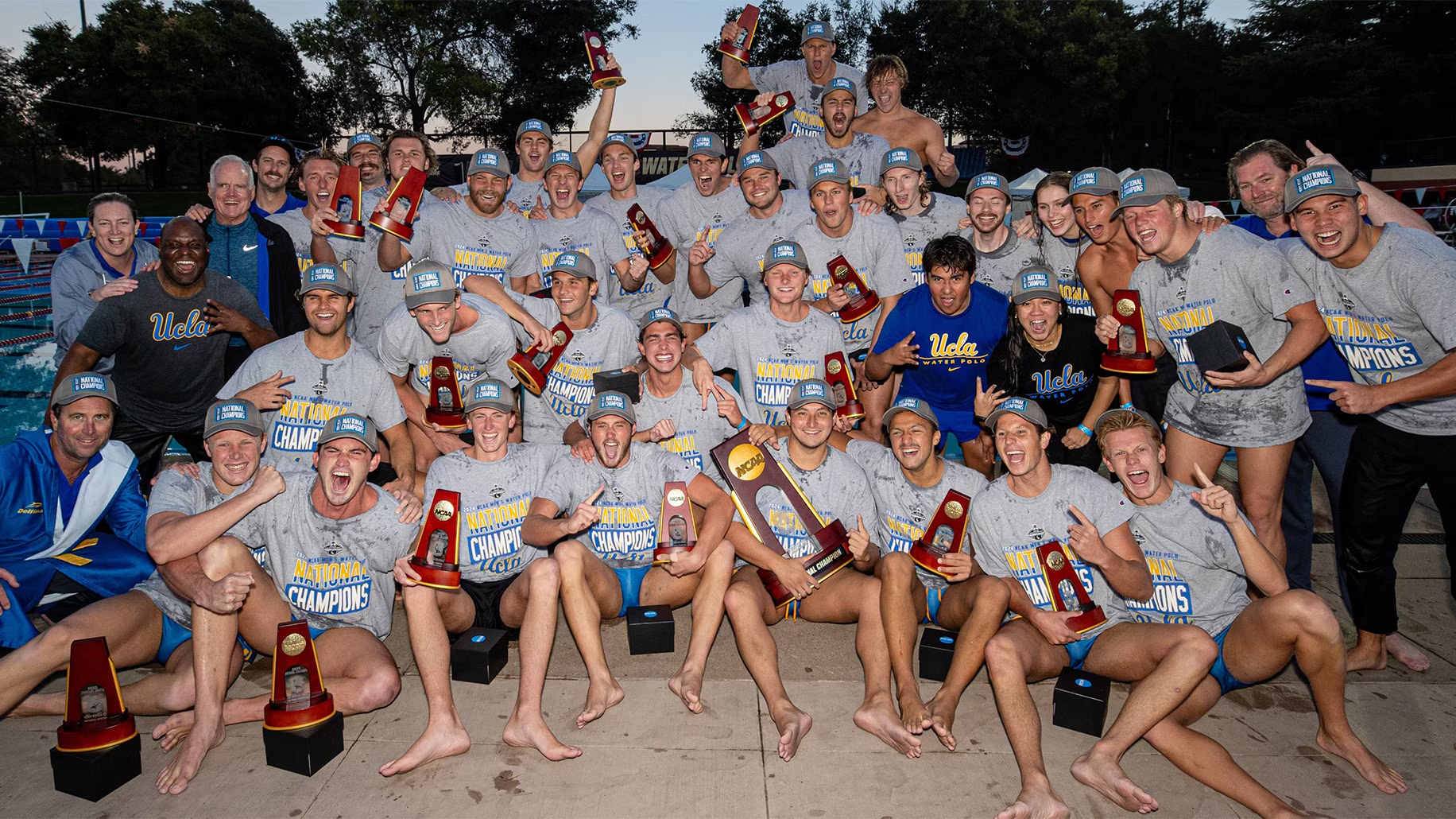
UCLA men’s water polo captured the 2025 NCAA championship in stunning fashion, edging rival USC on a last-second goal by Frederico Jucá Carsalade. The 11–10 win delivered the Bruins’ 14th national title in men’s water polo and the 125th NCAA team championship in school history.
UCLA men’s water polo repeats as NCAA champion on Carsalade buzzer beater vs USC
On December 7, 2025, University of California, Los Angeles men’s water polo added one of the most dramatic chapters yet to its storied history. The Bruins edged archrival USC 11–10 on a last-second goal from redshirt junior Frederico Jucá Carsalade to win the NCAA men’s water polo championship at Stanford’s Avery Aquatic Center.
The victory gave UCLA its 14th NCAA men’s water polo title and its second straight national championship over the Trojans. It also marked the school’s 125th NCAA team championship across all sports, reinforcing the Bruins’ reputation as one of college athletics’ premier Olympic-sport powerhouses.
An instant-classic national final between crosstown rivals
The 2025 NCAA men’s water polo championship game featured all the ingredients of the UCLA vs USC rivalry: elite talent, wild momentum swings, and a finish that will be replayed for years. Second-seeded UCLA entered at 27–2 as the defending national champion, while top-seeded USC came in 23–4, seeking its 11th NCAA crown.
From the opening sprint, the matchup at Stanford’s Avery Aquatic Center reflected how little separated the two programs throughout the season. The teams had already met four times in the regular season and conference play, splitting those contests. The national title game served as a high-stakes rubber match, and neither side backed down.
UCLA came out sharp, relying on a balanced front-court attack and opportunistic shooting. Sophomore attacker Chase Dodd struck twice in the first quarter as the Bruins built a 3–1 lead, energizing a sizable UCLA fan base that had traveled north to Palo Alto.
But in a rivalry defined by runs, USC answered in force. The Trojans dominated the second period, outscoring UCLA 5–1 to seize a 6–4 advantage at halftime. Their surge briefly quieted the Bruin faithful and put UCLA’s title defense in serious jeopardy.
UCLA’s third-quarter response keeps the title within reach
The third quarter mirrored the ebb and flow that has long defined this rivalry. USC twice stretched its lead to two goals, going up 7–5 and then 8–6 as the pressure mounted on the defending champions.
Each time, UCLA refused to let the game get away. The Bruins tightened their defense in front of goalkeeper Nate Tauscher, limiting clean looks for USC and buying time for their offense to rediscover its rhythm.
Late in the third, the Bruins found a crucial spark from redshirt junior Frederico Jucá Carsalade. The Brazilian attacker, already a key figure in UCLA’s tournament run, delivered a big-time goal to trim the deficit to 8–7. That strike shifted momentum and set up a final quarter that would decide not only a national champion but also bragging rights in one of college sports’ fiercest rivalries.
Fourth-quarter drama: Dodd’s surge and USC’s answer
Trailing 8–7 entering the final eight minutes, UCLA leaned on a mix of veterans and emerging standouts. The Bruins’ defensive structure solidified, with Tauscher steady in goal and the front line applying more disciplined pressure on USC’s perimeter shooters.
Offensively, sophomore scorer Ryder Dodd took over the moment. He struck twice in quick succession, including a crucial penalty conversion after a foul committed by USC’s Jack Vort. Those goals not only erased the deficit but flipped the scoreboard, giving UCLA a 10–9 lead with just over two and a half minutes to play.
USC was not finished. The Trojans earned a power-play opportunity and capitalized when Jack Martin found the back of the net to tie the game at 10–10. As the clock ticked down, both teams traded defensive stops, each possession growing more intense than the last.
With the season, a title, and the rivalry hanging in the balance, the game seemed destined for overtime. Instead, UCLA set up one last play that would enter program lore.
Carsalade’s buzzer beater delivers the national title
In the final seconds, UCLA worked the ball around the perimeter, searching for a clean look and a high-percentage shot. The ball ultimately found its way to Carsalade, who had already scored once in the second half and had been a difference-maker all tournament.
With defenders closing, the redshirt junior rose up and fired from the perimeter. The shot beat the USC goalkeeper and crossed the line with one second left on the game clock, sending the Bruins’ bench and supporters into a frenzy. The goal stood as the winner in an 11–10 instant classic, and the University of California, Los Angeles players poured into the shallow end at Avery Aquatic Center in jubilation.
Carsalade’s buzzer beater instantly joined the short list of the most dramatic finishes in NCAA water polo championship history, and it will be remembered for years as a defining moment in UCLA’s rivalry with USC.
Most Outstanding Player: Carsalade caps dominant tournament
The last-second heroics were a fitting capstone to Carsalade’s outstanding NCAA tournament. His consistency, efficiency, and ability to deliver in big moments earned him Most Outstanding Player honors and a spot on the NCAA All-Tournament team.
Across UCLA’s three games at Stanford, Carsalade totaled eight goals on highly efficient shooting:
- Four goals in a 15–11 quarterfinal win over Princeton
- Two goals and three assists in a 9–7 semifinal win against host Stanford
- Two goals in the title game vs USC, including the championship-winning buzzer beater
He was joined on the All-Tournament team by teammates Ryder and Chase Dodd, underscoring just how central UCLA’s core attackers were to the run. Ryder Dodd led the Bruins with three goals in the final, while Bode Brinkema and Chase Dodd each scored twice. In goal, Tauscher contributed eight saves to stabilize the defense after USC’s high-scoring second quarter.
For recruits and families tracking high-level NCAA water polo, Carsalade’s performance illustrates the value of players who can impact games both as primary scorers and as facilitators. In each round, he adapted to the matchup, whether carrying a heavy scoring load or creating for teammates.
UCLA’s path through a deep NCAA bracket
As the No. 2 seed in an eight-team, single-elimination field, the Bruins had no easy road to the title. The NCAA men’s water polo championship has long been dominated by West Coast powers, but the 2025 bracket still demanded precision and poise in every round.
UCLA opened its tournament with a 15–11 win over Princeton, a program that has emerged as one of the East Coast’s strongest water polo teams. From there, the Bruins had to face host Stanford in a 9–7 semifinal battle that featured strong defense and another standout performance from Carsalade, who contributed two goals and three assists.
The final against USC capped a bracket that also included Fordham, San Jose State, Concordia Irvine and UC Davis. Emerging from that field with a 27–2 final record and a second consecutive national title confirmed UCLA’s position at the top of collegiate men’s water polo.
For context on the event and format, the NCAA details the history and structure of the men’s water polo championship on its official site at NCAA.com, which also recaps this 2025 title game. UCLA’s own athletic department provides further historical background on the program’s championships and legendary players at uclabruins.com.
Adam Wright’s coaching legacy grows again
The 2025 championship added another milestone to head coach Adam Wright’s remarkable UCLA resume. A UCLA Athletic Hall of Famer, Wright has now been part of 10 NCAA titles at the school as both a player and coach.
As head coach of the men’s program, he has guided the Bruins to six national championships, all of them coming against USC in the final. That dominance in the sport’s premier rivalry underscores his impact on both game strategy and long-term program culture.
Wright’s success extends beyond men’s water polo. He has also won NCAA titles with UCLA women’s water polo and was a standout player during earlier championship runs. For athletes considering a future in collegiate water polo, Wright’s track record is a prime example of a coach who can help players reach both NCAA and international levels.
In addition to official game recaps, UCLA’s campus news reports on the broader significance of the 125th NCAA team championship for the university community. The campus newsroom highlights how Olympic and Olympic-style sports continue to shape UCLA’s identity at newsroom.ucla.edu.
The meaning of title No. 14 in men’s water polo and No. 125 overall
The victory over USC raised UCLA’s men’s water polo championship total to 14, one of the best marks in NCAA history. It also pushed the school’s all-time tally of NCAA team championships across all sports to 125, reinforcing UCLA’s place among the nation’s elite athletic departments.
That milestone highlights a long-standing institutional focus on Olympic and Olympic-style sports. From water polo and volleyball to gymnastics and track and field, UCLA has consistently invested in programs that compete for national titles and produce Olympians.
For recruits and families, this context matters. Joining a program with a deep championship history often means:
- Daily training alongside national team and professional-level talent
- Exposure to high-pressure championship environments
- Access to experienced coaching staffs who understand long postseason runs
- A campus culture that values both academics and athletic excellence
At a school like UCLA, those factors combine to create a uniquely competitive environment in sports like men’s water polo.
Why UCLA vs USC water polo resonates with recruits
The Bruins’ buzzer-beating win is more than just a single dramatic finish. It continues one of college sports’ premier rivalries and sends a powerful message to athletes considering top-level water polo.
Historically, the UCLA vs USC water polo rivalry has been central to the national championship picture, with both programs stacking NCAA titles and producing a long line of Olympians. The 2025 final, decided in the last second, reinforces a few key realities for recruits:
- The margin between elite programs is often razor-thin, making daily development and attention to detail crucial.
- Playing at this level means constant exposure to high-stakes games against equally loaded opponents.
- Choice of program can shape not only college careers but also opportunities at the international level.
Coverage from national outlets such as ESPN reflects how the broader sports world is paying attention to moments like Carsalade’s buzzer beater. That kind of spotlight can be important for athletes hoping to compete beyond college.
What this game says about high-level NCAA water polo
For athletes, parents, and coaches evaluating NCAA men’s water polo, the 2025 championship offers a clear snapshot of what it takes to win at the highest level:
- Depth across the roster: UCLA did not rely on a single star. Multiple attackers scored in each round, and players like Bode Brinkema and both Dodd brothers stepped up at critical times.
- Goalkeeping stability: Tauscher’s eight saves in the final were vital, especially after USC’s second-quarter surge. In tournament play, a composed goalkeeper can swing a game or an entire bracket.
- Adaptability: UCLA navigated different game styles: a higher-scoring opener vs Princeton, a tighter defensive semifinal at Stanford, and a back-and-forth shootout in the title game.
- Coaching continuity: Under Adam Wright, the Bruins have built a consistent identity. That continuity is a major asset in recruiting and development.
For prospective student-athletes, watching or studying games like this can provide a blueprint for the pace, physicality, and tactical complexity of top-tier Division I water polo.
Exploring other Los Angeles–area water polo programs
While UCLA sits at the top of the NCAA men’s water polo landscape after this title run, the greater Los Angeles region offers a variety of collegiate options for athletes with different academic goals, athletic levels, and campus preferences.
Some additional programs in the area worth exploring include:
- Loyola Marymount University: A private institution with a strong reputation in West Coast athletics and academics, LMU offers a coastal campus setting and competitive Division I programs in multiple sports.
- Occidental College: A nationally recognized liberal arts college in Los Angeles, Occidental competes in NCAA Division III and provides a smaller-campus experience that appeals to many student-athletes balancing rigorous academics with sport.
- California State University, Northridge
Each school offers a different blend of size, setting, and academic offerings. For recruits interested in water polo and related aquatic sports, exploring a range of Los Angeles–area options can help clarify what type of environment feels like the best fit.
How athletes can use Pathley to find their own best-fit program
Not every athlete will play in an NCAA men’s water polo championship game, but every athlete can pursue a college home that matches their goals in the classroom, pool, and beyond. The challenge is sorting through hundreds of schools, all with different levels of competition, majors, locations, and financial aid options.
Tools like Pathley are built to make that search smarter and more efficient. Instead of relying only on word of mouth or scattered lists, you can use AI-powered search and insights to identify programs that align with your academic interests, athletic level, and personal preferences.
If you are starting your recruiting journey or looking to refine your target list, Pathley Chat acts as an AI recruiting assistant. You can ask about potential college matches, get guidance on how to present your athletic resume, and better understand where you might be a realistic fit.
Takeaways from UCLA’s buzzer-beating national title
UCLA’s 11–10 win over USC in the 2025 NCAA men’s water polo championship will be remembered for more than the highlight-reel buzzer beater. It showcased the depth and resilience of a roster built to contend every year, the impact of experienced coaching, and the razor-thin margins at the top of Division I water polo.
For aspiring college athletes, the game is a reminder of what is possible when talent, preparation, and opportunity meet on the biggest stage. Whether your goal is to compete in national finals or simply find a program where you can contribute and grow, understanding stories like UCLA’s can help you frame your own recruiting journey.
As collegiate water polo continues to grow in visibility and competitive balance, tools that help athletes explore options and make informed choices become even more important. Following the path from high school standout to NCAA contributor starts with finding the right fit, one conversation and one program at a time.