Pathley News
Texas A&M women’s volleyball sweeps Kentucky for first NCAA title
Texas A&M volleyball swept Kentucky to win the 2025 NCAA women’s volleyball title, capping Jamie Morrison’s rebuild and a run through three No. 1 seeds.

On December 21, 2025, Texas A&M University completed one of the most dominant postseason runs in recent NCAA volleyball history, sweeping Kentucky 3–0 to capture the 2025 NCAA Division I women’s volleyball national championship at the T-Mobile Center in Kansas City, Missouri. The third-seeded Aggies prevailed by set scores of 26–24, 25–15 and 25–20, securing the first national title in program history and becoming just the 13th school ever to win the Division I women’s volleyball crown.
The victory over top-seeded Kentucky, in what was also the first all-SEC national championship match in the history of the tournament, capped a 29–4 season and completed a stunning three-year rebuild under head coach Jamie Morrison. By the end of December, “Texas A&M volleyball national championship 2025” was more than a headline; it was a defining moment for the program, the university and the growing profile of SEC volleyball on the national stage.
When Texas A&M hired Morrison before the 2023 season, the Aggies were a long way from the bright lights of a national championship match. The program was coming off a 13–16 campaign and had not posted a winning season since 2019. Within three years, that trajectory flipped.
In 2025, Texas A&M finished 29–4 overall and 14–1 in Southeastern Conference play, one of the best seasons in school history and a breakout campaign that turned the Aggies into a national story. The title added to a wave of recent athletic success in College Station, where other women’s programs such as tennis and track and field had already claimed NCAA crowns, strengthening the overall profile of Texas A&M University as a national player across multiple sports.
Morrison’s blueprint was rooted in continuity and belief. Instead of a full-scale roster overhaul, he rebuilt Texas A&M volleyball around a veteran core that chose to stay when he arrived. Nine seniors played major roles in 2025, including several who shared deep roots as former teammates on the Houston Skyline club circuit. That continuity, along with Morrison’s background with USA Volleyball youth national teams, gave the Aggies a foundation of chemistry and toughness that showed up repeatedly in pressure moments throughout the season.
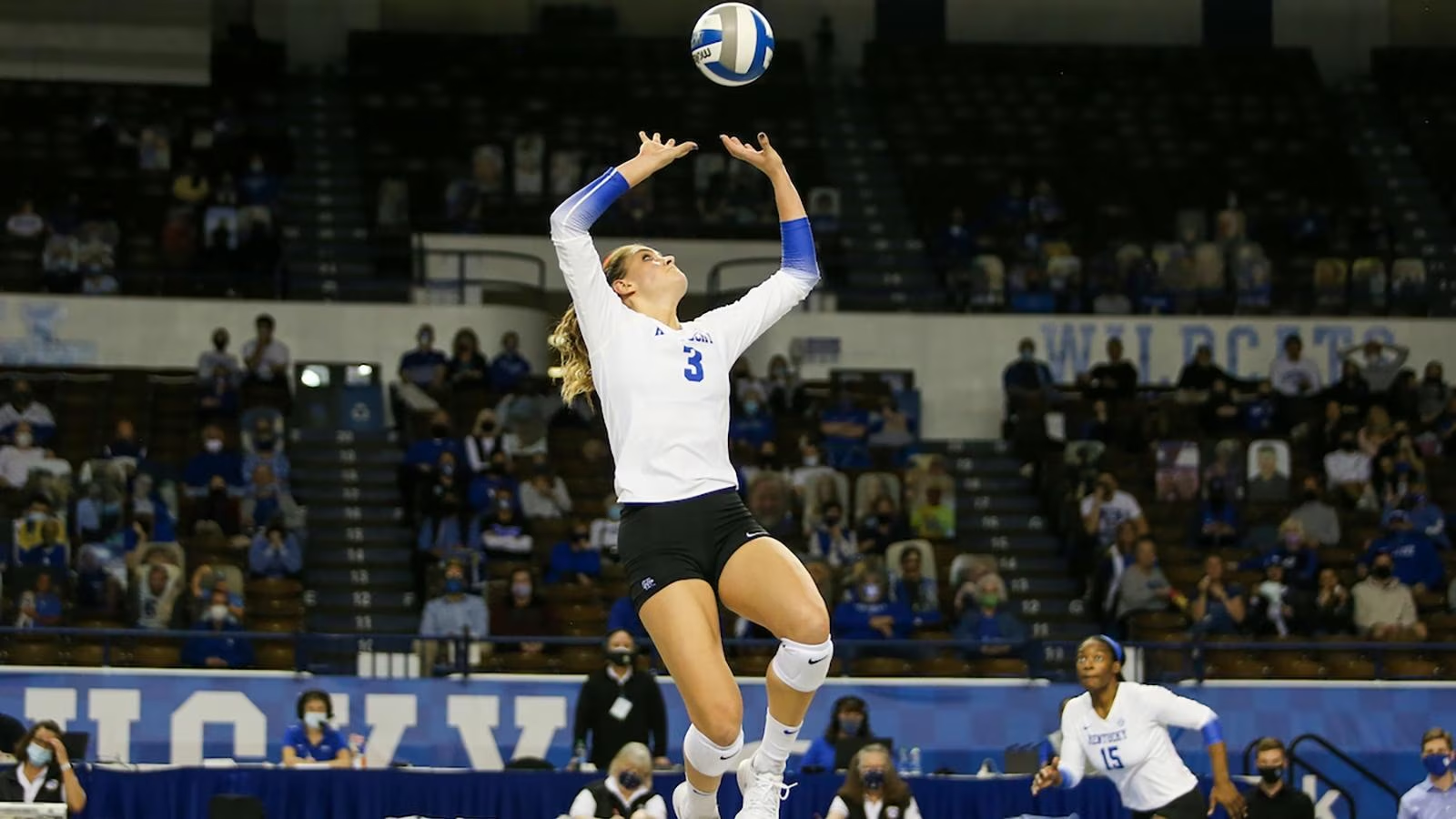
Coming into the NCAA women’s volleyball final vs. Kentucky, most of the pressure sat on the Wildcats’ side of the net. Kentucky was the No. 1 overall seed with a 30–2 record, carrying a 27-match winning streak and the confidence of a regular-season win over Texas A&M back on October 8.
For the first 20 points of the night, it looked like more of the same. Kentucky surged to a 10–4 lead in the opening set behind sharp blocking and a hot start from its offense. Texas A&M trailed for nearly the entire frame and spent much of it chasing the Wildcats, who appeared poised to validate their top seed.
The turning point of the championship and, arguably, of the Aggies’ entire postseason, came late in that first set. Down the stretch, Kentucky edged closer to set point and Texas A&M again found itself in a position it had seen before during this tournament: forced to respond to adversity.
With Kentucky leading and threatening to close out the set, Texas A&M mounted a 6–1 run to erase the deficit and pull even at 24–24. Redshirt sophomore outside hitter Kyndal Stowers delivered a critical kill to tie the score, and senior middle blocker Ifenna Cos-Okpalla followed with a key block that gave Texas A&M its first set point. Stowers then hammered another kill to seal the 26–24 comeback win.
That rally did more than flip the scoreboard. It shifted the momentum of the NCAA women’s volleyball final vs. Kentucky and showcased the composure Morrison often cited throughout the season. Facing both an early six-point hole and a late set point against them, the Aggies stayed calm, leaned on their veteran core and grabbed control of the match.
Riding the surge from their opening-set escape, Texas A&M dominated the second set. The Aggies’ block and back-row defense smothered Kentucky’s normally efficient attack, forcing the Wildcats into repeated errors and out-of-system swings.
By the midpoint of the set, Kentucky’s hitting percentage had dropped toward zero efficiency, a stark contrast to its season-long dominance. Texas A&M, meanwhile, extended its lead to double digits and never allowed the Wildcats any serious run. The Aggies cruised to a 25–15 victory that left them one set away from history.
The third set followed a familiar pattern. Texas A&M again surged ahead early, built a cushion around the media timeout and maintained firm control down the stretch. Kentucky managed to stave off a couple of match points and tried to spark one final run, but the Aggies’ composure held.
Fittingly, Cos-Okpalla delivered the final blow, finishing off a quick attack through the middle for a 25–20 clincher that sealed a 3–0 sweep and the program’s first NCAA national championship. With that swing, Texas A&M women’s volleyball officially joined the small club of programs to hoist a Division I national title.
One of the defining traits of Texas A&M’s 2025 team was balance, and that showed clearly in the championship box score. Rather than leaning on a single go-to star, the Aggies spread the offensive load and defended as a unit.
Key stat lines from the 2025 NCAA women’s volleyball national championship:
On the other side, Kentucky managed just a .148 hitting percentage, its lowest of the season, and committed 23 total errors, including nine service errors. That combination of Texas A&M’s efficiency and Kentucky’s uncharacteristic mistakes tilted every tight moment in the Aggies’ favor.
For readers interested in historical stats and season-by-season trends, the NCAA and school archives provide deep context on tournament performance and hitting metrics across years (NCAA.com, Texas A&M stats archives).
The sweep of Kentucky was impressive on its own. What makes Texas A&M’s 2025 title run historic is the path the Aggies had to navigate to reach the top. As a No. 3 seed, they faced a bracket stacked with traditional powers and elite No. 1 seeds, yet they emerged as champions by consistently rising to the moment.
Texas A&M opened the NCAA tournament in efficient fashion, sweeping Campbell in the first round and TCU in the second. Those wins were the kind of businesslike performances you expect from a contender, setting the stage for a much tougher regional in Lincoln.
In the regional semifinal, the Aggies ran into No. 2 seed Louisville and immediately found themselves in trouble. Louisville took a 2–0 lead, and Texas A&M was suddenly two points from elimination in the fifth set, tied 23–23 in a hostile environment.
Once again, the Aggies turned to Stowers at crunch time. The redshirt sophomore came through with back-to-back kills to complete a dramatic reverse sweep and keep Texas A&M’s title hopes alive. That win embodied the resilience that would define the Aggies’ run and served as a preview of how comfortable they had become under postseason pressure.
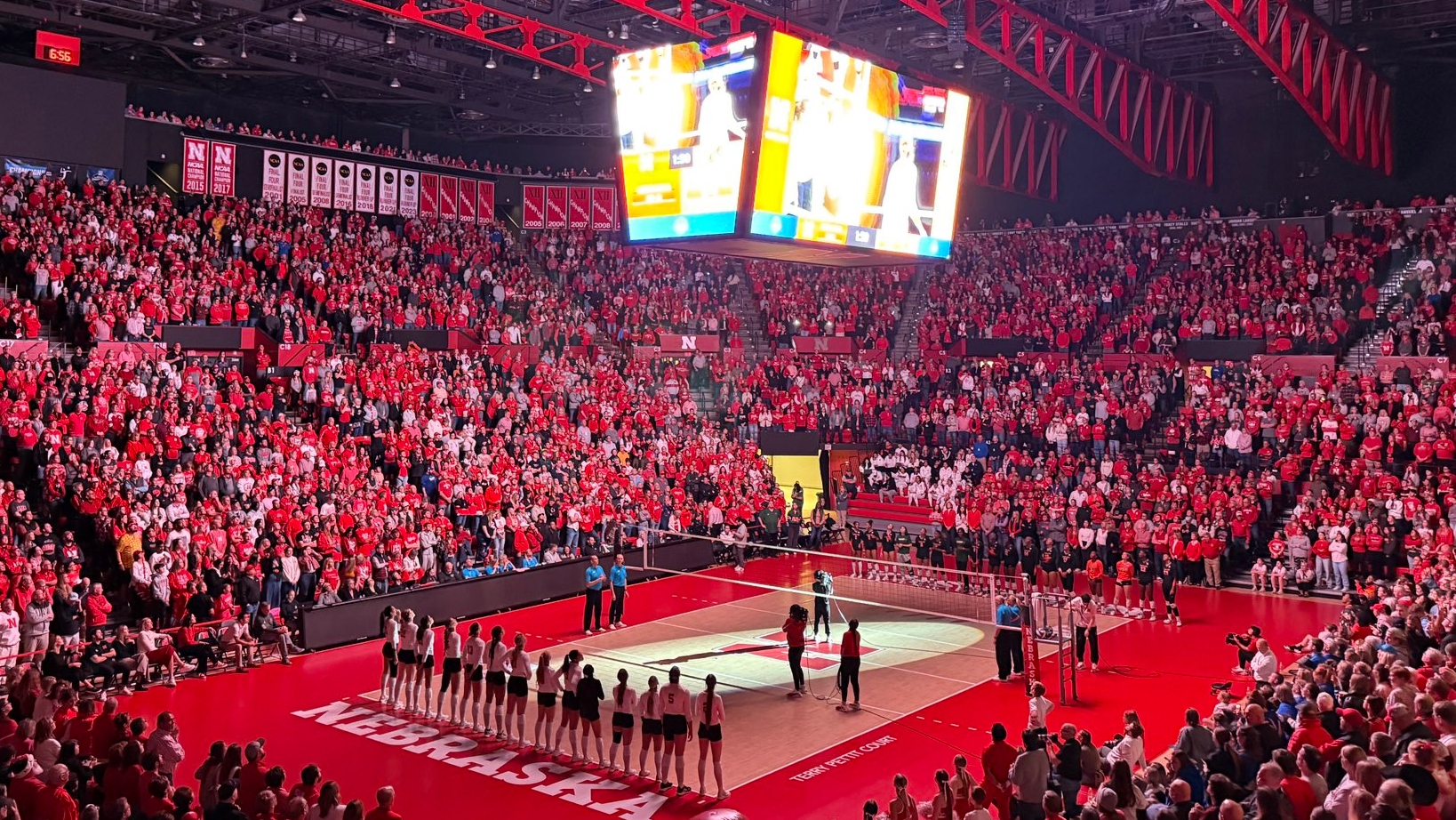
The next challenge might have been the toughest of the entire NCAA women’s volleyball tournament: top-ranked and previously undefeated Nebraska in a regional final at the Bob Devaney Sports Center, one of the most intimidating environments in college volleyball.
Nebraska entered at 33–0 and riding a 63-match home winning streak. Texas A&M, however, rose to the moment. In a five-set classic, the Aggies edged the Cornhuskers and snapped both the unbeaten season and the long home streak, sending shockwaves through the sport and establishing themselves as a legitimate threat to win it all.
Stowers again starred, posting 25 kills and further strengthening her case as the breakout player of the 2025 NCAA women’s volleyball tournament.
By the time Texas A&M reached Kansas City for the Final Four, the Aggies had already knocked out one No. 1 seed. They quickly added another. In the national semifinal, Texas A&M swept No. 1 seed Pittsburgh 29–27, 25–21, 25–20.
The opening set required another comeback, as Pittsburgh challenged the Aggies early. Once Texas A&M escaped with a 29–27 win, it controlled the match with a balanced offense and sturdy blocking. Stowers delivered 16 kills, and the Aggies did not drop a set in the Final Four, entering the championship match with surging confidence.
By the time they lined up against Kentucky, the Aggies had already eliminated Nebraska and Pittsburgh, two of the four top overall seeds, and were on the verge of a postseason sweep of No. 1 seeds. With their 3–0 victory over the Wildcats, they became one of the rare No. 3 seeds to defeat multiple No. 1s in a single NCAA women’s volleyball tournament and did so in back-to-back-to-back fashion.
No storyline from the 2025 championship run resonated more than the rise of Kyndal Stowers. A transfer from Baylor University, Stowers had once been medically retired after multiple concussions and spent much of 2024 away from competition. Her decision to enter the transfer portal and join Texas A&M changed both her own trajectory and the Aggies’ program ceiling.
Wearing a protective Q-Collar throughout the season, Stowers became one of the breakout stars of the entire NCAA women’s volleyball postseason. Her tournament stat line tells the story:
Beyond the raw numbers, Stowers repeatedly delivered in high-leverage moments, from late-set kills to steady passing that allowed the Aggies’ offense to stay balanced. Her performance earned her the tournament’s Most Outstanding Player award and landed her on multiple national year-end lists recognizing top female college athletes.
Her story, which has been highlighted in coverage from outlets such as the Houston Chronicle, illustrates the evolving landscape of athlete health, concussion management and the role of transfer opportunities in college sports (Houston Chronicle). For recruits and families, it is a powerful example of how a fresh environment and the right support system can revitalize a career.
While Stowers became the face of the postseason, the backbone of Texas A&M’s 2025 success was its senior class. Nine seniors played significant roles, many of them connected well before they arrived in College Station.
Lednicky, Waak, Underwood and middle blocker Morgan Perkins all shared time together on the Houston Skyline club program. That shared experience translated into an elevated level of trust and on-court communication at Texas A&M University, giving the Aggies a veteran group that could stabilize tight sets and pass down standards to younger players.
Morrison leaned into that maturity. With his background in USA Volleyball youth national teams, he emphasized toughness, belief and detailed preparation. Throughout the tournament, players repeatedly referenced his message about responding to adversity, whether it was a 2–0 deficit against Louisville, a raucous Nebraska crowd in Lincoln or an early six-point hole against Kentucky on the sport’s biggest stage.
The result was a team that did not panic, even when facing elimination or playing from behind against more heralded opponents. That mental edge may have been the decisive factor in a 2025 bracket full of imposing favorites.
By sweeping Kentucky in an all-SEC final, Texas A&M did more than win a trophy. The Aggies offered a clear signal about the shifting geography of power in NCAA women’s volleyball.
Traditionally, the sport’s strongest programs have clustered in the Big Ten and Pac-12, with perennial contenders such as Nebraska, Wisconsin and Stanford making frequent deep postseason runs. In recent years, however, SEC programs have steadily climbed the national rankings, investing in higher-level recruiting, facilities and coaching.
The 2025 championship added another data point to that trend. The SEC not only produced the No. 1 overall seed in Kentucky, but also saw Texas A&M emerge from the No. 3 seed line to beat three No. 1s in a row. For recruits considering where to play high-major volleyball, the conference’s visibility and perceived ceiling continue to rise.
For Texas A&M specifically, the title permanently alters expectations. A program that was sub-.500 as recently as 2022 is now a national champion with a proven coach, a culture of resilience and a track record of developing both transfers and homegrown recruits. Prospective athletes can view the Aggies as a place where they can compete for national titles while joining a campus that has been successful across multiple women’s sports.
For high school players following the 2025 Texas A&M volleyball national championship, there are several takeaways that matter for recruiting and college selection.
Texas A&M did not have a long history of national titles in women’s volleyball, but the trajectory under a new coach quickly changed what was possible. When evaluating schools, athletes should look closely at:
A fast-rising program can offer more immediate opportunity and a chance to help build something historic, as the 2025 Aggies did.
Stowers’ journey from medical retirement to Kyndal Stowers Most Outstanding Player in the NCAA tournament is a reminder that the right medical, training and coaching environment can be life-changing. Recruits dealing with injuries or complex health histories should ask detailed questions about:
Those elements can be just as important as playing time or offensive system when it comes to long-term success.
The Houston Skyline connection among several Aggie seniors shows how club bonds can carry over to college. While you should not pick a school only to follow friends, existing chemistry can help ease the transition and immediately raise a team’s on-court cohesion.
Many recruits focus only on traditional powerhouses. Texas A&M’s 2025 season is a reminder that emerging programs can offer national-title upside. Platforms like Pathley are designed to widen your search by helping you discover schools that match your academic, athletic and personal priorities, not just brand names.
If you are exploring where a future like the Aggies’ seniors might be possible, you can use Pathley Chat as an AI recruiting assistant to identify college matches, understand roster depth and build a stronger athletic résumé.
If the story of Texas A&M’s 2025 NCAA women’s volleyball championship resonates with you, the next step is to dig deeper into programs that share similar profiles: strong academics, rising athletic investment and a track record of player development.
On Pathley, you can explore a detailed profile for Texas A&M, including admissions data, campus life insights and broader athletic context, all in one place:
With their sweep of Kentucky in Kansas City, Texas A&M did more than win a match. The Aggies:
For Aggie fans, it is a moment that will sit alongside other landmark championships in the school’s athletic history. For recruits and families, it is a powerful case study in how quickly a program’s status can change when the right coaching, culture and player development align.
The 2025 Texas A&M volleyball national championship stands as proof that a program once mired in mediocrity can, within a few years, transform into a national powerhouse. And for anyone dreaming of playing on a stage like the T-Mobile Center in late December, it is a reminder that the journey starts with finding the right college fit and a coaching staff that believes in your potential.
Pathley was built to help athletes make those decisions more clearly and confidently. Whether you hope to play for a future champion like Texas A&M or thrive at a smaller program that fits you perfectly, the tools are there to chart your own path.
Rosters, coaches, and division breakdowns for every NCAA and NAIA program we track.